
Anti-overspeed belt conveyor
A technology for belt conveyors and conveyor belts, which is applied in the direction of conveyors, conveyor objects, conveyor control devices, etc., and can solve problems such as speeding accidents, waste, and speed out of control
Patent Information
- Authority / Receiving Office
- CN · China
- Current Assignee / Owner
- Publication Date
- 2020-10-20
- Estimated Expiration
- Not applicable · inactive patent
Smart Images
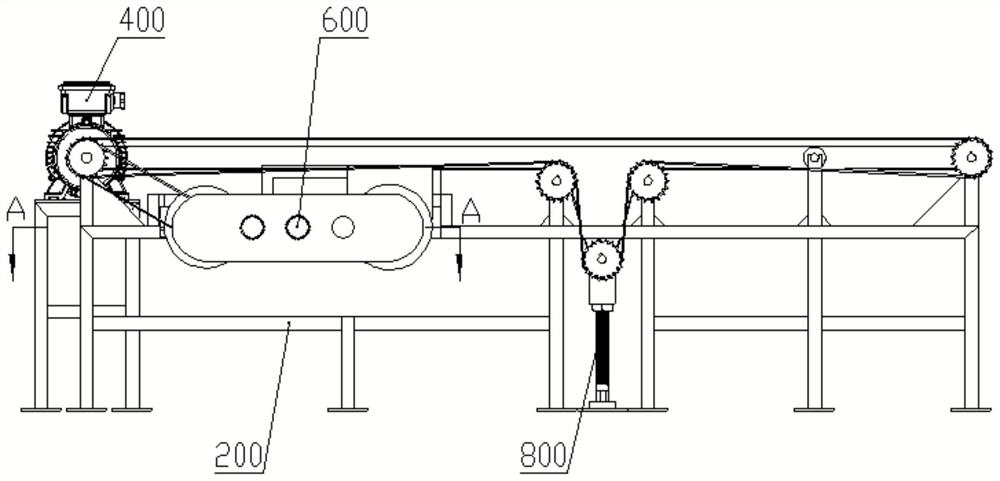
Figure 1 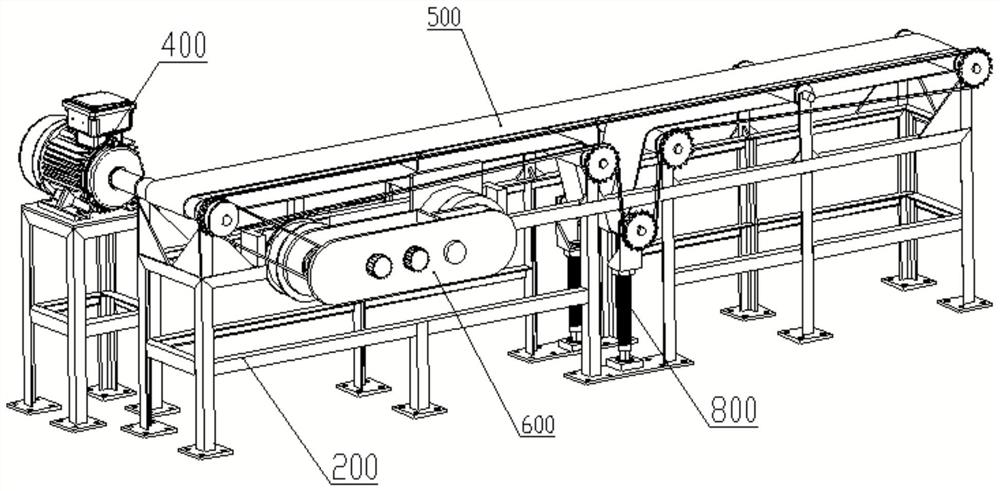
Figure 2 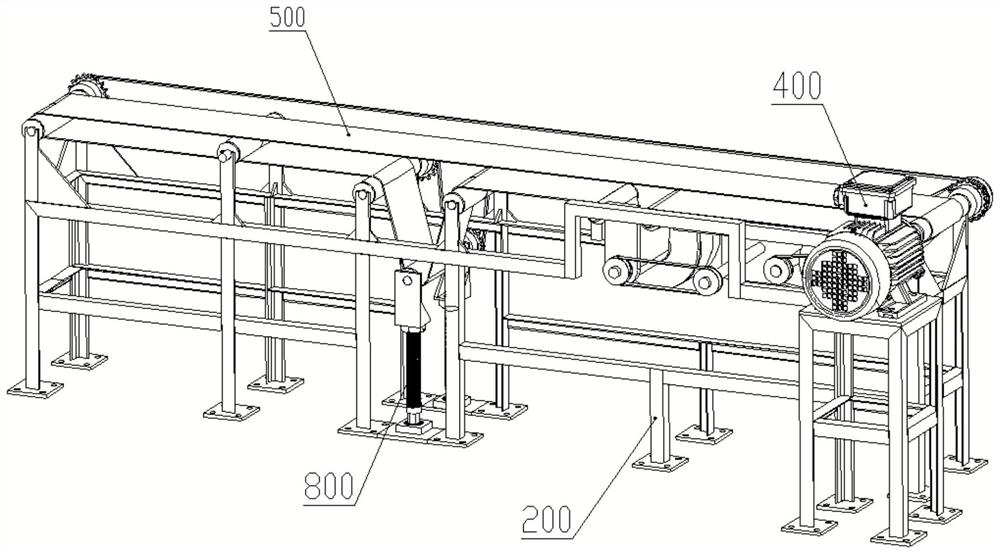
Figure 3
Abstract
Description
technical field
[0001] The invention relates to a conveying device, in particular to an anti-overspeed belt conveyor. Background technique
[0002] Belt conveyor is a kind of conveying device, which is a device for transporting materials from one place to another. It is widely used in mining, metallurgy, building materials, chemical industry, electric power, ports, food processing and other industrial fields to convey Various materials. These conveying devices must rely on electric motors or other power to drive their operation. The conveying device often has its rated speed, which is limited to run at a certain speed. If it runs above the speed, it will cause damage, cause excessive conveying volume, cause blockage, and throw materials out, resulting in waste, because most of these belt conveyors Using a motor, the speed of the motor will be changed by factors such as frequency and voltage. When the frequency converter fails or is damaged, the speed will be out of control...
Examples
Embodiment approach 1
[0113] Such as Figure 1-16 As shown, this embodiment provides an anti-overspeed belt conveyor, including:
[0114] frame body 200;
[0115] There are at least two belt rollers 700, which are rotatably connected with the frame body 200;
[0116] The conveying belt 500 is wound on the belt roller 700 and is used for conveying materials;
[0117] The driving mechanism 400 is connected with the conveying belt 500 and is used to drive the conveying belt 500 to rotate;
[0118] The roller speed limiting mechanism 100 is connected with the belt roller 700 to prevent the belt roller 700 from running at an overspeed;
[0119] The speed-regulating operating mechanism 600 is connected with the roller speed-limiting mechanism 100 and is used to adjust the running resistance of the roller speed-limiting mechanism 100;
[0120] The belt adjustment mechanism 800 is connected with the conveying belt 500 and used for adjusting the tension of the conveying belt 500 .
[0121] Among them, ...
Embodiment approach 2
[0180] refer to Figure 17-Figure 21 The main difference between this embodiment and Embodiment 1 is that the roller speed limiting mechanism 100 uses a uniform speed mechanism 130 and an adjusting mechanism 140 of different structures, while the frame body 200, the belt roller 700, the conveyor belt 500, the driving mechanism 400, and the roller limiter The housing 110 of the speed mechanism 100, the arrangement of non-Newtonian fluid, the connection of the rotating shaft 120, and the stirring working principle and beneficial effect of the first stirring blade 135 are all the same as those of Embodiment 1, and the differences will be described in detail below.
[0181] The constant speed mechanism 130 of this embodiment adopts two radially evenly distributed first stirring blades 135, which also includes:
[0182] The sliding sleeve 131 is sleeved on the rotating shaft 120, and the sliding sleeve is provided with a chute 136;
[0183] The slider 132 is embedded in the chute ...