
Perovskite solar cell electron transport layer and production method thereof
A technology of electron transport layer and solar cell, which is applied in the direction of circuits, photovoltaic power generation, electrical components, etc., and can solve problems such as the decline in the stability of solar cells
Patent Information
- Authority / Receiving Office
- CN · China
- Patent Type
- Applications(China)
- Current Assignee / Owner
- Publication Date
- 2021-04-20
Smart Images
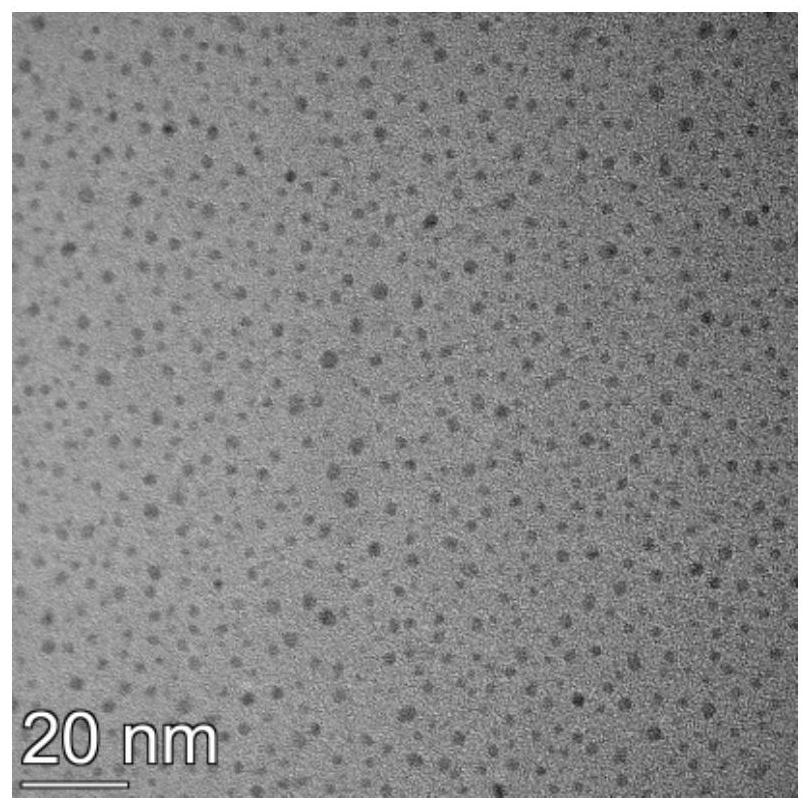
Figure 1
Abstract
Description
technical field
[0001] The invention relates to the technical field of semiconductor devices, in particular to an electron transport layer of a perovskite solar cell and a preparation method thereof. Background technique
[0002] Perovskite solar cells are a new type of solar cells, which use organic-inorganic hybrid or all-inorganic perovskites as light-absorbing materials, combined with wide-bandgap semiconductor oxide electron-transport materials and organic small molecules, conductive polymers or inorganic space materials. The hole transport material constitutes a solar cell. Perovskite solar cells have the characteristics of low cost, simple preparation process, and high photoelectric conversion efficiency, so they have good application prospects and are expected to replace existing high-cost solar cells. The electron transport layer is an important part of perovskite solar cells, which has an important impact on the extraction and transport of photogenerated electrons...
Examples
preparation example Construction
[0022] A preparation method for an electron transport layer of a perovskite solar cell, comprising the following steps:
[0023] Step 1, the two-dimensional thin layer Ti with a concentration of 10wt% to 50wt% 3 C 2 The aqueous dispersion is placed in a planetary ball mill and ball milled for 4 to 8 hours at a speed of 7000 to 8000 rpm to make a two-dimensional thin layer of Ti 3 C 2 Two-dimensional thin-layer Ti in aqueous dispersion 3 C 2 Crushed into a size of 0.1 ~ 0.5μm 2 Ti 3 C 2 debris;
[0024] Step 2, then will contain Ti after ball milling 3 C 2 Fragmented 2D Ti 3 C 2 The water dispersion is added to 1-2mol / L alkaline solution to obtain a mixed suspension, and stirred for 120-144 hours in an oxygen atmosphere at a speed of 7000-8000 rpm to make the Ti in the mixed suspension 3 C 2 Fragments are oxidized and decomposed into rutile phase titanium dioxide fragments;
[0025] Step 3, then ultrasonicating the mixed suspension obtained in step 2 at a power of...
Embodiment 1
[0032] A preparation method for an electron transport layer of a perovskite solar cell, comprising the following steps:
[0033] Step 1, first prepare 100mL of two-dimensional monolayer Ti with a concentration of 10wt% 3 C 2 The aqueous dispersion was placed in a planetary ball mill and ball milled for 4 hours at a speed of 8000 rpm to make a two-dimensional monolayer Ti 3 C 2 Two-dimensional monolayer Ti in aqueous dispersion 3 C 2 Crushed into a size of 0.1 ~ 0.2μm 2 Ti 3 C 2 debris;
[0034] Step 2, then the two-dimensional monolayer Ti after ball milling3 C 2 The aqueous dispersion of fragments was added to 400mL, 2mol / L ammonia water to obtain a mixed suspension, and stirred for 120 hours at a speed of 8000 rpm in an oxygen atmosphere to make the Ti in the mixed suspension 3 C 2 Fragments are oxidized and decomposed into rutile phase titanium dioxide fragments;
[0035] Step 3, then the mixed suspension obtained in step 2 is ultrasonicated at a power of 1000W f...
Embodiment 2
[0043] A preparation method for an electron transport layer of a perovskite solar cell, comprising the following steps:
[0044] Step 1, first 100mL, the two-dimensional thin layer (2~5 layers) Ti that concentration is 50wt% 3 C 2 The aqueous dispersion was placed in a planetary ball mill and ball milled at a speed of 7000 rpm for 8 hours to make the two-dimensional thin layer Ti 3 C 2 Two-dimensional thin-layer Ti in aqueous dispersion 3 C 2 Crushed into a size of 0.3 ~ 0.5μm 2 Ti 3 C 2 debris;
[0045] Step 2, then ball milled containing Ti 3 C 2 Fragmented 2D Ti 3 C 2 The aqueous dispersion was added to 100mL, 2mol / L tetrabutylammonium hydroxide solution to obtain a mixed suspension, and stirred for 144 hours at a speed of 7000 rpm in an oxygen atmosphere to make the Ti in the mixed suspension 3 C 2 Fragments are oxidized and decomposed into rutile phase titanium dioxide fragments;
[0046] Step 3, then ultrasonicating the mixed suspension obtained in step 2 u...