
Method for improving silicon carbide-niobium brazing connection quality through low-expansion 4J42 alloy interlayer auxiliary brazing filler metal
A technology of connection quality and intermediate layer, applied in welding equipment, auxiliary devices, metal processing equipment, etc., can solve the problems of large residual stress in the brazing connection of silicon carbide and niobium, poor reaction of the ceramic side interface, etc., and optimize the weld structure. and interface reaction, improving plasticity and toughness, and preventing cracks
Patent Information
- Authority / Receiving Office
- CN · China
- Patent Type
- Applications(China)
- Current Assignee / Owner
- Publication Date
- 2021-12-03
Smart Images
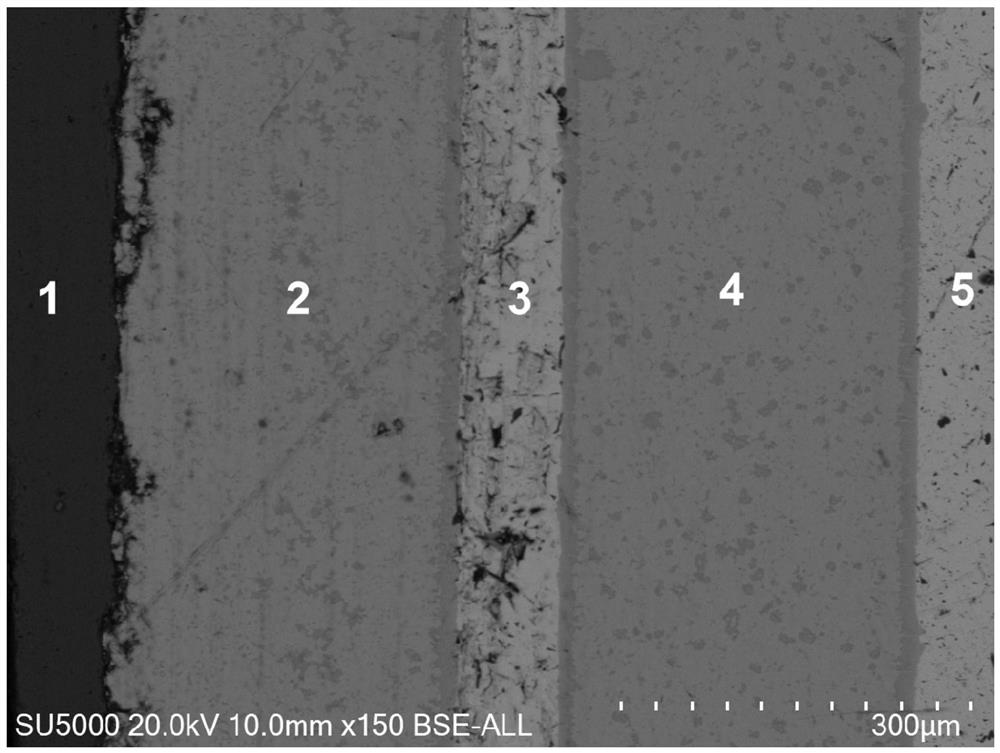
Figure 1 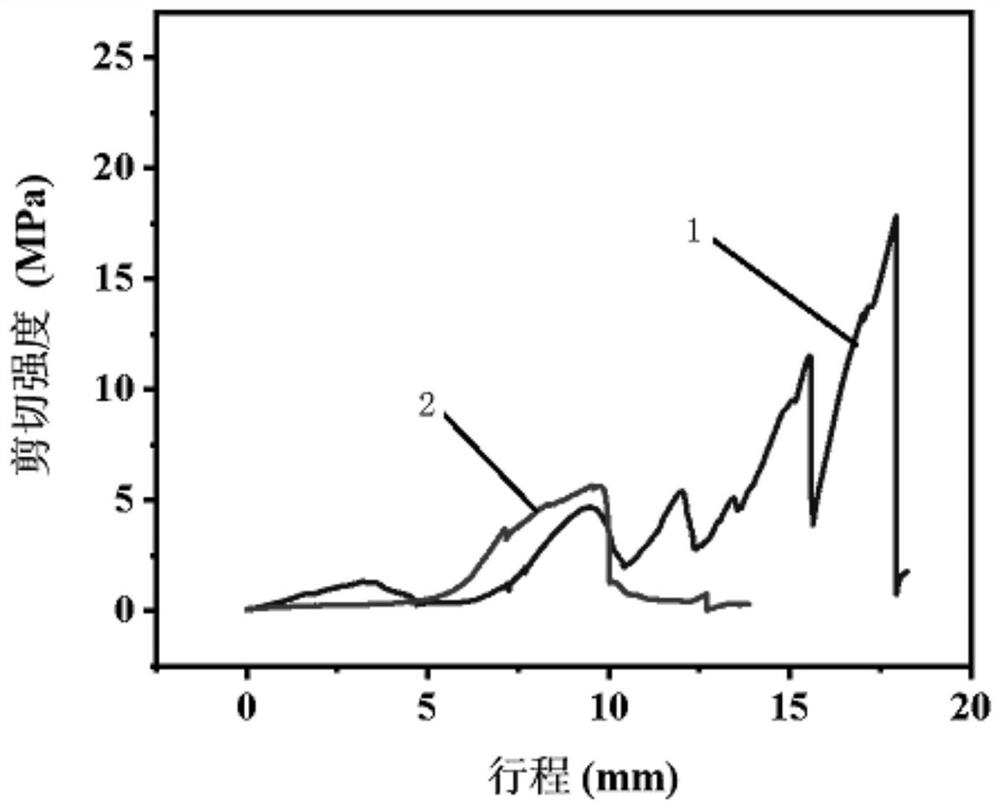
Figure 2
Abstract
Description
technical field
[0001] The invention relates to a silicon carbide-niobium brazing connection method. Background technique
[0002] Silicon carbide ceramics have great application potential in the field of high-temperature structures due to their high strength, corrosion resistance, creep resistance and excellent high-temperature performance. It has become a structural material with broad application prospects in the fields of aerospace, petrochemical equipment, and nuclear power engineering.
[0003] However, silicon carbide also has the disadvantages of high brittleness and poor processability. It is difficult to make components with complex shapes or large sizes, which limits its application in the engineering field. In the process of promoting the application of silicon carbide materials, it is inevitable to involve the application of silicon carbide and metal assemblies. At present, the connection between silicon carbide and various metal materials has been realized. F...
Examples
specific Embodiment approach 1
[0019] Specific embodiment one: present embodiment a kind of low-expansion 4J42 alloy interlayer assists the method for brazing filler metal to improve silicon carbide-niobium brazing connection quality, and it is carried out according to the following steps:
[0020] 1. Pre-processing:
[0021] Add titanium-zirconium-copper-nickel solder into the binder to obtain solder containing the binder, and coat the solder containing the binder on the metal niobium surface to be welded to obtain the first solder layer. Place a 4J42 alloy foil with a thickness of 100 μm to 200 μm on the solder layer, and then coat a layer of solder containing an adhesive on the 4J42 alloy foil to obtain a second solder layer, and place on the second solder layer Silicon carbide is finally heated and dried to obtain the parts to be welded;
[0022] 2. Vacuum brazing:
[0023] Place the parts to be welded in a vacuum brazing furnace, and pump the air pressure of the vacuum furnace to 3×10 -3 Pa~5×10 -3...
specific Embodiment approach 2
[0028]Embodiment 2: The difference between this embodiment and Embodiment 1 is that the binder described in step 1 is carboxymethyl cellulose or ethyl cellulose. Others are the same as in the first embodiment.
specific Embodiment approach 3
[0029] Specific embodiment three: the difference between this embodiment and specific embodiment one or two is that the mass percentage of Ti in the titanium-zirconium-copper-nickel solder described in step 1 is 41.14%, and the mass percentage of Zr is 34.36%. The mass percentage of Cu is 14.67%, and the mass percentage of Ni is 9.83%. Others are the same as in the first or second embodiment.
[0030] The titanium-zirconium-copper-nickel solder is Ti41.14-Zr34.36-Cu14.67-Ni9.83.