
Collaborative relation graph-based recommendation method and related device
A recommendation method and technology of relationship diagrams, applied in the information field, can solve problems such as poor recommendation results and poor high-order neighborhood information mining capabilities, and achieve the effect of improving recommendation accuracy
Patent Information
- Authority / Receiving Office
- CN · China
- Patent Type
- Applications(China)
- Current Assignee / Owner
- Publication Date
- 2022-05-10
Smart Images
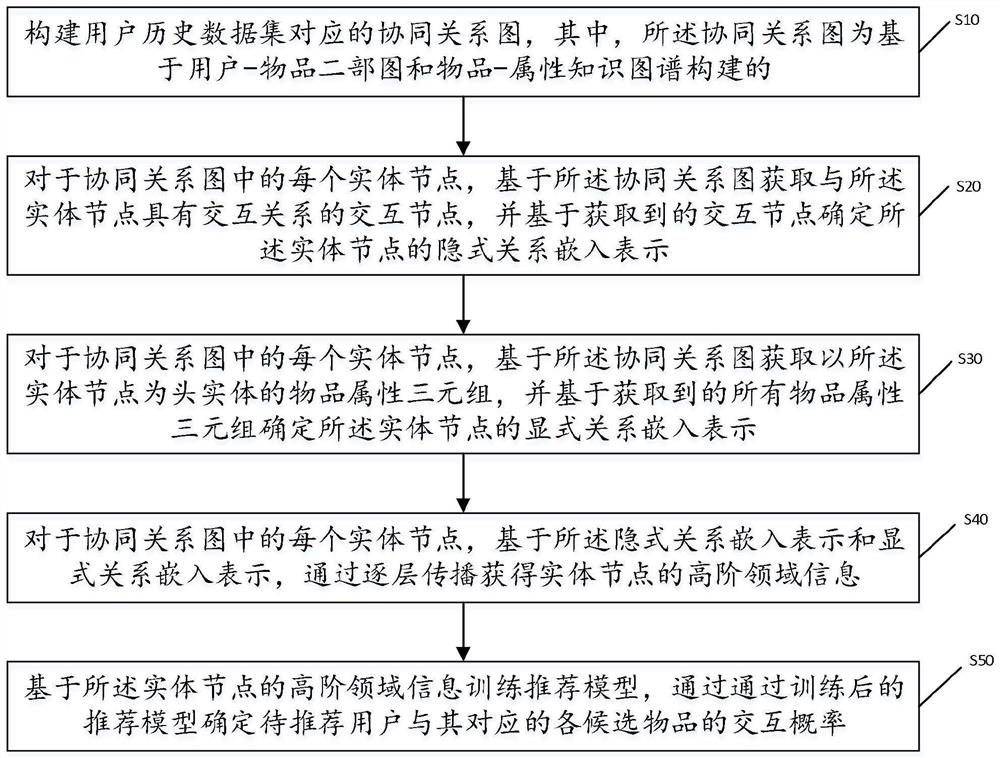
Figure 1 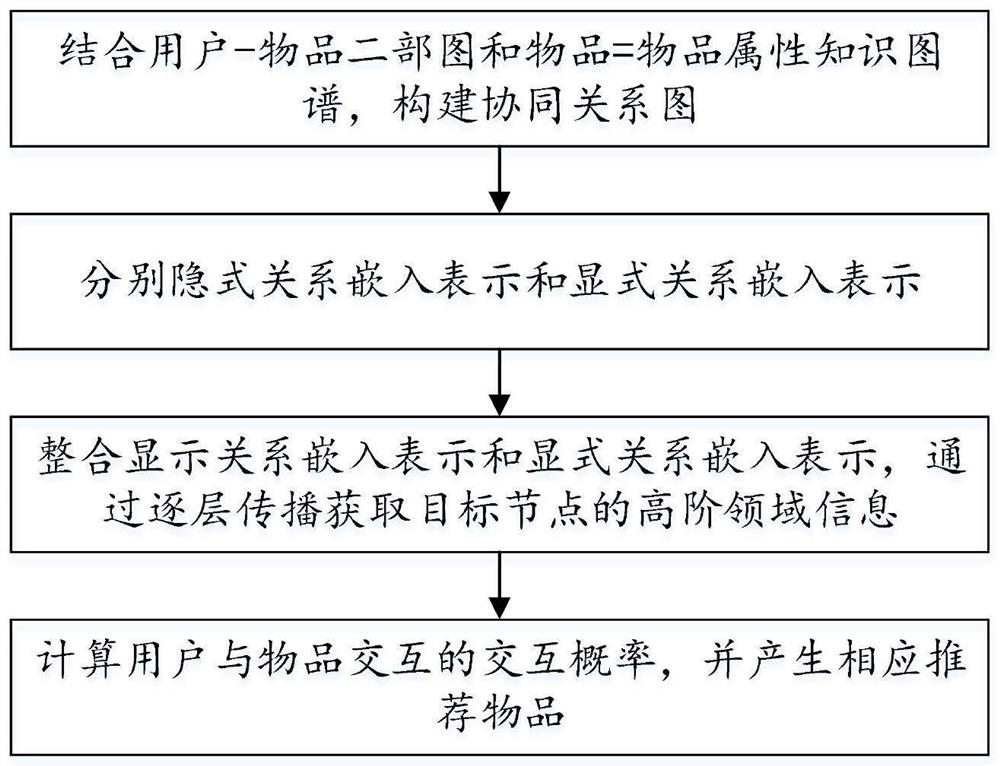
Figure 2 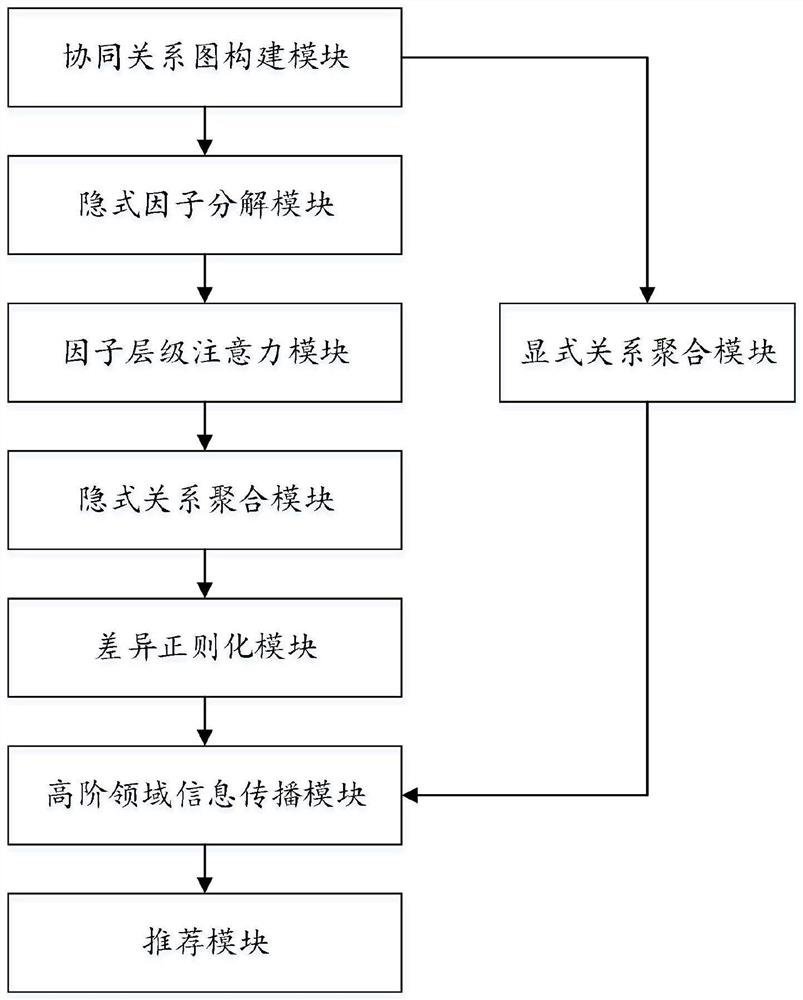
Figure 3
Abstract
Description
technical field
[0001] The present application relates to the field of information technology, in particular to a recommendation method based on a collaborative relationship graph and a related device. Background technique
[0002] With the rapid development of the Internet era, it has become difficult to quickly and accurately obtain the required information from massive resources. This problem is called information overload. As a means to effectively alleviate information overload, recommender systems have important practical research value. Traditional recommendation algorithms such as collaborative filtering (Collaborative Filtering) methods can build a "user-item" interaction matrix through the user's historical behavior, thereby recommending items that similar users like to target users, or recommending items that target users like. of similar items. However, on the one hand, the collaborative filtering method has the problem of data sparsity, that is, it does not pe...
Examples
Embodiment Construction
[0054] The present application provides a recommendation method based on a collaborative relationship graph and related devices. In order to make the purpose, technical solution, and effect of the present application clearer and more specific, the present application will be further described in detail below with reference to the accompanying drawings and examples. It should be understood that the specific embodiments described here are only used to explain the present application, not to limit the present application.
[0055] Those skilled in the art will understand that unless otherwise stated, the singular forms "a", "an", "said" and "the" used herein may also include plural forms. It should be further understood that the word "comprising" used in the specification of the present application refers to the presence of the features, integers, steps, operations, elements and / or components, but does not exclude the presence or addition of one or more other features, Integers, ...