
Air pointer with improved user experience
a pointer and user experience technology, applied in the field of 3d pointers, can solve the problems of less accurate, more robust than the former over time, etc., and achieve the effect of reducing the possibility for a user to, improving the robustness of a precise mapping algorithm, and ensuring smooth transitions
Patent Information
- Authority / Receiving Office
- US · United States
- Patent Type
- Patents(United States)
- Current Assignee / Owner
- Publication Date
- 2019-06-25
Smart Images
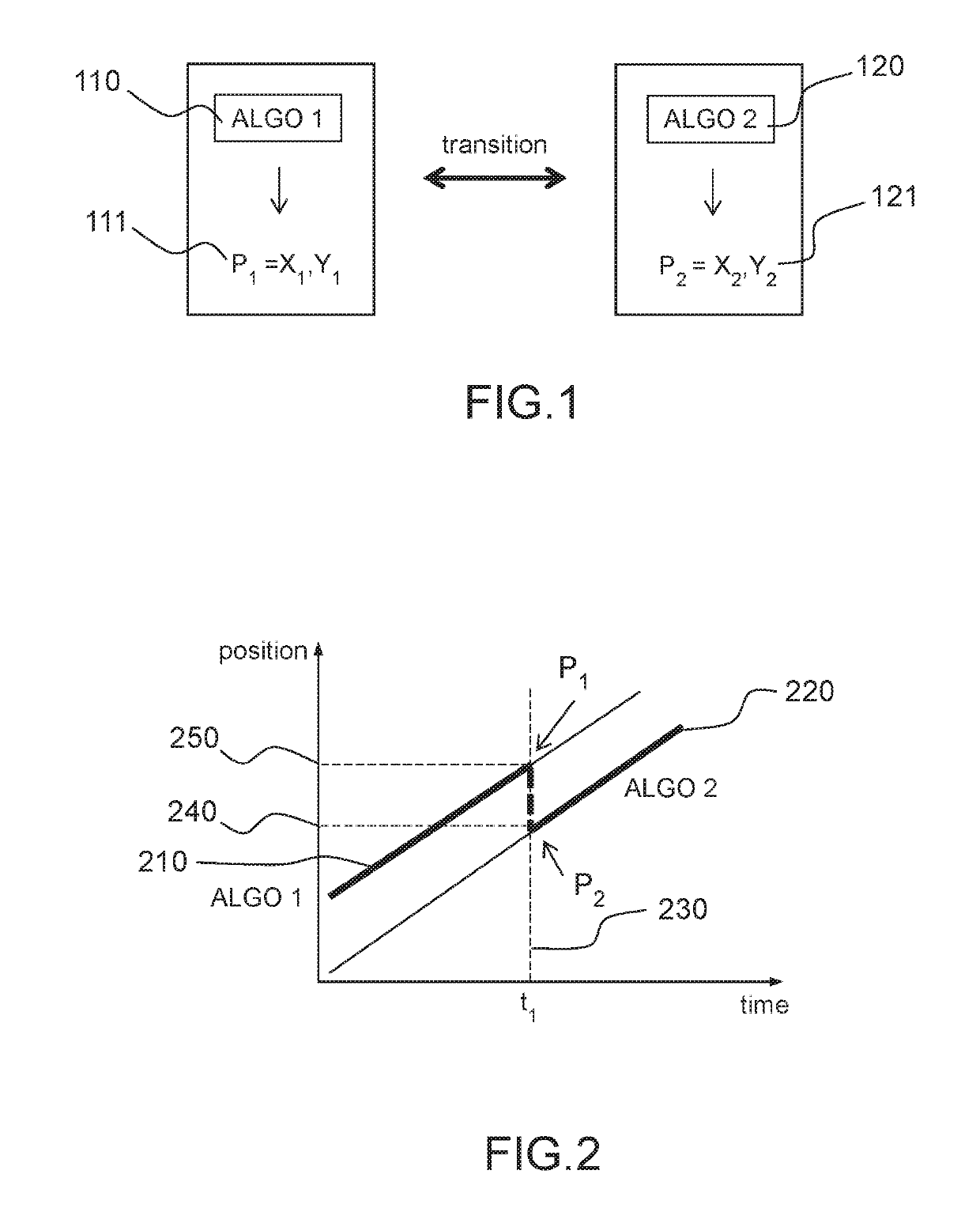
Figure 1 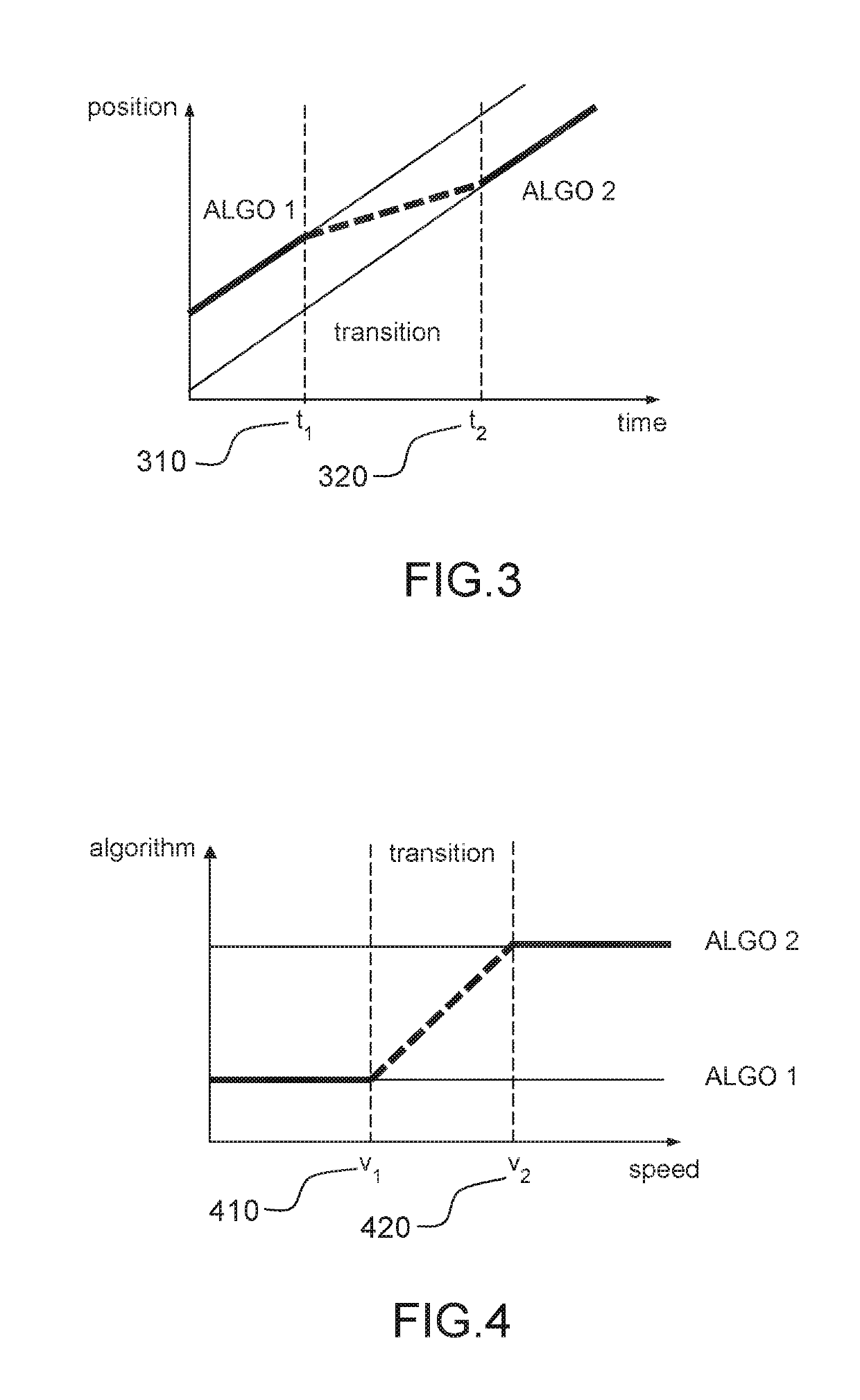
Figure 2 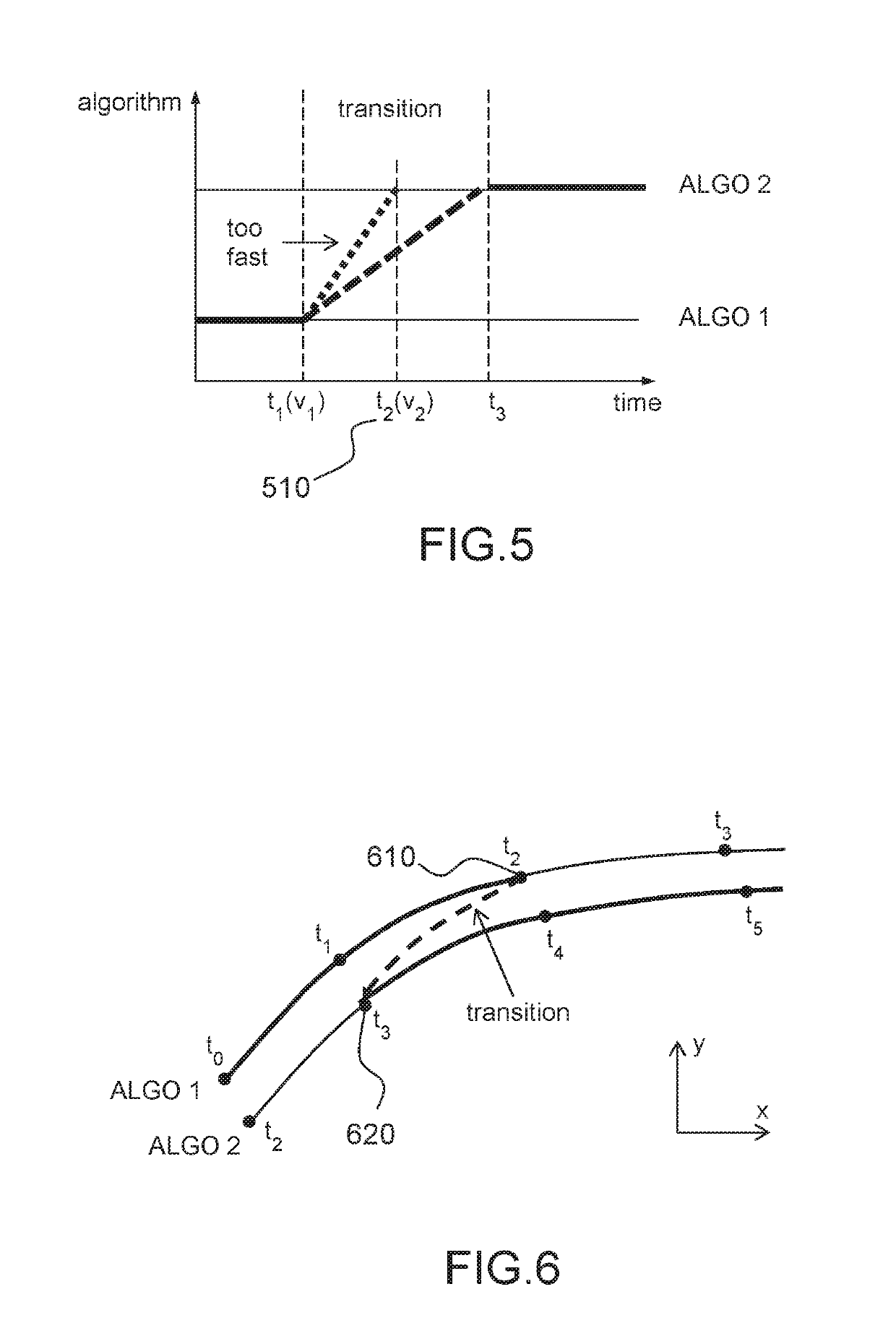
Figure 3
Abstract
Description
TECHNICAL BACKGROUND OF THE INVENTION
[0001] The present invention relates to the use of 3D pointers. These pointing devices are used for a variety of different purposes: control the functionalities of a TV set or a tablet, using or not a set top box, control a presentation on a desktop or a larger screen, play games, etc. A 3D pointer includes motion sensors which capture the motion imparted to the pointer by a user handling it. In most applications, the motion of the device in space is converted into the motion of a virtual object, often times a cursor, in a plane, generally a display. By controlling the object and moving it across the plane, the user is able to command the execution of specific functions, like e.g. selection of a program, control of an audio or a video stream, creation of drawings and graphics, etc. Depending on the use case, the precision of the control of the movement of the object will be more or less important. Generally speaking, high precision is needed when ...
Examples
Embodiment Construction
[0031]FIG. 1 illustrates how the position of an object on a surface may be calculated using two difference algorithms.
[0032]A device may be used to control the movements of the object (position, orientation) on the surface. Devices used for these applications are air pointers or air mice equipped with motion sensors. In general these motion sensors are accelerometers and gyrometers, but magnetometers may also be included. The devices can also be in the form of a game interface like a WiiMote™. Smart phones can also be used, since they are now more and more often equipped with adequate motion sensors and the users only need to run the appropriate application to use the phone as a pointer. The basic operating principle of these devices is that the sensors determine motion parameters of the device in space and a processor then maps these motion parameters into position / motion data of an object on a surface, for example a cursor on a display.
[0033]The sensing device comprises a power su...