

Optical stack for switchable directional display
a technology of optical stacks and directional displays, applied in non-linear optics, optics, instruments, etc., can solve the problems of increasing inventory and cost, high loss of film head-on illumination, moiré artefacts, etc., and achieve the effect of reducing the field of view of privacy displays, reducing cost and thickness, and reducing the cos
Patent Information
- Authority / Receiving Office
- US · United States
- Patent Type
- Patents(United States)
- Current Assignee / Owner
- Publication Date
- 2021-07-27
Smart Images
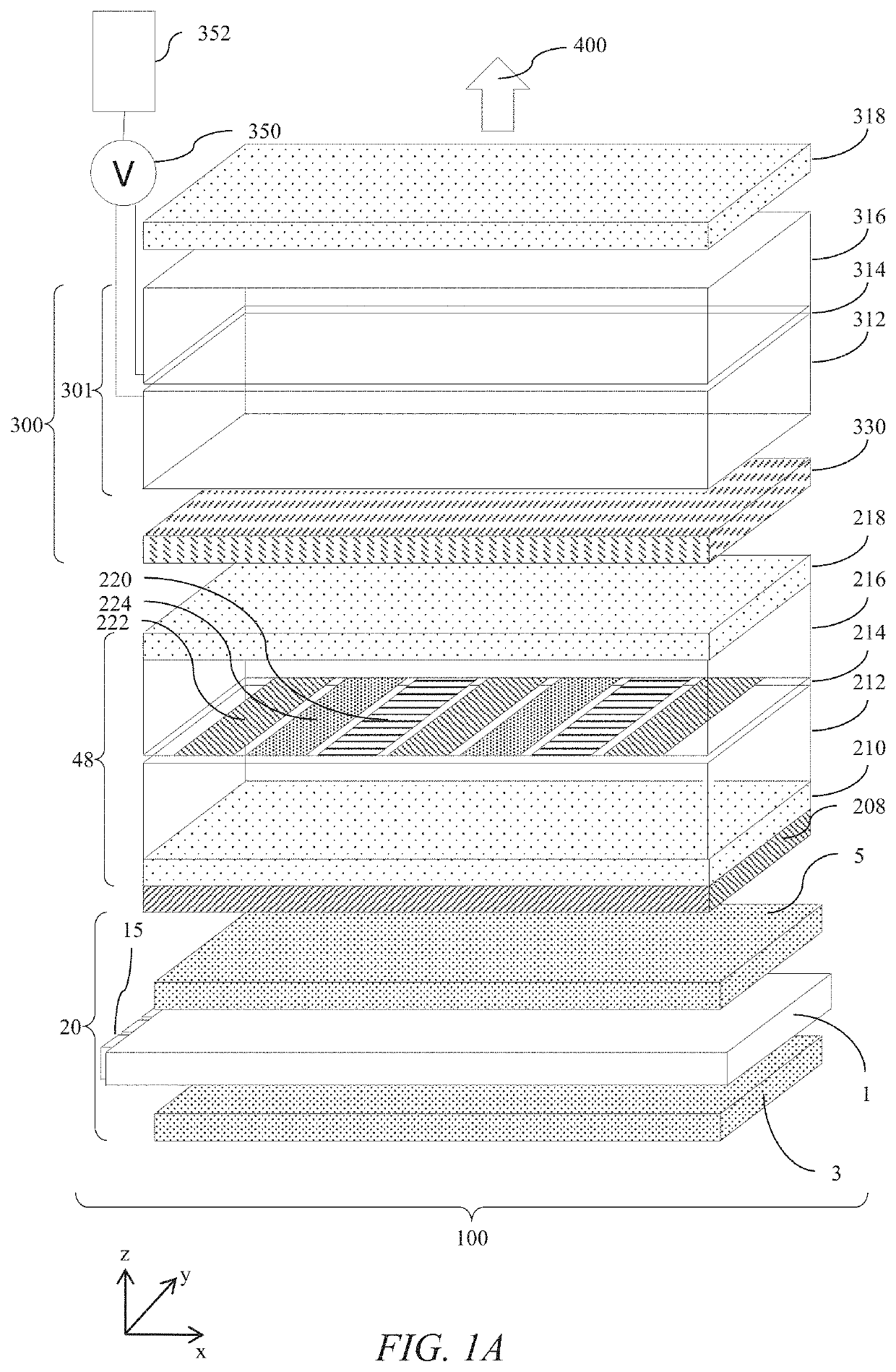
Figure 1 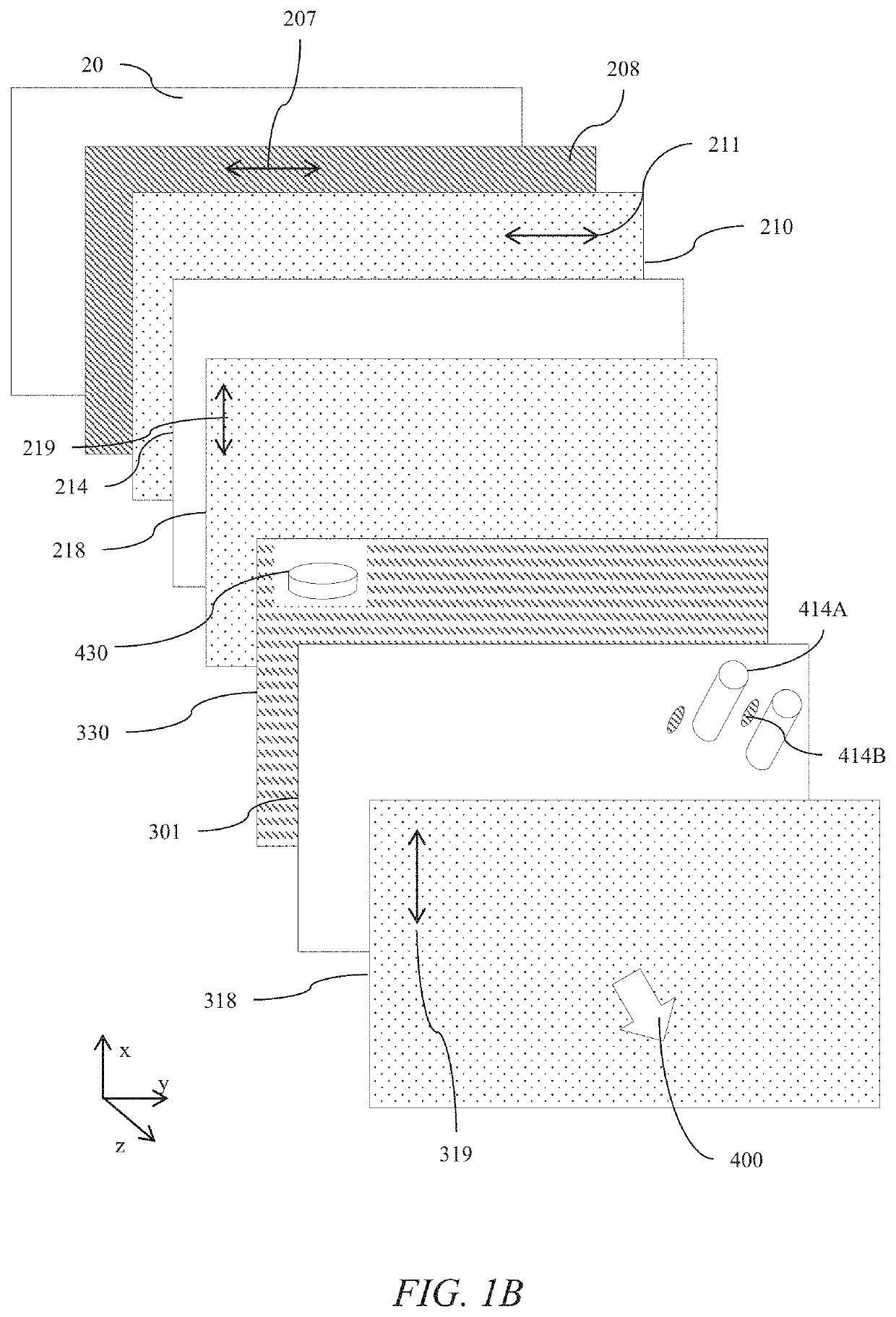
Figure 2 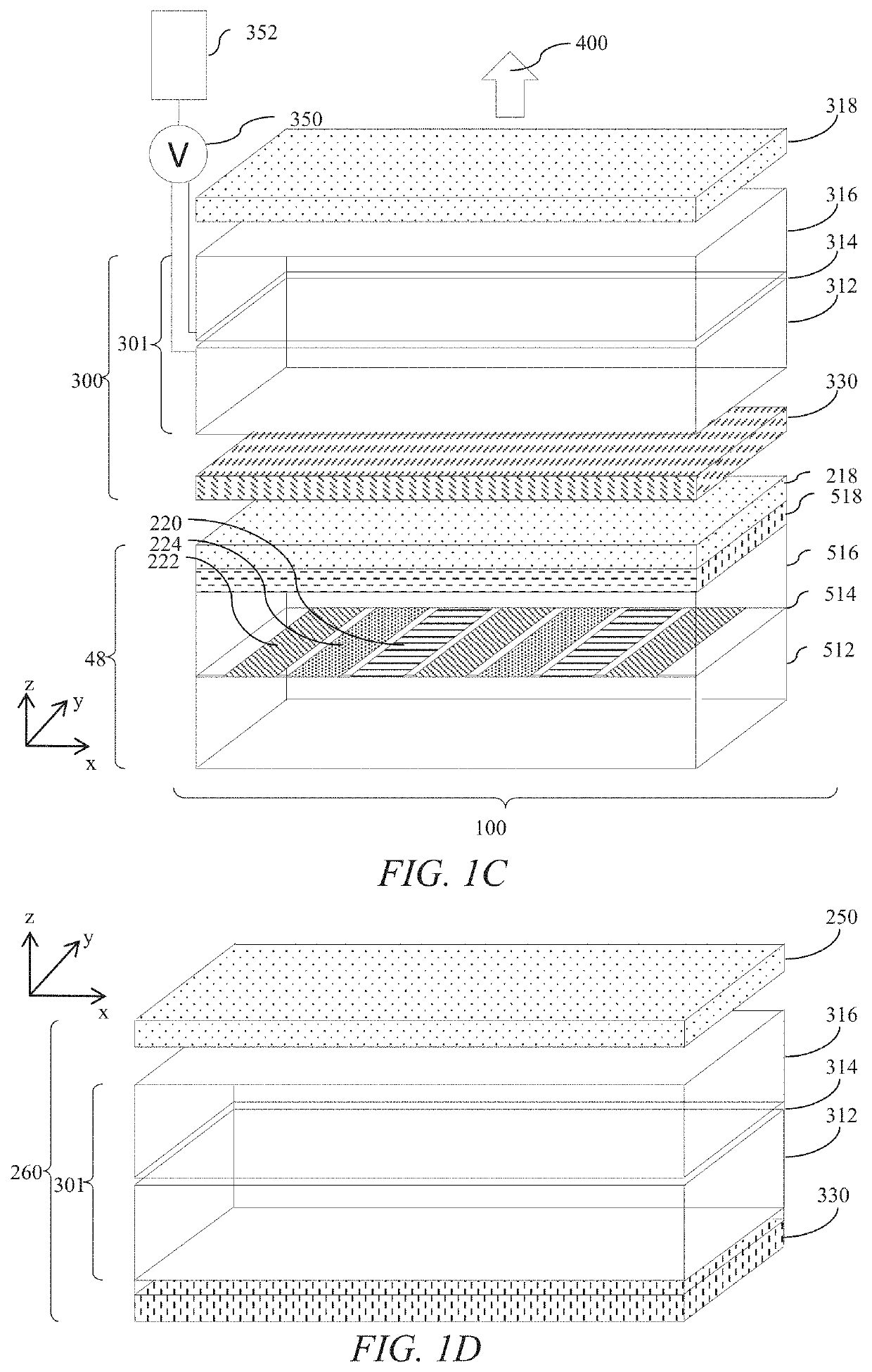
Figure 3
Abstract
Description
TECHNICAL FIELD
[0001] This disclosure generally relates to illumination from light modulation devices, and more specifically relates to switchable optical stacks for providing control of illumination for use in a display including a privacy display.BACKGROUND
[0002] Privacy displays provide image visibility to a primary user that is typically in an on-axis position and reduced visibility of image content to a snooper, that is typically in an off-axis position. A privacy function may be provided by micro-louvre optical films that transmit some light from a display in an on-axis direction with low luminance in off-axis positions. However such films have high losses for head-on illumination and the micro-louvres may cause Moiré artefacts due to beating with the pixels of the spatial light modulator. The pitch of the micro-louvre may need selection for panel resolution, increasing inventory and cost.
[0003] Switchable privacy displays may be provided by control of the off-axis optical output...
Examples
Embodiment Construction
[0131]Terms related to optical retarders for the purposes of the present disclosure will now be described.
[0132]In a layer comprising a uniaxial birefringent material there is a direction governing the optical anisotropy whereas all directions perpendicular to it (or at a given angle to it) are optically equivalent.
[0133]Optical axis refers to the direction of propagation of an unpolarised light ray in the uniaxial birefringent material in which no birefringence is experienced by the ray. For light propagating in a direction orthogonal to the optical axis, the optical axis is the slow axis when linearly polarized light with an electric vector direction parallel to the slow axis travels at the slowest speed. The slow axis direction is the direction with the highest refractive index at the design wavelength. Similarly the fast axis direction is the direction with the lowest refractive index at the design wavelength.
[0134]For positive optical anisotropy uniaxial birefringent materials ...