
Project optimization system
Patent Information
- Authority / Receiving Office
- US · United States
- Current Assignee / Owner
- Publication Date
- 2005-06-02
- Estimated Expiration
- Not applicable · inactive patent
Smart Images
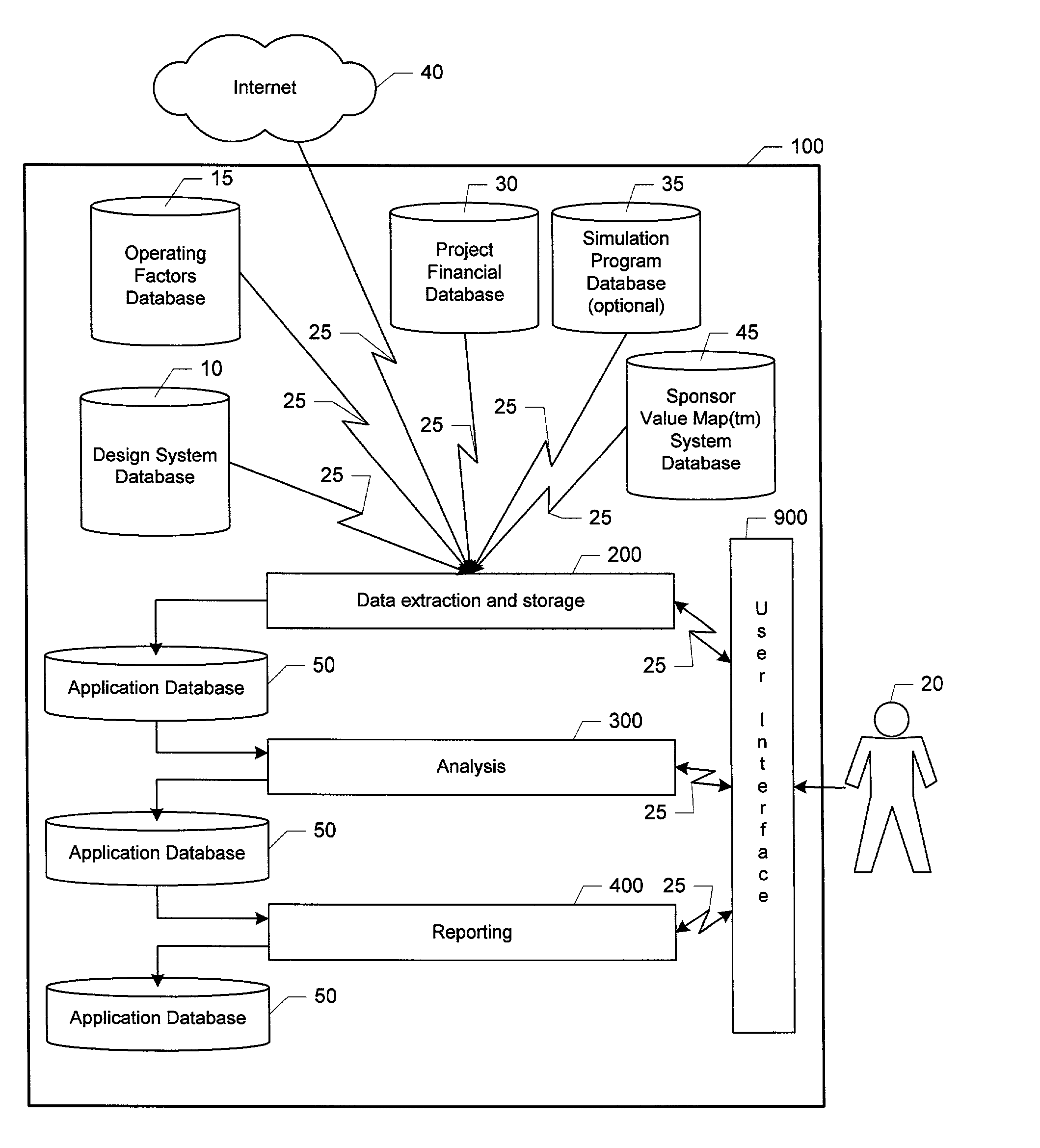
Figure 1 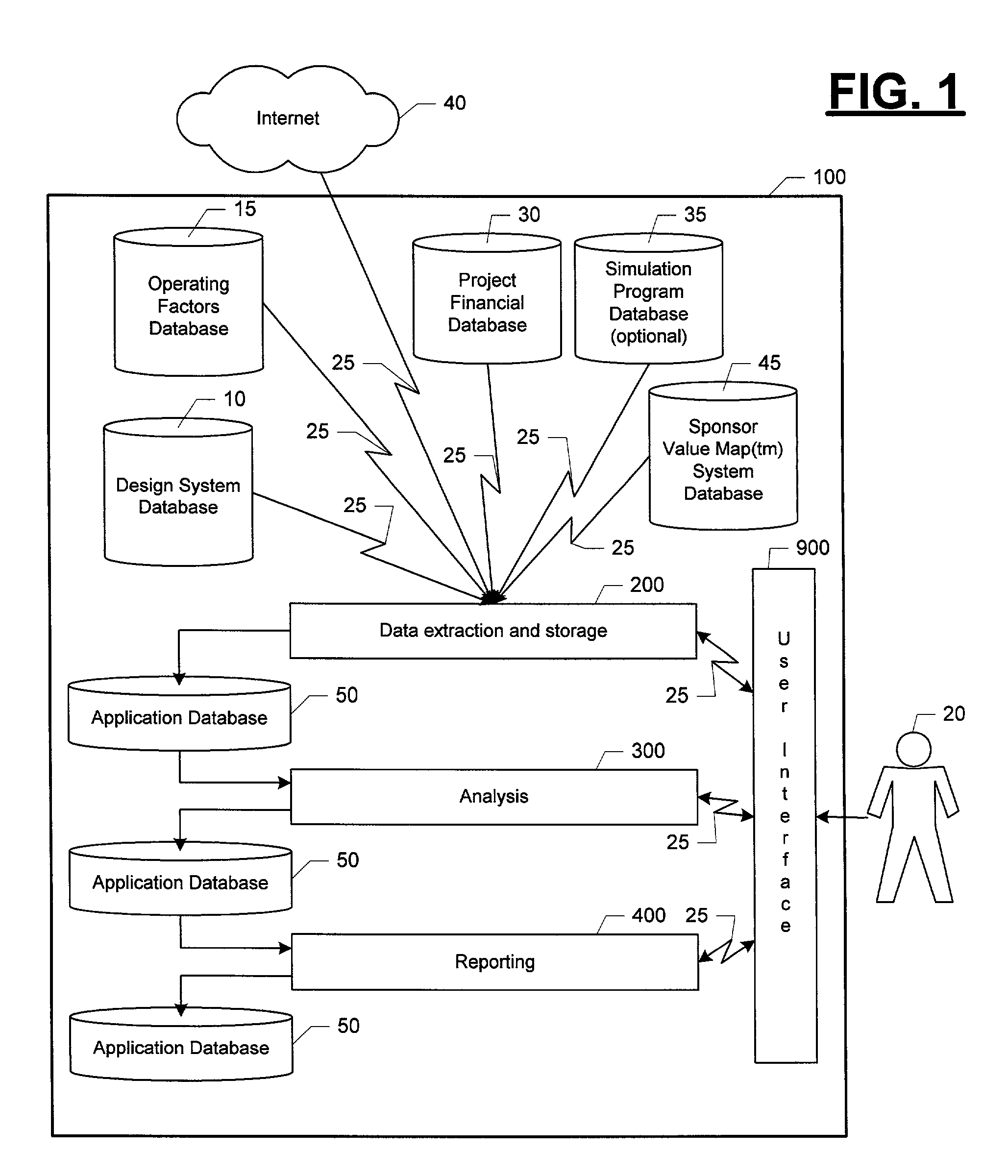
Figure 2 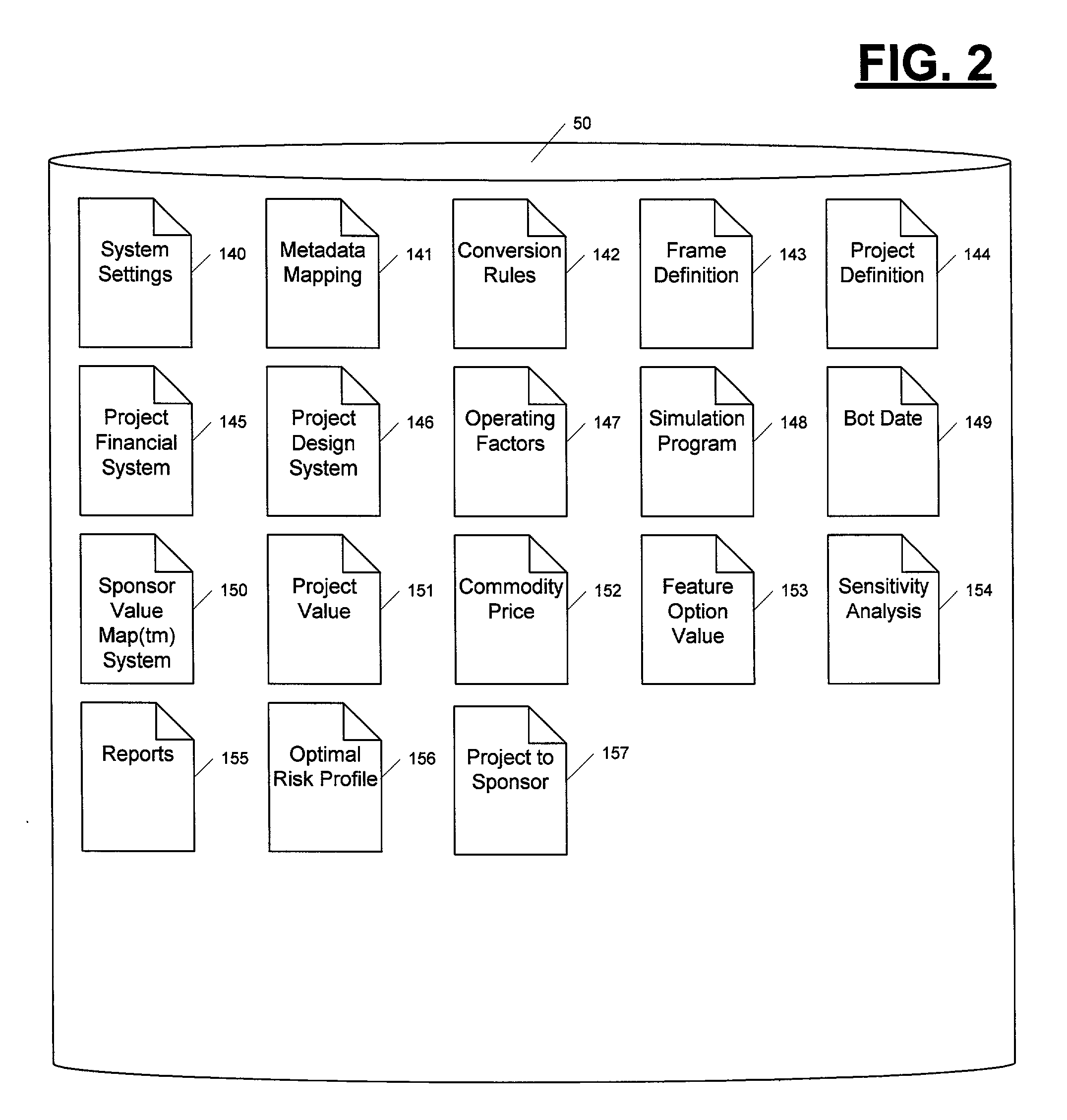
Figure 3
Abstract
Description
CROSS REFERENCE TO RELATED APPLICATIONS AND PATENTS
[0001] The subject matter of this application is related to the subject matter of application Ser. No. 09 / 994,720 filed Nov. 28, 2001, application Ser. No. 09 / 994,739 filed Nov. 28, 2001, application Ser. No. 09 / 931,422 filed Aug. 17, 2001, U.S. Pat. No. 5,615,109 for “Method of and System for Generating Feasible, Profit Maximizing Requisition Sets”, by Jeff S. Eder an U.S. Pat. No. 6,321,205 “Method of and System for Modeling and Analyzing Business Improvement Programs” by Jeff S. Eder, the disclosure of which is incorporated herein by reference. BACKGROUND OF THE INVENTION
[0002] This invention relates to a computer based method of and system for optimizing projects in a manner that maximizes expected returns while minimizing risk for the enterprise or multi-enterprise organization that sponsors the project.
[0003] All design projects have goals for profitability and expected financial return. Success in meeting these goals is a ...
Examples
Embodiment Construction
[0068]FIG. 1 provides an overview of the processing completed by the innovative system for project risk and return optimization. In accordance with the present invention, an automated method of and system (100) for project risk and return optimization is provided. Processing starts in this system (100) with a block of software (200) that extracts, aggregates and stores the data and user input required for completing the analysis. This information is extracted via a network (25) from a design system database (10), an operating factors database (15), a project financial system database (30), optionally, a simulation program database (35), the Internet (40) and a Sponsor Value Map® System database (45). These information extractions and aggregations are guided by a user (20) through interaction with a user-interface portion of the application software (900) that mediates the display and transmission of all information to the user (20) from the system (100) as well as the receipt of inf...