
Lubricant composition for automobile driving system
a technology for automobile driving and lubricant composition, which is applied in the direction of lubricant composition, base materials, additives, etc., can solve the problems of reducing the friction coefficient, facilitating wear, and reducing so as to reduce the viscosity of lubricant and maintain the durability of wear resistance
Patent Information
- Authority / Receiving Office
- US · United States
- Patent Type
- Applications(United States)
- Current Assignee / Owner
- Publication Date
- 2005-12-01
- Estimated Expiration
- Not applicable · inactive patent
Smart Images
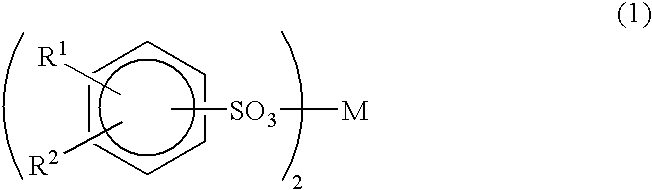
Figure 1 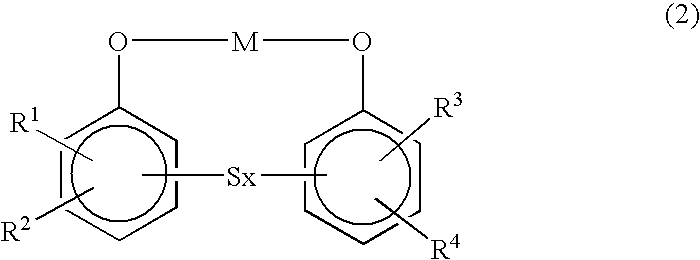
Figure 2 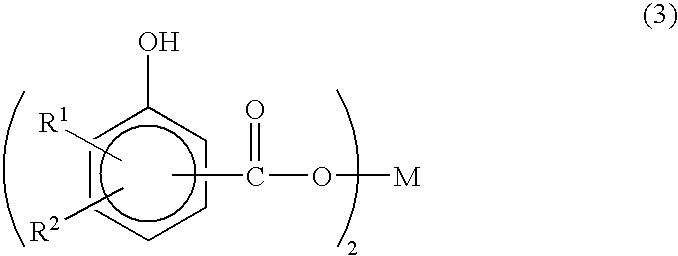
Figure 3
Abstract
Description
[0001] This application claims the benefit of Japanese Patent Application 2004-163106 filed Jun. 1, 2004 (Patent Applicants: Tonen General Sekiyu K.K. and Toyota Motor Corporation). FIELD OF THE INVENTION
[0002] The present invention pertains to a lubricant composition for an automobile driving system. More specifically, the present invention pertains to a lubricant composition for automobile gears, especially for a manual speed-change gear. BACKGROUND OF THE INVENTION
[0003] In recent years, as a measure for preventing global warming, various schemes for protecting the environment have been proposed. One said scheme calls for development of an environmentally friendly lubricant. An environmentally friendly lubricant for use in automobiles, is required to have an excellent effect in improving gas mileage to reduce the amount of carbon dioxide exhaust from internal combustion engines. In order to increase the mileage with the lubricant, two methods have been under study, that is, a m...
Examples
example 1
[0082] With said refined mineral oil as the base oil, magnesium sulfonate was added at a quantity corresponding to a content of elemental Mg in the oil of 0.15 wt %, and zinc dithiophosphate was added in a quantity corresponding to a content of elemental Zn in the oil of 0.1 wt %, with the ratio of the quantity of elemental Zn in the oil to the quantity of elemental Mg in the oil adjusted to 0.67. In addition, as other additives, the sulfur-phosphorus based (S—P) package was added in a quantity of 7.1 wt %, forming oil sample A with a 40° C. dynamic viscosity of 30 mm2 / s.
[0083] For oil sample A, the friction width measured using the aforementioned wear-resistance evaluation method was found to be 0.74 mm.
example 2
[0084] Oil sample B with a 40° C. dynamic viscosity of 30 mm2 / s was prepared in the same way as in Example 1, except that the magnesium sulfonate was added in a quantity corresponding to a quantity of elemental Mg in the oil of 0.3 wt %, and the zinc dithiophosphate was added in a quantity corresponding to a quantity of elemental Zn in the oil of 0.2 wt %, with the ratio of elemental Zn to elemental Mg in the oil being 0.67.
[0085] For oil sample B, the friction width measured using the aforementioned wear-resistance evaluation method was found to be 0.80 mm.
example 3
[0086] Oil sample C with a 40° C. dynamic viscosity of 30 mm2 / s was prepared in the same way as in Application Example 1, except that the magnesium sulfonate was added in a quantity corresponding to a quantity of elemental Mg in the oil of 0.3 wt %, and the zinc dithiophosphate was added in a quantity corresponding to a quantity of elemental Zn in the oil of 0.1 wt %, with the ratio of elemental Zn to elemental Mg in the oil being 0.33.
[0087] For oil sample C, the friction width measured using the aforementioned wear-resistance evaluation method was found to be 0.80 mm.