
Devices and methods for the rapid, reliable detection and determiniation of acrylamide concentration in food substances and prevention of acrylamide formation in the same
a technology of acrylamide and food substances, which is applied in the field of devices and methods for the rapid, reliable detection and determination of acrylamide concentration in food substances and the prevention of acrylamide formation in the same, can solve the problems of inability to adapt no prior art exists, and food matrices are not suited to the new method, etc., to reduce the concentration of reducing sugar, reduce the concentration of acrylamide, and eliminate or greatly reduce acrylamides
Patent Information
- Authority / Receiving Office
- US · United States
- Patent Type
- Applications(United States)
- Current Assignee / Owner
- Publication Date
- 2006-02-09
Smart Images
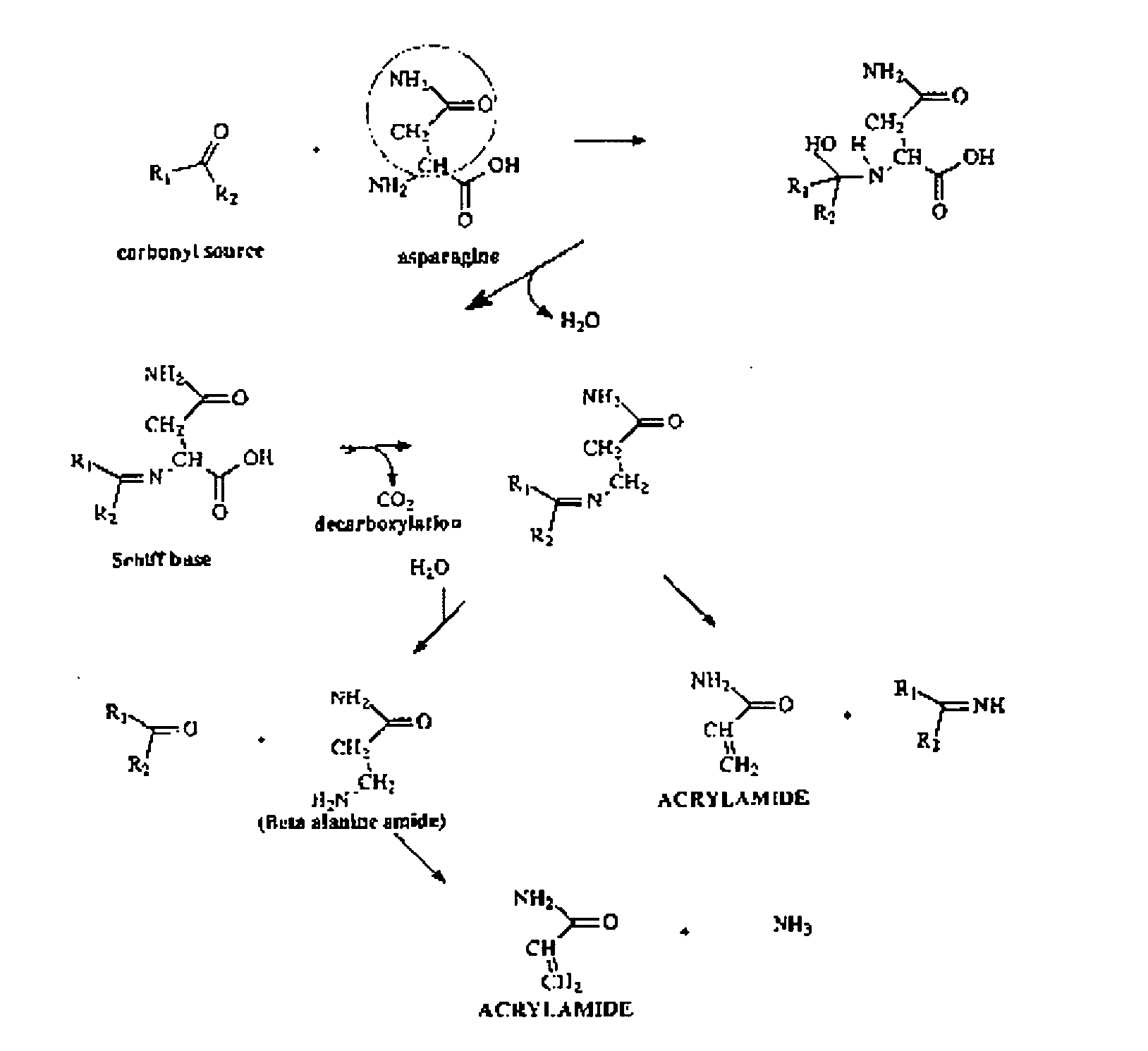
Figure 1
Abstract
Description
BACKGROUND
[0001] 1. Field of the Invention
[0002] The field of the present invention relates to a device and associated analytical method that can be used for the sensitive detection and accurate, rapid determination of acrylamide in food substances. More specifically, the present invention also relates to the use of a kit device and associated analytical method in which a user can quickly and easily ascertain the amount of acrylamide in food substances and in any location, including a non-laboratory environment. Additionally, the invention also relates to the use of lower temperatures, removal of glucose or other related reducing sugars and / or potential food additives that would block or prevent the formation of acrylamides during food processing including baking, frying, etc.
[0003] Such a detection device and method may be comprised of a sample collection area on which a sample of food, after being mixed in a solution, is placed for example on the substrate of a biochip that inc...
Examples
Embodiment Construction
[0050] The description below is an example of how the concentration of acrylamide in a food substance could be measured calorimetrically using an aliphatic amidase, AmiE that can convert the acrylamide into ammonia or other nitrogen containing compounds. Similar techniques are also anticipated by this invention using other enzymes or techniques that may convert or degrade the acrylamide present in food into other chemical fragments that are easily and readily detectable by one of several techniques including calorimetric, pH change, temperature change, etc. Techniques where acrylamides may not have to be converted into other chemical fragments to be detected are also anticipated by this invention.
[0051] The gene for the aliphatic amidase, AmiE, from H. pylori is amplified by PCR and cloned into pUC19. Genes from P. aeruginosa, Rhodococcus sp. R312 or B. stearothermophilus encoding other short-chain amidases would work equally as well. The resultant plasmid is used to transform E. c...