
Indirect detection of cardiac markers for assessing acute myocardial infarction
a cardiac marker and infarction technology, applied in the field of diagnostic immunoassays, can solve the problems of high percentage of patients who present with chest pain, insufficient sensitivity of traditional diagnostic regiments, and added injury to the individual, and malpractice actions taken against the institution
Patent Information
- Authority / Receiving Office
- US · United States
- Patent Type
- Applications(United States)
- Current Assignee / Owner
- Publication Date
- 2006-02-23
- Estimated Expiration
- Not applicable · inactive patent
Smart Images
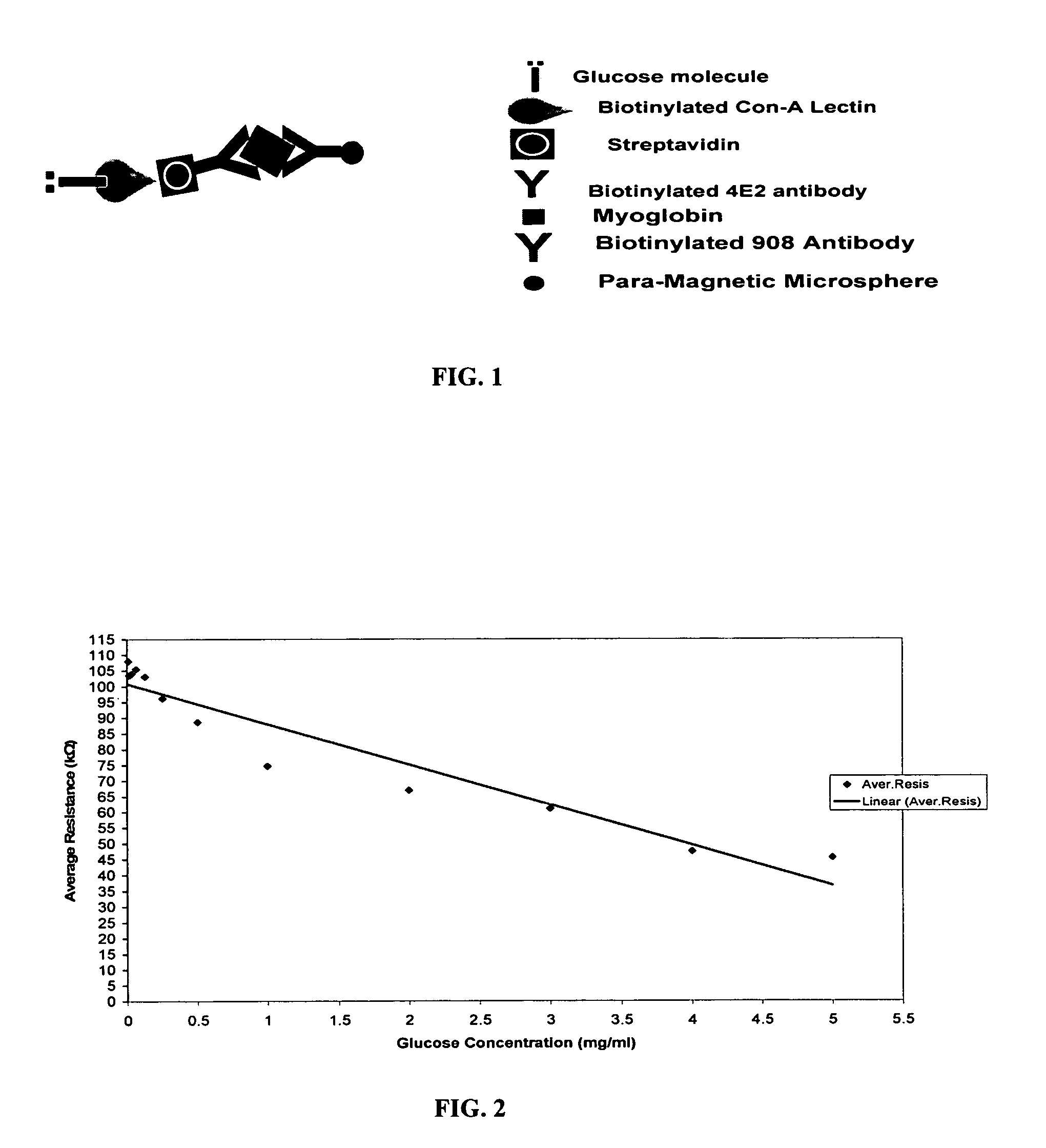
Figure 1 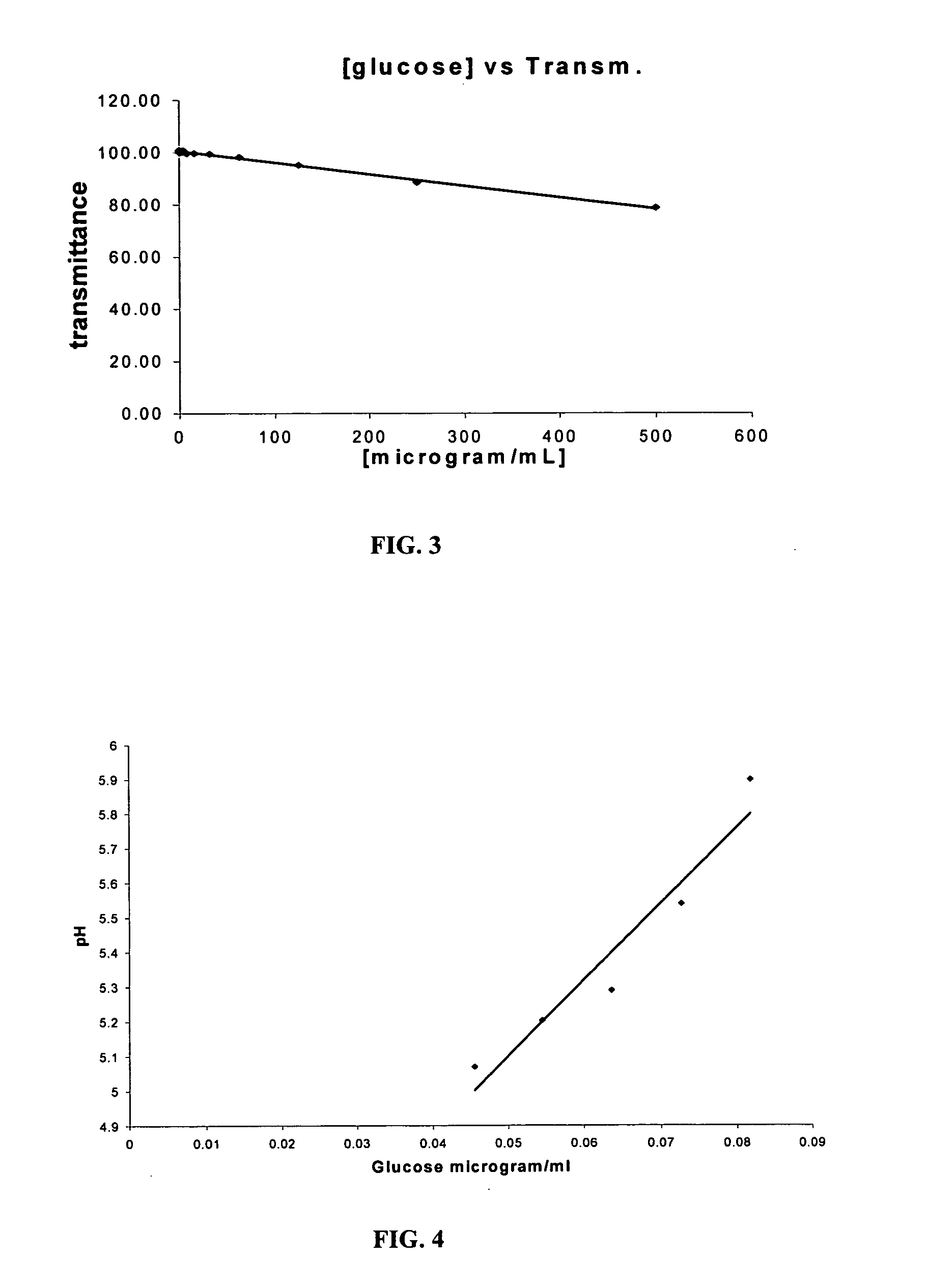
Figure 2 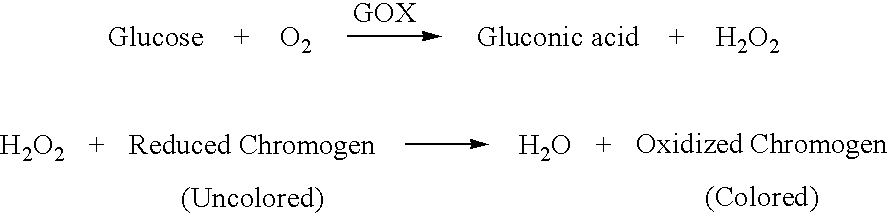
Figure 3
Abstract
Description
CROSS-REFERENCE TO RELATED APPLICATIONS
[0001] This application claims the benefit of U.S. Provisional Application No. 60 / 602,420, filed Aug. 18, 2004. The application is incorporated herein by reference in its entirety.BACKGROUND OF THE INVENTION
[0002] This invention relates generally to diagnostic immunoassays for medical applications, and more particularly to methods for rapidly determining whether a person has suffered an acute myocardial infarction.
[0003] Acute Myocardial Infarction (AMI), commonly referred to as a heart attack, is a disorder in which a region of the heart muscle is damaged due to an inadequate supply of oxygen thereto. For instance, a clot in a coronary artery that blocks the supply of oxygen to the particular region of the heart and results in death or damage to the cells in this region can cause an AMI. Typically, the AMI occurs as a result of a coronary artery that has been narrowed due to the effects of arteriosclerosis. The damaged tissue causes a perma...
Examples
example 1
Magnetic Immunoassay for Myoglobin
[0049] Materials Preparation
[0050] Magnetic microspheres (MMS) were produced using protocols that were established by Haik, et al., J. Magnetism &Magnetic Materials 194:254-61 (1999); Chatterjee et al., J. Magnetism &Magnetic Materials 257:113-18 (2003). The MMS were coated with albumin and coupled with avidin to conjugate the anti-myoglobin antibody. The synthesis of the magnetic microspheres was accomplished according to a published protocol (Chatterjee et al., J. Magnetism &Magnetic Materials 257:113-18 (2003)) in three major steps: coprecipitation of ferrous chloride and ferric chloride by sodium hydroxide, material heating and sonication, and material peptization with nitric acid. Both ferrous and ferric chloride were dissolved in a 1:2 molar ratio in distilled water. The solution then was mixed immediately with a highly concentrated sodium hydroxide, stirred continuously, heated to 90° C., and sonicated to produce ultra fine magnetic particl...