
Electrically conductive paste and multilayer ceramic substrate
Patent Information
- Authority / Receiving Office
- US · United States
- Current Assignee / Owner
- Publication Date
- 2007-04-12
Smart Images
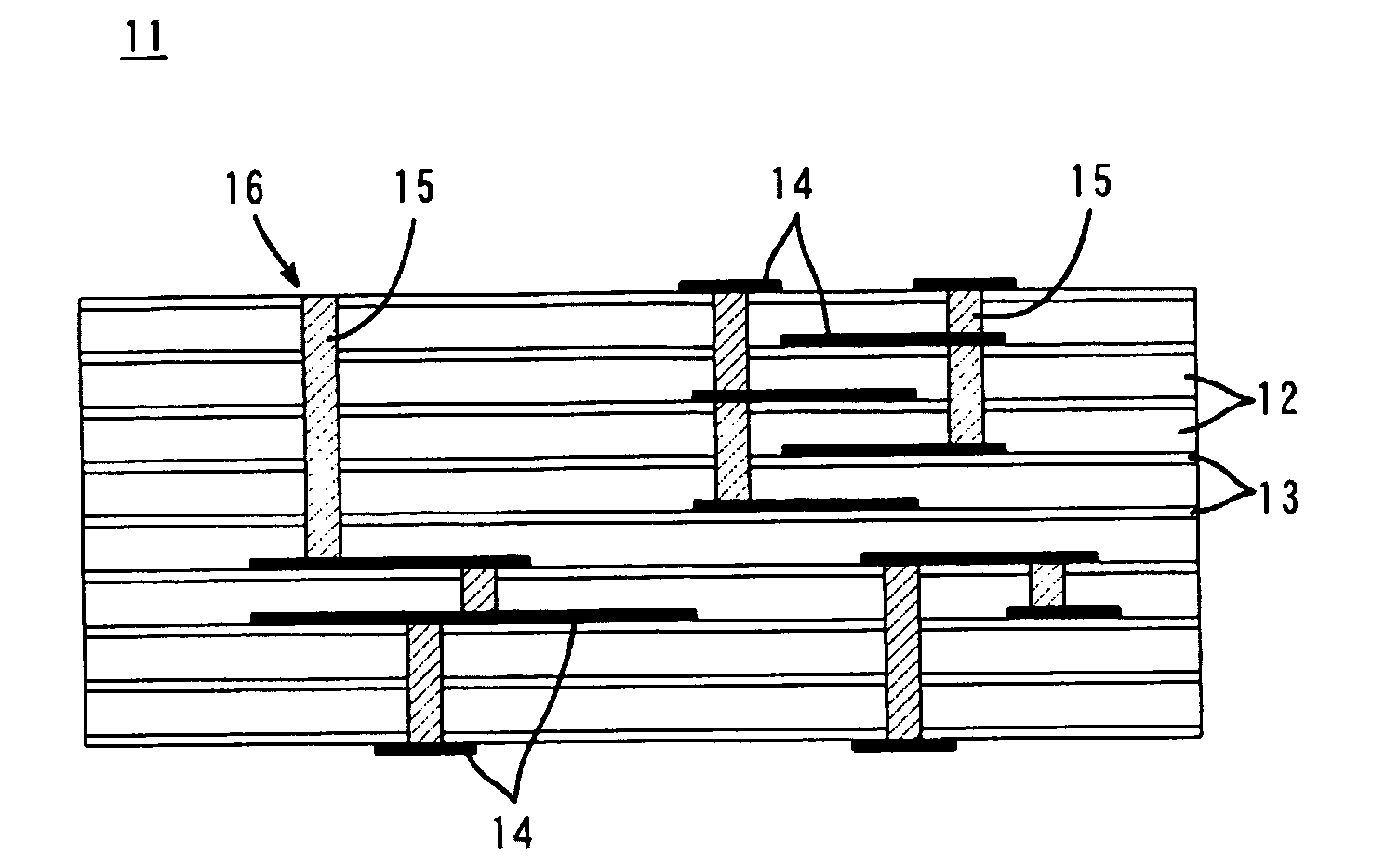
Figure 1 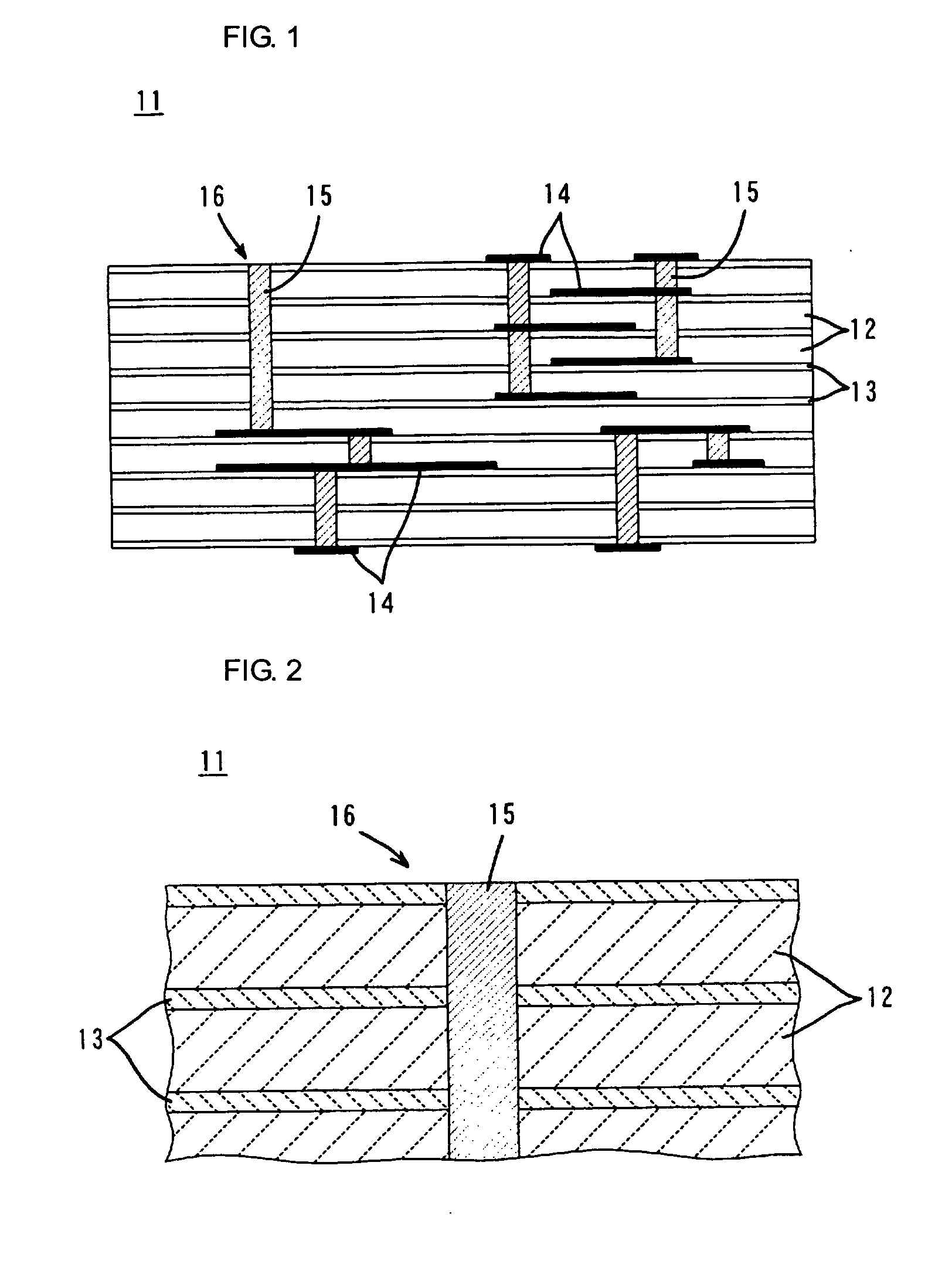
Figure 2 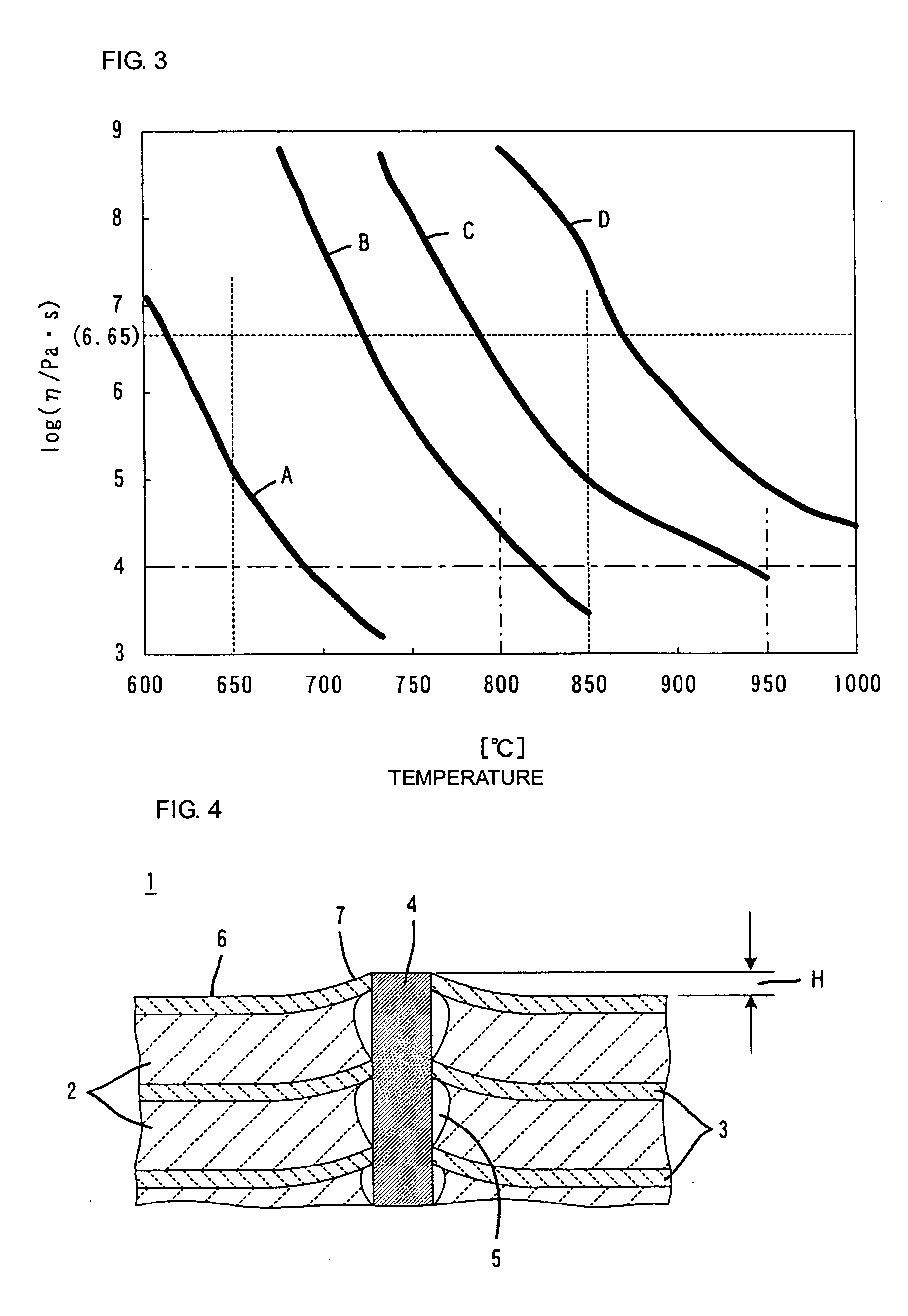
Figure 3
Abstract
Description
TECHNICAL FIELD
[0001] The present invention relates to an electrically conductive paste used for forming wiring conductors disposed in a multilayer ceramic substrate, as well as the multilayer ceramic substrate. In particular, it relates to an electrically conductive paste to be co-fired in a firing step for sintering ceramic layers in the manufacture of a multilayer ceramic substrate, as well as the multilayer ceramic substrate provided with the wiring conductors formed by using the electrically conductive paste. BACKGROUND ART
[0002] An electrically conductive paste contains at least a metal powder and an organic vehicle. The electrically conductive paste has been widely used in the field of electronic components, since a conductor with a desired pattern or in a desired form can easily be formed by applying printing or the like to the electrically conductive paste. More specifically, the electrically conductive paste has been widely used for forming wiring conductors, such as con...
Examples
example 1
[0090] An electrically conductive paste composed of 82.0 percent by weight of alumina-coated copper powder, 4.5 percent by weight of glass frit composed of the glass B, and 13.5 percent by weight of organic vehicle was produced.
example 2
[0091] An electrically conductive paste composed of 82.0 percent by weight of alumina-coated copper powder, 4.5 percent by weight of glass frit composed of the glass C, and 13.5 percent by weight of organic vehicle was produced.
example 3
[0092] An electrically conductive paste composed of 76.0 percent by weight of alumina-coated copper powder, 4.0 percent by weight of glass frit composed of the glass C, 3.0 percent by weight of polypropylene powder, and 17.0 percent by weight of organic vehicle was produced.