
Method and apparatus for providing integrated symmetric and asymmetric network capacity on an optical network
a technology of optical network and network capacity, applied in the field of communication networks, can solve the problems of changing traffic patterns, subscribers now generally consuming more bandwidth than they are generating, and there has not been a clear plan for how existing ring-topology networks may be adapted, so as to selectively increase the capacity of the network
Patent Information
- Authority / Receiving Office
- US · United States
- Patent Type
- Applications(United States)
- Current Assignee / Owner
- Publication Date
- 2008-02-14
Smart Images
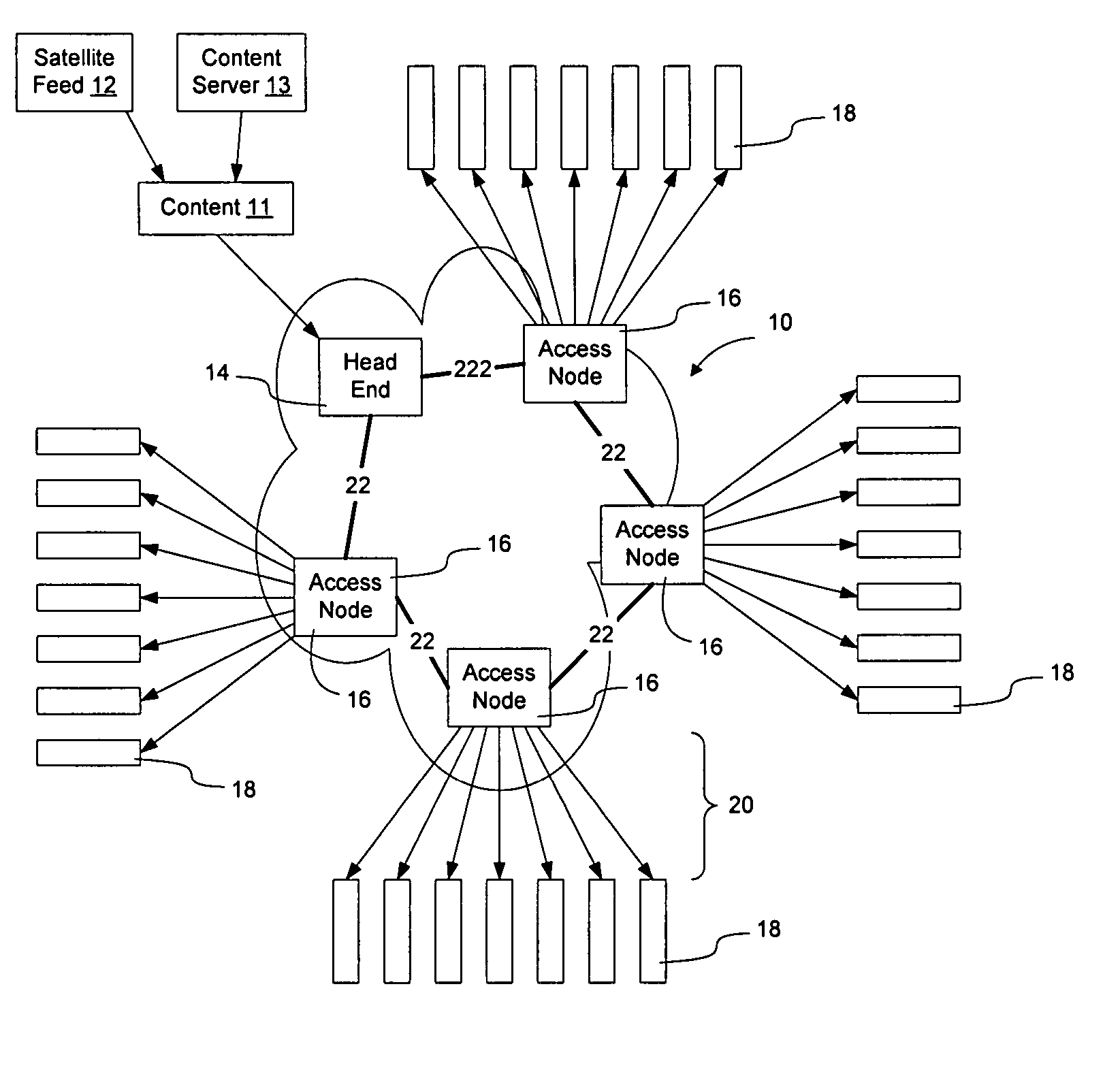
Figure 1 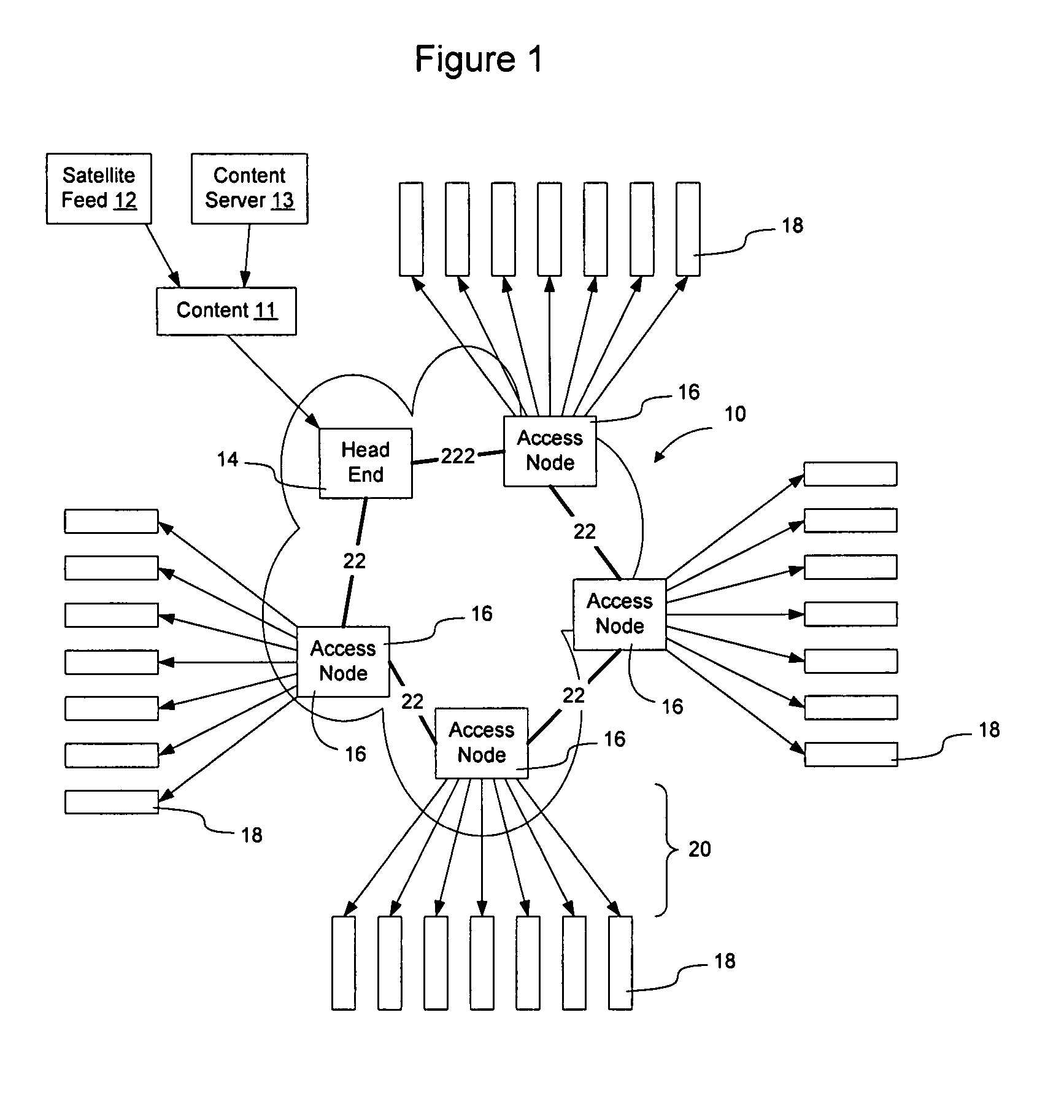
Figure 2 
Figure 3
Abstract
Description
CROSS-REFERENCE TO RELATED APPLICATION
[0001] This application claims priority to U.S. Provisional Application No. 60 / 673,852, filed Apr. 22, 2005, entitled Dedicated Downstream Shared Upstream Protected Rings, the content of which is hereby incorporated herein by reference.BACKGROUND
[0002] 1. Field
[0003] This application relates to communication networks and, more particularly, to a method and apparatus for providing integrated symmetric and asymmetric network capacity on an optical network.
[0004] 2. Description of the Related Art
[0005] Data communication networks may include various computers, servers, hubs, switches, nodes, routers, proxies, and other devices coupled to and configured to pass data to one another. These devices will be referred to herein as “network elements”. Data is communicated through the data communication network by passing protocol data units, such as frames, packets, cells, or segments, between the network elements by utilizing one or more communicatio...
Examples
Embodiment Construction
[0031] The following detailed description sets forth numerous specific details to provide a thorough understanding of the invention. However, those skilled in the art will appreciate that the invention may be practiced without these specific details. In other instances, well-known methods, procedures, components, protocols, algorithms, and circuits have not been described in detail so as not to obscure the invention.
[0032]FIG. 1 illustrates an example of a network 10 in which content 11, such as video on demand content available via a satellite feed 12 or from a content server 13, is transported from a head-end node 14 to access nodes 16 and then out to subscribers 18. A distribution network 20 from the access nodes 16 to the subscribers 18 may be formed using optical fibers, copper wires, wireless links, or any other desired physical medium. The invention is not limited to a particular technology used to implement the links on the access network 20 interconnecting the subscribers ...