
Method, system and computer program product for providing high speed fault tracing within a blade center system
a blade center system and fault tracing technology, applied in the field of data processing systems, can solve problems such as difficult access to the fabric for troubleshooting problems, blade center systems providing no method to directly monitor the switching fabric, and storage systems may experience problems or malfunctions. , to achieve the effect of doubling the number of snoop ports
Patent Information
- Authority / Receiving Office
- US · United States
- Patent Type
- Applications(United States)
- Current Assignee / Owner
- Publication Date
- 2008-10-30
- Estimated Expiration
- Not applicable · inactive patent
Smart Images
Figure 1 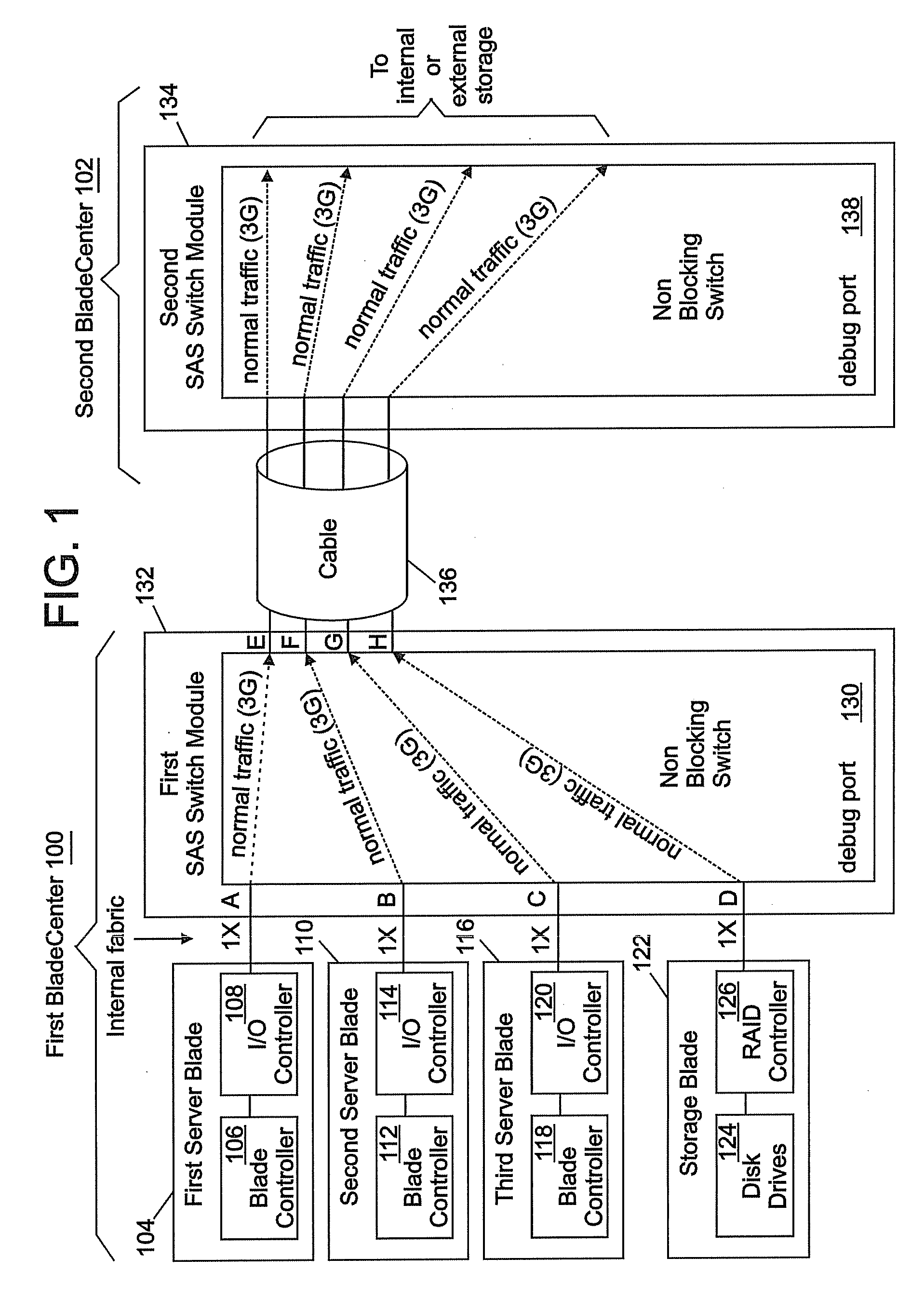
Figure 2 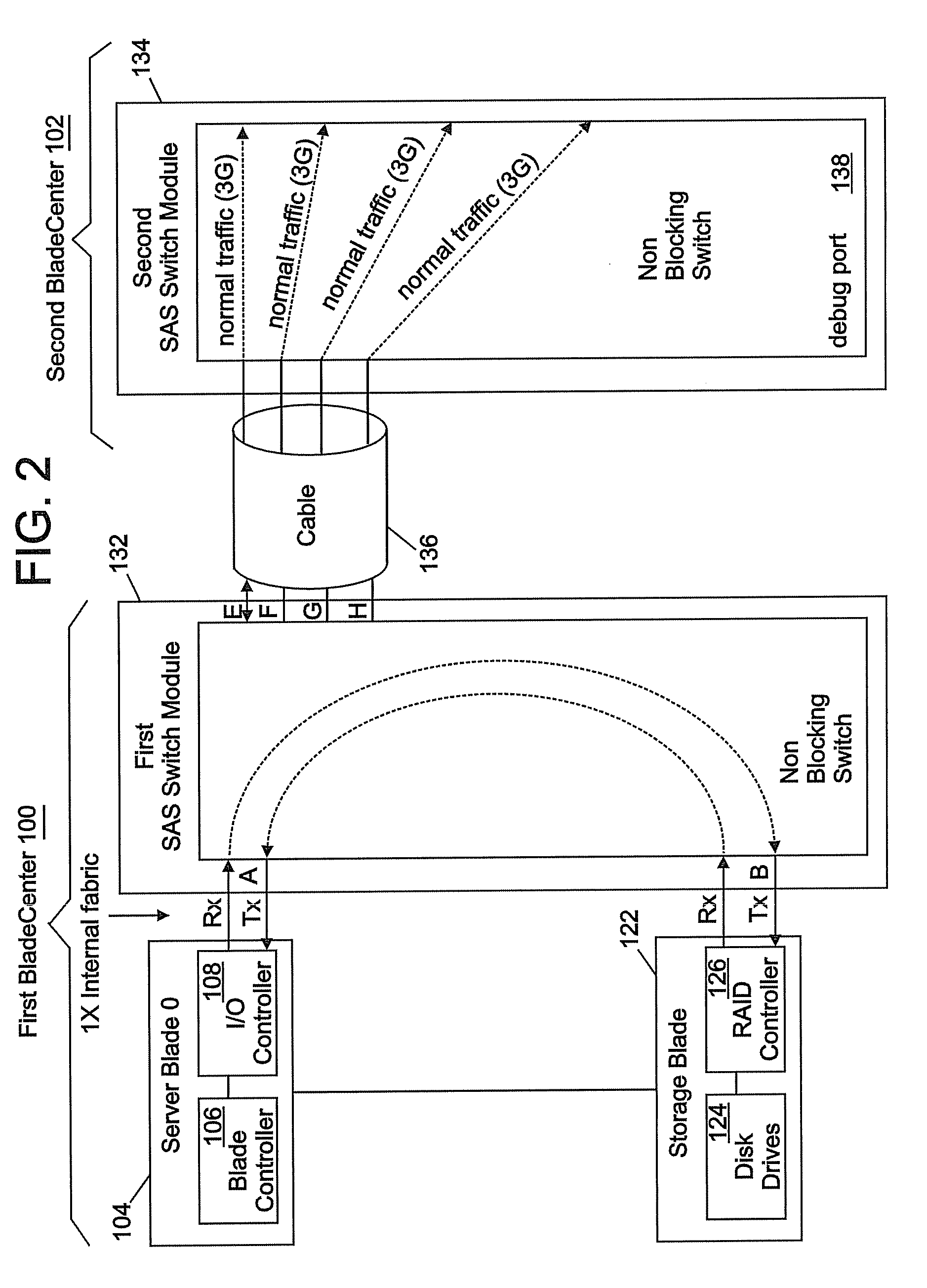
Figure 3
Abstract
Description
TRADEMARKS
[0001] IBM® is a registered trademark of International Business Machines Corporation, Armonk, N.Y., U.S.A. Other names used herein may be registered trademarks, trademarks or product names of International Business Machines Corporation or other companies.BACKGROUND OF THE INVENTION
[0002] 1. Field of the Invention
[0003] The present invention relates generally to data processing systems and, more specifically, to a method, system, and computer program product for providing high speed fault tracing within a blade center system.
[0004] 2. Description of Background
[0005] A blade center is a server chassis housing multiple thin, modular electronic circuit boards known as server blades. Each server blade is a server containing a processor, memory, integrated network controllers, and input / output (I / O) ports. Blade centers allow more processing power in less rack space, simplifying cabling and reducing power consumption. Each blade typically includes one or two local Advanced Technology...
Examples
Embodiment Construction
[0021]Recent advances in high speed switch technology provide the ability to selectively and redundantly mirror high speed traffic to other ports on the same switch. This feature is also known as “snooping”, in the sense that high speed traffic in progress between two switch ports can be “snooped” or monitored and then directed to yet another port on a switch dedicated for snooping. There are two storage configurations to consider for snooping: FIG. 1 illustrates a related art blade center system utilizing external storage, whereas FIG. 2 illustrates a related art blade center system utilizing internal storage. However, it should be understood that some blade center systems may utilize a combination of internal as well as external storage.
[0022]Referring to FIG. 1, a blade center system includes a first blade center 100 and a second blade center 102. First blade center 100 includes a first serial-attached SCSI (SAS) switch module 132 operatively coupled to a plurality of server blad...