
Multiocular Intraocular Lens System
a multi-ocular, intraocular technology, applied in the field of intraocular lenses, can solve the problems of degrading or completely destroying the ability of the eye to function properly, bifocal intraocular lenses, and only about 40% of the available light in bifocal images, and achieve the effect of increasing the amplitude or diopter of accommodation
Patent Information
- Authority / Receiving Office
- US · United States
- Current Assignee / Owner
- Publication Date
- 2010-01-07
- Estimated Expiration
- Not applicable · inactive patent
Smart Images
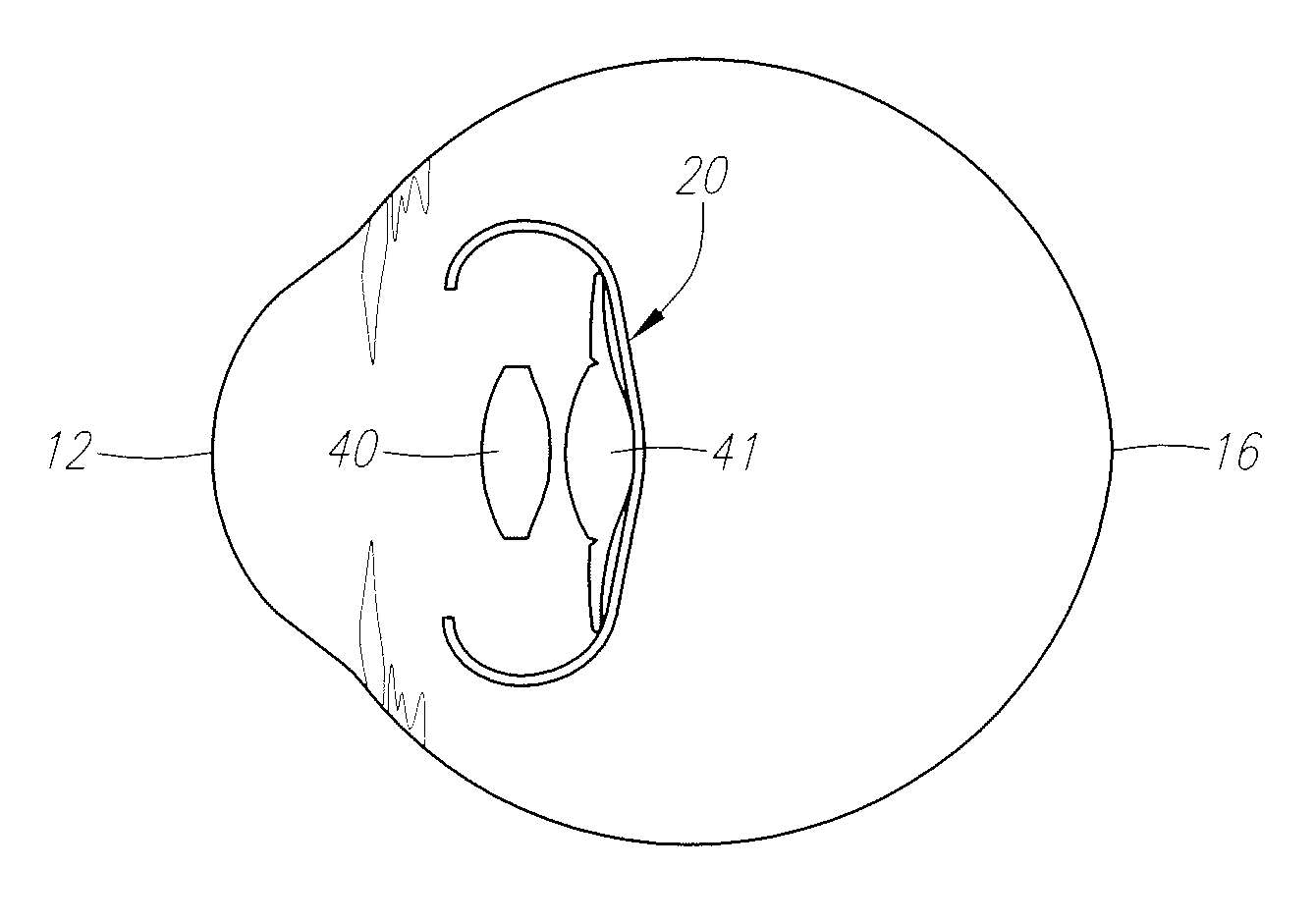
Figure 1 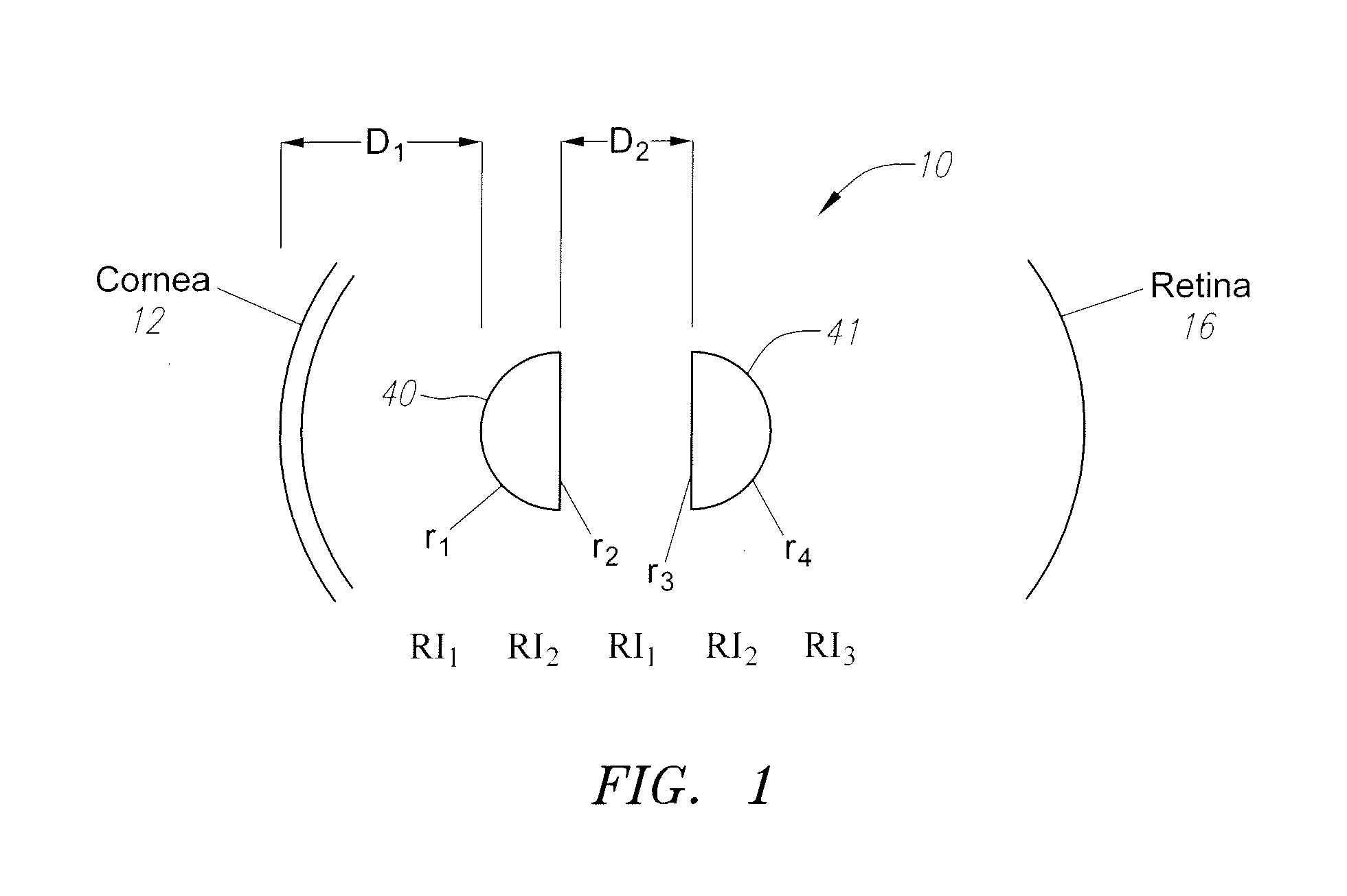
Figure 2 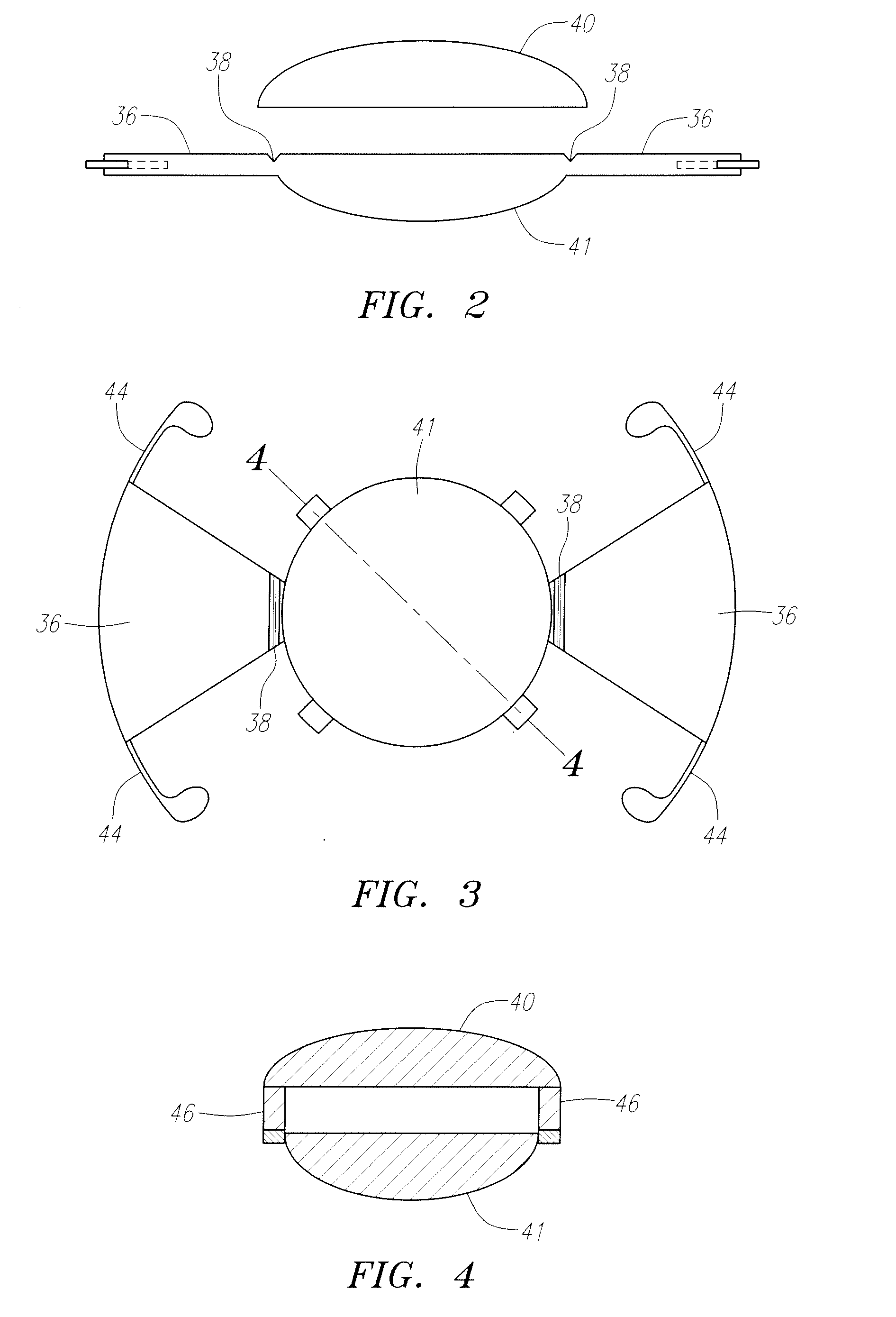
Figure 3
Abstract
Description
BACKGROUND OF THE INVENTION
[0001] This application claims the benefit of U.S. Provisional Application No. 60 / 822,475 filed Aug. 15, 2006, which applications are incorporated herein by reference, and is a continuation-in-part of application Ser. No. 11 / 623,655.
[0002] This invention relates generally to intraocular lenses to be implanted within the human eye formed by evacuation of the crystalline matrix from the natural lens of the eye through an anterior capsulotomy in the lens. The invention relates more particularly to novel accommodating intraocular lenses of this kind having a number of improved features including, most importantly, increased depth of focus.
[0003] The human eye has an anterior chamber between the cornea and iris, a posterior chamber behind the iris containing a crystalline lens, a vitreous chamber behind the lens containing vitreous humor, and a retina at the rear of the vitreous chamber. The crystalline lens of a normal human eye has a lens capsule attached about ...
Examples
Embodiment Construction
[0035]The lens system comprises two optics fused together, one in front of the other, as will be further explained beginning with FIG. 1 below. T-shaped extended portions or plate haptics 36 extend from diametrically opposite edges of the optic. These haptics include haptic members or plates 36 proper having inner ends joined one or other of the optics and opposite outer free ends and lateral fixation fingers at their outer ends. The haptic plates 36 may be longitudinally tapered so as to narrow or widen in width toward their ends or may be wider in their periphery and narrower adjacent to the optic. The optical system 34 is movable anteriorly and posteriorly relative to the haptics 36. The preferred lens embodiment illustrated is constructed of a resilient semi-rigid material and has flexible hinges 38 which join the inner ends of the haptic plates 36 to one of the optics. The haptics are relatively rigid and are flexible about the hinges anteriorly and posteriorly relative to the ...