
Thermal module for light-emitting diode
Patent Information
- Authority / Receiving Office
- US · United States
- Current Assignee / Owner
- Publication Date
- 2010-01-21
Smart Images
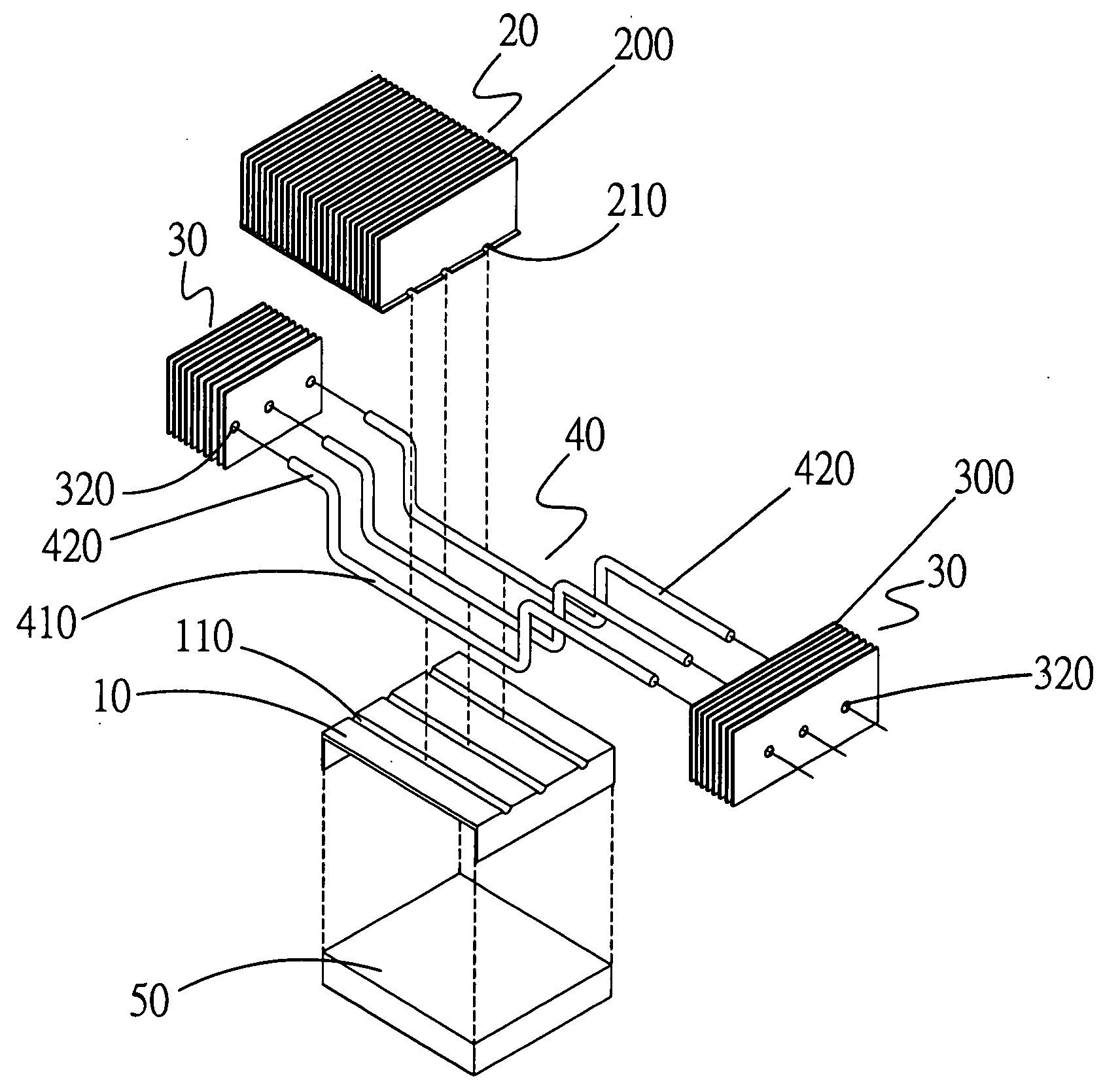
Figure 1 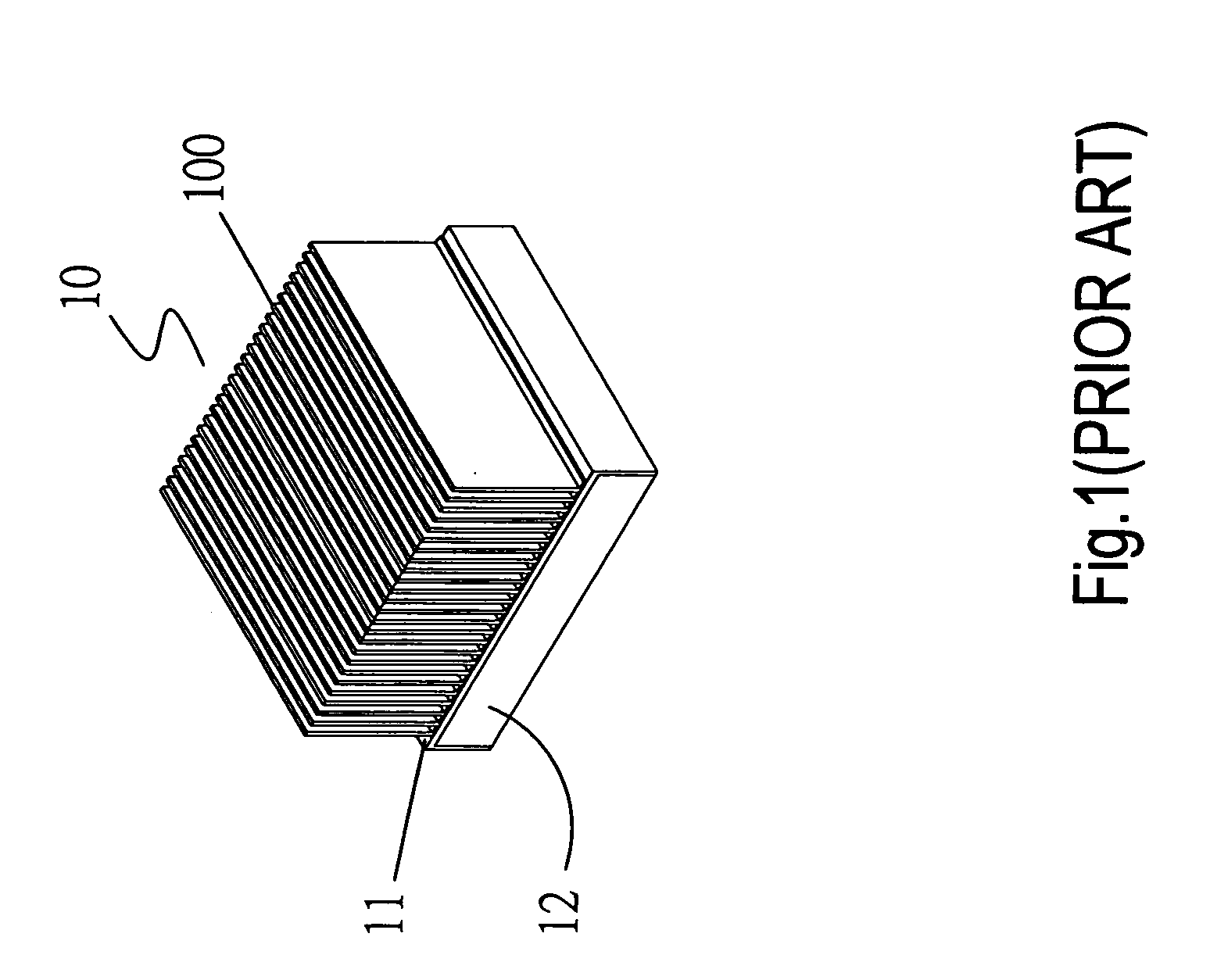
Figure 2 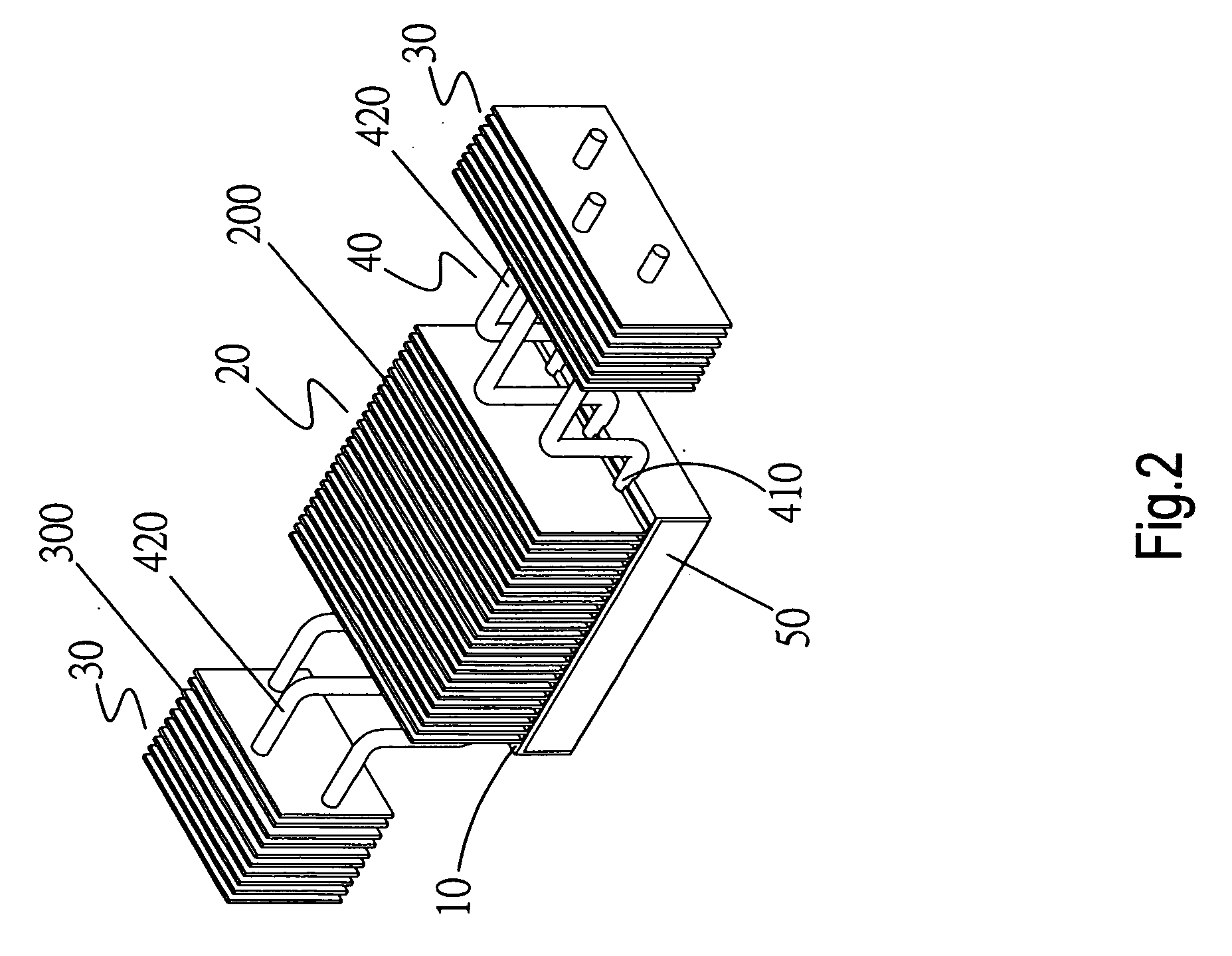
Figure 3
Abstract
Description
FIELD OF THE INVENTION
[0001] The present invention relates to a thermal module, and more particularly, to a thermal module for light-emitting diode.BACKGROUND OF THE INVENTION
[0002] Techniques for manufacturing highly bright light-emitting diodes (LEDs) and white LED shave become matured, allowing the LEDs to be widely applied to desk lamps, projector lamps, street lamps, etc. Now, LED lamps tend to gradually replace the incandescent lamps with tungsten filament and become a major light source for indoor illumination.
[0003] In the traditional incandescent lamp, a large current is supplied to flow through the tungsten filament, so that the tungsten filament is heated to glow and emit light. Unlike the conventional tungsten filament lamp, the LED is a semiconductor element. When the electrons and holes in the semiconductor material of the LED join one another to release energy, light is emitted. Therefore, only a very low current is needed to excite the LED to emit very bright light.[000...
Examples
Embodiment Construction
[0017]Please refer to FIGS. 2 and 3 that are assembled and exploded perspective views, respectively, of a thermal module for LED according to a preferred embodiment of the present invention, and to FIG. 4 that is an enlarged fragmentary front view of the present invention. As shown, the thermal module for LED according to the preferred embodiment of the present invention includes a base 10, a first radiating fin assembly 20, at least one second radiating fin assembly 30, and at least one heat pipe 40. An LED module 50 is in direct contact with one of two opposite sides of the base 10. In the illustrated embodiment, there are provided two second radiating fin assemblies 30. Each of the second radiating fin assemblies 30 consists of a plurality of parallelly arranged radiating fins 300 with a space d1 existing between any two adjacent radiating fins 300 to provide an air passage 310. Heat-carrying airflows (not shown) can smoothly and quickly flow through the air passages 310. With th...