
Conditional Mst Overexpressing Construct and Conditional Myostatin Overexpressing Transgenic Mouse
a transgenic mouse and construct technology, applied in the field of molecular genetics, can solve the problems of in vivo regulation of skeletal muscle homeostasis and its pathology, inability to fully integrate, and wasting muscle, and achieve the effects of increasing mst expression, reducing muscle mass, and reducing muscle strength
Patent Information
- Authority / Receiving Office
- US · United States
- Current Assignee / Owner
- Publication Date
- 2010-07-01
Smart Images
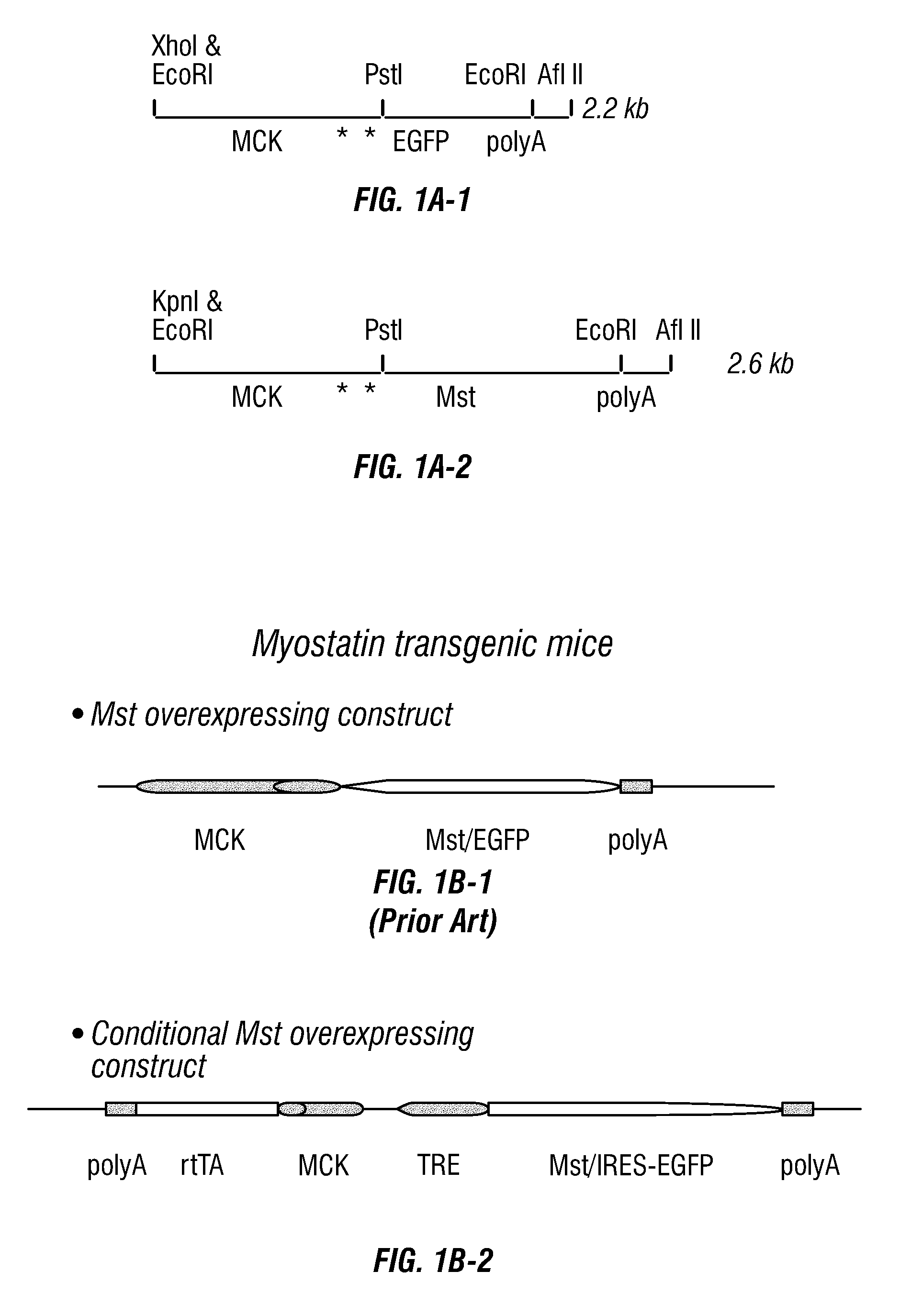
Figure 1 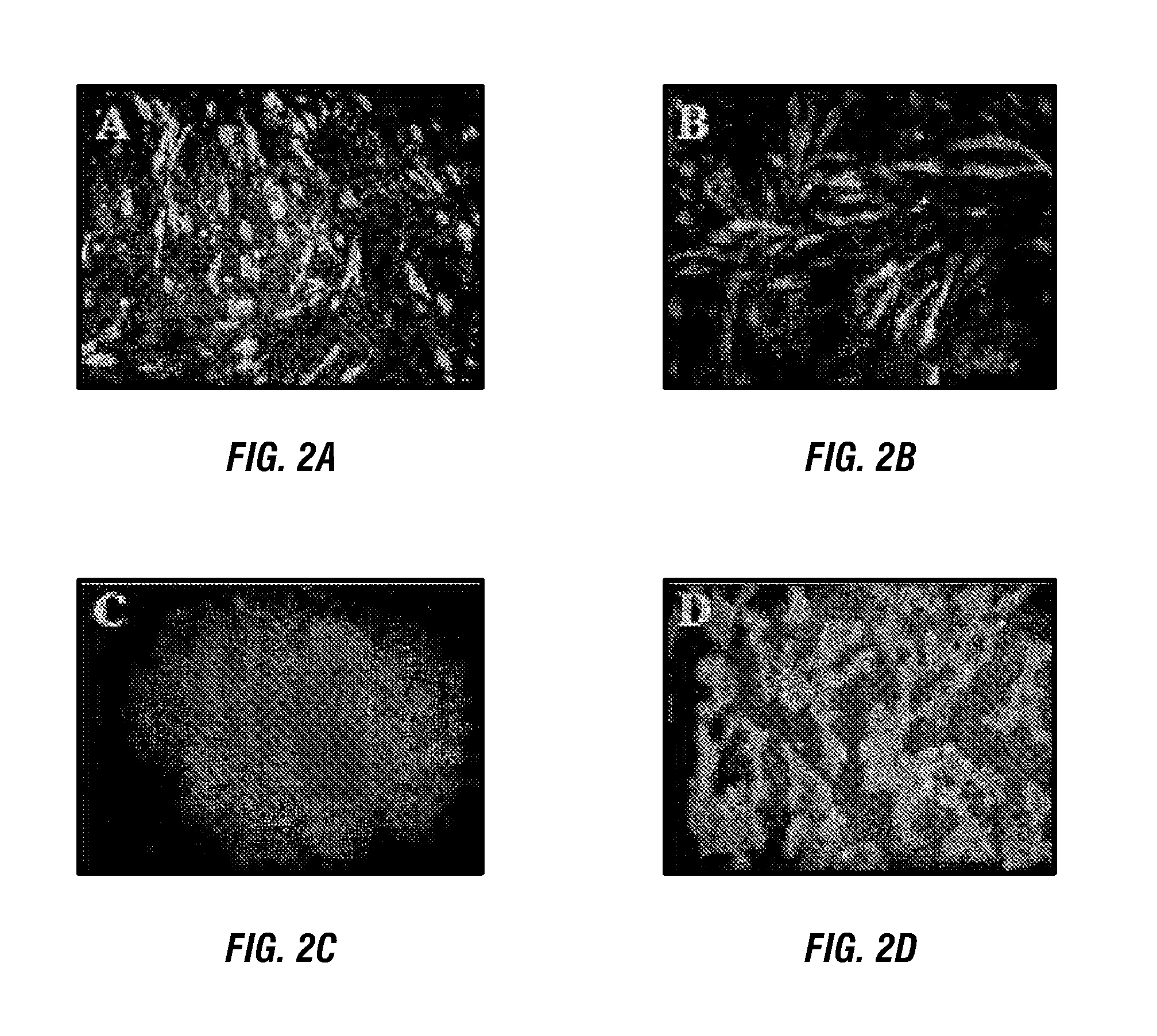
Figure 2 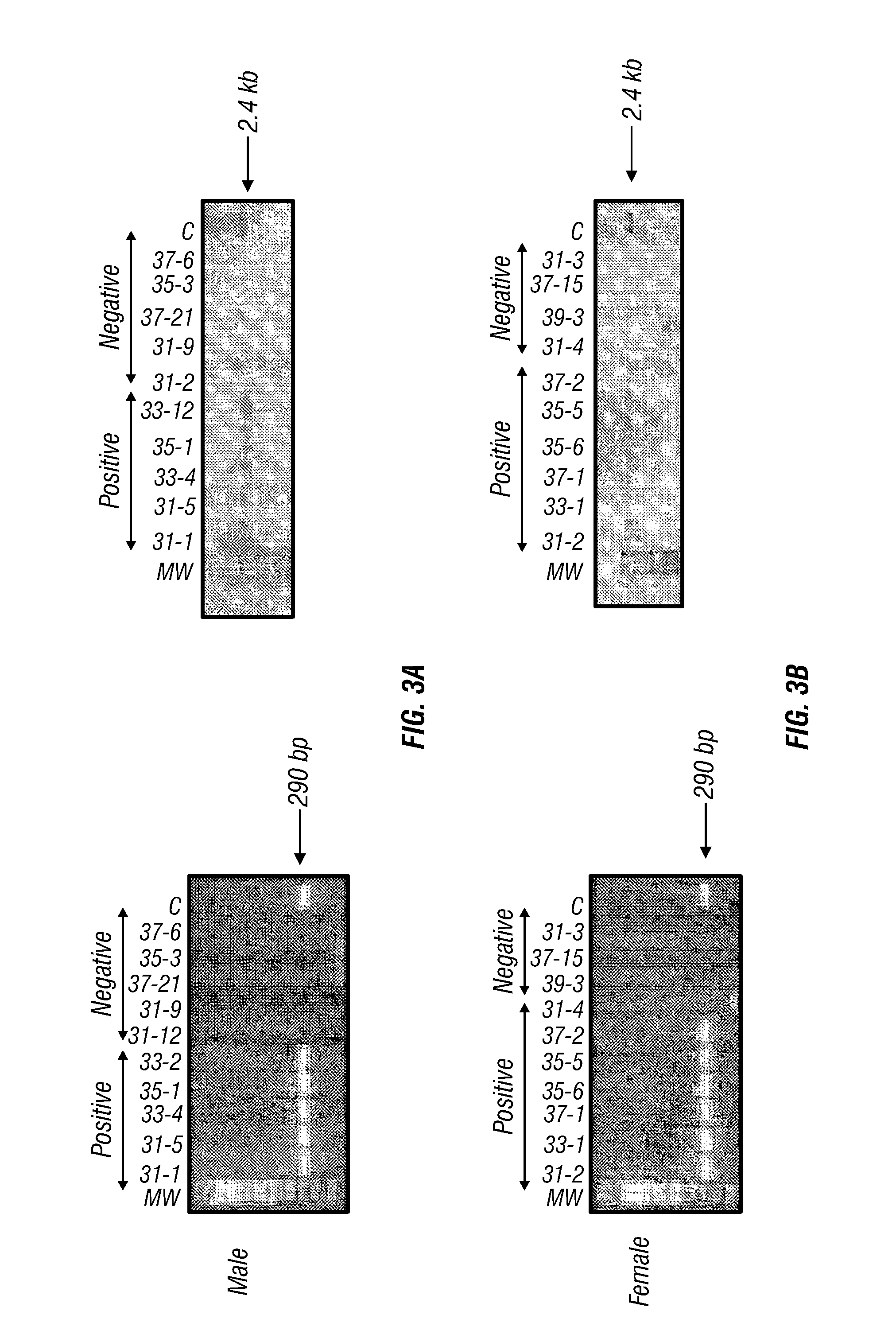
Figure 3
Abstract
Description
CROSS-REFERENCE TO RELATED APPLICATIONS
[0001] This application claims priority under 35 U.S.C. §119(e) from U.S. Provisional Application Ser. No. 61 / 034,083 filed Mar. 5, 2008, the contents of which are hereby incorporated by reference in their entirety.GOVERNMENT SUPPORT
[0002] This work was made possible, in part, with support from the United States government, NIH / MBRS Score Program Grant: S06 GM 0685510-01 and NIH / NIASMD grant 1R21AR0541010-01A2. The government of the United States Government may have certain rights in this invention.FIELD OF THE INVENTION
[0003] The instant invention relates to the field of molecular genetics, in particular to the generation of transgenic mice, and most particularly to the generation of conditional transgenic mice which allows for the study of myostatin gene expression at different stages of development.BACKGROUND OF THE INVENTIONMyostatin—a Member of the (TGF)-β Superfamily
[0004] Myostatin (Mst), a member of the transforming growth factor (TGF)-β su...
Examples
embodiment 6
7. A conditional monocistronic construct of embodiment 6 where the response construct lacks a HA tag on Mst sequence.
8 A conditional bicistronic myostatin expression construct comprising a construct of any of claims 1-4 lacking an IRES / EGFP sequence downstream of Mst sequence.
embodiment 8
9. A conditional monocistronic construct of embodiment 8 where the response construct has no IRES / EGFP sequence.
10. A conditional bicistronic myostatin expression construct comprising a construct of any of embodiments 1-4 lacking BFP fusion to the rtTA sequence.
embodiment 10
11. A conditional monocistronic construct of embodiment 10 wherein the regulatory construct lacks a BFP fusion at the 3′ end of the rtTA sequence.
12. A construct of any of embodiments 1-11 wherein said construct comprises a plasmid.
13. A method of producing a transgenic non-human animal comprising introducing the construct of any of embodiments 1-11 into a non-human animal.
14. A transgenic non-human animal for conditionally overexpressing Mst comprising cells comprising a construct of any of embodiments 1-11.
15. A transgenic non-human animal produced by: (a) crossing a first transgenic non-human animal comprising a first (regulatory) construct that expresses rtTA operably linked to promoter MCK or MCK-3E with a second non-human animal comprising a second (response) construct comprising Mst or Mst cDNA operably linked to a promoter TRE and (b) selecting from the first generation offspring a transgenic non-human animal having a genome comprising both the first regulatory construct and...