
Programmer View Timing Model For Performance Modeling And Virtual Prototyping
Patent Information
- Authority / Receiving Office
- US · United States
- Current Assignee / Owner
- Publication Date
- 2010-08-05
- Estimated Expiration
- Not applicable · inactive patent
Smart Images
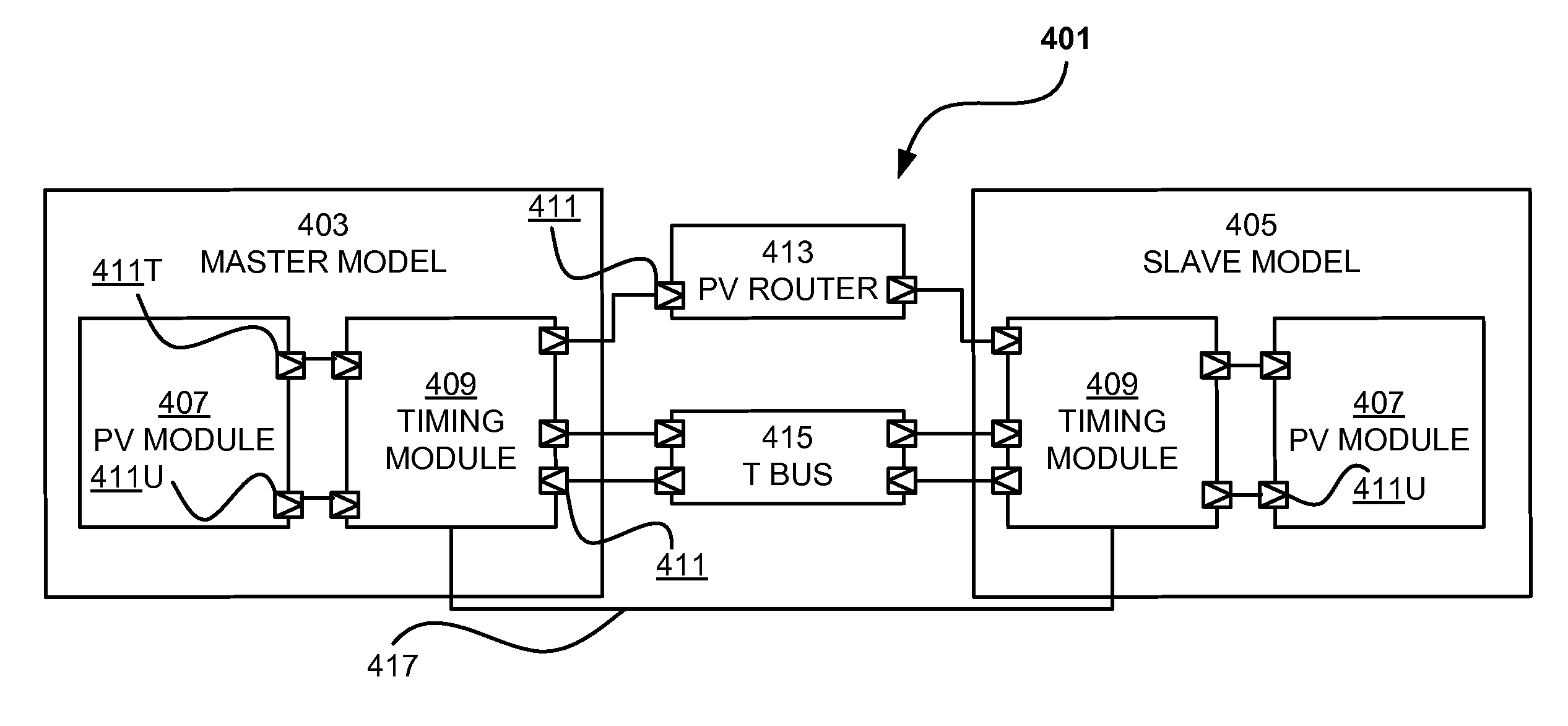
Figure 1 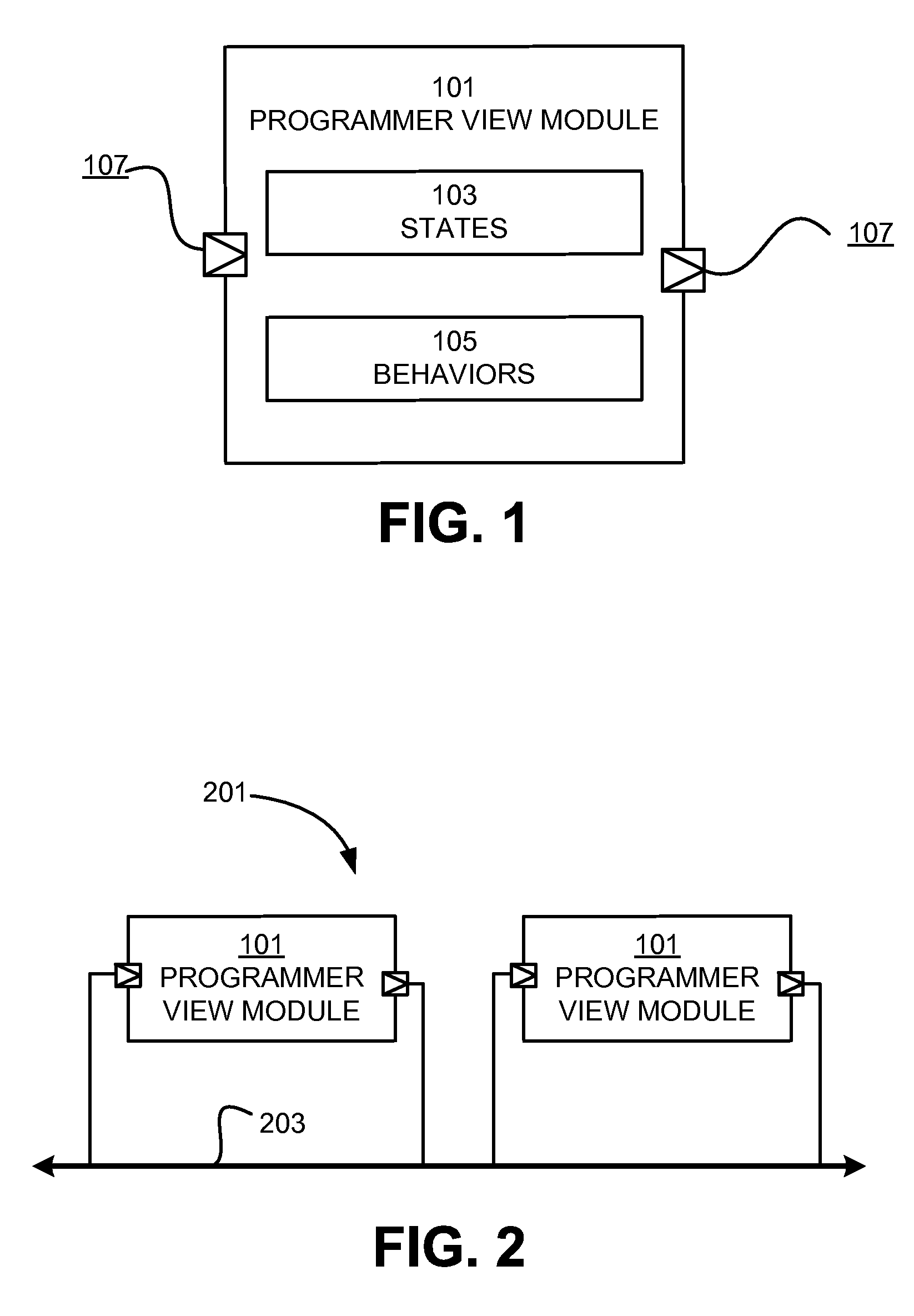
Figure 2 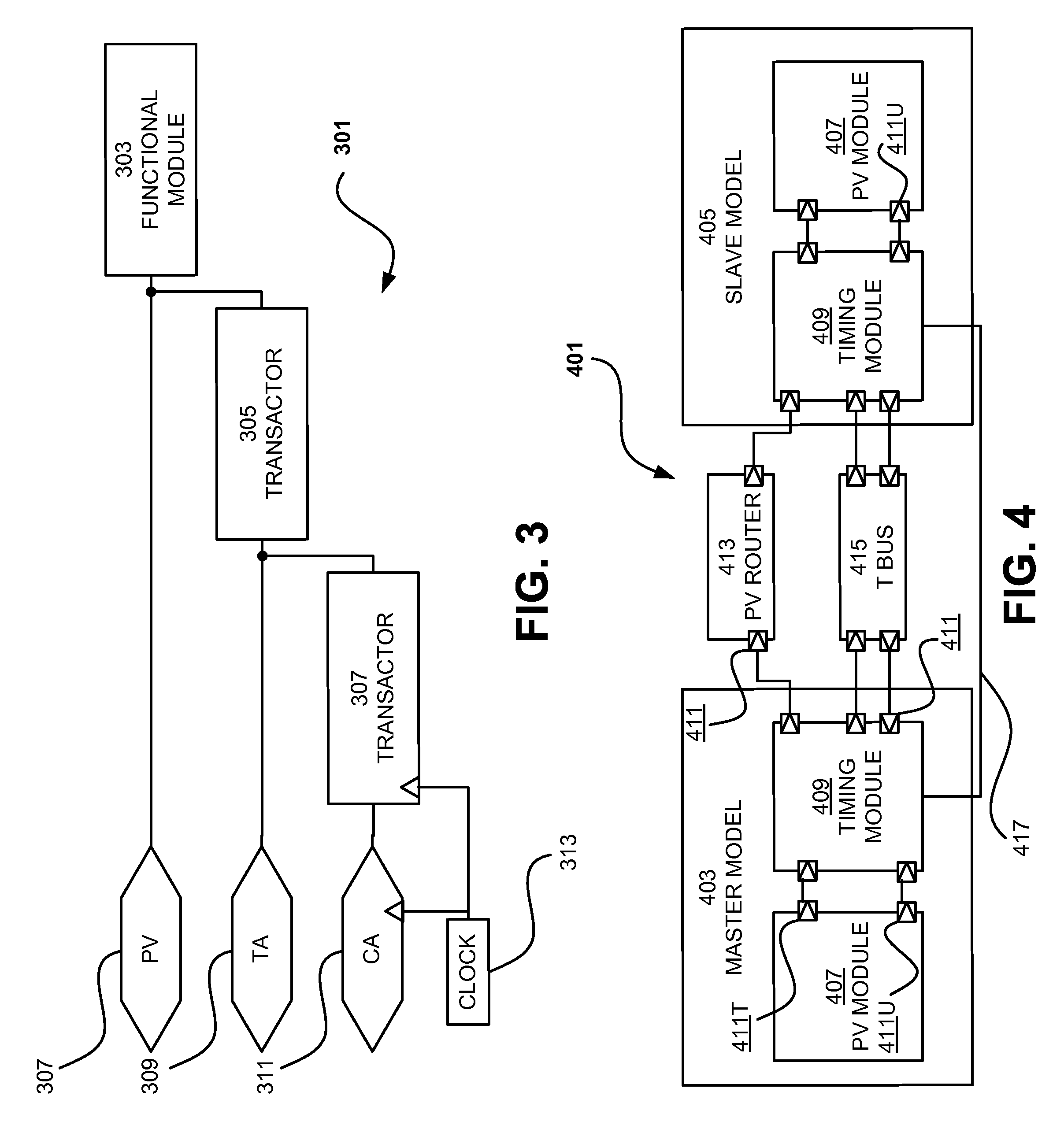
Figure 3
Abstract
Description
RELATED APPLICATIONS
[0001] This application claims priority to U.S. Provisional Patent Application No. 61 / 207,882 entitled “Programmer View Timing Model For Microdevice Designs,” filed on Jan. 30, 2009, and naming Yossi Veller et al. as inventors, which application is incorporated entirely herein by reference.FIELD OF THE INVENTION
[0002] The invention relates to the field of electronic system level design. More specifically, various embodiments of the invention relate to modeling of electronic device designs. Additionally, various embodiments of the invention relate to virtual prototyping employing electronic device design models.BACKGROUND OF THE INVENTIONElectronic Device Design
[0003] Electronic devices, and particularly integrated circuits (IC's), are designed at various levels of abstraction. For example, designs often start at a high level of abstraction, by the designers creating a specification that describes particular desired functionality. This specification, typically implem...
Examples
Embodiment Construction
Transaction Level Modeling
[0029]As introduced above, transaction level modeling is a technique for performing virtual prototyping, which may include performance modeling. Transaction level modeling is typically facilitated by employing models having a higher level of abstraction than logical models. Typically, transaction level modeling methodologies employ two types of models. An “untimed” and a “timed” model. The “untimed” model represents the behavioral characteristics of the hardware implementation while the “timed” model represents the behavioral characteristics and the performance characteristics of the hardware implementation. Typically, individual models, referred to as modules, are generated to represents each component within the hardware design. In a digital electronic system, each component is composed of a finite set of available states and a series of concurrent behaviors. Accordingly, a module representing the component must accurately represent these states and behav...