
Methods for the directed expansion of epitopes for use as antibody ligands
a technology of epitopes and directed expansion, which is applied in the field of directed expansion of epitopes for use as antibody ligands, can solve the problems of not ensuring therapeutic effectiveness, and reducing the efficacy of therapeutic or prophylactic antibodies that compete,
Patent Information
- Authority / Receiving Office
- US · United States
- Current Assignee / Owner
- Publication Date
- 2010-11-25
- Estimated Expiration
- Not applicable · inactive patent
Smart Images
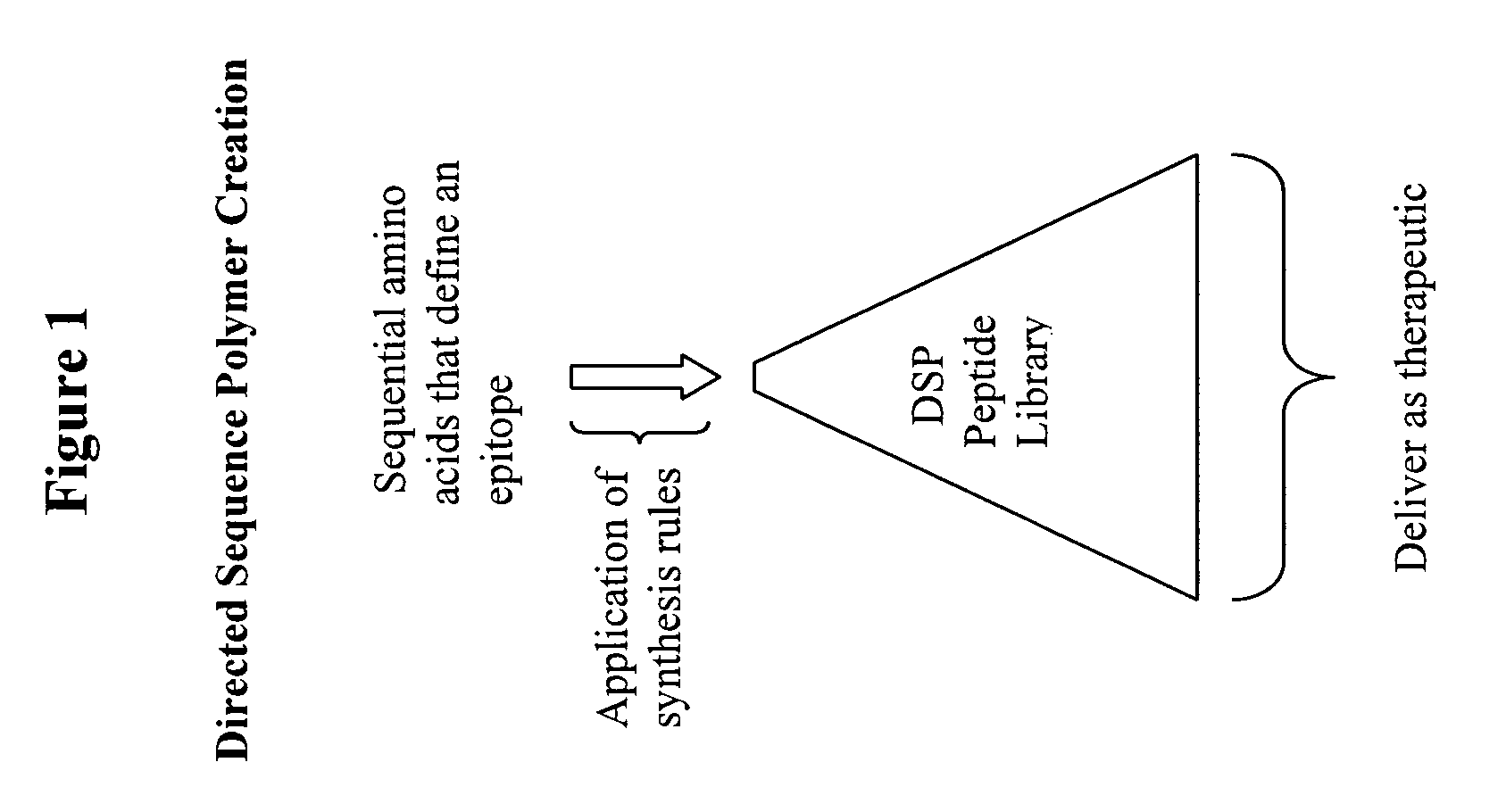
Figure 1 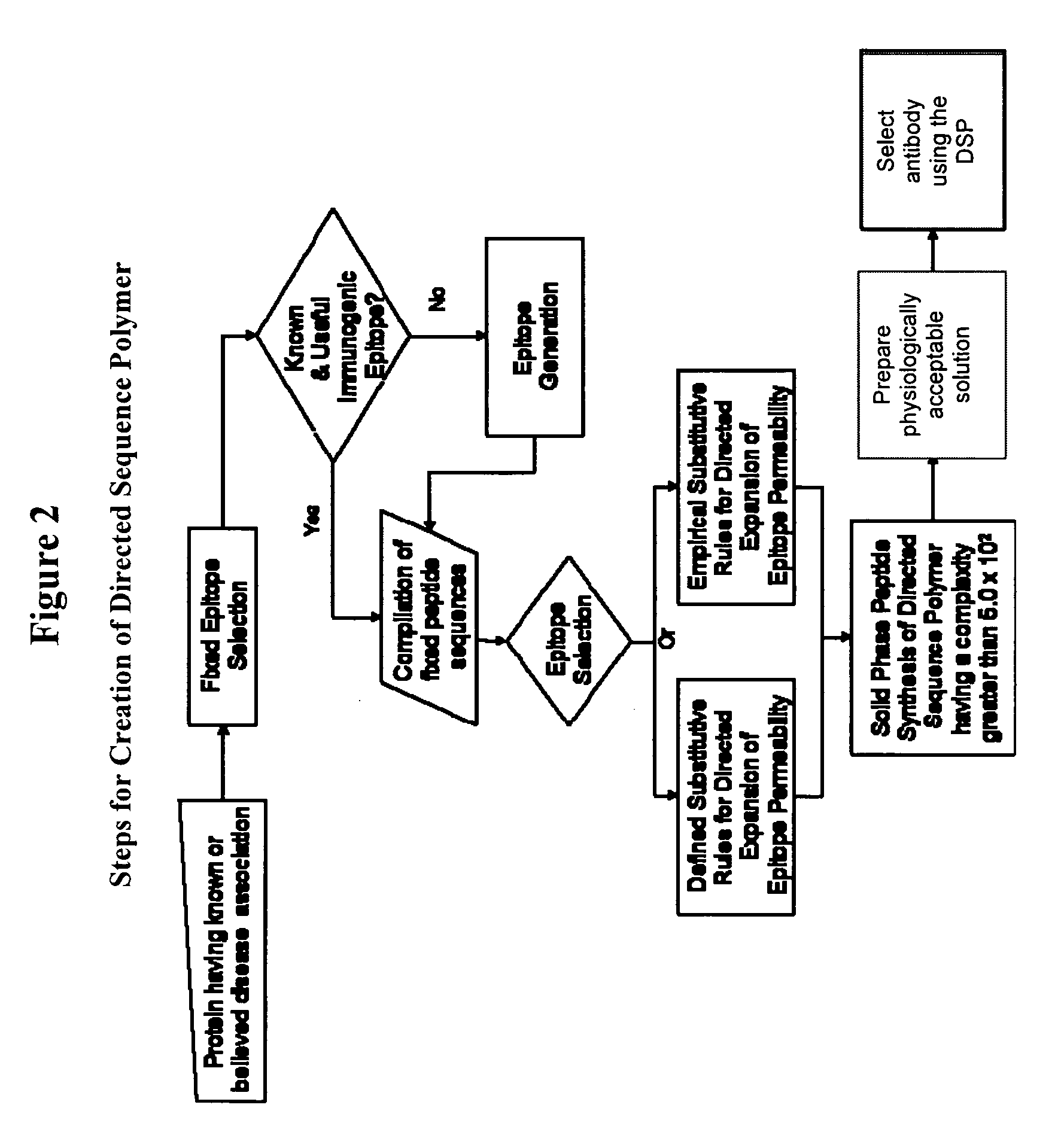
Figure 2 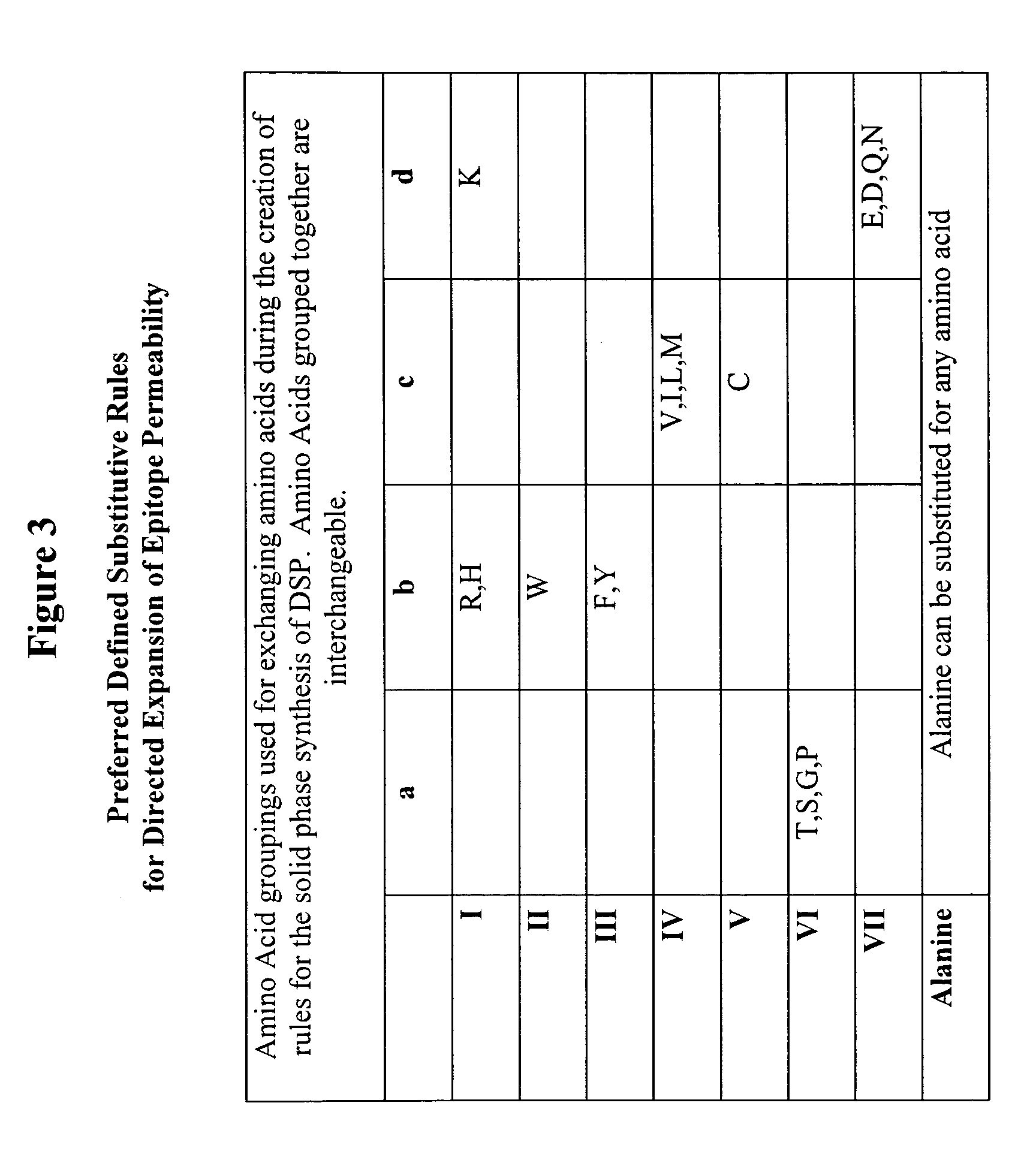
Figure 3
Abstract
Description
RELATED APPLICATION
[0001] This application claims the benefit of U.S. Provisional Application 60 / 928,225, filed May 7, 2007, U.S. Provisional Application 60 / 999,283, filed Oct. 16, 2007, U.S. Provisional Application 60 / 999,284, filed Oct. 16, 2007, and U.S. Provisional Application 61 / 124,689, filed Apr. 17, 2008. This application is also a continuation-in-part of U.S. application Ser. No. 11 / 787,229, filed Apr. 13, 2007, which claims the benefit of U.S. Provisional Application 60 / 792,085, filed Apr. 13, 2006. The disclosure in all of the above-listed applications is incorporated herein by reference in its entirety.BACKGROUND OF THE INVENTION
[0002] In the recent years, antibodies have cemented their position as a class of effective therapeutic agents against various diseases and conditions. Currently there are 21 approved antibody-based drugs in the world, and a number of them are in the pipeline.
[0003] A single antibody may be specific for one antigen, or may recognize multiple antigen...
Examples
example 1
Preparation of a DSP Composition from Fictitious Base Peptides
[0123]For ease of understanding, as an illustration, preparation of a DSP composition deriving from two fictitious peptide sequences, representing a known epitope, is described and shown in the table depicted in FIG. 6. In this illustration, the cassettes consist of five amino acids each, (x1, x2, x3, x4, x5=THMCE in y1 and PWKNA in y2).
[0124]THMCE is defined as having an input ratio of a=7, b=1, c=1, d=1, e=10. PWKNA is defined as having an input ratio of a=1, b=3, c=3, d=3, e=20. For synthesis, the identity of group of amino acids occupying each amino acid position for each peptide is determined using the preferred method of amino acid substitution described by Kosiol et al., J. Theoretical Biol. 228:97-106, 2004, as shown in FIG. 4 (or less preferably an equivalent means of systematically altering amino acids), and the overall ratio of amino acids that occupy each of such positions in the resulting collective DSP compo...
example 2
Preparation of a DSP Composition from Gp100 (a.a. Residues 154-162) As a Source Peptide
[0128]FIG. 7A-B shows an example of the application of the DSP Synthesis Rules using Gp100 (a.a. residues 154-162) as a source peptide. The methods and rules to define the identity of amino acids for each position of the resulting peptides are described above in Example 1. As with Example 1, the DSP composition is synthesized using a solid phase peptide synthesis method.
example 3
Preparation of a DSP Composition from an HLA Peptide as a Source Peptide
[0129]FIG. 8A-B shows examples of the application of the DSP Synthesis Rules using an HLA-derived peptide and an HLA mimic-derived peptide as source peptides. The methods and rules to define the identity of amino acids for each position of the resulting peptides are described above in Example 1. As with Example 1, the DSP composition is synthesized using a solid phase peptide synthesis method.