
System And Method For Integrated Pair-Wise Registration Of Images Using Image Based Information And Sensor Coordinate And Error Information
Patent Information
- Authority / Receiving Office
- US · United States
- Current Assignee / Owner
- Publication Date
- 2012-08-02
Smart Images
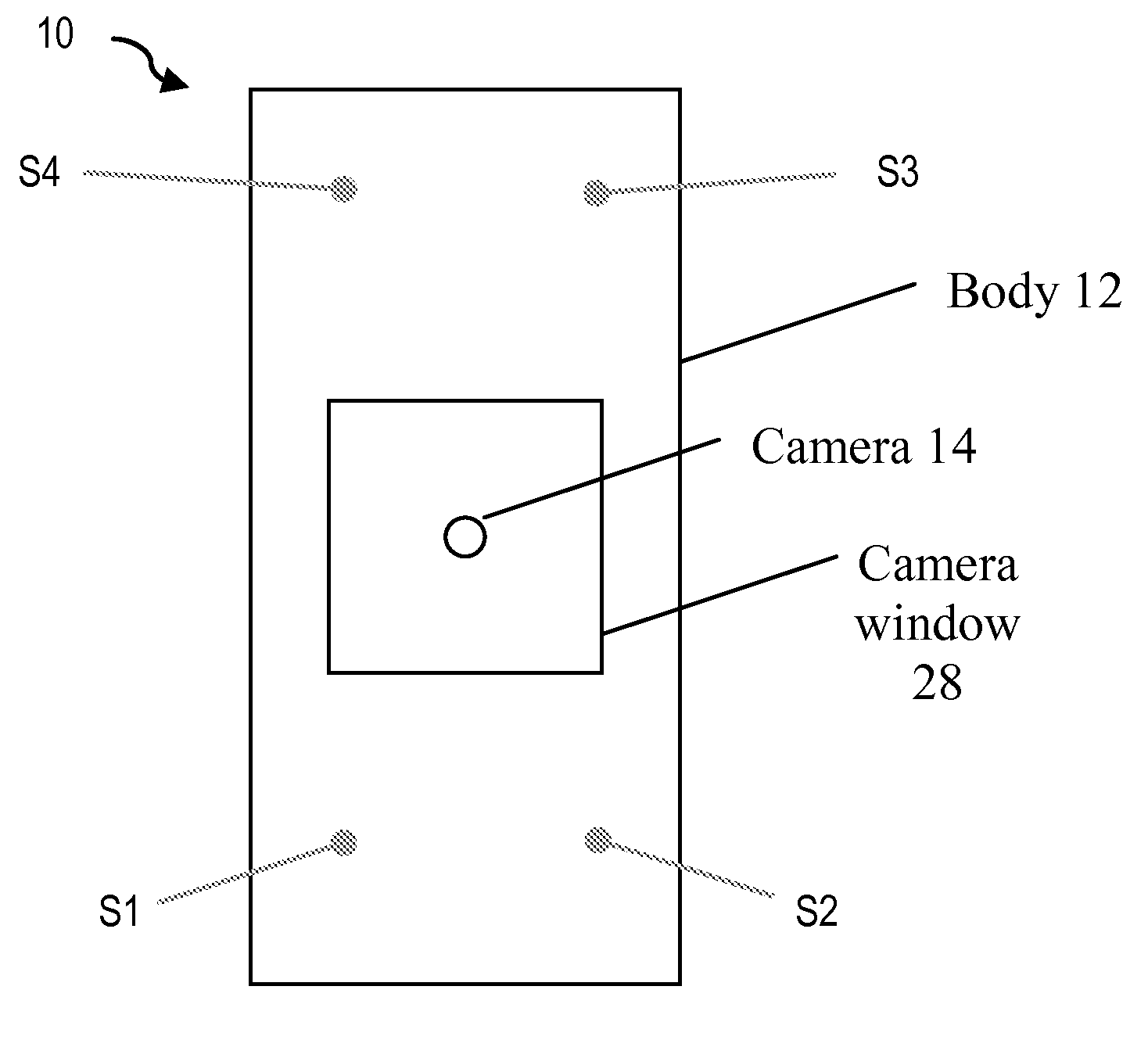
Figure 1 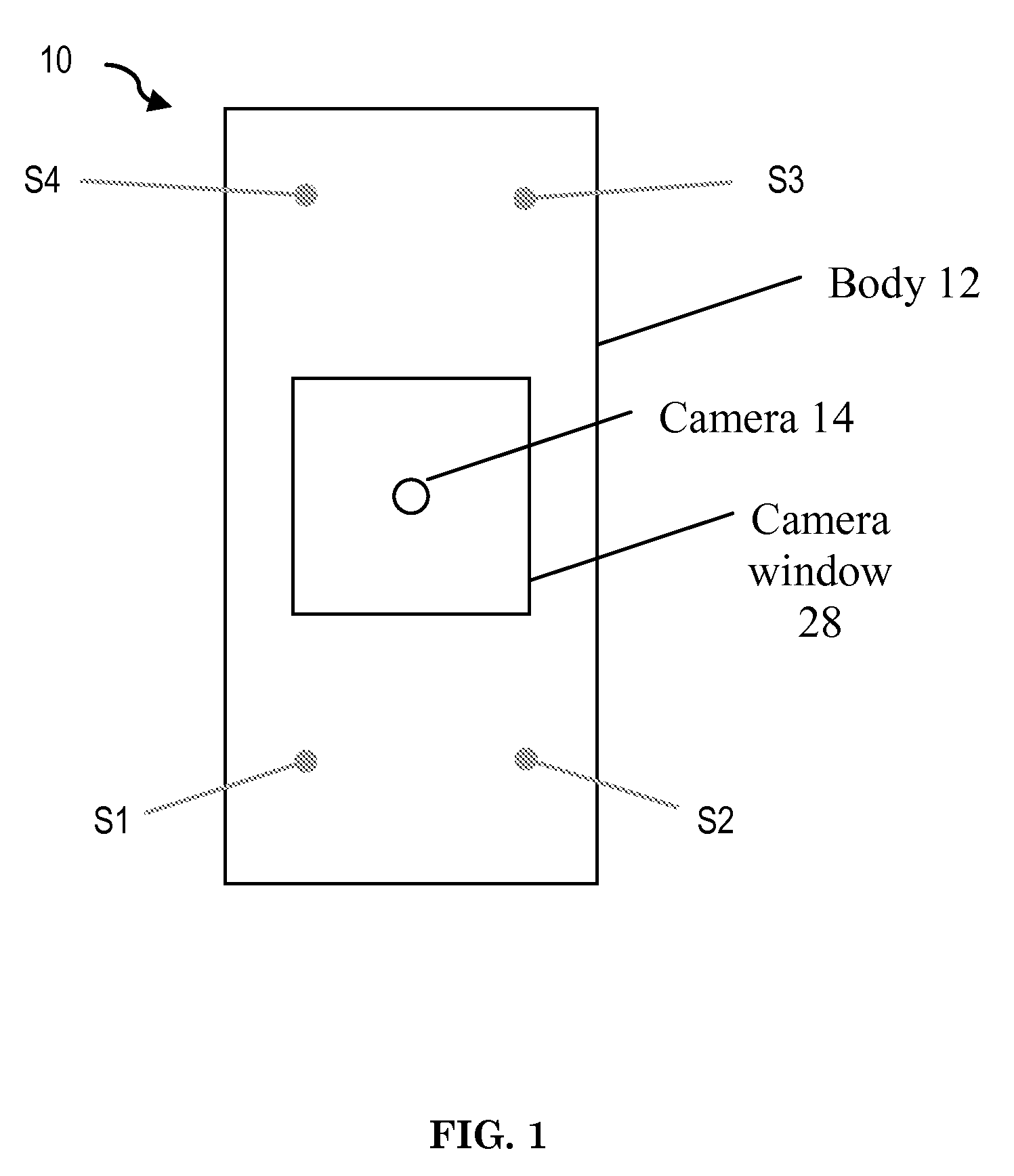
Figure 2 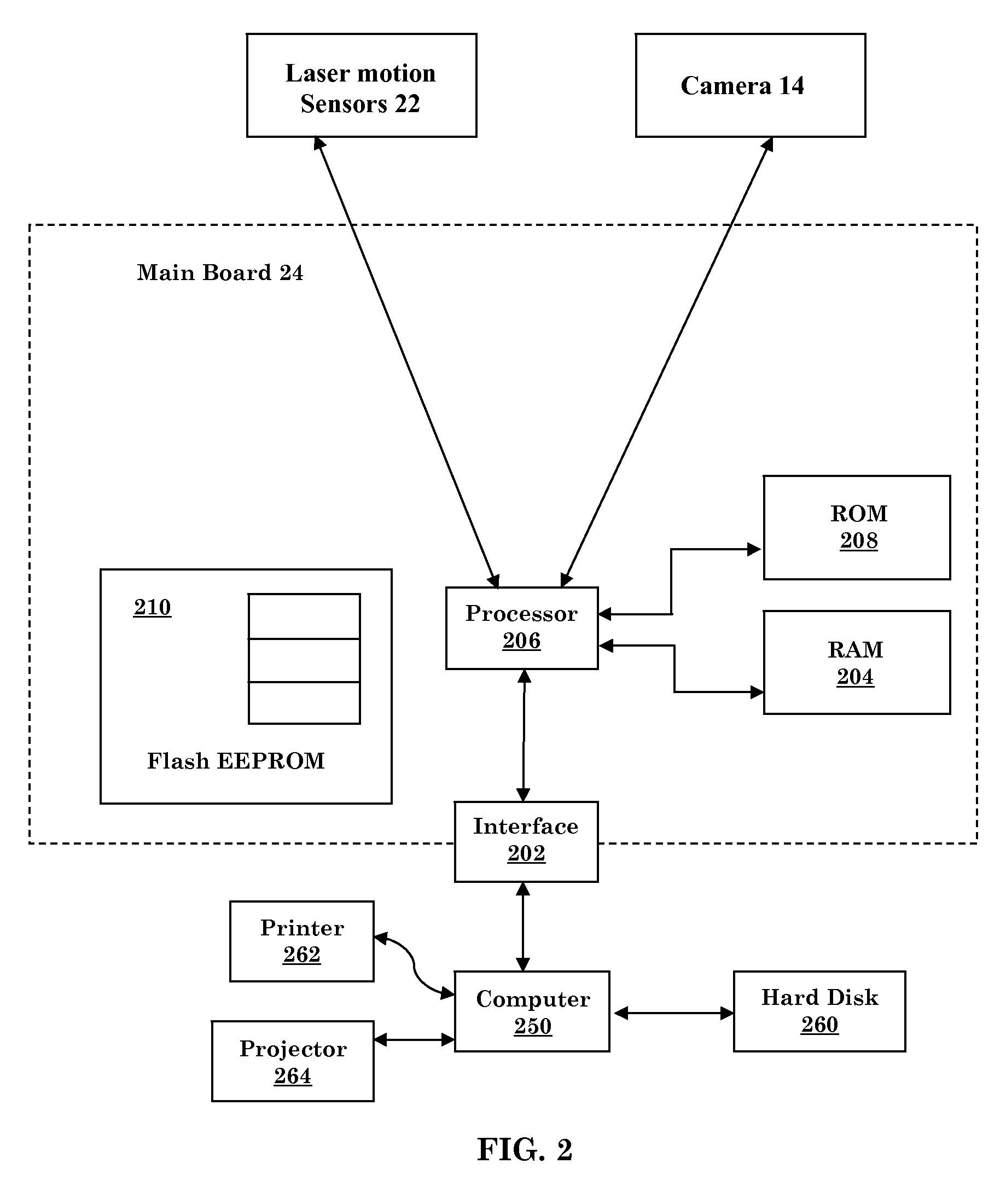
Figure 3
Abstract
Description
CROSS-REFERENCE TO RELATED APPLICATIONS
[0001] Commonly owned U.S. patent application Ser. No. 12 / 648,236, filed Dec. 28, 2009, Publication No. 2010 / 0171996, and U.S. patent application Ser. No. 12 / 645,421, filed Dec. 22, 2009, Publication No. 2010 / 0165422 are hereby incorporated by reference in their entirety. This application is also related to commonly owned U.S. patent application Ser. No. ______, filed xxxx, entitled “Image registration parameters and confidence estimation from sensor data” (Attorney Docket No. EETP130) and U.S. patent application Ser. No. ______, filed xxxx, entitled “System and method for real-time image retensioning and loop error correction” (Attorney Docket No. EETP131), the contents of such applications being hereby incorporated by reference in their entirety.BACKGROUND
[0002] 1. Field of Invention
[0003] The present invention is related to scanning devices, particularly document scanners of the hand-held type, such as a mouse scanner.
[0004] 2. Description of Re...
Examples
case 1
[0188, the new loop contains one or more closed loops (FIG. 13).
[0189]As shown in FIG. 13, a new loop contains a closed loop, which has been corrected. Frames from 1 to N are extracted for the new loop (the outer loop), but frames K to L (the inner loop) are already corrected.
[0190]The new loop is extracted from frame 1 to N. We may refer the extracted frames from 1 to n as shown as the lower row in FIG. 14.
[0191]We will obtain an index vector, which contains only the non-fixed frame numbers. For the above example, we will have index vector of size (N−(L−K)), which contains the frame number [1, . . . K,L+1 . . . N]
case 2
[0192, the new loop is inside a closed loop (FIG. 15).
[0193]The new loop is extracted from frame K to N (FIG. 16). We may refer the extracted frames from 1 to n as shown as the lower row in FIG. 17.
[0194]We will obtain an index vector, which contains only the non-fixed frame numbers. For the above example, we will have index vector of size (N−L) or (n−k), which contains the frame number [L+1 . . . N] or [k+1 . . . n].
[0195]The global optimization will then process the extracted loop, but it is only to correct the non-fixed pair-wise registration recorded in the index vector.
[0196]The following are discussions of modification of the algorithm for certain situations.
[0197]Single Loop Correction with Break Frame
[0198]The following is a discussion of the correction for the closed loop with a break between frames i and i+1.
[0199]According to the global constraint of the closed loop T1T2 . . . Ti . . . Tn=I, where I is the identity matrix
(100010001).
Combining the N pair-wise transformatio...