
System for predicting a driver's intention to change lanes
a technology a system, which is applied in the field of systems for predicting the intention of a driver to change lanes, can solve the problems of unduly annoying the driver, the detection of the driver's intention may be too late for most adas applications, and the limited application rang
Patent Information
- Authority / Receiving Office
- US · United States
- Patent Type
- Applications(United States)
- Current Assignee / Owner
- Publication Date
- 2013-04-04
Smart Images
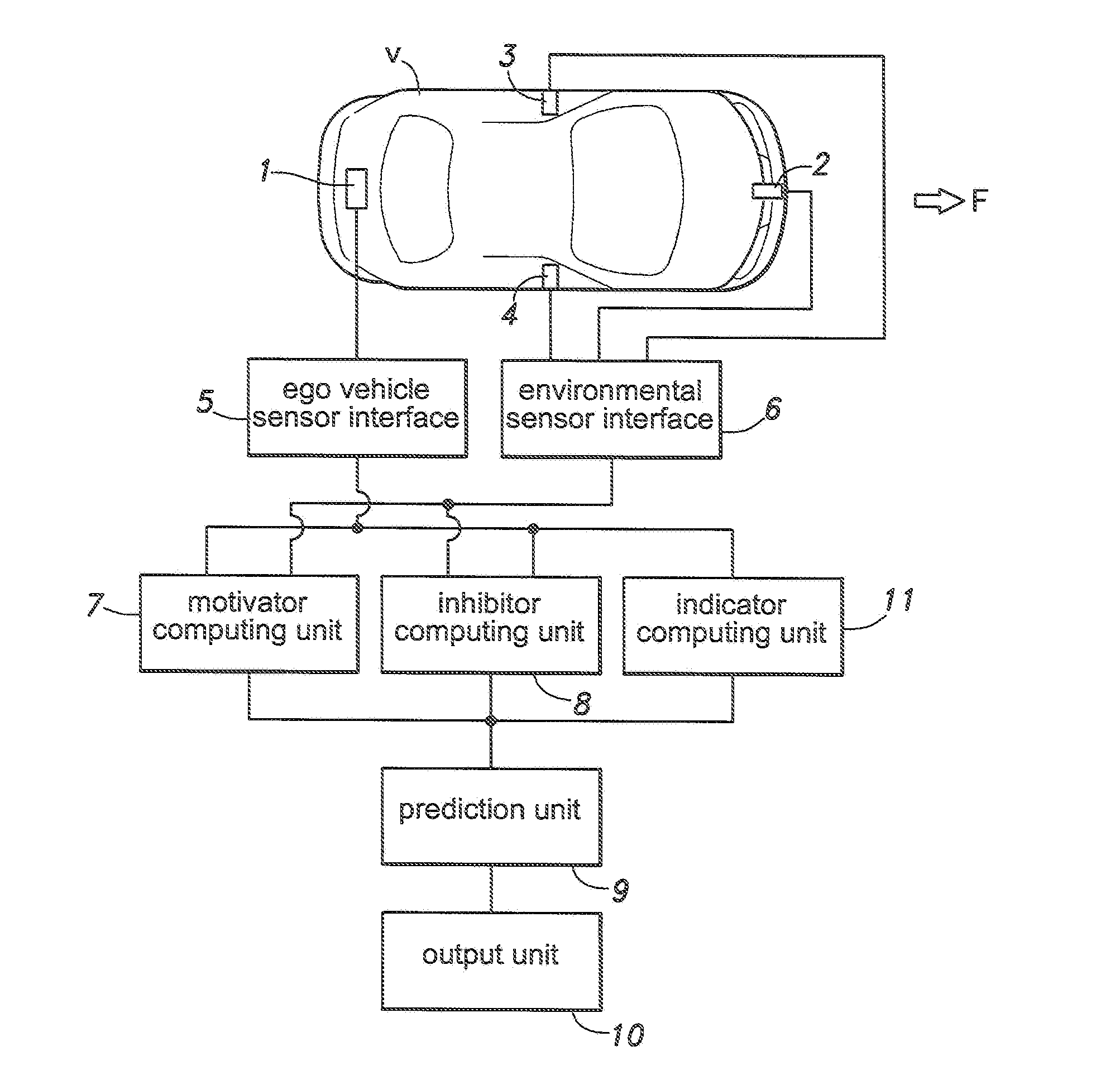
Figure 1 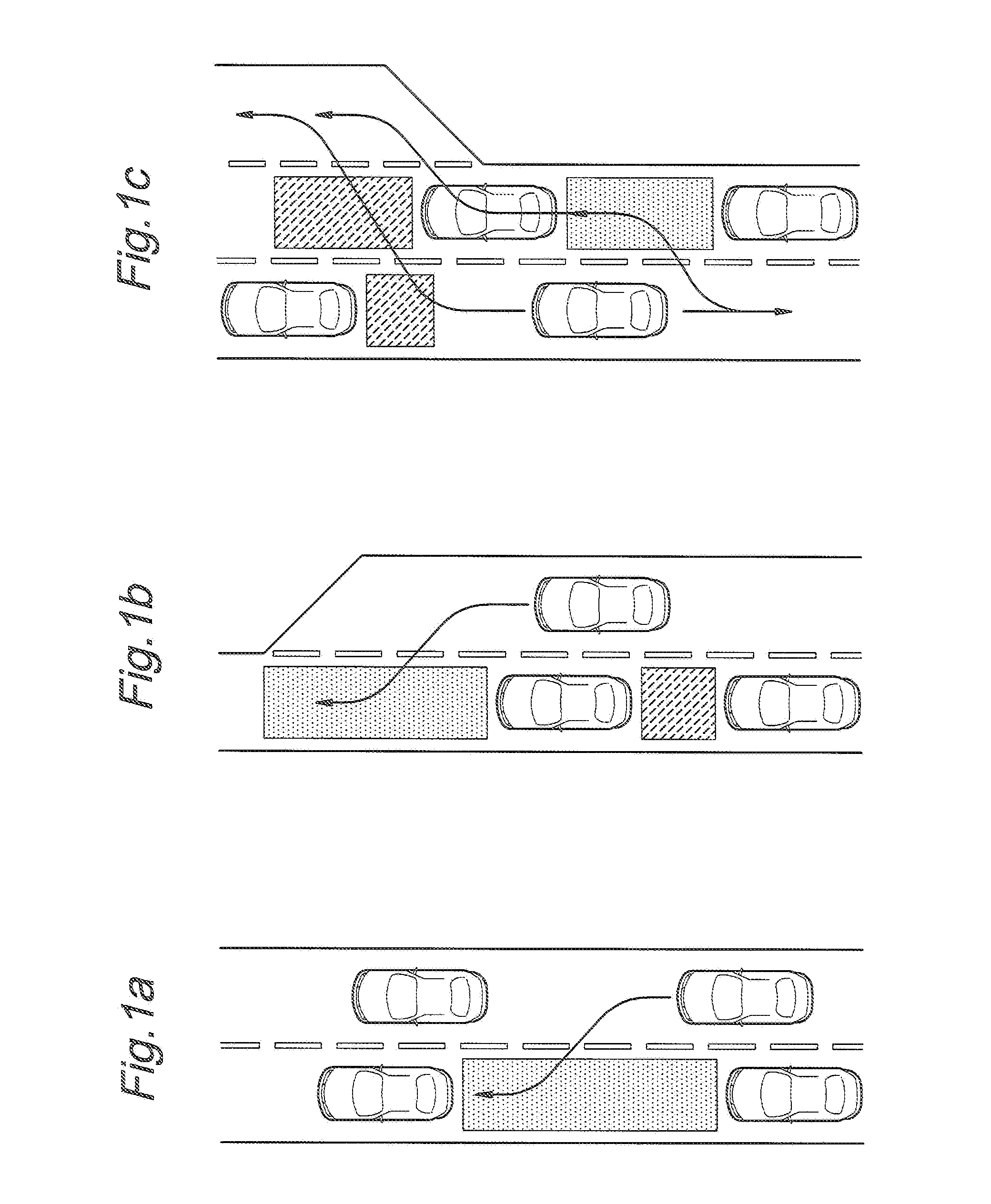
Figure 2 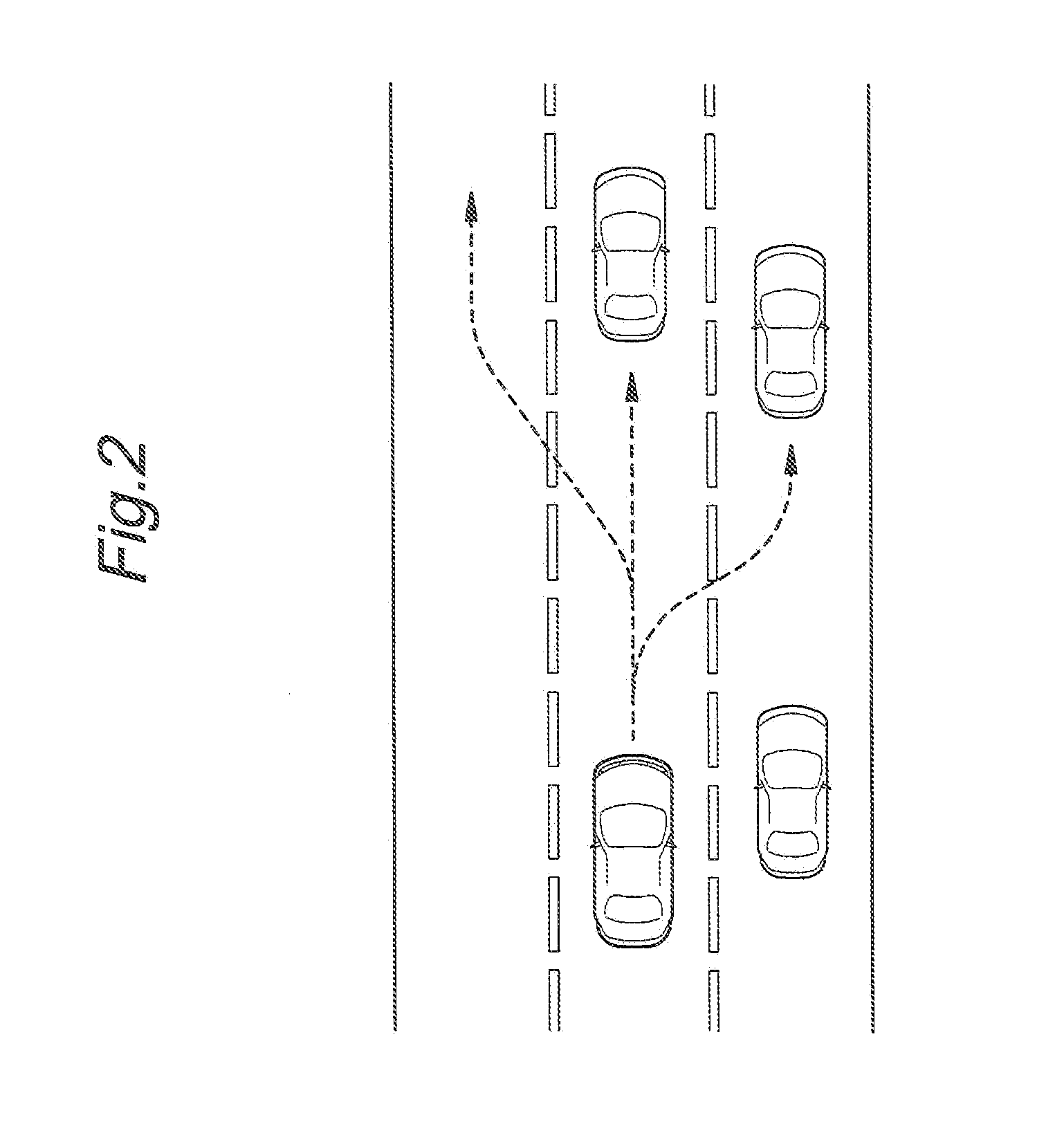
Figure 3
Abstract
Description
TECHNICAL FIELD
[0001] The present invention relates to a system for predicting a driver's intention to change lanes, and in particular to a system for predicting a driver's intention to change lanes that can be used for advanced driver assistance systems (ADAS).BACKGROUND OF THE INVENTION
[0002] Continuous maneuver based advanced driver assistance systems (ADAS), such as a lane change assistance system (LCAS), assist the driver, for example, before and during lane changes. These systems have the risk to act as a nagging guardian for the driver as soon as there is a mismatch between the system support and the driver's intention, and this may unduly annoy the driver. For instance, the driver intends to follow the vehicle ahead on a motorway but LCAS may continuously recommend a lane change maneuver to the left adjacent lane by e.g. haptic, visual, acoustic or active longitudinal / lateral interventions, in order to overtake the vehicle in front. To solve this mismatch between the system an...
Examples
Embodiment Construction
[0036]The system embodying the present invention and described in the following enables an early and reliable detection of the driver's lane change / overtaking intention in order to realize a maneuver based ADAS which supports the driver before and during lane changes. In addition, the system takes into account a plurality of different reasons or factors for lane change / overtaking maneuvers.
[0037]FIGS. 1a to 1c show different modes of lane changing maneuver. FIG. 1a illustrates a case where an ego vehicle traveling in the current lane changes to the adjacent lane, typically because the other vehicle traveling ahead of the ego vehicle is slower. FIG. 1b illustrates a case where the ego vehicle changes the current lane to the adjacent lane to filter into the traffic of the adjacent lane because the current lane is about to end. FIG. 1c shows a case where the ego vehicle merges with the traffic of the adjacent slower lane, and then exits the slow lane to an exit road. In any of the situ...