
System And Method For Thinning Of Scalable Video Coding Bit-Streams
a video coding and bit-stream technology, applied in the field of multimedia and telecommunications technology, can solve the problems of increasing the cost and complexity of scalable coding, requiring significant computational resources, and adding significant subjective distortions to the video signal and delay of the video transmission, so as to achieve the effect of flexible processing of svc bit-streams
Patent Information
- Authority / Receiving Office
- US · United States
- Patent Type
- Applications(United States)
- Current Assignee / Owner
- Publication Date
- 2007-11-15
- Estimated Expiration
- Not applicable · inactive patent
Smart Images
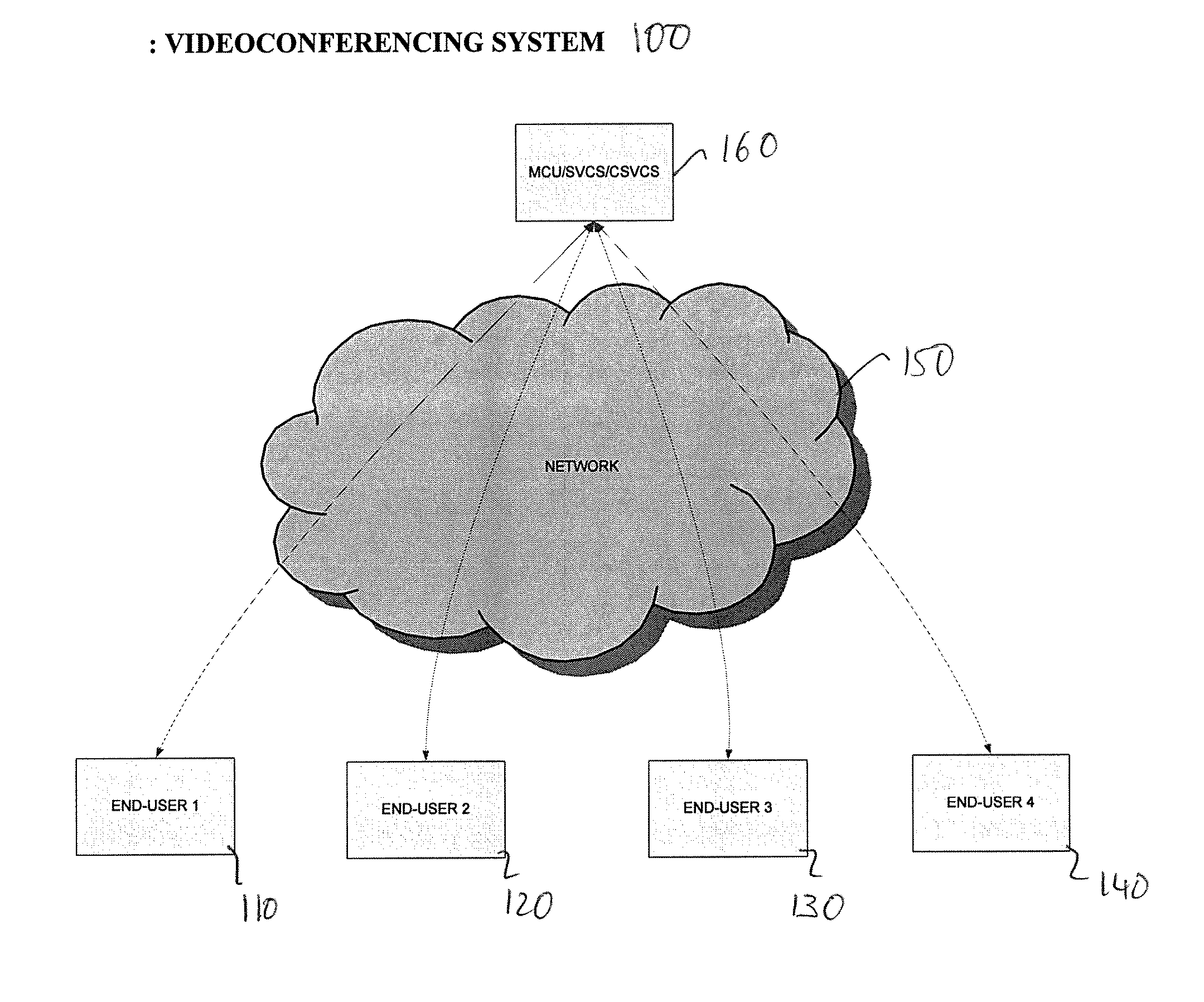
Figure 1 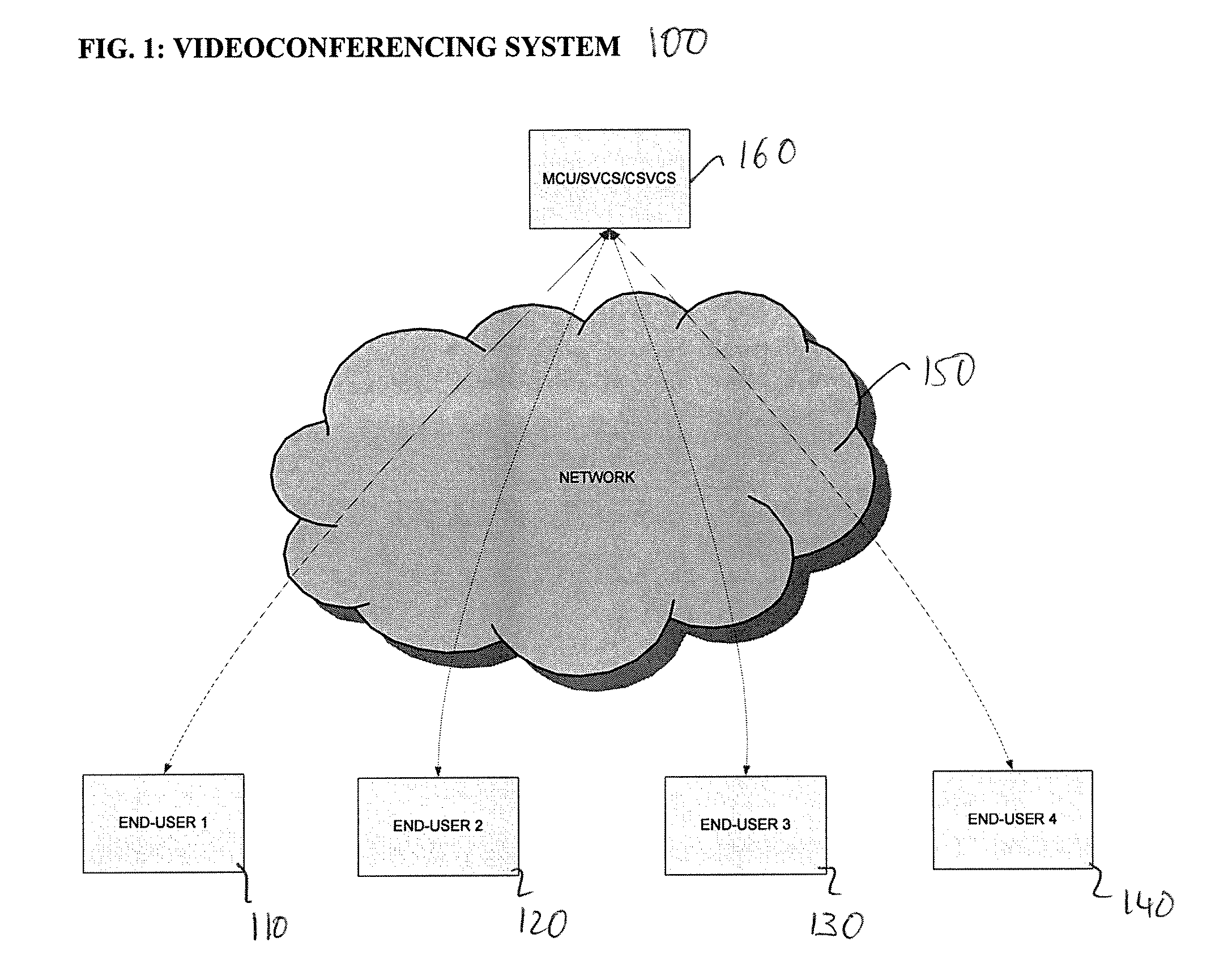
Figure 2 
Figure 3
Abstract
Description
CROSS-REFERENCE TO RELATED APPLICATIONS
[0001] This application claims the benefit of U.S. provisional patent application Ser. No. 60 / 774,094, filed Feb. 16, 2006. Further, this application is related to International patent application Nos. PCT / US06 / 28365, PCT / US06 / 028366, PCT / US06 / 028367, PCT / US06 / 028368, and PCT / US06 / 061815, and U.S. provisional patent application Nos. 60 / 786,997, 60 / 827,469, 60 / 778,760, and 60 / 787,031. All of the aforementioned priority and related applications, which are commonly assigned, are hereby incorporated by reference herein in their entireties. FIELD OF THE INVENTION
[0002] The present invention relates to multimedia and telecommunications technology. In particular, the invention relates to systems and methods using scalable video coding techniques for videoconferencing between user endpoints over electronic communication networks, which can provide different levels of quality of service (QoS), and which the user endpoints can connect to using access d...
Examples
Embodiment Construction
[0049] Video conferencing systems and methods based on SVC coding are provided. The systems and methods (collectively referred to herein as “SVC Thinning”) are designed to provide flexibility in processing SVC bitstreams for videoconferencing applications. In particular, SVC Thinning provides system and processing functionalities for selectively discarding or not transmitting SVC bitstream portions to receiver / endpoints in response to receiver / endpoints needs or properties.
[0050]FIG. 1 shows an exemplary embodiment of a videoconferencing system 100 having SVC Thinning functionalities according to the present invention. System 100 may include a plurality of end-user terminals 110-140, a network 150, and one or more MCU / SVCS / CSVCS 160. The network enables communication between the end-user terminals and the MCU / SVCS / CSVCS. The SVC Thinning functionalities described herein may be placed in MCU / SVCS / CSVCS 160, or in one or more endpoints (e.g. 110-140).
[0051] In system 100, an end-use...