
Methods for forming light olefins by cracking
a technology of light olefins and cracking, which is applied in the field of cracking methods for forming light olefins, can solve the problems that the cracking of naphtha or butane may not form enough coke on the catalyst to burn to generate heat, and achieve the effect of reducing the cost of producing light olefins
Patent Information
- Authority / Receiving Office
- US · United States
- Patent Type
- Patents(United States)
- Current Assignee / Owner
- Publication Date
- 2022-10-04
Smart Images
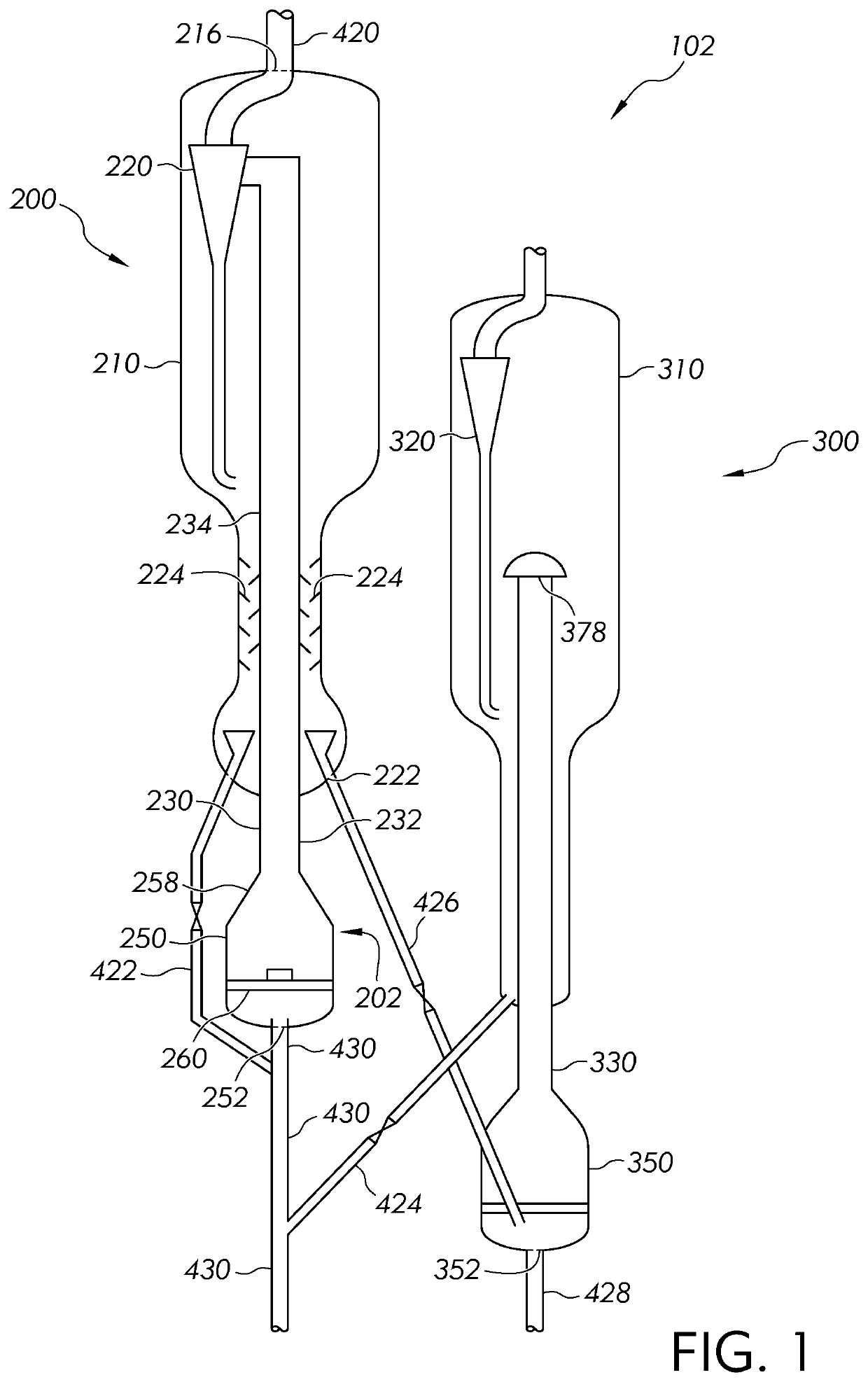
Figure 1 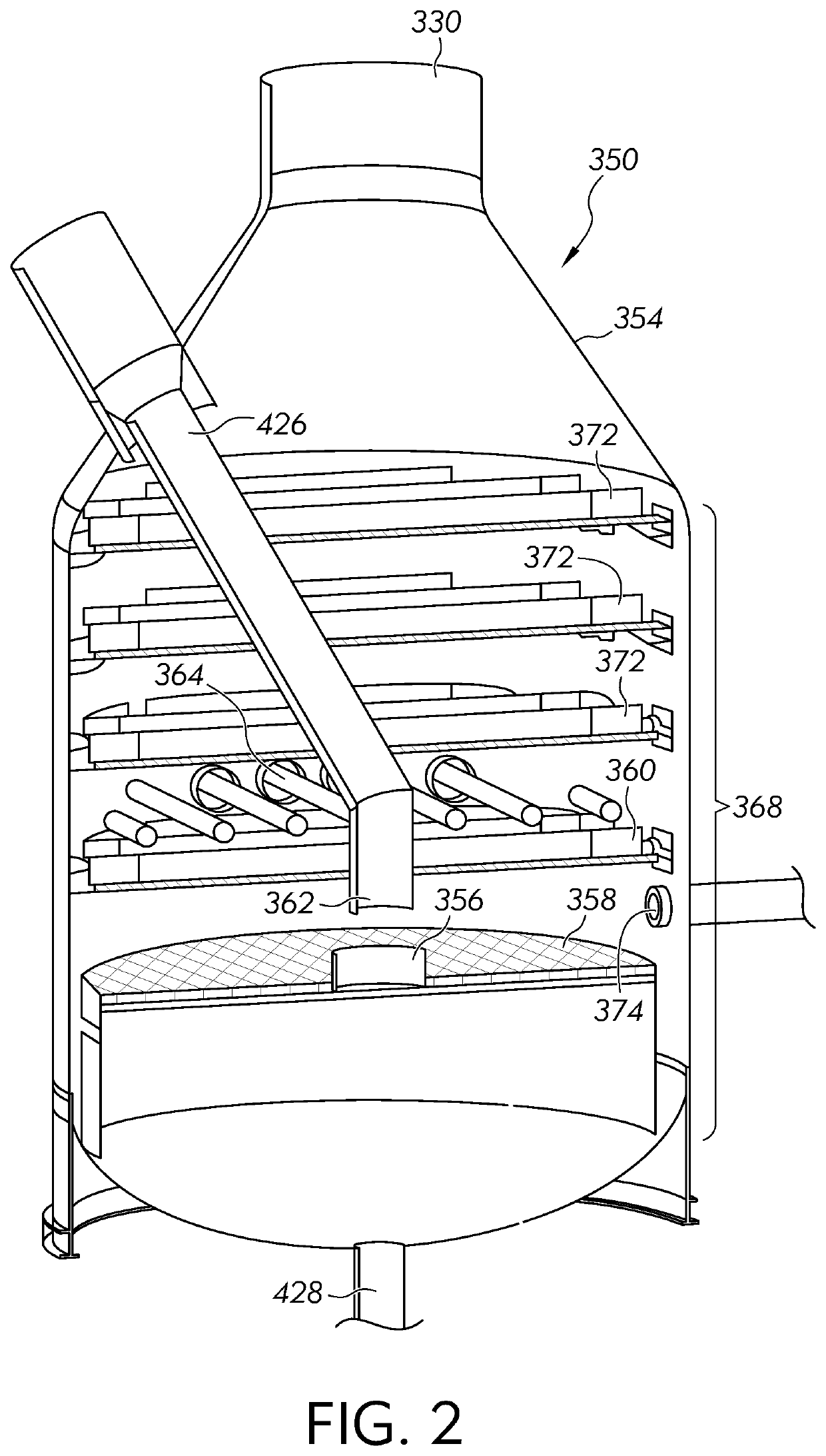
Figure 2 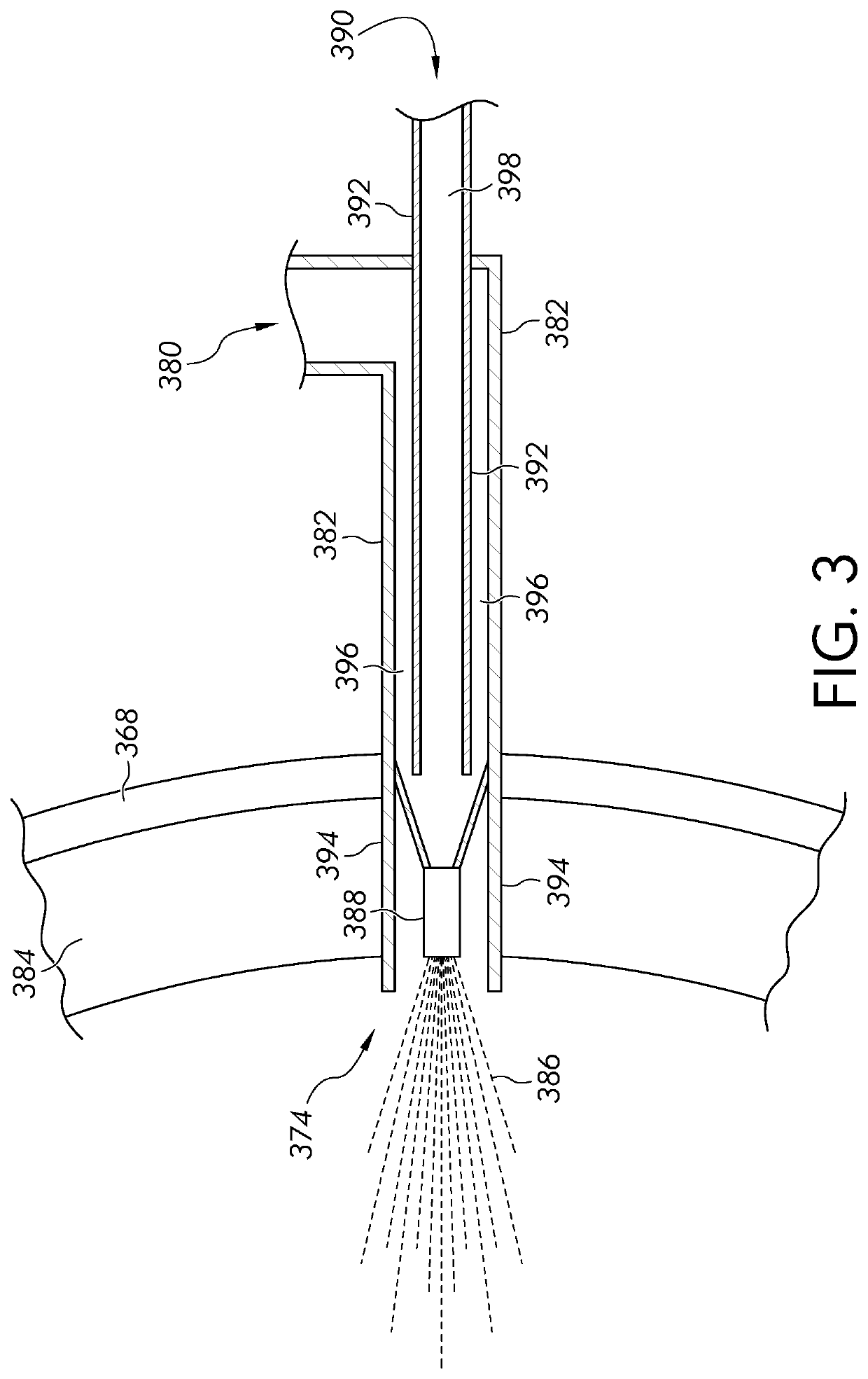
Figure 3
Abstract
Description
CROSS-REFERENCE TO RELATED APPLICATIONS
[0001] This application claims priority to U.S. Provisional Patent Application No. 62 / 470,570, filed Mar. 13, 2017, entitled “Methods And Apparatuses For Forming Light Olefins By Cracking”, the contents of which are hereby incorporated by reference in their entirety.BACKGROUNDField
[0002] The present disclosure generally relates to chemical processing, and more specifically, to reactor designs and systems utilized in cracking reactions to from light olefins.Technical Background
[0003] Light olefins may be utilized as base materials to produce many types of goods and materials. For example, ethylene may be utilized to manufacture polyethylene, ethylene chloride, or ethylene oxides. Such products may be utilized in product packaging, construction, textiles, etc. Thus, there is an industry demand for light olefins, such as ethylene, propylene, and butene. However, most light olefins must be produced by different reaction processes based on the given ch...
Examples
Embodiment Construction
[0019]Embodiments related to methods for processing chemical streams are disclosed herein. In one or more embodiments, the chemical stream that is processed may be referred to as a feed stream, which is processed by a reaction to form a product stream. In one or more embodiments, the feed stream may comprise one or more of naphtha or butane. Butane is defined as either n-butane or iso-butane or a combination of both. The feed stream may be converted by reaction to a product stream which may comprise one or more of ethylene, propylene, or butene. Ethylene, propylene, and butene may be referred to herein as “light olefins.” As described herein, butene many include any isomer of butene, such as α-butylene, cis-β-butylene, trans-β-butylene, and isobutylene.
[0020]In one embodiment, the product stream may comprise at least 50 wt. % light olefins. For example, the product stream may comprise at least 60 wt. % light olefins, at least 70 wt. % light olefins, at least 80 wt. % light olefins, ...