
Computer graphics system with dual FIFO interface
a computer graphics and interface technology, applied in the field of computer graphics systems, can solve the problems of not efficient methods for rendering 2d and 3d, high cost of operation, and high computational intensity of three-dimensional (3d) clients
Patent Information
- Authority / Receiving Office
- US · United States
- Patent Type
- Patents(United States)
- Current Assignee / Owner
- Publication Date
- 2001-06-26
- Estimated Expiration
- Not applicable · inactive patent
Smart Images
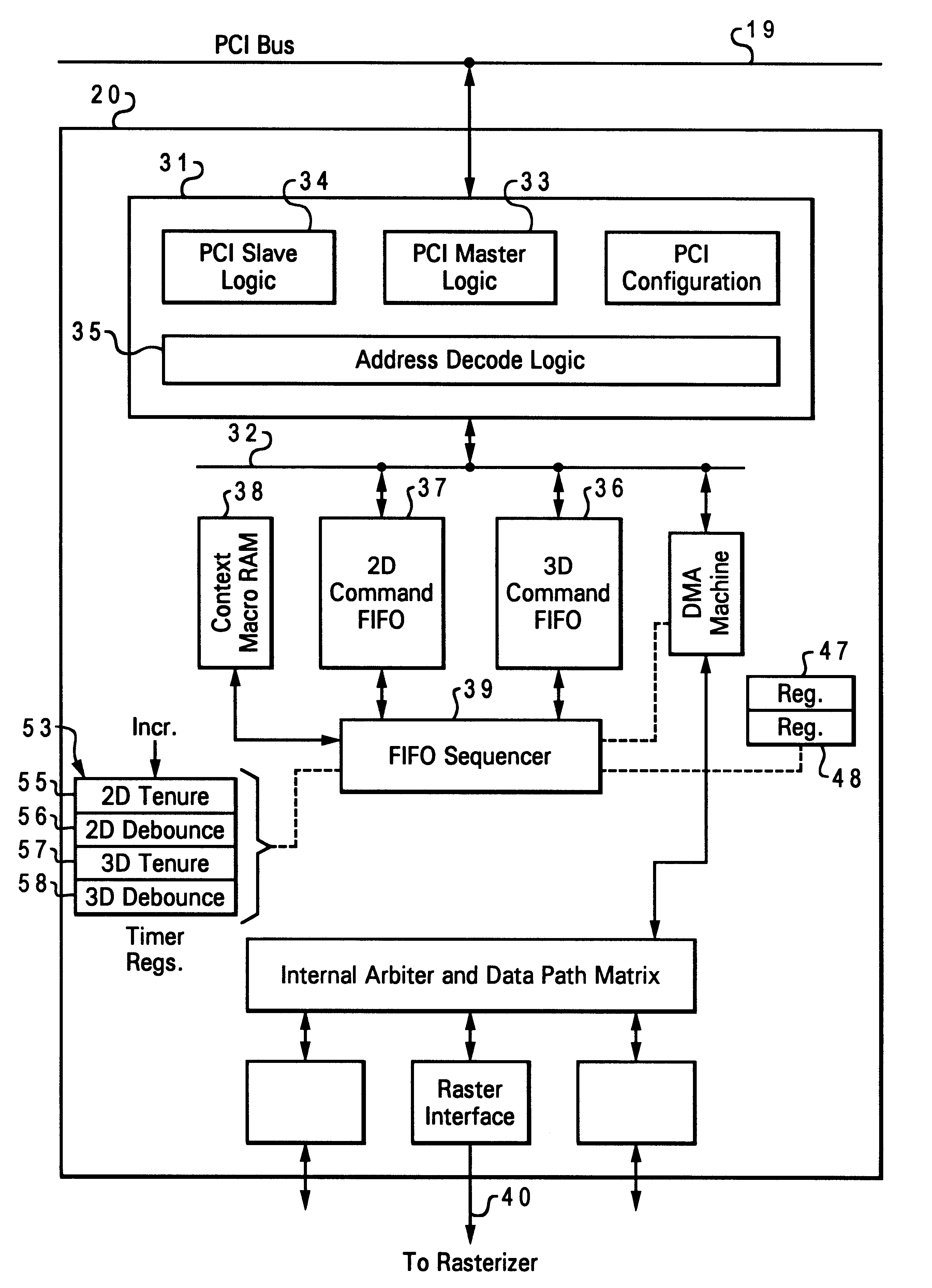
Figure 1 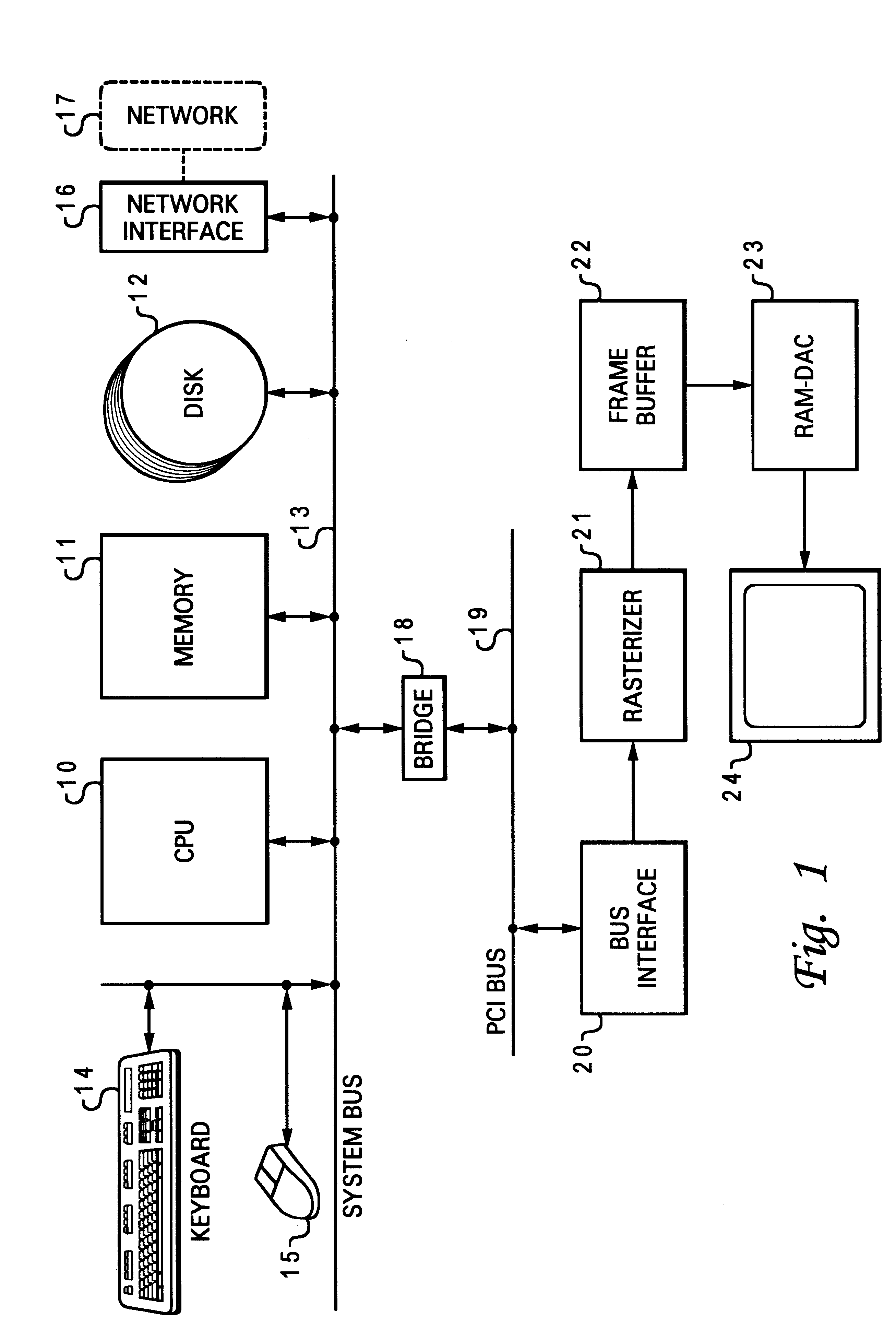
Figure 2 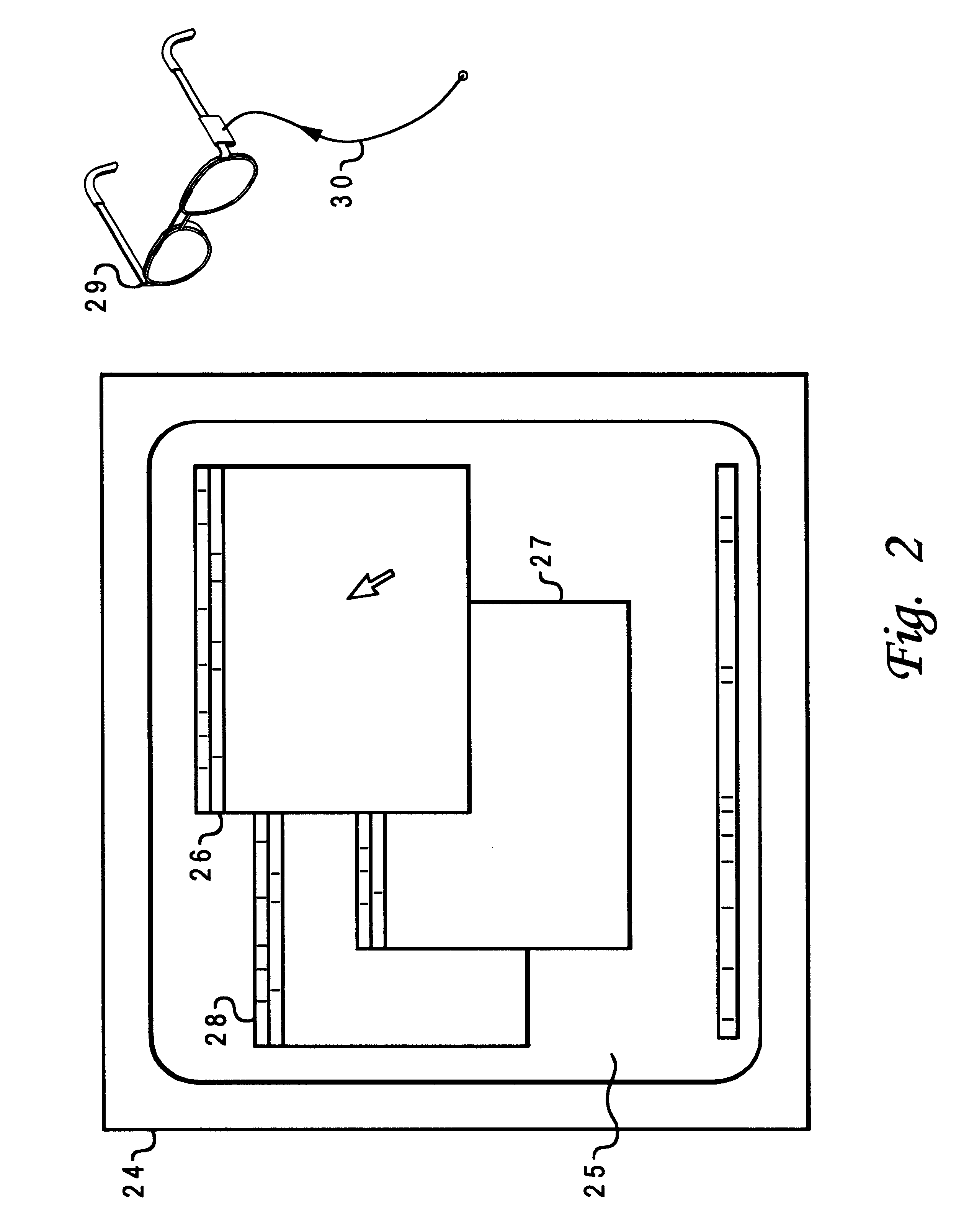
Figure 3
Abstract
Description
1. Technical FieldThis invention relates to computer systems having a graphics interface, and more particularly to computer graphics systems, and more particularly to processing commands and data for graphics systems employing display windows with both 2D and 3D images.2. Description of the Related ArtComputer graphics workstations are used to generate high-quality graphics images, often three-dimensional, and to run applications programs in a windowed environment. A windowed environment allows a display device to present the output from several applications on a single physical output medium, e.g., a CRT display or monitor. The output display of an application is typically presented in one or more "windows" in a windowed environment. One or more unique "contexts" may be associated with the application area of each window. The contexts define the properties and parameters of the window area for that application. Thus, context refers to the data used by a graphics system to control t...
Examples
Embodiment Construction
Referring to FIG. 1, a computer system is shown which has a graphics display output that may utilize the dual FIFO bus interface features of the invention. The computer system includes a CPU 10, main (physical) memory 11, and disk storage 12, interconnected by a system bus 13. Other peripherals such as a keyboard 14, mouse 15, and adapter card 16 for interface to a network 17 are included in the computer system. The graphics subsystem is connected to the CPU and memory via a bridge 18 and PCI bus 19. This is just an example of one embodiment of a computer system and bus arrangement; features of the invention may be used in various system configurations. The graphics subsystem includes a bus interface chip 20 described in detail below, connected to the PCI bus 19 to handle transfer of commands and data from the CPU and memory to the graphics subsystem. A rasterizer 21 generates pixel data for a bit-mapped image of the screen to be displayed, for storing in a frame buffer 22. The data...