
Targeted/immunomodulatory fusion proteins and methods for making same
a technology of fusion proteins and immunomodulatory proteins, which is applied in the direction of fusion polypeptides, peptide/protein ingredients, dna/rna fragmentation, etc., can solve the problems of challenging the goal of active therapeutic vaccination to induce these immune effectors and establish immunological memory against tumor cells, so as to reduce the ability of cancer cells to avoid an immune response, enhance the antitumor effect of chemotherapy, and effective compositions and methods
Patent Information
- Authority / Receiving Office
- US · United States
- Current Assignee / Owner
- Publication Date
- 2013-10-31
Smart Images
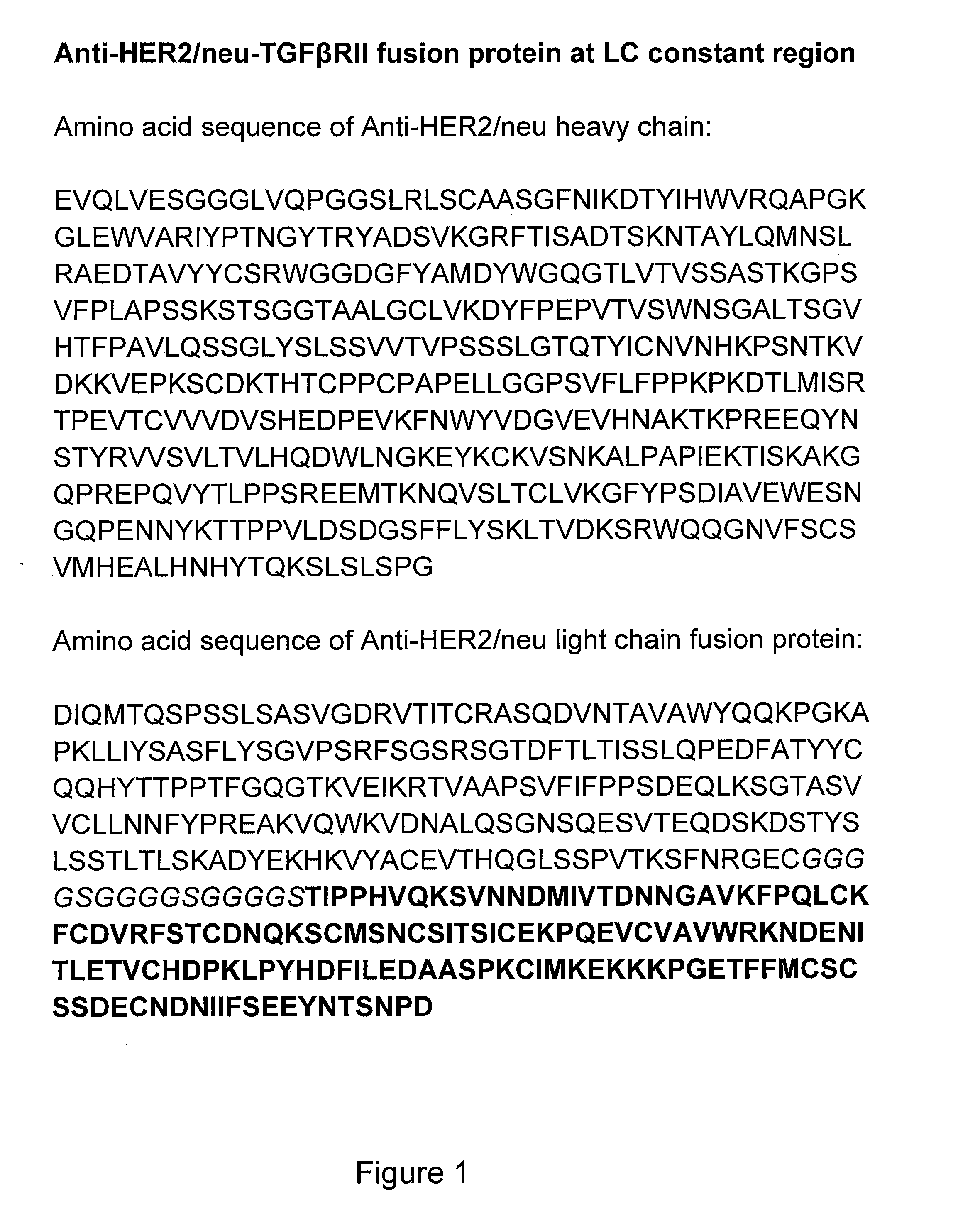
Figure 1 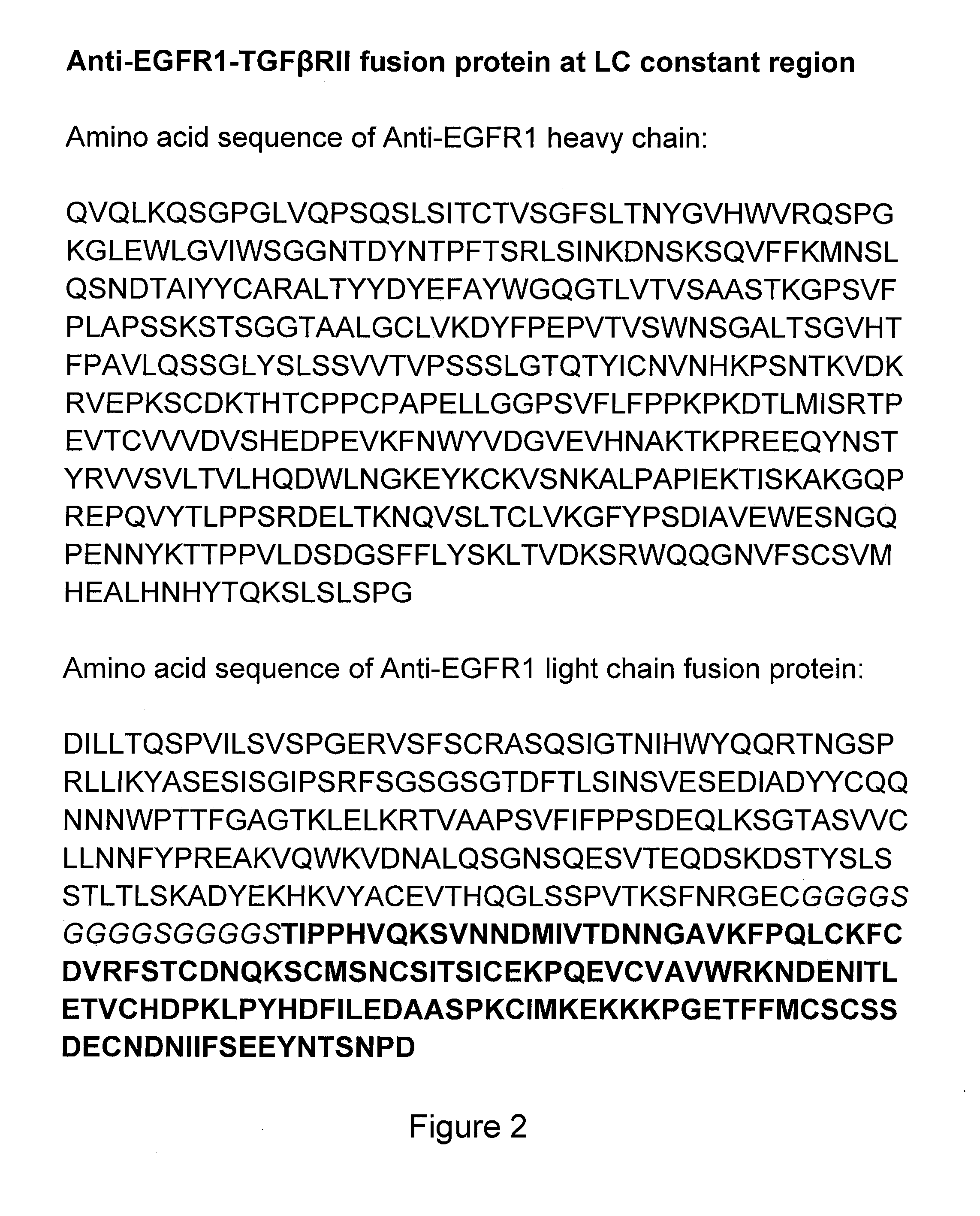
Figure 2 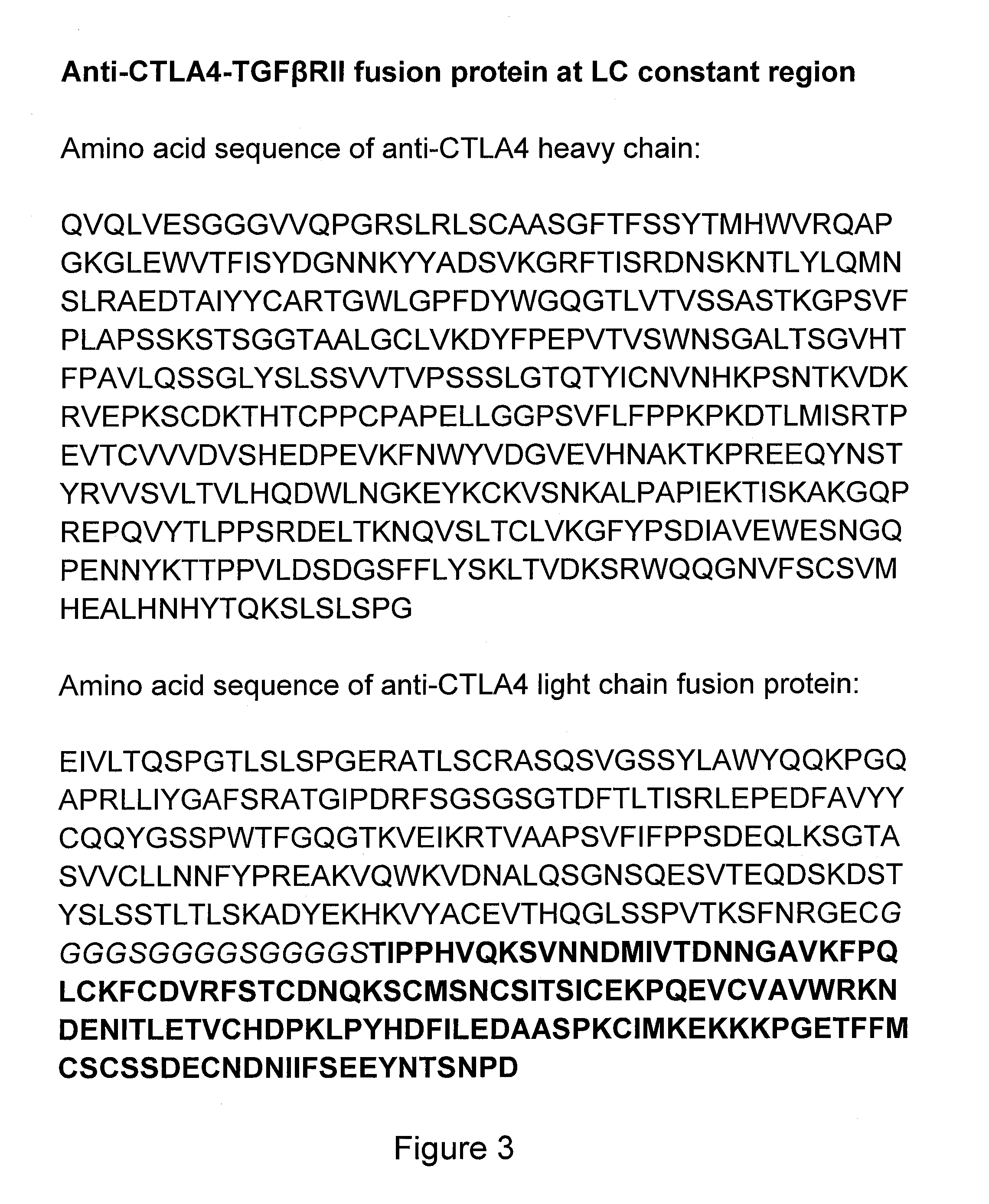
Figure 3
Abstract
Description
CROSS REFERENCE TO RELATED APPLICATIONS
[0001] The application claims priority to Indian Patent Application No. 1689 / CHE / 2012 filed on Apr. 30, 2012 and Indian Patent Application No. 1690 / CHE / 2012 filed on Apr. 30, 2012, the contents of both is hereby incorporated by reference herein for all purposes.BACKGROUND OF THE INVENTION
[0002] 1. Technical Field
[0003] The present invention relates generally to the field of generating fusion proteins to be used in cancer therapy, and more specifically, to nucleotide sequences encoding the fusion proteins, wherein the fusion or chimeric polypeptides comprises at least one targeting moiety and at least one immunomodulatory moiety that counteracts the immune tolerance of cancer cells.
[0004] 2. Related Art
[0005] The immune system provides the human body with a means to recognize and defend itself against microorganisms and substances recognized as foreign or potentially harmful. While passive immunotherapy of cancer with monoclonal antibodies and passiv...
Examples
example 1
[0150]The Fusion proteins comprising of IgG heavy chain linked to immunomodulator (either suppressor or activator) ligands were expressed by codon optimized genes for the expression of CHO cells. The codon optimized nucleotide sequences defined by SEQ ID NOs: 12 to 28 were expressed in (CHO) cells and the expressed chimeric / fusion proteins are shown in
TABLE 1Fusion protein DetailsAnti-HER2 / neu heavy chain + TGFβ-RII ECD and Anti-HER2 / neulight chainAnti-EGFR1 heavy chain + TGFβ-RII ECD and Anti- EGFR1 lightchainAnti-CTLA4 heavy chain + TGFβ-RII ECD and Anti-CTLA4 lightchainAnti-CTLA4 heavy chain + PD1 ectodomain and Anti-CTLA4light chainAnti-HER2 / neu heavy chain + 4-1BBL and Anti-HER2 / neu lightchainAnti-EGFR1 heavy chain + 4-1BBL and Anti- EGFR1 light chainAnti-CTLA4 heavy chain + 4-1BBL and Anti-CTLA4 light chainPD1 ectodomain-Fc-4-1BBLTGFβRII ECD-Fc-4-1BBLAnti-EGFR1 heavy chain + PD1 ectodomain and Anti- EGFR1 lightchainAnti-CD20 heavy chain + 4-1BBL and Anti- CD20 light chainAnti-...
example 2
[0152]Protein A / SEC chromatography. The Anti-HER2 / neu-TGFβRII and Anti-EGFR1-TGFβRII samples were analyzed by ProteinA / SEC chromatography and the results are shown in FIG. 23. FIG. 23 A shows a sharp peak of elution of Bmab200(Herceptin) vs a broader elution peak is believed to be a measure of heterogeneity due to presence of glycosylation as there are three additional N-glycosylation sites that are present in the TGFβRII region. Notably storage at −80 C did not causing aggregation. The shift in the position or appearance of the peak early in SEC column indicates that the increase in the molecular weight is because of the fusion partner. This once again confirms that the full length molecule is being expressed. FIG. 23 B shows a sharp peak of elution of Bmab200(Herceptin) vs a broader elution peak which is believed to be a measure of heterogeneity due to presence of glycosylation sites as there are three additional N-glycosylation sites are present in the TGFβRII region. Again, stor...
example 3
[0153]Functional assays for the Fusion proteins. ELISA experiment was carried out to check the binding ability of Anti-HER2 / neu-TGFβRII and Anti-EGFR1-TGFβRII to TGFβ. FIG. 24 A shows that Anti-HER2 / neu-TGFβRII and Anti-EGFR1-TGFβRII molecules bind to the TGFβ indicating that the fusion protein is functional. FIG. 24 B shows that Anti-HER2-TGFβRII inhibits the proliferation of BT474 cell line similar to the Bmab200 (Herceptin). FIG. 25 shows that Anti-EGFR1-TGFβRII-inhibits the proliferation of A431 cell line similar to the Cetuximab.