
Enhanced aav-mediated gene transfer for retinal therapies
a technology of gene transfer and retinal therapy, which is applied in the direction of sense disorder, drug composition, peptide, etc., can solve the problem that there is no recombinant virus that transduces, and achieves the effect of preventing, preventing, and preventing the progression of the diseas
Patent Information
- Authority / Receiving Office
- US · United States
- Patent Type
- Applications(United States)
- Current Assignee / Owner
- Publication Date
- 2015-12-31
Smart Images
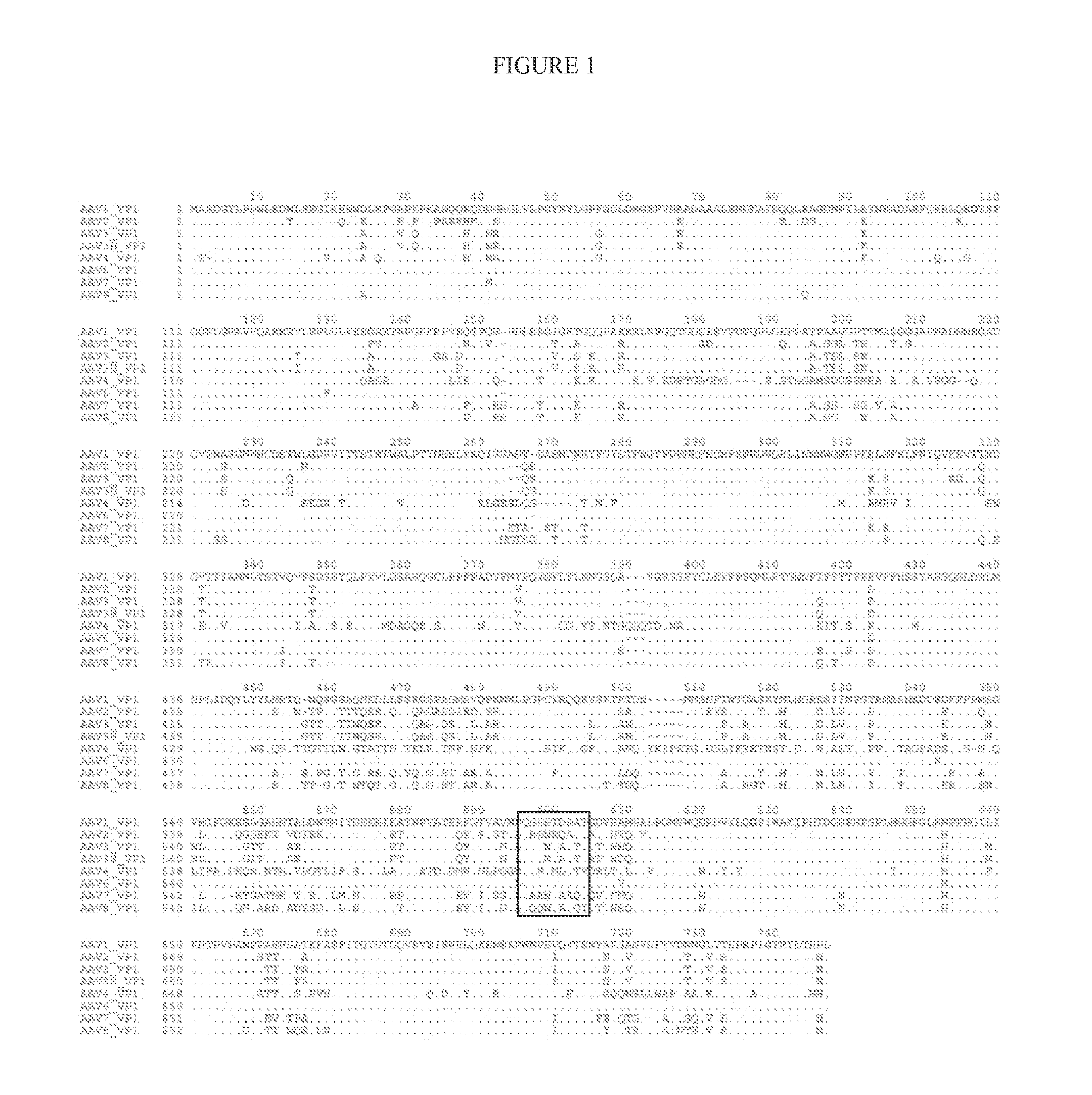
Figure 1 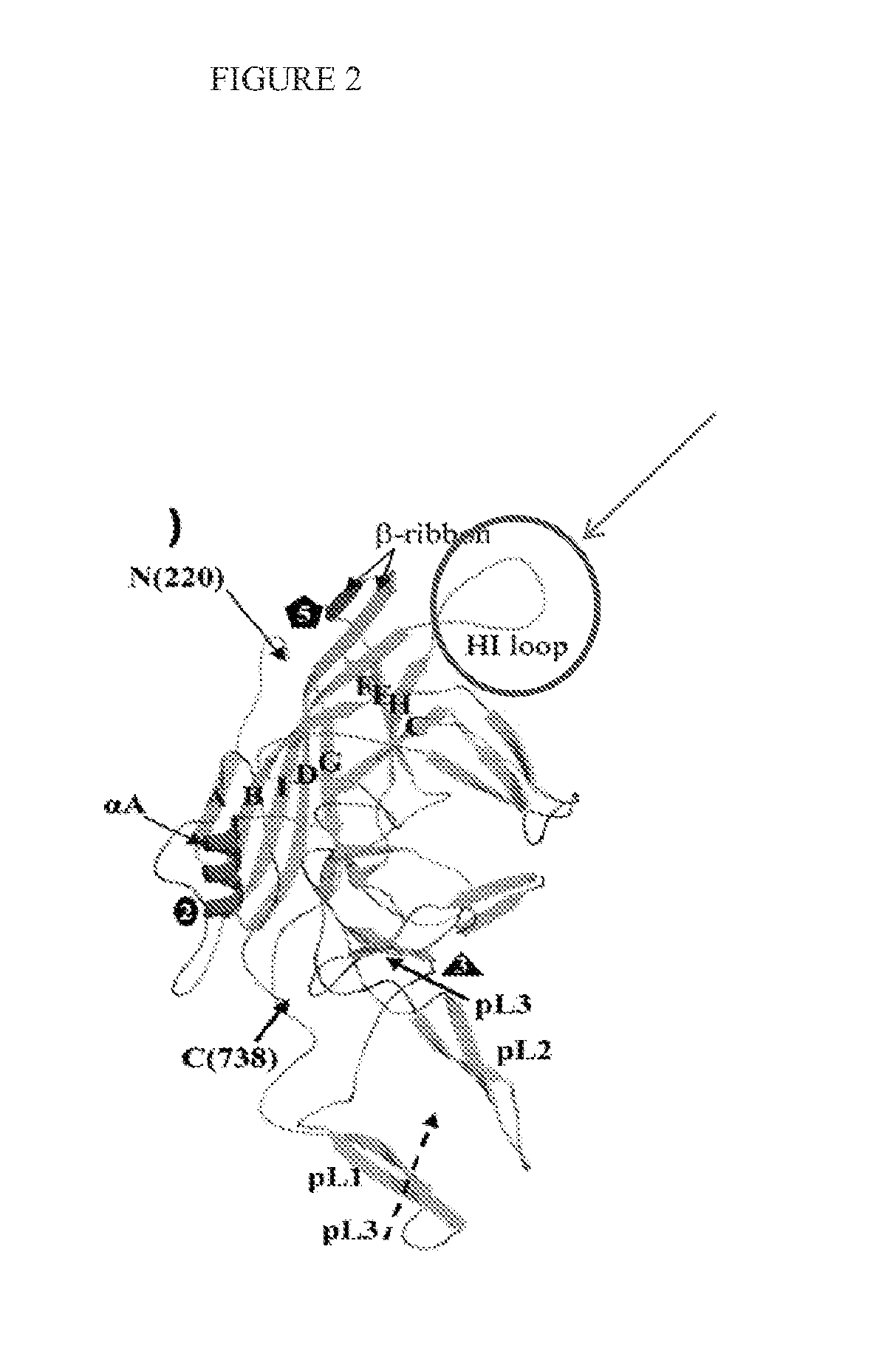
Figure 2 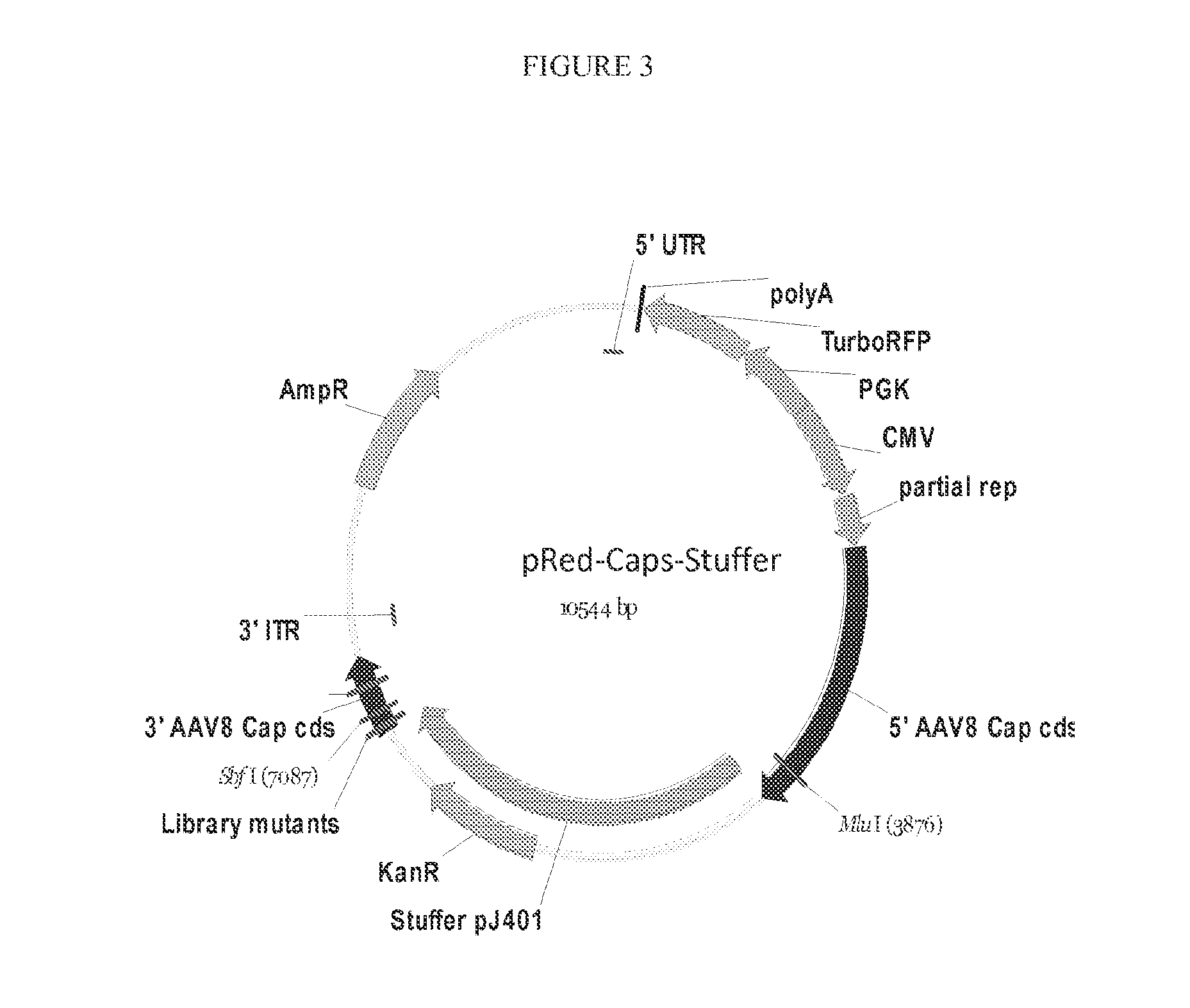
Figure 3
Abstract
Description
BACKGROUND OF THE INVENTION
[0001] Recombinant Adeno-Associated Virus (rAAV) vectors have been instrumental in achieving restoration of vision in humans with Leber's congenital amaurosis due to RPE65 mutations and in a number of animal models (reviewed by Stieger, K. et al, Adeno-associated virus mediated gene therapy for retinal degenerative diseases. Methods Mol Biol 807, 179-218 (2011) which is incorporated by reference herein). The first retinal gene therapy clinical trials for retinal degenerative disease were initiated in humans in 2007 using AAV2 to deliver test the safety of therapeutic gene expression in children and adults with an early form of blindness called Leber's Congenital Amaurosis. Now, five years later, there are 7 Phase I / II gene therapy trials in progress involving inherited blindness. The first Phase III clinical trial initiated enrollment in the fourth quarter of 2012 (http: / / clinicaltrials.gov) and the results to date have been excellent. More than 125 individ...
Examples
example 1
Generation of Mutants
[0111]To find recombinant AAV capable of transducing bipolar cells, the divergent VP3 loop HI of the AAV8 capsid gene was targeted for mutation (FIG. 2). Briefly, a library of mutations across 9 amino acids (aa 587-595 of AAV8 vp1), was engineered into the AAV capsid and this library cloned into the plasmid pRFP-AAV8cap (FIG. 3). The AAV viral library was then produced by triple transfection of 293T cells using standard methods. See, e.g., Flannery and Visel, Methods in Molecular Biology, 935:351-69 (September 2012), which is incorporated by reference herein.
[0112]From crystallography studies carried out at 2.6-A resolution Nam et al have contributed the lack of heparan sulfate binding by AAV8 to be in part due to the structural differences in the region utilized for receptor recognition by AAV2 (highlighted in red in FIG. 1A, from PDB 2QA0, (Nam et al., 2007)). Two critical residues, R585 and R588 are particularly necessary for the ability of AAV2 to bind hepar...
example 2
Mutant Selection
[0122]The viral library (2 μl) was subretinally injected into 10 adult transgenic mice with GFP-labeled ON-bipolar cells (mGluR6-EGFP mice, as described in Dhingra et al, J Comp Neurol. 2008 Oct. 10; 510(5):484-96 which is incorporated by reference herein). After 3 weeks, the GFP-labeled cells were isolated after retinal cell dissociation FACS sorting. Viruses were isolated from the bipolar cells and the mutant region of the capsid was amplified by PCR and sequenced. These capsid sequences where then reincorporated into the pRFP-AAV8 cap plasmid for a second round of library production and injection.
[0123]After 3 weeks, FACS sorting was again performed. ON-bipolar cells expressed a double positive for dsRED and GFP. Non-bipolar cells transfected with AAV were positive for dsRED alone. The ON-bipolar cells accounted for about 1% of the parent population, while the transfected non-bipolars accounted for about 9.1% (FIG. 4). It was noted that a large range of mutants we...
example 3
Expression from AAV8-b Compared to AAV8wt Using the Ubiquitous Promoter EF 1α
[0126]1.5 μl of AAV8-b(EF1α-EGFP) at a titer of 5.3×10¹² gc / ml was subretinally injected into 10 week old C57B16 (WT) mice (n=5). For comparison, 1.5 μl of AAV8wt-(EF1α-EGFP) at a titer of 6.4×10¹³ gc / ml was subretinally injected into 10 week old C57B16 (WT) mice (n=5). After three weeks the mice were sacrificed, the retinas removed and 150 μm vibratome sections were made of the tissue. Immunostaining was performed to identify bipolar cell strata (anti-ChAT). This requires a 7-day incubation causing a loss in fluorescence, therefore GFP was also labeled (anti-GFP). Sections were imaged by confocal microscopy with equivalent laser intensities, gains and step sizes for a 40× z-stack. Fluorescent bipolar cells are marked with an arrow to distinguish them from amacrine cells (FIG. 7). The amacrine cell bodies lie just beneath the bipolar cell bodies and have a dendritic tree spreading horizontally across the re...