
A Semiconductor Laser
a semiconductor laser and laser technology, applied in semiconductor lasers, instruments, optical elements, etc., can solve the problems of reducing the rate of finished products, adversely affecting the quality of finished products, and high processing costs, so as to improve the efficiency and reliability of lasers, reduce the thickness of substrates, and reduce the effect of thermal dissipation
Patent Information
- Authority / Receiving Office
- US · United States
- Patent Type
- Applications(United States)
- Current Assignee / Owner
- Publication Date
- 2018-02-01
Smart Images
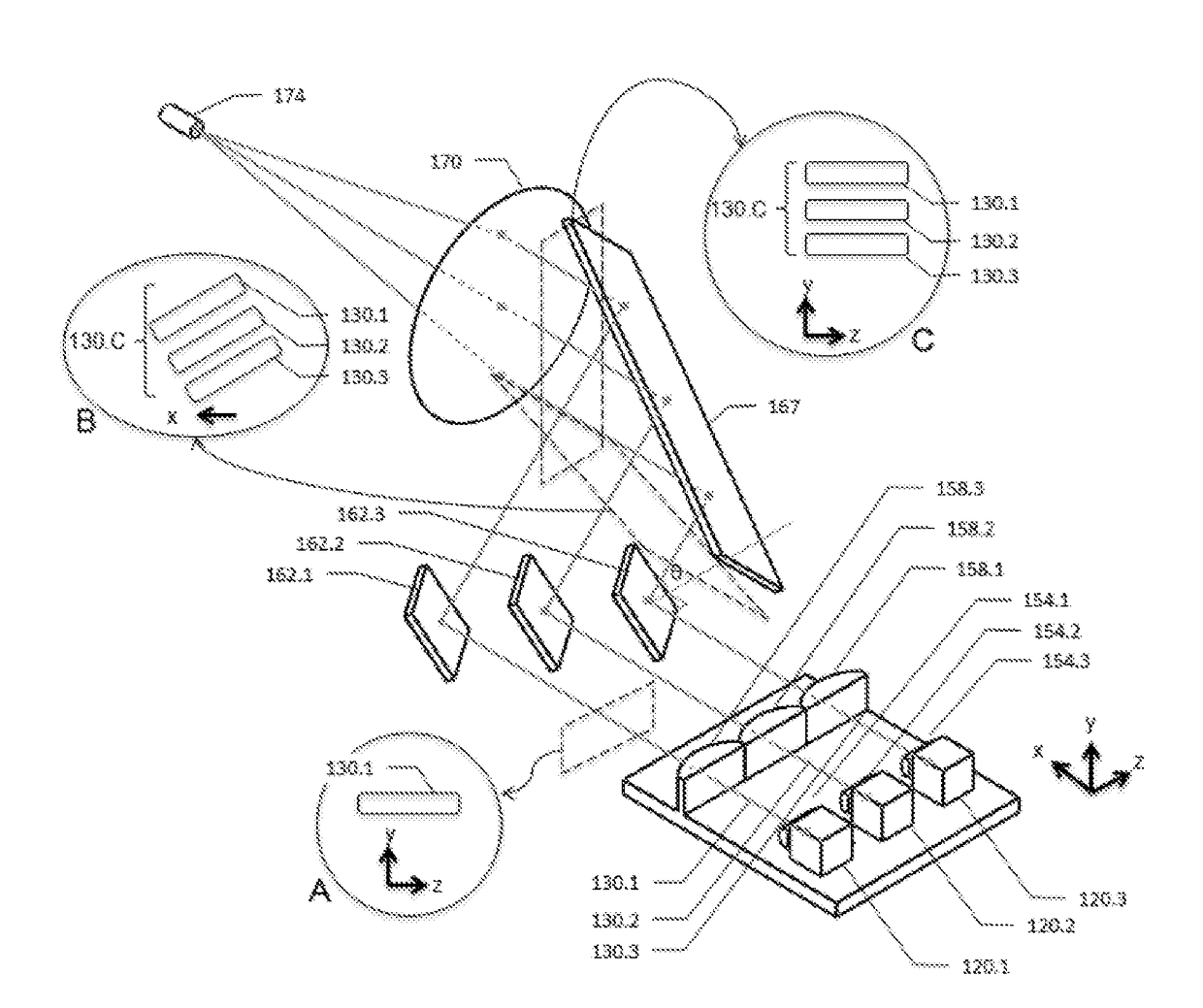
Figure 1 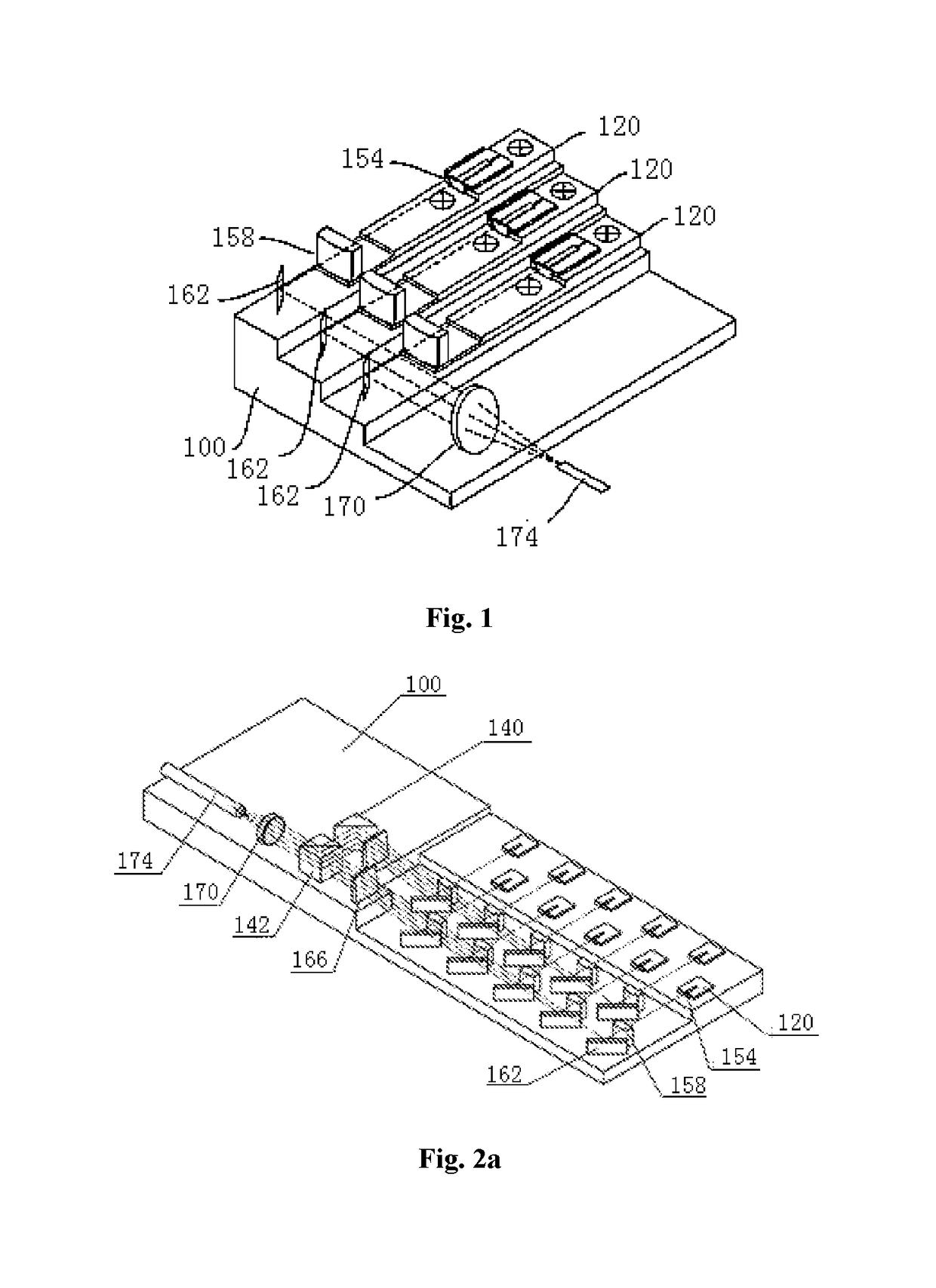
Figure 2 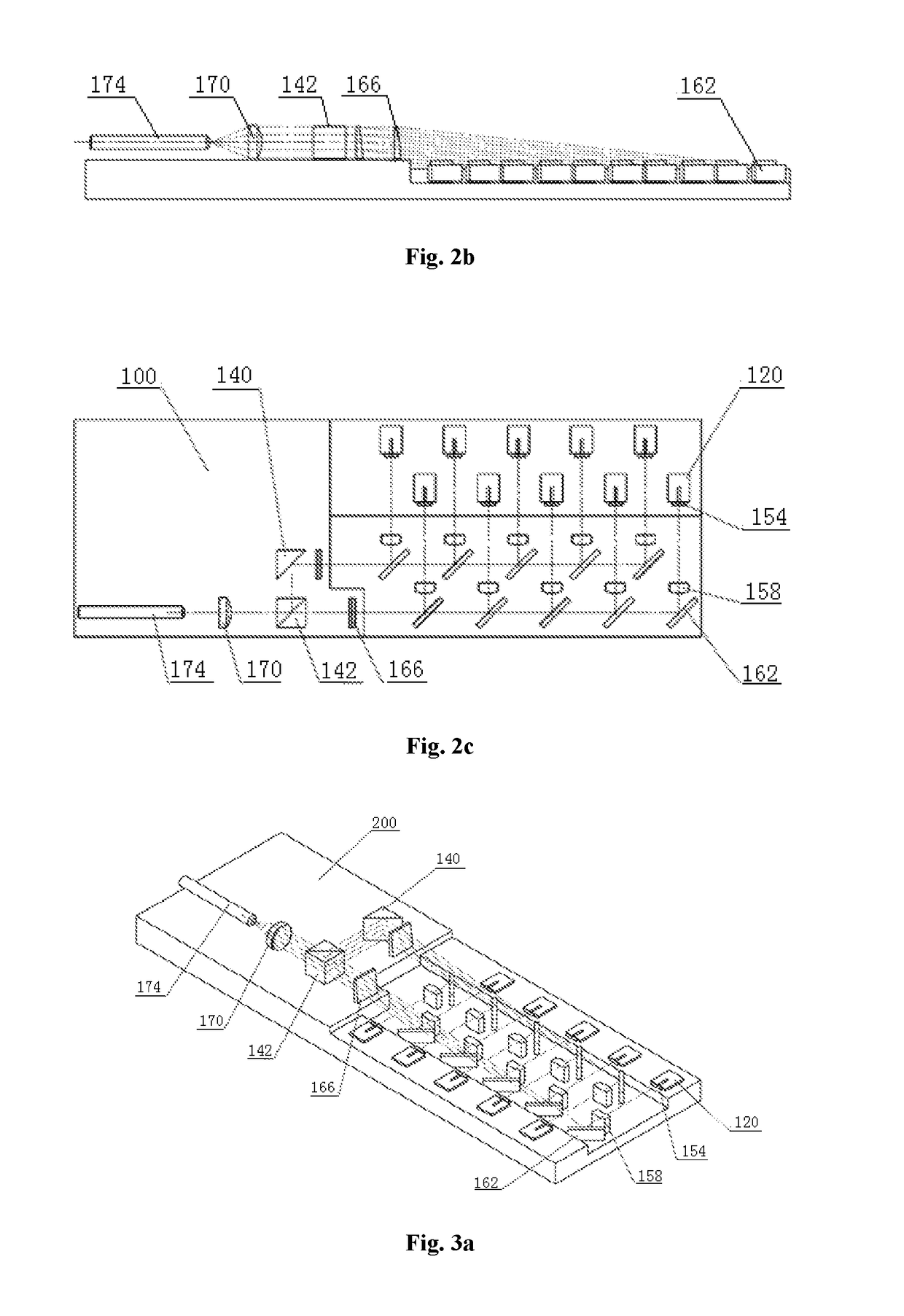
Figure 3
Abstract
Description
TECHNICAL FIELD
[0001] The present invention belongs to the field of laser technology, particularly relates to a semiconductor laser.DESCRIPTION OF RELATED ART
[0002] Currently, the beam combiner of most of multiple single-emitter semiconductor lasers adopts a stepped structure, in which a substrate is processed to include steps equally spaced and on each of the steps a laser diode chip is mounted, as shown in FIG. 1. This method is of high requirement of precision of the step spacing processing, and of strict requirement of parallelism between the steps, therefore of relatively high processing cost. In the meanwhile, each step has a different thermal dissipation capacity due to the existence of height difference. When increasing the number of single-emitter diode lasers to increase the output power, it is necessary to compress the step spacing. Due to the existence of machining tolerance, it caused negative influence to the assembly and adjustment of an optical element is greatly and a...
Examples
embodiment 1
[0046]The present invention relates to a fiber-coupled laser, as shown in FIG. 2a-2c, including a substrate 100, two rows of lasers 120, a plurality of fast axis collimation components 154, a plurality of slow axis collimation components 158, a plurality of steering mirrors 162, a steering rectangular wedge prism 166, a steering prism 140, a polarization beam combination prism 142, a focusing lens 170 and a coupling optical fiber 174. The steering compression optical systems are the combinations of the steering mirrors 162 with the steering rectangular wedge prism 166. The laser beams outputted by the plurality of lasers 120, after being collimated and combined, are coupled into the optical fiber 174, and then outputted.
[0047]In the present embodiment, the substrate 100 is made of a material of high thermal conductivity such as oxygen-free copper. As shown in FIG. 2a-2c, there are three planes of different heights on the substrate 100 which are respectively used for carrying the las...
embodiment 2
[0049]The structure of the present embodiment is substantially the same as that of the Embodiment 1, except that the two rows of LDs are relatively crossed and welded at two opposite sides of the substrate 200 and all of the LDs are located in the same horizontal plane, as shown in FIG. 3a-3c.
embodiment 3
[0050]Two rows of lasers 120 are located in different planes, each row of emitters is located in the same horizontal plane, and there is a specific spacing d2 in heights between two rows. The steering compression optical systems are formed by the combinations of the steering mirrors 162 and a rhombic prism 135. The rhombic prism 135 lifts the beams emitted by the lower row of lasers 120, ensuring that the two beams of laser, after being steered and compressed, have the same height when arriving at the polarization beam combination prism 142, as shown in FIG. 4a-4c.