
Epoxy resin composition
a technology of epoxy resin and composition, applied in the direction of non-macromolecular adhesive additives, coatings, basic electric elements, etc., can solve the problems of poor storage stability, inferior workability, high relative dielectric constant and dielectric loss, etc., to achieve excellent adhesion to metal, good workability during use, and high storage stability
Patent Information
- Authority / Receiving Office
- US · United States
- Patent Type
- Applications(United States)
- Current Assignee / Owner
- Publication Date
- 2022-08-04
Smart Images
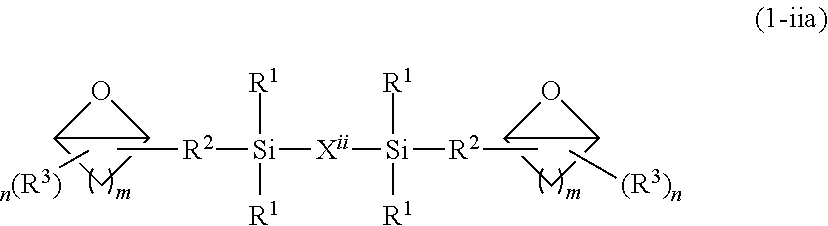
Figure 1 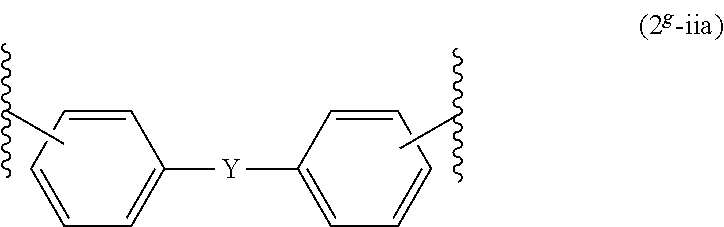
Figure 2 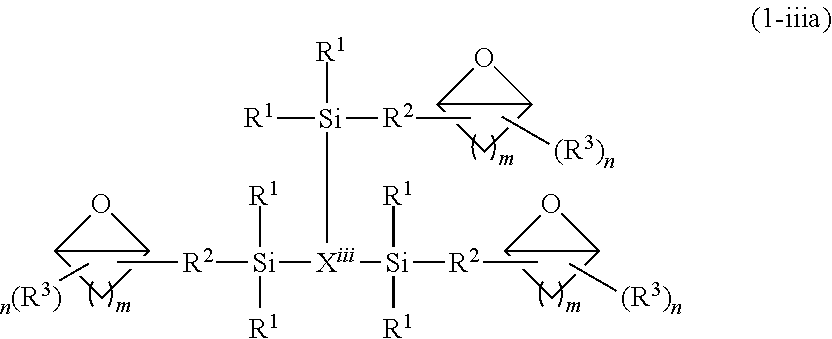
Figure 3
Abstract
Description
TECHNICAL FIELD
[0001] The present invention relates to an epoxy resin composition, a cured product obtained by using the same, use of the composition, etc.BACKGROUND ART
[0002] Epoxy resin compositions are widely used in various industrial fields, such as paints, adhesives, and electrical and electronic because cured products obtained from them have excellent adhesion, corrosion resistance, electrical characteristics, and the like. Among these, in the field of electronic materials, such as semiconductors and printed circuit boards, epoxy resin compositions are used as sealing materials, printed circuit board materials, etc. With the technological innovation in these fields, the demand for higher performance is increasing.
[0003] Conventionally, epoxy resin compositions containing a bisphenol epoxy resin or a cresol novolak epoxy resin, a phenol novolak resin, and a curing accelerator have mainly been used as resin compositions for semiconductor sealing materials and resin compositions fo...
Examples
production example 1 (
Production of Epoxy Resin A)
[0165]Allyl glycidyl ether (5.9 g), 0.05 g of 2 mass % ethanol solution of hexachloroplatinic acid hexahydrate, and 100 g of toluene were placed in a 200-mL four-necked flask equipped with a stirrer, a thermometer, and a condenser in a nitrogen atmosphere, and the liquid temperature was raised to 70° C. Thereafter, 5.0 g of 1,4-bis(dimethylsilyl)benzene was added dropwise for 15 minutes, and the mixture was then stirred at 90° C. for 4 hours. After the toluene was concentrated, 10.3 g (epoxy equivalent: 211 g / eq) of 1,4-bis[(2,3-epoxypropyloxypropyl)dimethylsilyl]benzene (epoxy resin A) was obtained as a colorless, transparent liquid.
production example 2 (
Production of Epoxy Resin B)
[0166]1,2-Epoxy-5-hexene (5.0 g), 0.05 g of 2 mass % ethanol solution of hexachloroplatinic acid hexahydrate, and 100 g of toluene were placed in a 200-mL four-necked flask equipped with a stirrer, a thermometer, and a condenser in a nitrogen atmosphere, and the liquid temperature was raised to 70° C. Thereafter, 5.0 g of 1,4-bis(dimethylsilyl)benzene was added dropwise for 15 minutes, and the mixture was then stirred at 90° C. for 5 hours. After the toluene was concentrated, 9.5 g (epoxy equivalent: 195 g / eq) of 1,4-bis[(5,6-epoxyhexyl)dimethylsilyl]benzene (epoxy resin B) was obtained as a colorless, transparent liquid.
production example 3 (
Production of Epoxy Resin C)
[0167]3,4-Epoxy-1-butene (4.0 g), 0.05 g of 2 mass % ethanol solution of hexachloroplatinic acid hexahydrate, and 100 g of toluene were placed in a 200-mL four-necked flask equipped with a stirrer, a thermometer, and a condenser in a nitrogen atmosphere, and the liquid temperature was raised to 70° C. Thereafter, 5.0 g of 1,4-bis(dimethylsilyl)benzene was added dropwise for 15 minutes, and the mixture was then stirred at 90° C. for 5 hours. After the toluene was concentrated, 8.5 g (epoxy equivalent: 167 g / eq) of 1,4-bis[(3,4-epoxybutyl)dimethylsilyl]benzene (epoxy resin C) was obtained as a colorless, transparent liquid.