

Balloons for medical devices and fabrication thereof
a technology for medical devices and balloons, applied in the field of balloons for medical devices, can solve the problems of low tensile strength, severe limitations in further extension, and undesirable properties in addition to general non-distinction, and achieve the effects of good strength, convenient use, and convenient us
Patent Information
- Authority / Receiving Office
- US · United States
- Patent Type
- Patents(United States)
- Current Assignee / Owner
- Publication Date
- 2002-12-31
- Estimated Expiration
- Not applicable · inactive patent
Smart Images
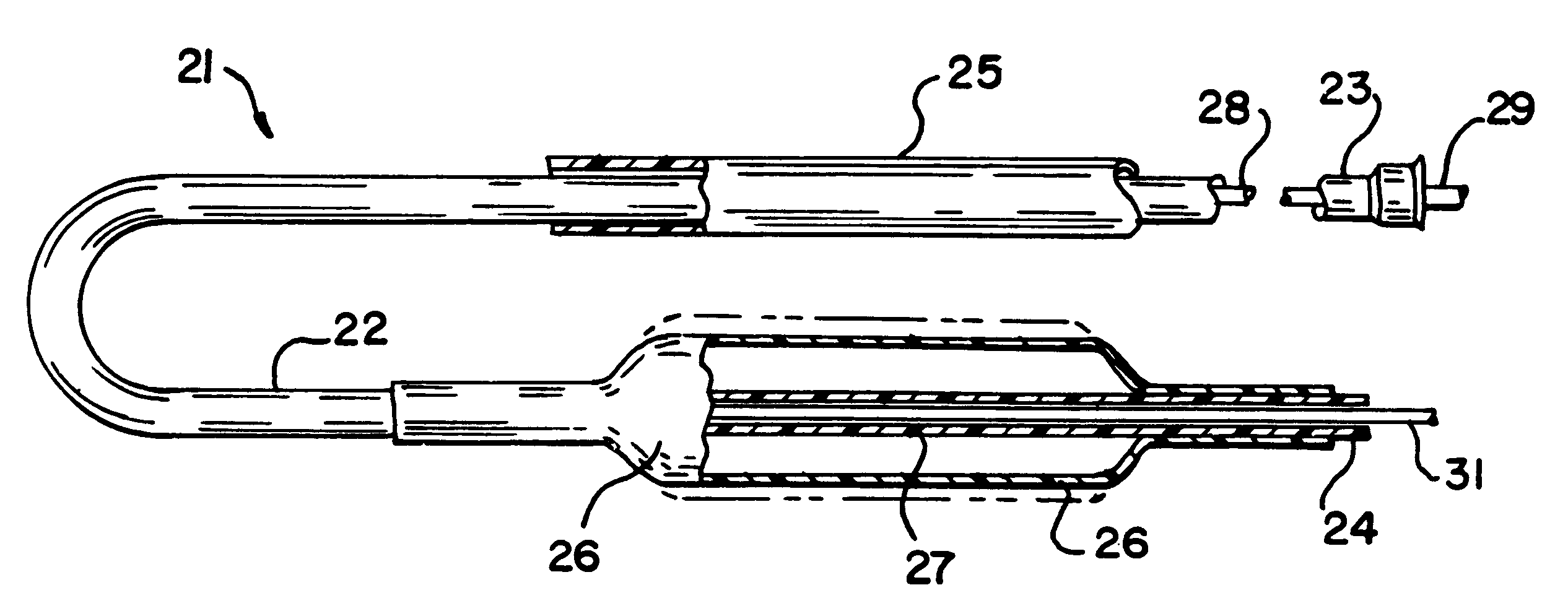
Figure 1 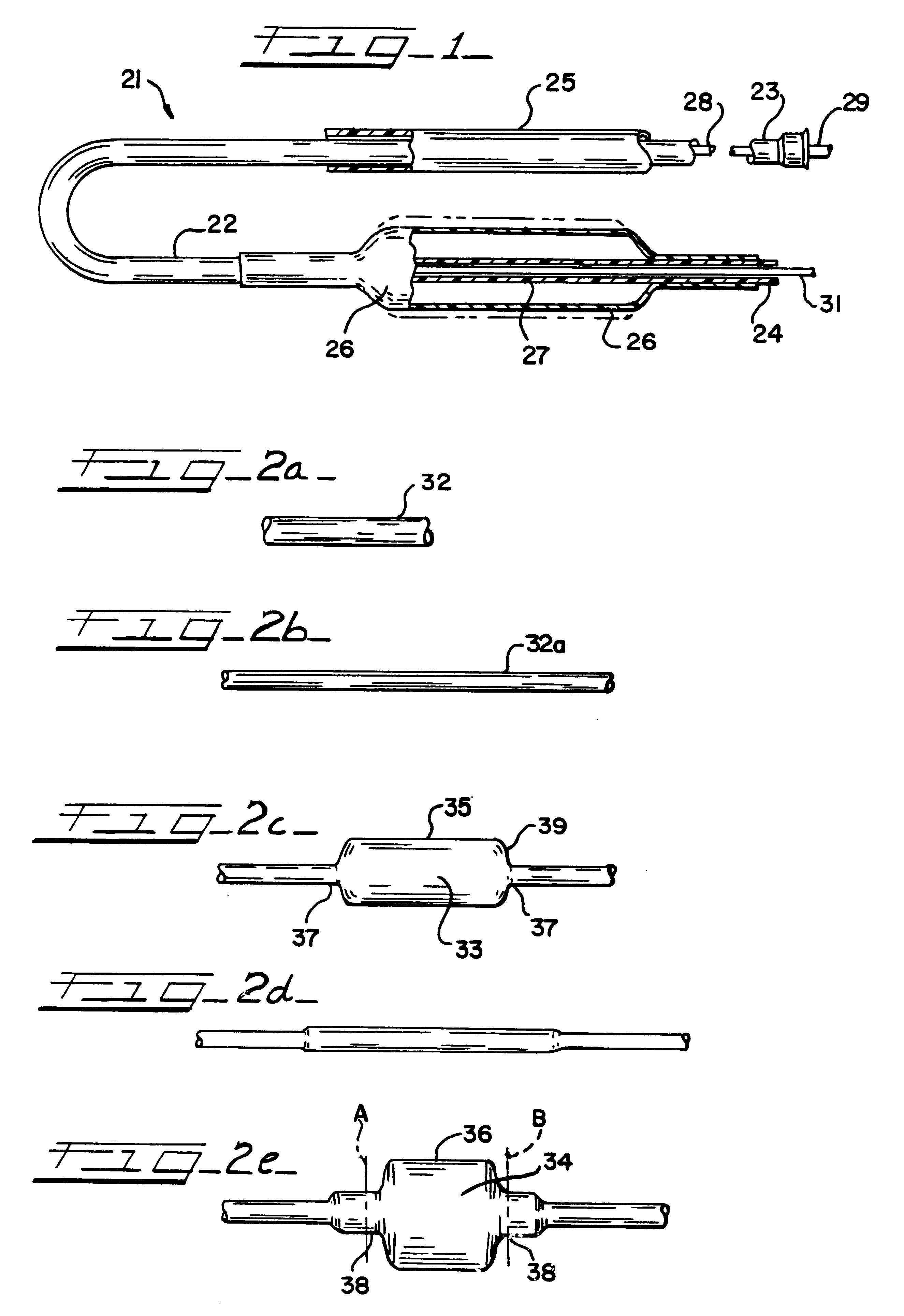
Figure 2 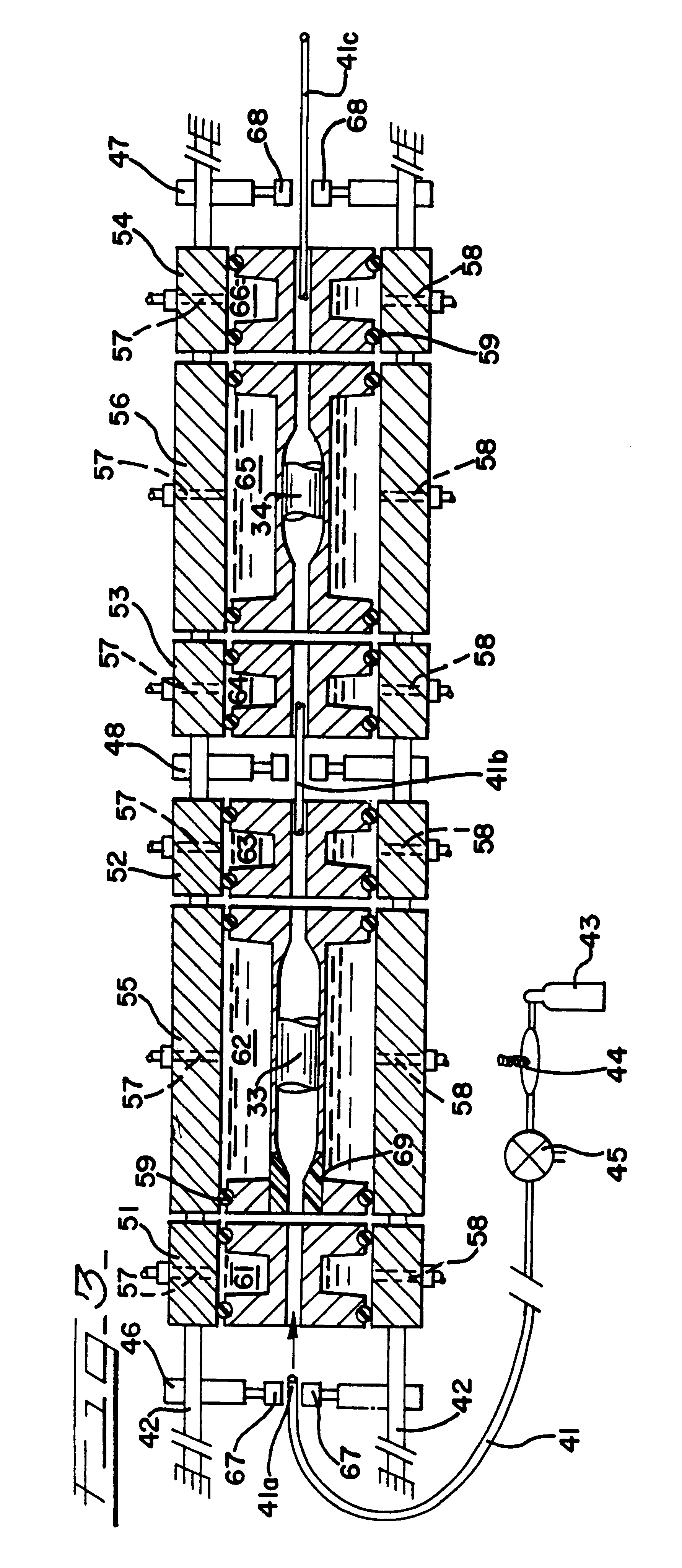
Figure 3
Abstract
Description
BACKGROUND AND DESCRIPTION OF THE INVENTIONThe present invention generally relates to balloons for medical devices, as well as to processes and equipment for forming same. More particularly, the invention relates to medical or surgical balloons and to catheters ncorporating them, such as those designed for angioplasty, valvuloplasty and urological uses and the like. The balloons exhibit the ability to be tailored to have expansion properties which are desired for a particular end use. The expansion property of particular interest is the amount or percentage of expansion or stretching beyond a non-distended inflated size at which the balloons are inflated to remove folding wrinkles but are not stretched. Balloons which are especially suitable in this regard are made of nylon or polyamide tubing that has been formed into the desired balloon configuration.Catheter balloons and medical devices incorporating them are well-known for use in surgical contexts such as angioplasty procedures ...
Examples
Embodiment Construction
An illustrative catheter is generally designated in FIG. 1 by reference numeral 21. Catheter 21 includes a catheter tube 23 having a proximal end 23 and a distal end 24. A guiding catheter 25 is also illustrated. A medical balloon 26 is shown secured to the distal portion of the catheter tube 22 in a location overlying one or more apertures 27 through the catheter tube. Extending through the lumen of the catheter tube 22 is an inner elongated body 28, such having a proximal end 29 and a distal tip end 31. The inner body 28 may be solid or have an internal lumen, depending upon the function hat the inner body is to perform, whether it be simply a guiding function or whether it is intended to also provide the capability to insert materials into the bloodstream or measure parameters of the bloodstream, or the like.
Except for the balloon 26, all of these various components perform functions that are generally appreciated in the art. Typically with the aid of the guiding catheter 25, the...