
Substituted arylalcanoic acid derivatives as PPAR pan agonists with potent antihyperglycemic and antihyperlipidemic activity
a technology of ppar pan agonist and arylalcanoic acid, which is applied in the field of preparation and pharmaceutical use of novel substituted arylalcanoic acid derivatives, can solve the problems of insufficient plasma insulin level to overcome, poor protection from eminent cardiovascular risk associated with type 2 diabetes, and sulfonylurea therapy, so as to reduce hyperglycemia and hypertriglyceremia, and reduce glucose and triglycerides levels
Patent Information
- Authority / Receiving Office
- US · United States
- Current Assignee / Owner
- Publication Date
- 2007-09-11
Smart Images
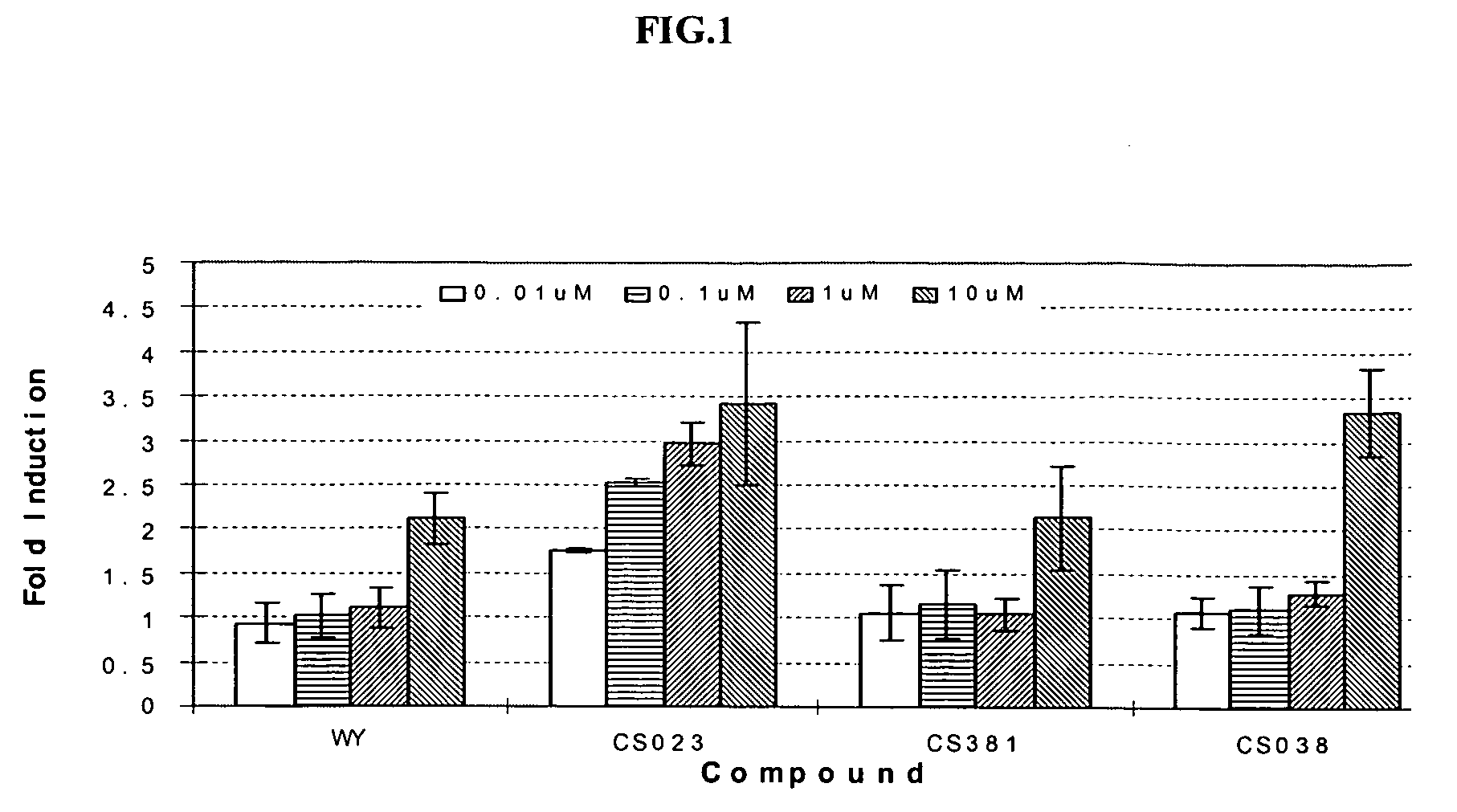
Figure 1 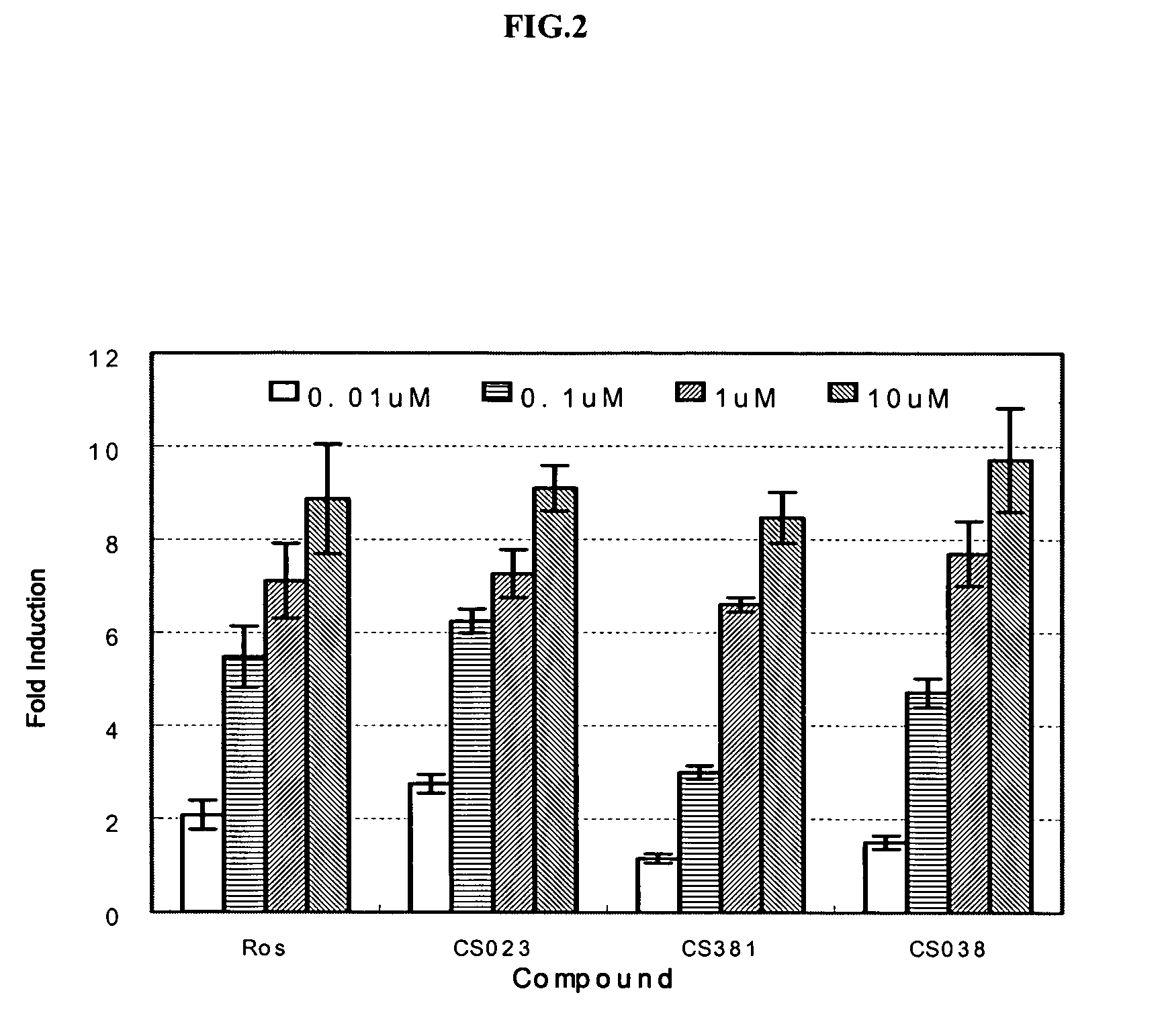
Figure 2 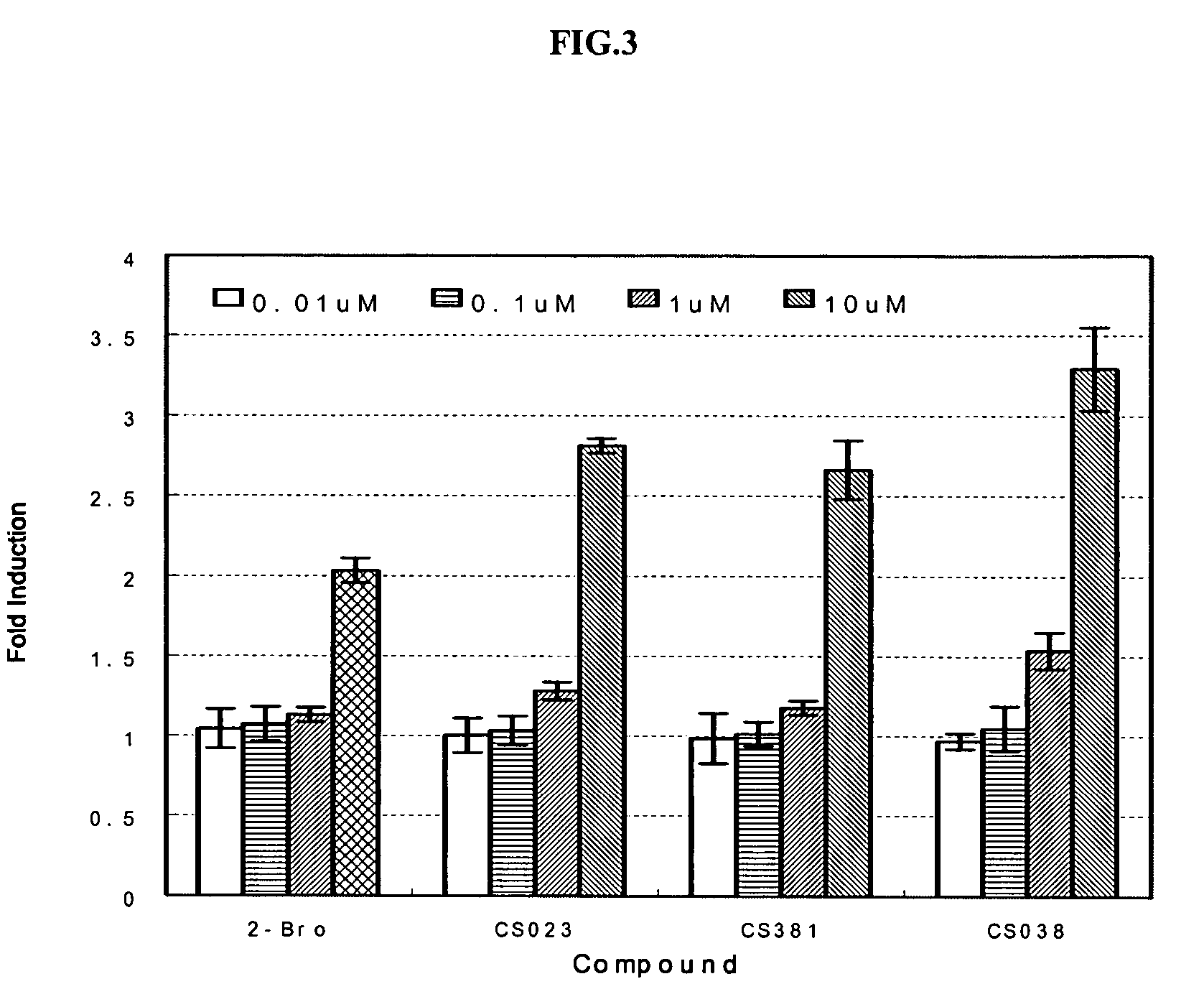
Figure 3
Abstract
Description
[0001] Priority is indicated herein from U.S. Provisional Application Ser. No. 60 / 429,221, filed Nov. 26, 2002; and U.S. Provisional Application Ser. No. 60 / 469,368, filed May 9, 2003.FIELD OF THE INVENTION
[0002] The present invention relates to the preparation and pharmaceutical use of novel substituted arylalcanoic acid derivatives. More particularly, the present invention relates to novel compounds of the general Formula (I), their preparation methods, their pharmaceutical compositions and their use for treatment and / or prevention of conditions mediated by nuclear receptors, in particular the RXR and PPAR heterodimers.
[0003] The present compounds are useful in treatment and / or prevention of type 2 diabetes and associated metabolic syndrome such as hypertension, obesity, insulin resistance, hyperlipidemia, hyperglycemia, hypercholesterolemia, atherosclerosis, coronary artery disease, and other cardiovascular disorders with improved side effects profile commonly associated with conven...
Examples
example 1
Preparation of 2-(1-methyl-3-oxo-3-phenyl-propenylamino)-3-(4-hydroxyphenyl)-propionic acid methyl ester
[0141]
[0142]To a solution of L-tyrosine methyl ester (4.00 g, 20.51 mmol) in methanol (150 ml) is added 1-benzoylacetone (3.66 g, 22.56 mmol), then the mixture is heated to reflux for 24 h. The solvent is evaporated under a vacuum. To the residue is added ethanol (50 ml), then the ethanol is distilled off under atmospheric pressure. The crude product is purified by silica gel chromatography using hexane / EtOAc (4:1) as eluent to give the title compound (6.80 g, 98%).
example 2
Preparation of 2-(1-methyl-3-oxo-3-phenyl-propenylamino)-3-[4-(2-bromoethoxy)-phenyl]-propionic acid methyl ester
[0143]
[0144]To a solution of potassium hydroxide (0.17 g, 2.95 mmol) in ethanol (20 ml) is added 2-(1-methyl-3-oxo-3-phenyl-propenylamino)-3-(4-hydroxyphenyl)-propionic acid methyl ester (1.00 g, 2.95 mmol) and 1,2-dibromoethane (5.54 g, 29.50 mmol). Then the mixture is heated to reflux for 8 hours. After cooled, the reaction mixture is filtered to remove the solid formed, and then the filtrate is evaporated under a vacuum. The crude product is purified by silica gel chromatography using hexane / EtOAc (4:1) as eluent to give the title compound (0.22 g, 17%).
example 3
Preparation of 2-(1-methyl-3-oxo-3-phenyl-propenylamino)-3-[4-(2-carbazolylethoxy)-phenyl]-propionic acid (compound CS023)
[0145]
[0146]To a solution of 2-(1-methyl-3-oxo-3-phenyl-propenylamino)-3-[4-(2-bromoethoxy)-phenyl]-propionic acid methyl ester (0.22 g, 0.49 mmol) and carbazole (0.082 g, 0.49 mmol) in benzene (10 ml) is added tetrabutyl ammonium bromide (0.08 g) and 50% NaOH aqueous solution (0.084 g, 1.08 mmol), then the mixture is heated to reflux for 10 h. After cooled, benzene (30 ml) is added, and the mixture is washed with water(3×30 ml). Then the solvent is evaporated under a vacuum. The crude product is purified by silica gel chromatography using CHCl3 / MeOH (4:1) as eluent to give the title compound (0.05 g, 20%). HRMS calcd for C33H30N2O4: 518.6123. Found: 518.6125. MA calcd for C33H30N2O4: C, 76.43%; H, 5.83%; N, 5.40%. Found: C, 76.21%; H, 5.85%; N, 5.39%.