
Configurable length first-in first-out memory
a technology of configurable length and memory, applied in the field of memory devices, can solve the problems of occupying less space, significant hardware overhead of control circuitry, slowing down bist speed, etc., and achieve the effect of increasing the number of required parallel operations on the chip and reducing the silicon area
Patent Information
- Authority / Receiving Office
- US · United States
- Patent Type
- Patents(United States)
- Current Assignee / Owner
- Publication Date
- 2008-01-22
Smart Images
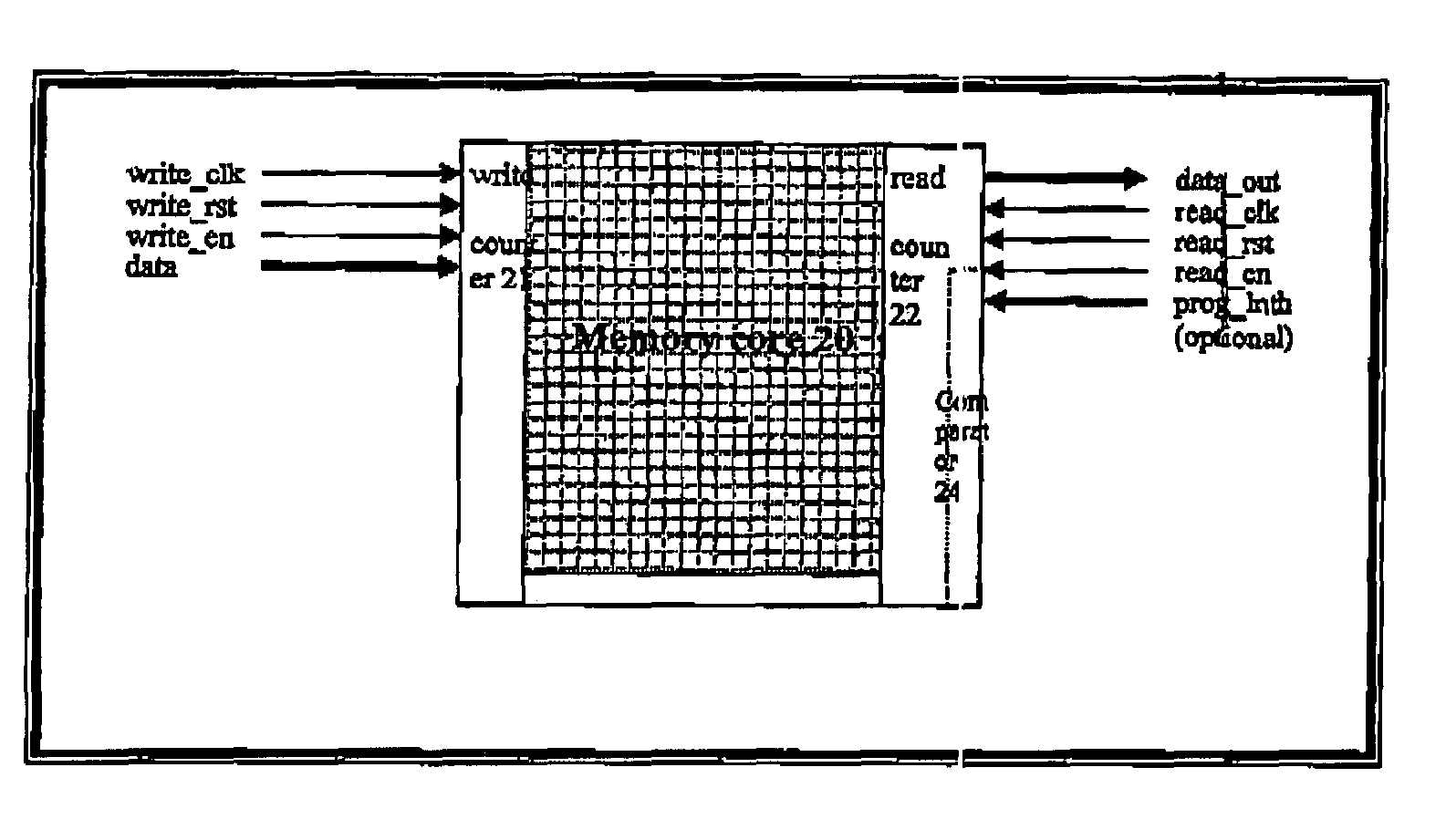
Figure 1 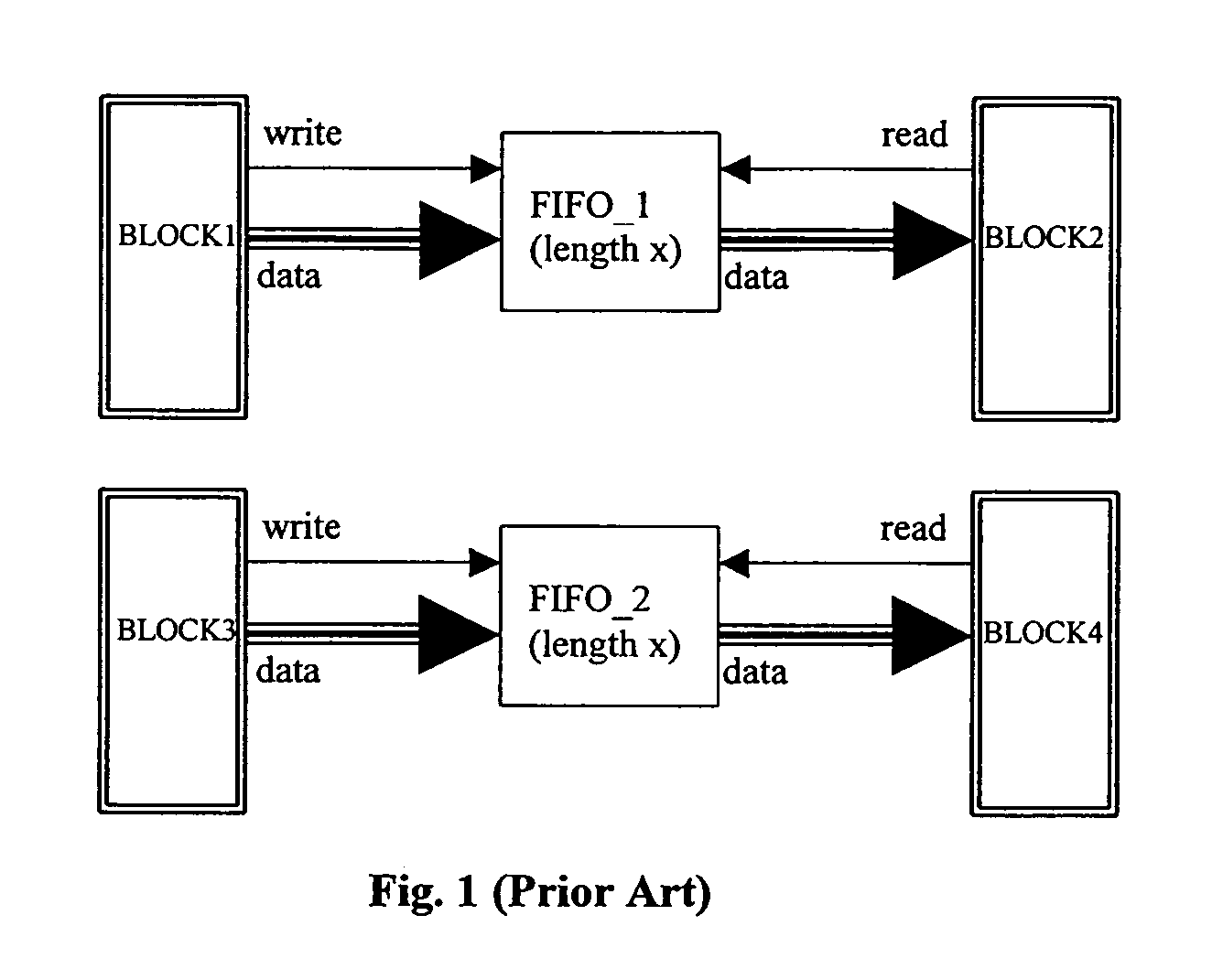
Figure 2 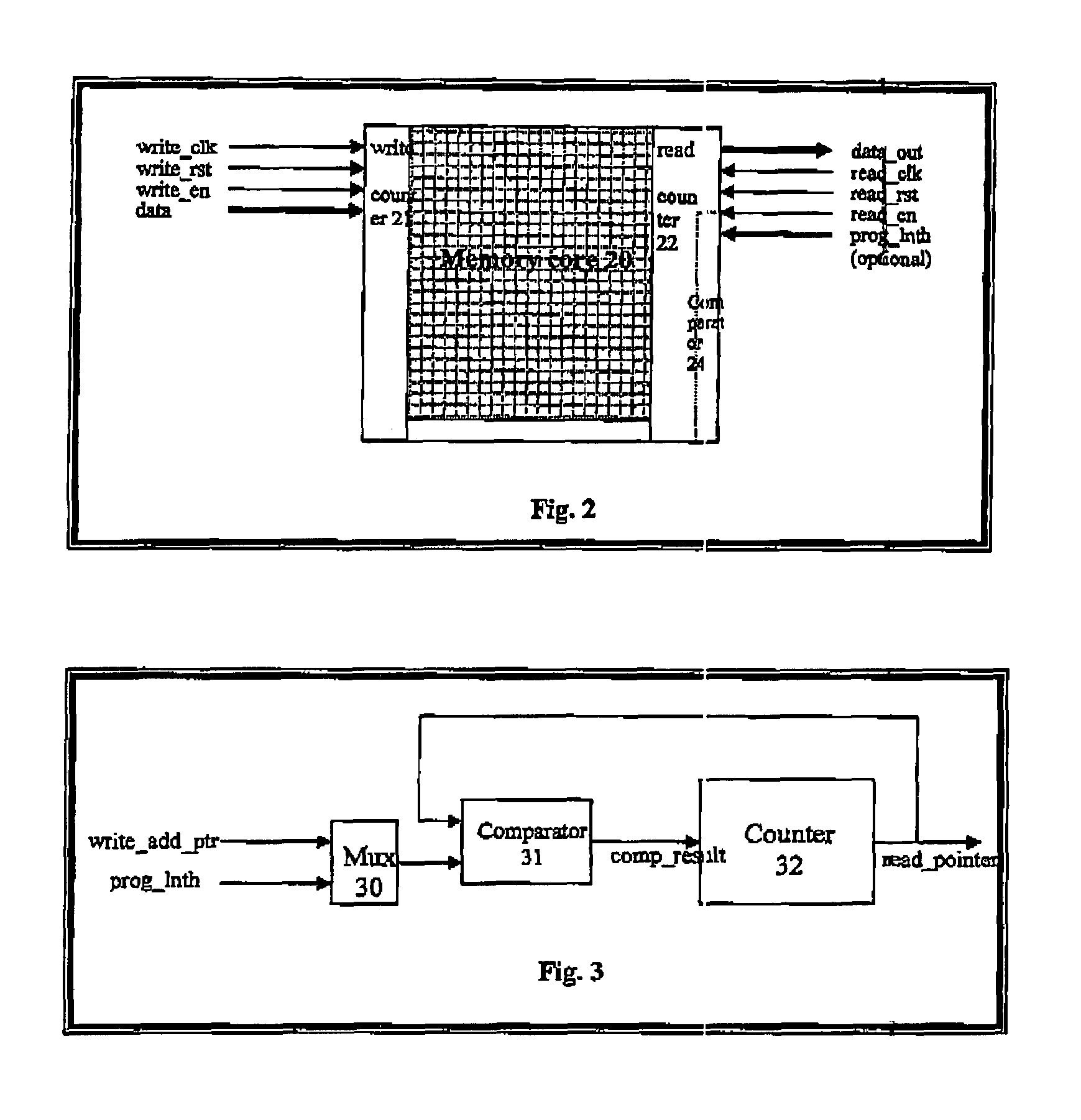
Figure 3
Abstract
Description
FIELD OF THE INVENTION
[0001] The present invention relates to memory devices, and more particularly, to a configurable length first-in first-out (FIFO) memory.BACKGROUND OF THE INVENTION
[0002] Memories are an integral part of a system on chip (SoC). Different types of memories are preferred based on the application and their intended use. First-in first-out (FIFO) memories are commonly used in memory-dominated architecture of SoC devices. Unlike other memories, FIFO memories have no address buses to retrieve data from a particular address. These memories have separate read and write address counters, which increment themselves on each read and write operation, respectively. These counters reset themselves to the first address on reaching the last address in the FIFO memory. FIFO memories occupy less space in comparison to conventional memories due to a lack of address generation devices and address buses. They are extensively used in devices where data retrieval is required in a fixed...
Examples
Embodiment Construction
[0025]The present invention relates to configurable length first-in first-out (FIFO) memories. The architecture of the configurable length FIFO is illustrated in FIG. 2. The architecture comprises four blocks, namely a memory core 20, a write address counter 21, a read address counter 22 and additional circuitry for configuring the FIFO length and resetting the counter.
[0026]The memory core 20 is a general-purpose storage device which is a collection of memory storage cells that may be flip-flops or other storage devices. The outputs of the address counters 21 and 22 are connected to the memory core 20 and are used to point to a particular address in the memory. These counters 21 and 22 may count in an algebraic increment / decrement direction, gray code or any other way. Initially, the value of the read / write address counter 22, 21 is set to a starting value which points to the first address location in the memory core 20.
[0027]After each read / write operation, the counter is incremen...