

Use of probiotic lactic acid bacteria for balancing the skin's immune system
a technology of skin immune system and probiotics, applied in the field of skin immune system balancing, can solve the problems of malignant cells escaping the immune system, accelerated skin ageing, and inability to perform the usual surveillance function, etc., to achieve the effect of reducing the individual's tendency to develop inflammatory and/or irritant reactions, and prophylaxis or treatment of undesirables
Patent Information
- Authority / Receiving Office
- US · United States
- Patent Type
- Patents(United States)
- Current Assignee / Owner
- Publication Date
- 2009-06-16
- Estimated Expiration
- Not applicable · inactive patent
Smart Images
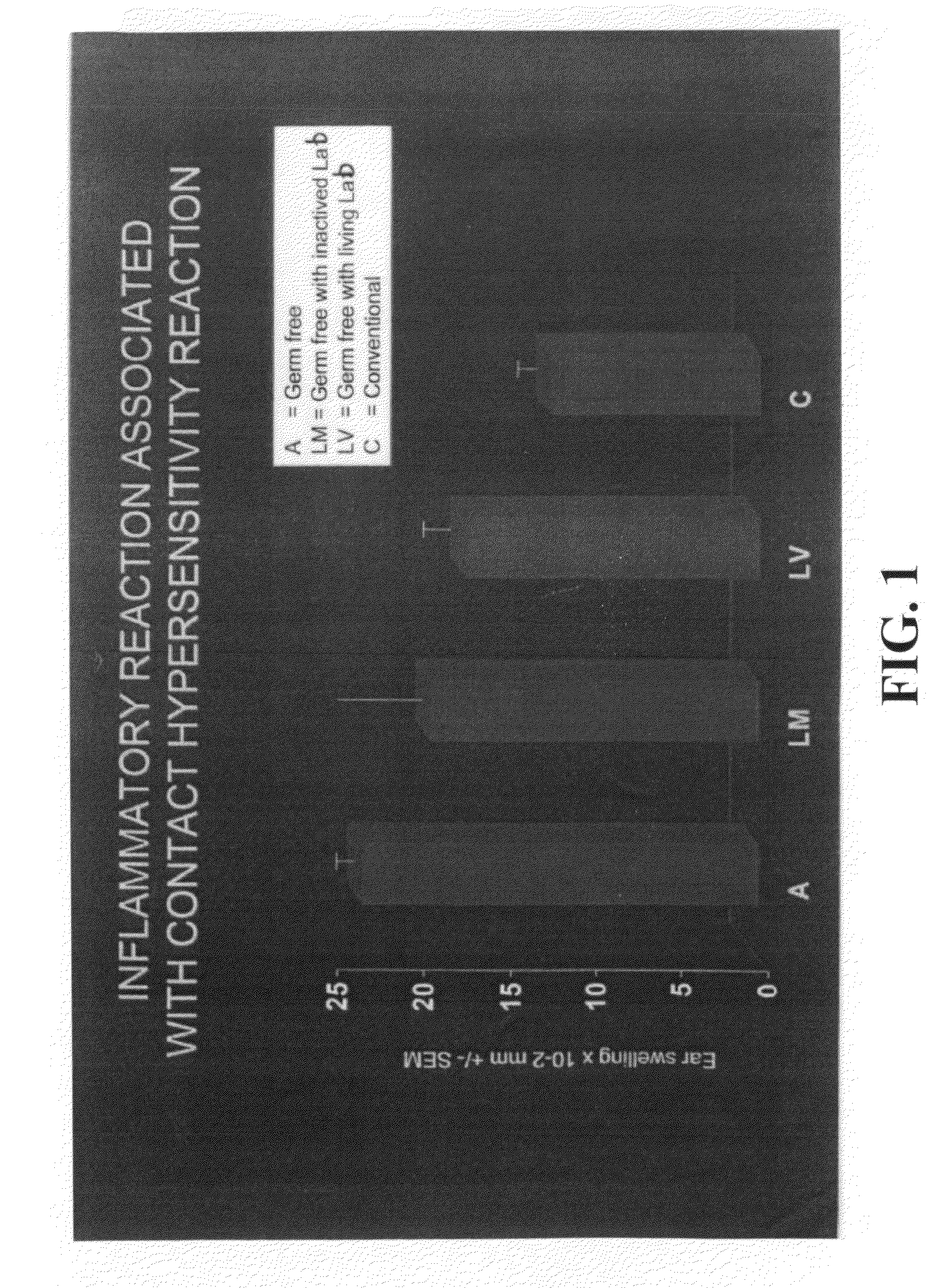
Figure 1 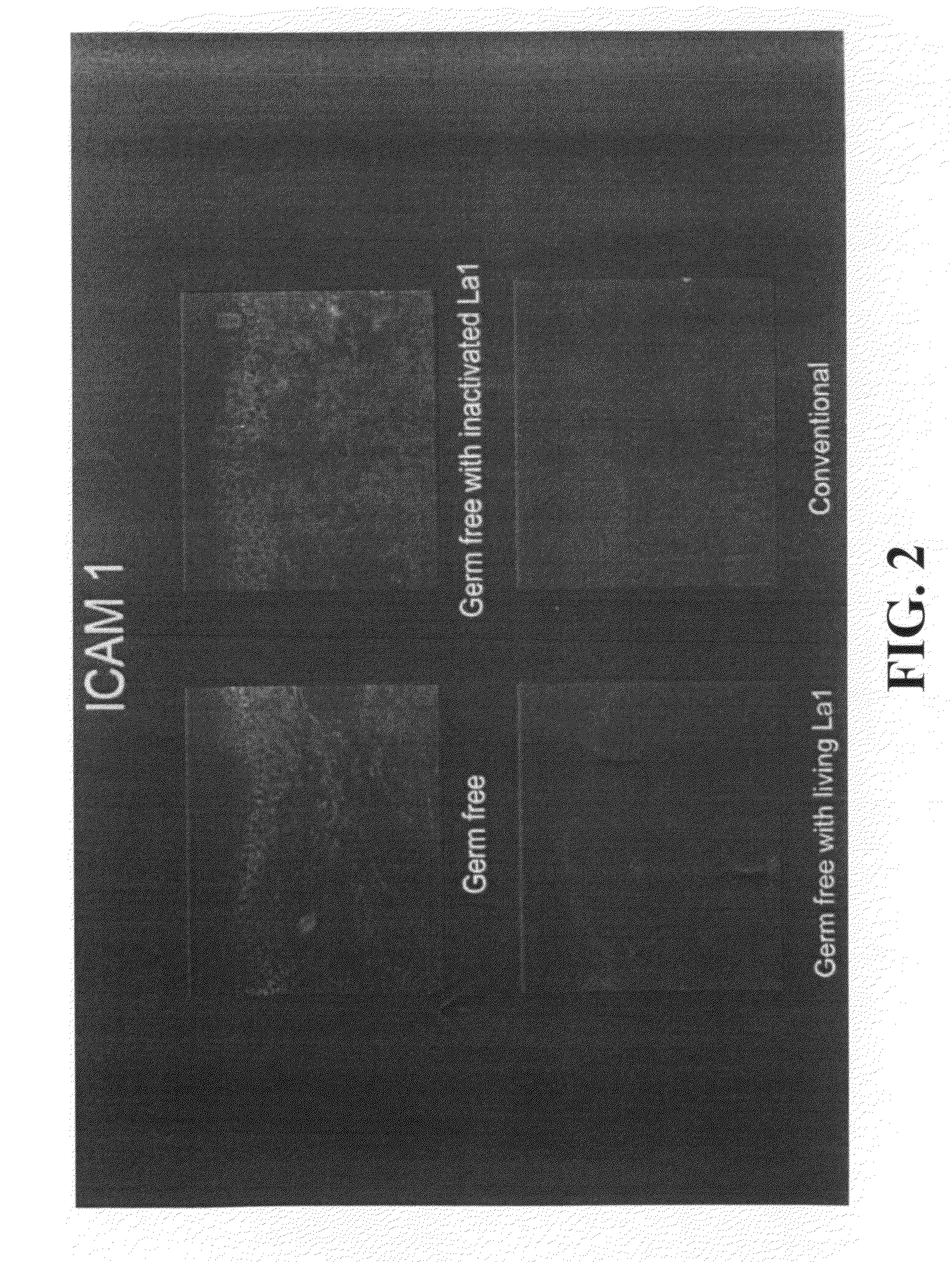
Figure 2 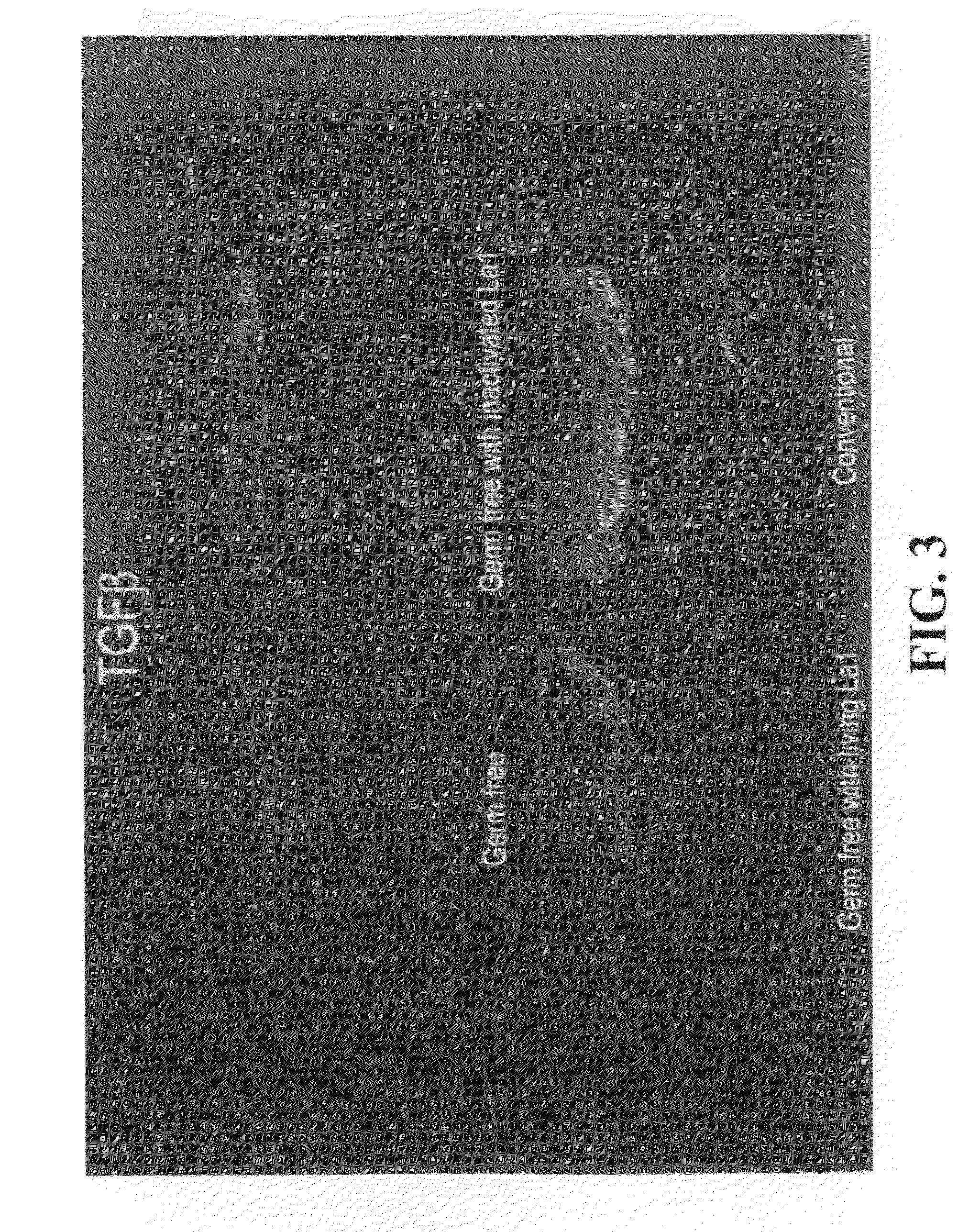
Figure 3
Abstract
Description
[0001] The present invention pertains to the use of probiotics for the preparation of a carrier for balancing the skin's immune function. In particular, the present invention pertains to the use of probiotic micro-organisms for improving the skin's immune function under stress conditions, leading to immune suppression, specifically for normalizing the skin's immune activity and reducing the tendency to develop hyper-reactions under such conditions.
[0002] The continuous decrease of the atmosphere's ozone layer with the concurrent increase of ultraviolet radiation reaching the planet's surface has attracted a great deal of interest in its potential consequence on human health. Although exposure to ultraviolet radiation is needed for humans to produce vitamin D, growing evidence suggests that extensive exposure to sun-light, in particular to ultraviolet radiation, causes a variety of problems in the skin, including induction of certain skin cancers and induction of accelerated skin agein...
Examples
example 1
Balancing Hypersensitivity Reactions
[0037]In this experiment the activity of probiotics (dead or alive) on the skin's immune system under a chemical stress situation was evaluated. In this respect, animals were sensitized with a chemical compound (dinitrochlorobenzene) and the effect of such a (chemical) stress situation in axenic animals was compared to the effect in animals, the gut of which contained probiotics only. The level of a hypersensitivity reaction developed against DNCB was evaluated by several parameters (see below).
[0038]For the experiments male mice C3H (LPS+), germ free and supplied by the Research Center Orleans (CNRS Orléans, France) were assembled in four groups of eight mice each. The groups reflected different statuses of the gut and were designated “C” (group with a Conventional (normal) microflora), “LV” (group with a microflora consisting of LiVing Lactic acid bacteria only), “LD” (group fed with dead probiotics (Lactobacillus Dead) and “A” (germ free (Axeni...
example 2
[0057]In this experiment the UV-light induced suppression of the immune system in the skin, as perceptible by an diminished development of a hypersensitivity reaction, was used to investigate the potential of probiotics to essentially restore the immune system's capability to respond to stress situations, such as being exposed to an allergenic substance, in a normal way.
[0058]Three test groups of animals were set up. The first group of animals was treated with a compound known to elicit hypersensitive reactions, dinitrofluorobenzene (DNFB), and the reaction of the skin's immune system thereto was determined. The second group was subjected to UV irradiation prior to being exposed to the compound above and the effect of said exposure on the immune reaction under these conditions was assessed. The third group received probiotics in living or inactivated form, or a culture supernatant thereof, and was exposed to UV-light. In this group the effect of the probiotics on the restoration of ...