
Energy storage system for elevators
a technology for energy storage and elevators, applied in the field of elevator systems, can solve the problems of inability to operate in all operating situations, inability to discharge energy storage, and high power consumption of filter components in the mains inverter of elevator systems, so as to reduce the average power of the elevator system, reduce the total power, and discharge energy storage.
Patent Information
- Authority / Receiving Office
- US · United States
- Patent Type
- Patents(United States)
- Current Assignee / Owner
- Publication Date
- 2010-03-23
- Estimated Expiration
- Not applicable · inactive patent
Smart Images
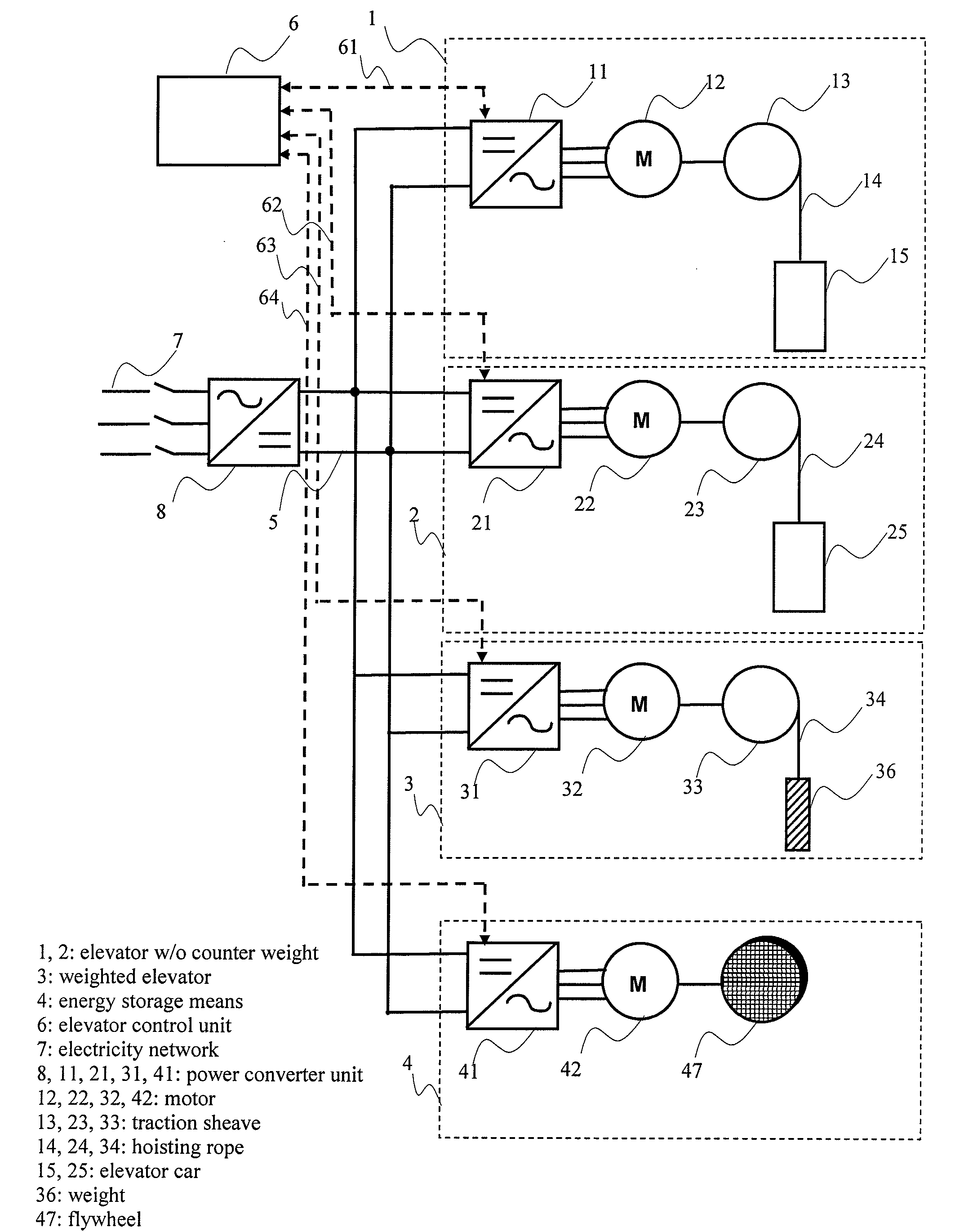
Figure 1 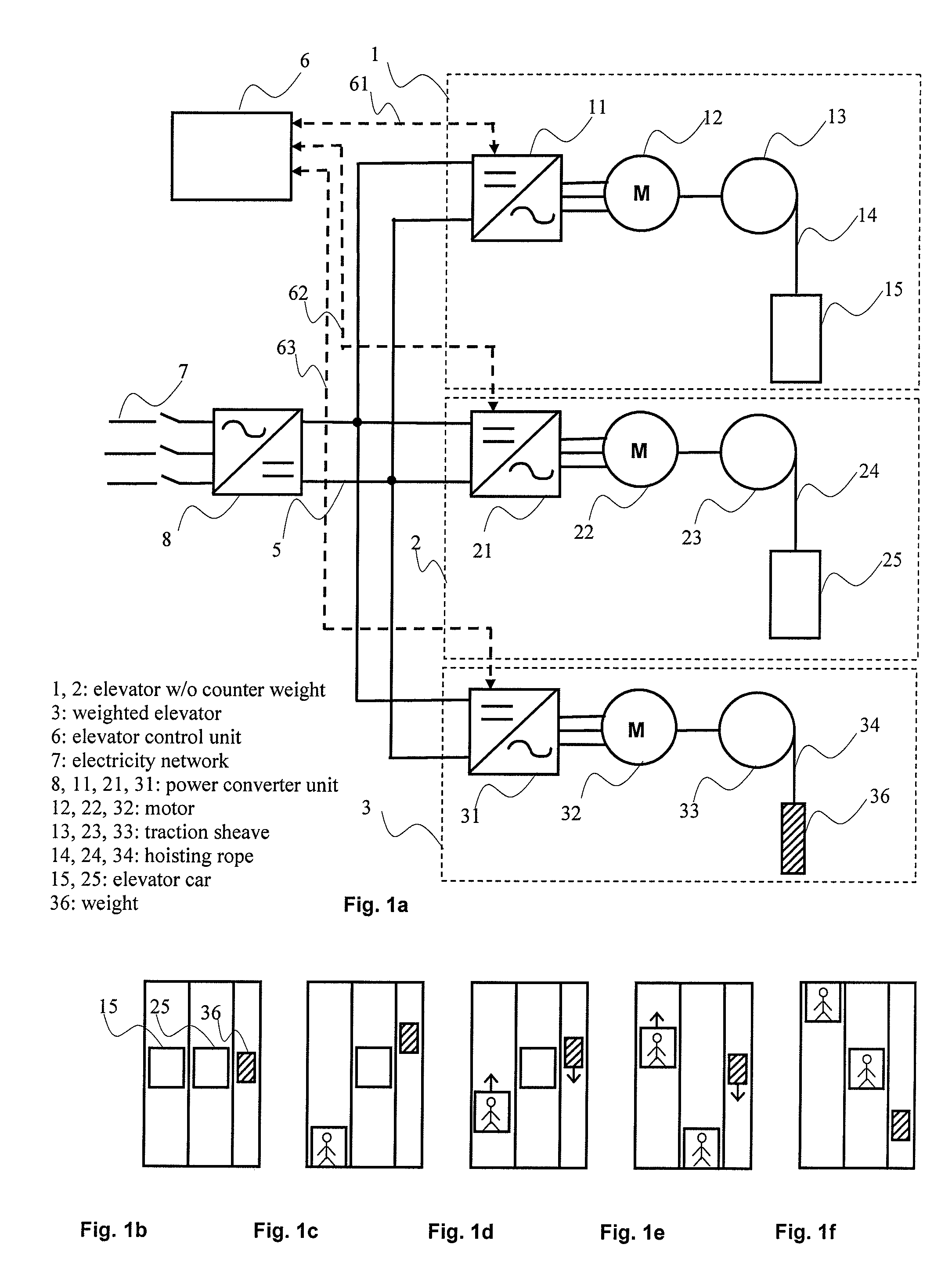
Figure 2 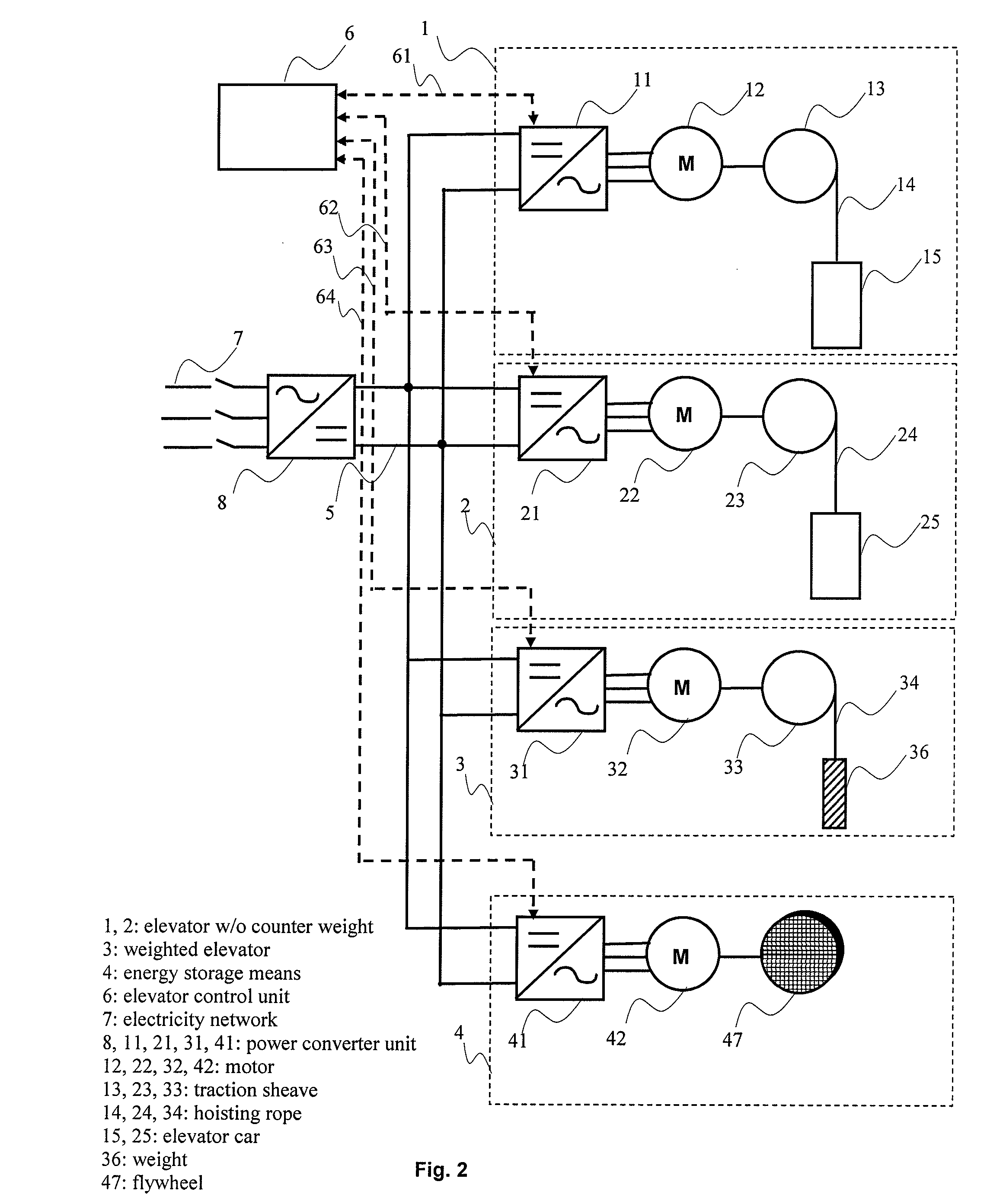
Figure 3
Abstract
Description
[0001] This application is a Continuation of co-pending Application No. PCT / F12006 / 000407filed on Dec. 8, 2006, and for which priority is claimed under 35 U.S.C. § 120; and this application claims priority of Application No. 20051343 filed Finland on Dec. 30, 2005 under 35 U.S.C. § 119; the entire contents of all are hereby incorporated by reference.FIELD OF THE INVENTION
[0002] The present invention relates to an elevator system as defined in the preamble of claim 1 and to a method for reducing the total power in an elevator system as defined in the preamble of claim 9.BACKGROUND OF THE INVENTION
[0003] The power required by the hoisting machine of an elevator varies depending on factors including load, speed, traveling direction and phase of the operating cycle of the elevator. It is advantageous to keep the power requirement as small as possible to minimize both the size of the hoisting machine and the required mains connection size. A traditional solution designed to minimize the pow...
Examples
Embodiment Construction
[0024]In non-counterweighted elevator systems, when the elevator car is moving downwards, potential energy of the elevator car is converted by the elevator motor into electric energy, and when the elevator car is moving upwards, its potential energy increases. As compared to counterweighted elevators, the instantaneous levels of power required and produced by non-counterweighted elevators are high. The power levels are proportional to the speed of the elevator. In the elevator system of the invention, one or more common energy storages are provided for an elevator or a number of elevators. The elevator system of the invention comprises at least one elevator without counterweight and means for storing mechanical energy and discharging an energy storage. When the elevator without counterweight is moving downwards, the change in potential energy of the elevator car can be at least partly converted into mechanical energy of the energy storage, and the energy stored in the energy storage...