
Electrical cord locking connector
a technology of locking connector and electric cord, which is applied in the direction of coupling device connection, coupling parts engagement/disengagement, electrical apparatus, etc., can solve the problems of difficult to locate and reestablish the connection, lost time, and often remote live electrical outlet, so as to minimize interference in tight spaces
Patent Information
- Authority / Receiving Office
- US · United States
- Patent Type
- Patents(United States)
- Current Assignee / Owner
- Publication Date
- 2010-07-20
- Estimated Expiration
- Not applicable · inactive patent
Smart Images
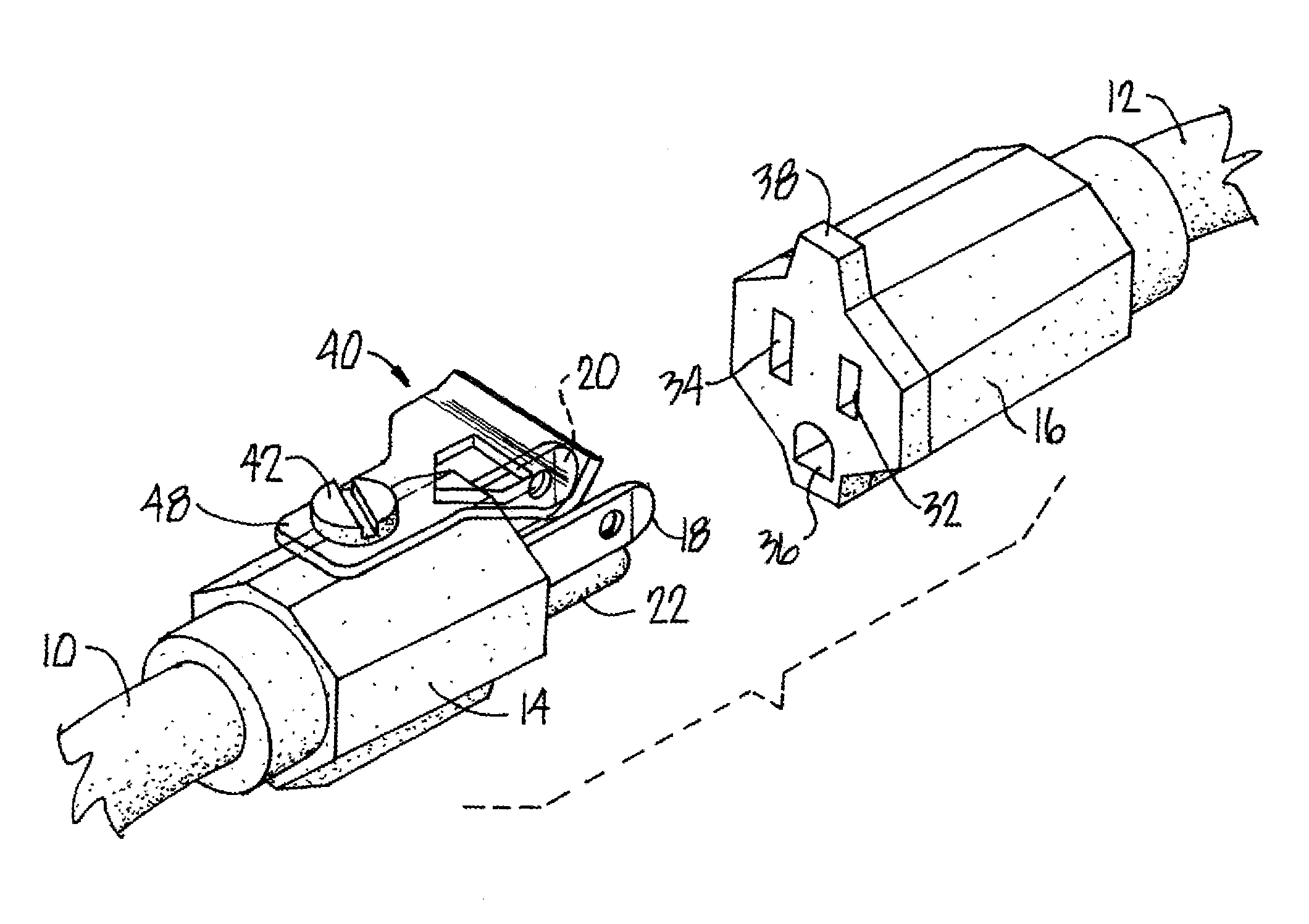
Figure 1 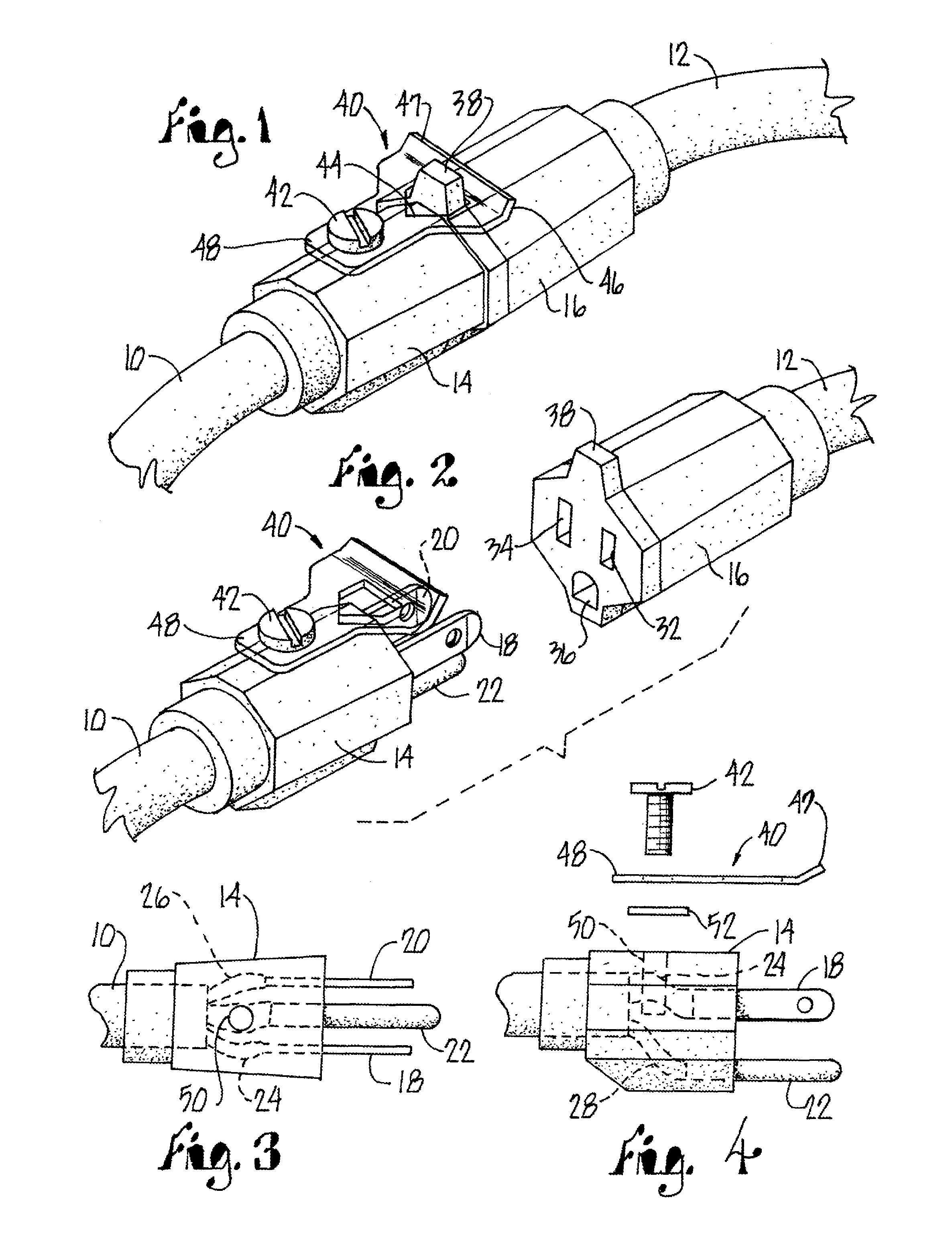
Figure 2 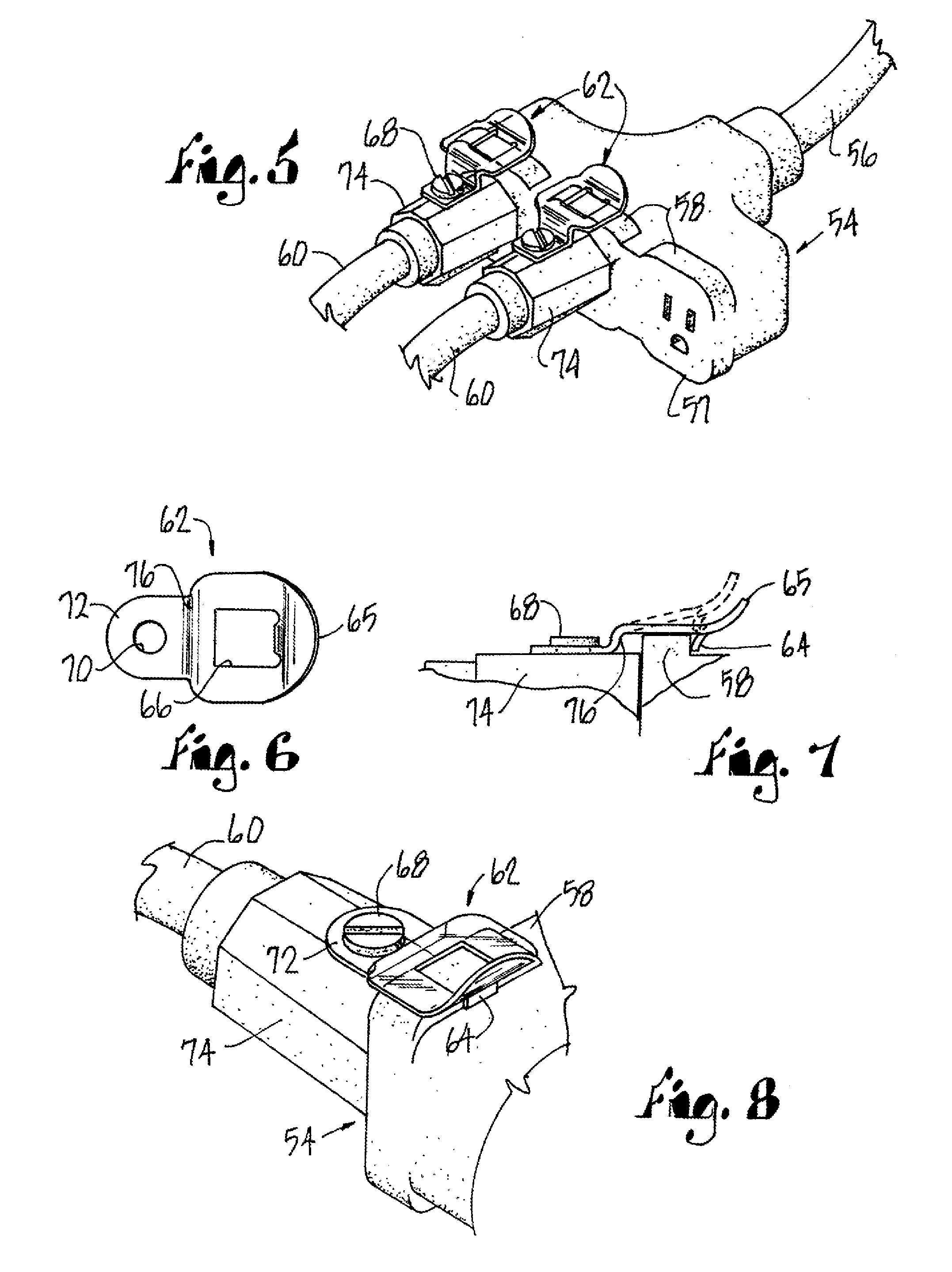
Figure 3
Abstract
Description
[0001] This invention relates to locking connectors for electrical extension and power cords to prevent separation of series-connected cords during use.BACKGROUND OF THE INVENTION
[0002] In the construction of buildings and other structures a live electrical outlet is often remote from the area where workmen require electric power to operate power tools of various types. A typical example is a carpenter utilizing a power tool in a multi-floor structure or single floor areas having a long horizontal expanse. In these common construction environments electrical power tools are supplied with electricity using long extension cords connected in series, which may span long horizontal distances as well as vertically through several floors. When power cords separate under stress, time is lost and the broken connection may be difficult to locate and reestablish.
[0003] Also, in a construction environment, a series of extension cords are often threaded through openings, around corners and, under s...
Examples
Embodiment Construction
[0018]Referring initially to FIGS. 1 and 2, the mating ends of two extension cords 10 and 12 are shown connected together in FIG. 1 and separated in FIG. 2 in alignment with each other to show the male and female parts aligned prior to connecting cords 10 and 12 together. The end of cord 10 illustrated is provided with a male plug 14 which, in FIG. 2, is shown aligned with but withdrawn from a female socket 16 on the corresponding end of cord 12. It should be appreciated that cords 10 and 12 may extend 50 feet or more from the mating plug and socket illustrated in FIGS. 1 and 2 where the remote end of cord 10 would be provided with a socket, and the remote end of cord 12 would be provided with a plug. Accordingly, at a construction site where extension cords are used to connect power tools to a current source, series connected cords may extend hundreds of feet.
[0019]Referring also to FIGS. 3 and 4, plug 14 is typically provided with three prongs 18, 20 and 22. Extension cords for a ...