
Method for continuous production of biodiesel fuel
a biodiesel fuel and production method technology, applied in the direction of carboxylic compound preparation, fatty acid chemical modification, separation process, etc., can solve the problems of increasing processing time, reducing plant capacity, heat and mass limitation of many chemical industry processes, etc., to minimize any impedance, reduce production costs, and reduce production costs
Patent Information
- Authority / Receiving Office
- US · United States
- Patent Type
- Patents(United States)
- Current Assignee / Owner
- Publication Date
- 2011-05-03
- Estimated Expiration
- Not applicable · inactive patent
Smart Images
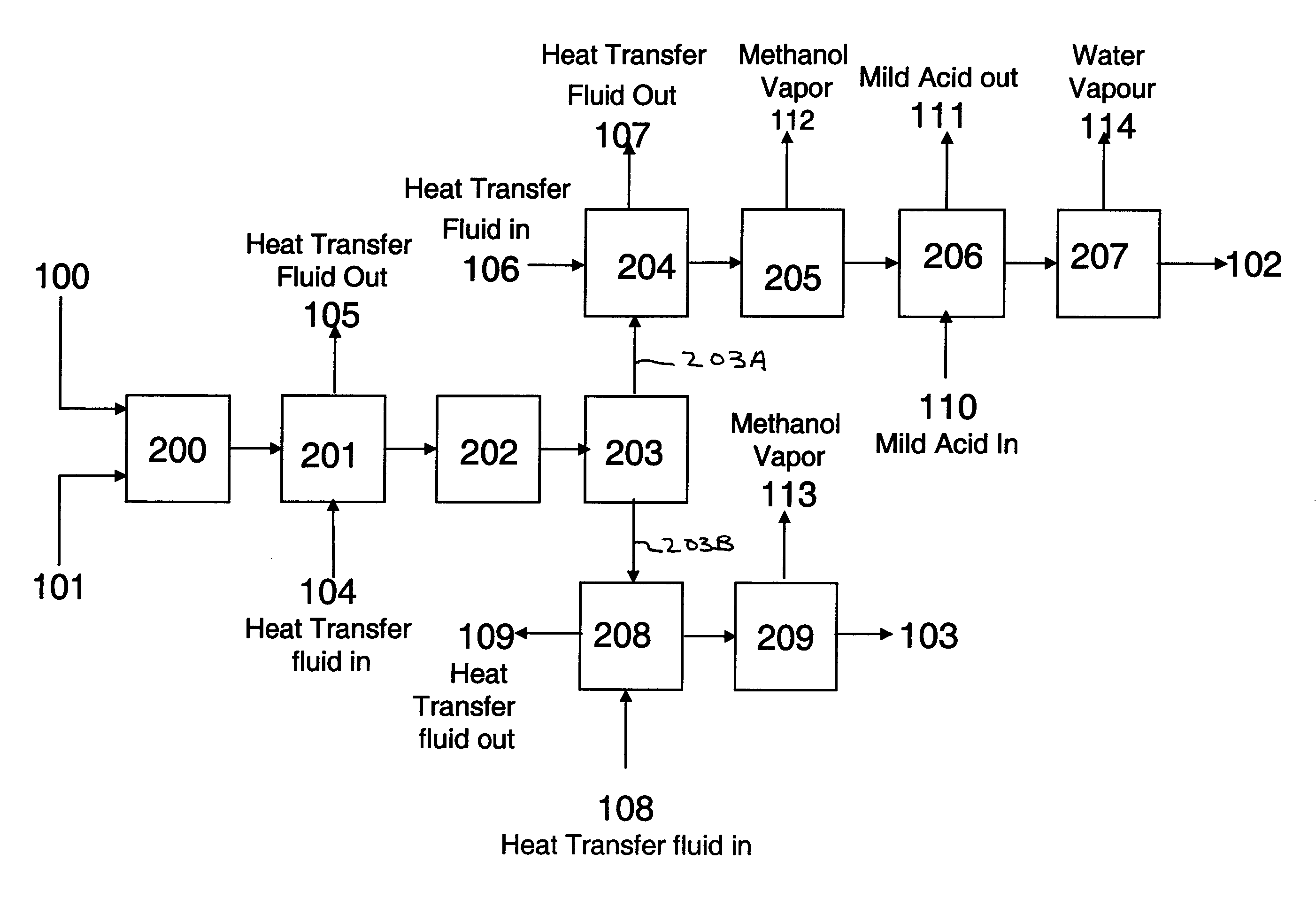
Figure 1 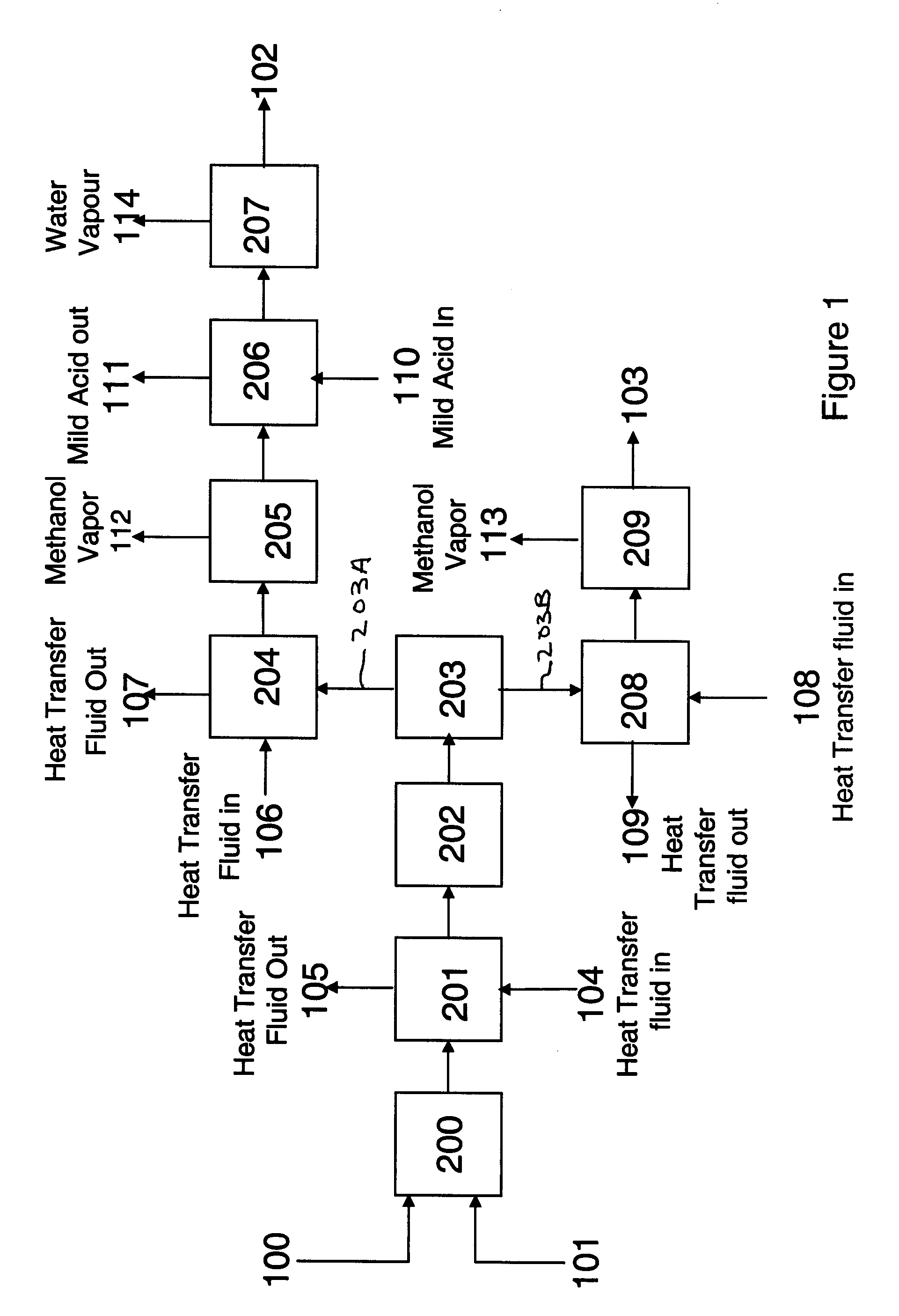
Figure 2 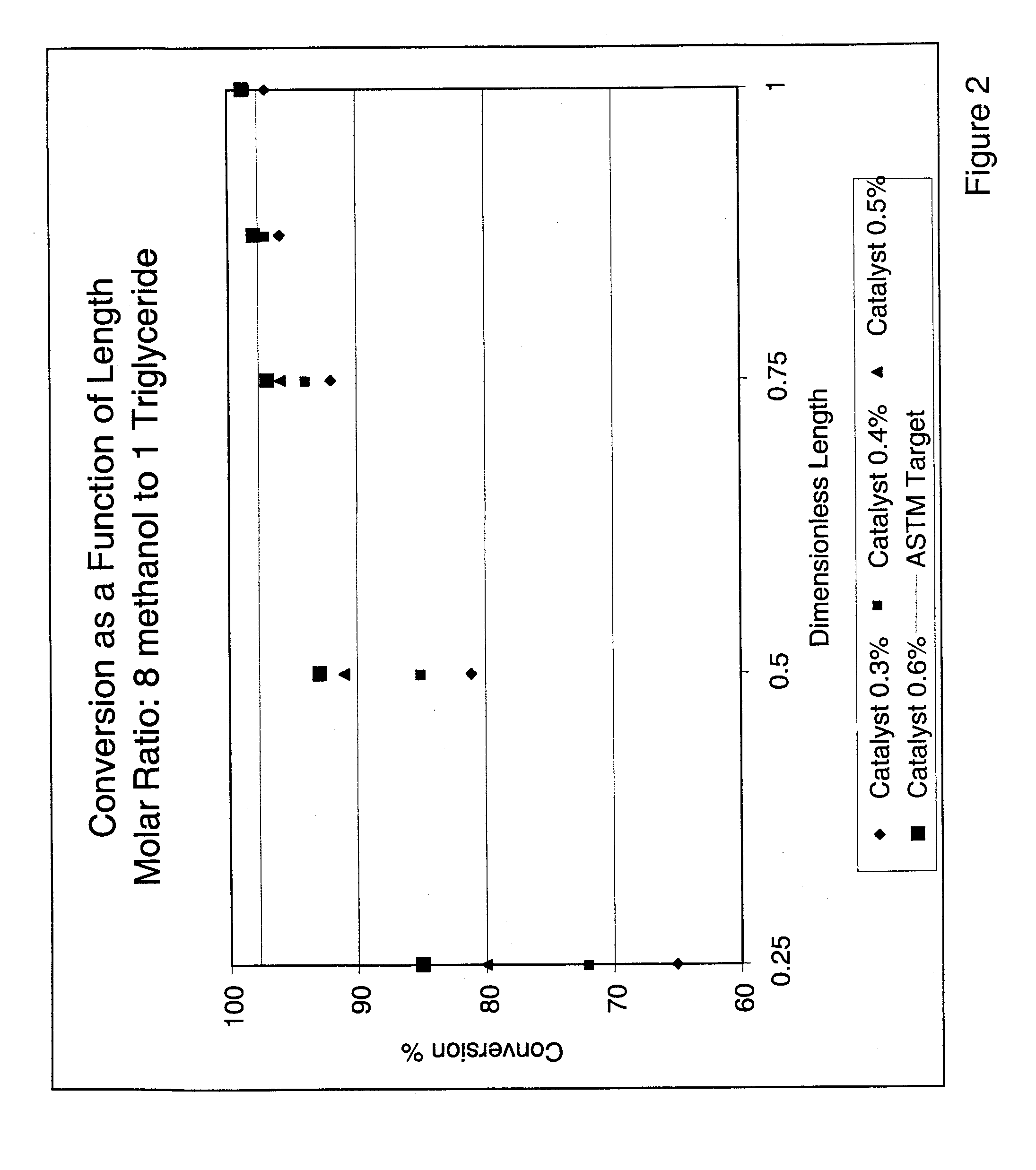
Figure 3
Abstract
Description
CROSS-REFERENCE TO RELATED APPLICATION
[0001] This application claims benefit of U.S. provisional patent application No. 60 / 775,409, filed Feb. 21, 2006, entitled CONTINUOUS PRODUCTION OF BIODIESEL FUEL and commonly assigned to the assignee of the present application, the disclosure of which is incorporated by reference in its entirety herein.FIELD OF THE INVENTION
[0002] This invention relates to an intensified process and apparatus for the continuous transesterification of a triglyceride.BACKGROUND OF THE INVENTION
[0003] Many processes within the chemical industry suffer from heat and mass limitations. These limitations result in increased processing times, reduced plant capacity, excessive product inventory and may even result in reduced yields. A relatively new design strategy, named Process Intensification (PI), has been developed in order that these process limitations can be minimized. The resulting processes are often smaller, more efficient, safer, lighter and all so importantly...
Examples
example 1
[0054]Oil, methanol and sodium hydroxide catalyst were continuously fed into a channel reactor. The rates chosen gave a molar ratio of eight mols methanol to 1 mol triglyceride. The methanol contained the catalyst (sodium hydroxide), the mass of which was in the range 0.3 to 0.6% by weight of the oil. The length of the reactor provided up to six minutes residence time. The mixture was passed through a Silverson inline homogenizer in which a stable microemulsion was formed. The mixture was then heated to a temperature of 90° C. in a plate heat exchanger. The mixture flowed through the channel reactor where reaction occurred. Samples were withdrawn at various lengths down the reactor and analyzed for methyl ester content. It was found that both increasing length and increasing catalyst loading. The conversion obtained, as a function of length, can be seen in FIG. 2. The conversion levels required by the ASTM 6751 could be achieved with a catalyst loading greater than 0.4%.
example 2
[0055]An apparatus was constructed consisting of four skids. Skid #1 was a reaction skid of overall dimensions 1.5 m wide, 4.5 m long with a maximum height of 1.8 m. 45.6 liters per minute of refined soy oil, 12 liters of anhydrous methanol and 0.75 kg per minute of 30% sodium methylate in methanol solution were fed onto the reaction skid. The mixture was homogenized and heated to 90° C. prior to flowing into the 7.5 cm ID reactor which has sufficient length to provide six minutes of residence time. The fluid exited the first skid and flowed onto the second skid. Skid #2 had a dimension 1.8 m by 7 m and 1.8 m high. The skid contained an 11,400 liter tank of dimensions 1.65 m diameter and 6.6 m long. The tank provided a hold up of approximately 3 hours. In this tank a glycerin-rich phase formed in the lower portion of the tank. The biodiesel rich stream exited from an upper port and flows onto skid #3. Skid #3 had overall dimensions 2.4 m wide, 4.5 m long and 4.2 m high. The biodiese...