
Tagging reagents and methods for hydroxylated compounds
a technology of hydroxylated compounds and reagents, which is applied in the preparation of isocyanic acid derivatives, instruments, organic chemistry, etc., can solve the problems of amiability of compounds to traditional chemistry and/or conditions, the absolute quantitation of steroids by the above-mentioned methods can be problematic, and the detection of many physiologically important molecules by mass spectrometry can be problemati
Patent Information
- Authority / Receiving Office
- US · United States
- Patent Type
- Patents(United States)
- Current Assignee / Owner
- Publication Date
- 2012-08-07
Smart Images
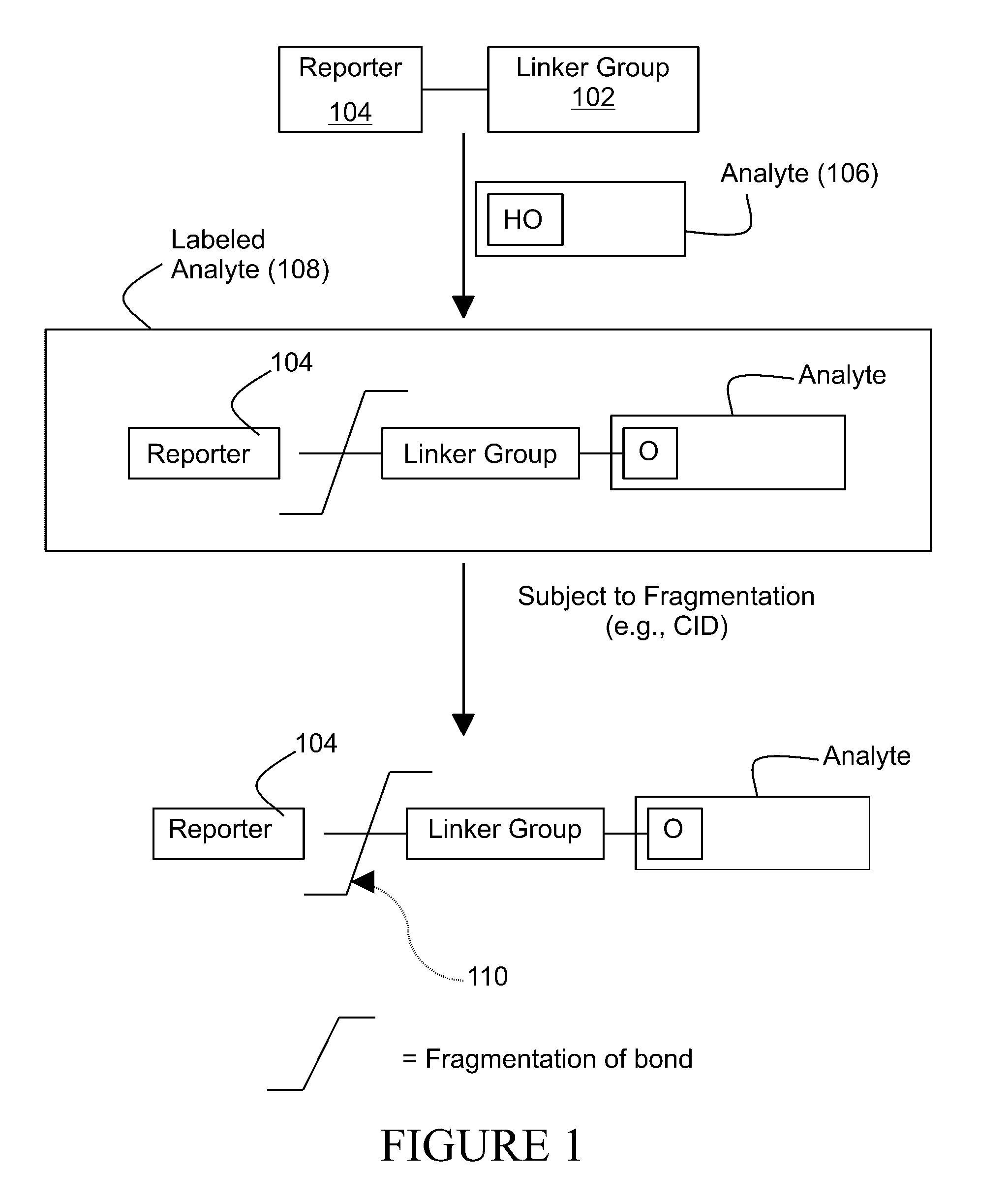
Figure 1 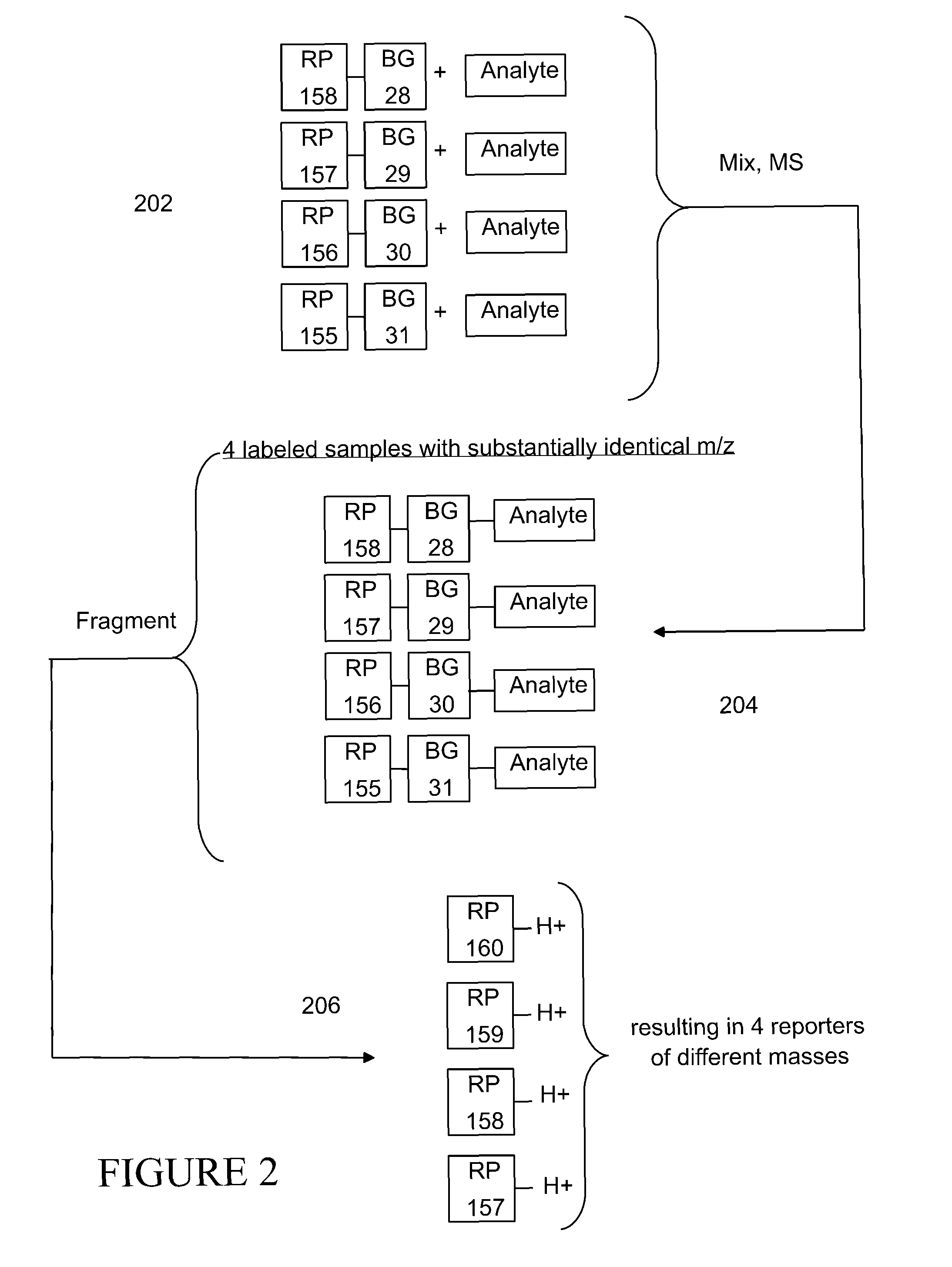
Figure 2 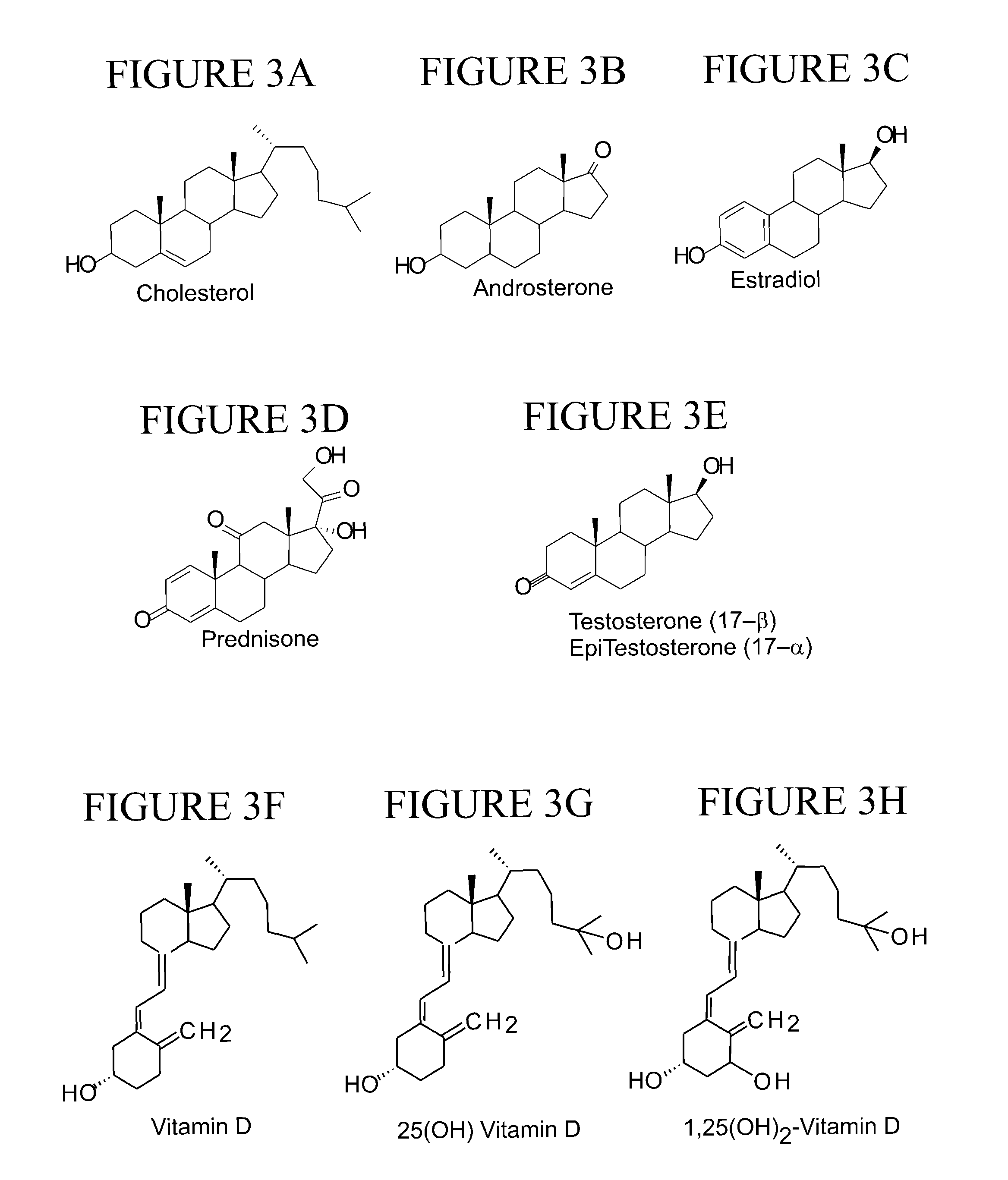
Figure 3
Abstract
Description
CROSS-REFERENCE TO RELATED APPLICATIONS
[0001] The present application claims the benefit of and priority to copending U.S. provisional application No. 60 / 809133 filed May 26, 2006, the entire contents of which are herein incorporated by reference.INTRODUCTION
[0002] The ability to rapidly screen and / or analyze a large number of biological samples is of great interest to many fields. Mass spectrometry is one technique that can provide rapid sample analysis. However, detection of many physiologically important molecules by mass spectrometry can be problematic due to mass interferences and low sample concentrations. In addition, some classes of compounds are not amiable to the traditional chemistry and / or conditions often used to prepare the sample for mass spectrometric analysis.
[0003] One class of physiologically important compounds are steroids. Traditional methods for the quantitation of steroids in a sample include immunoassays, high performance liquid chromatography (HPLC) with ultra...
Examples
examples
[0261]Aspects of the present teachings may be further understood in light of the following examples, which are not exhaustive and which should not be construed as limiting the scope of the present teachings in any way.
examples 1-4
[0262]In Examples 1-4 the following materials and methods were used unless stated otherwise.
[0263]The labeling reagent was added in a two-step reaction substantially as illustrated in FIG. 19. The first step was conducted in a THF (tetrahydrofuran) solution. The second step was conducted in ethyl acetate (EtOAc), in the presence of a tetrabutylammonium iodide (Bu4N+I−) catalyst.
[0264]An Applied Biosystems / MDS Sciex 3200 Q Trap® brand or 5000 Q Trap® brand LC / MS / MS system was used to obtain the chromatographic and mass spectral data. The MS / MS data was obtained using a nitrogen collision gas (at a pressure in the range between about 1 millitorr to 10 millitorrs). The chromatographic set-up comprised a binary gradient HPLC system equipped with an autosampler, C18 reverse phase column and column heater.
[0265]Table 1 further summarizes various experimental conditions for Examples 1-4, where the notation N-M-PIP before a compound name refers to the labeled analyte.
[0266]
TABLE 1CompoundLC...
examples 1-3
Piperzine Isocyanate Labels
[0267]Examples 1-3 present data on the effect of CID collision energy (CE) with the nitrogen collision gas on the fragmentation of various analytes labeled with a piperzine isocyante label of and according to the present teachings. Example 1 presents data on labeled estradiol; Example 2 on labeled cholesterol; and Example 3 on various labeled vitamin D compounds and metabolites.
[0268]The labeled analytes were subjected to PDITM where the parent ion was the labeled analyte, see e.g., FIGS. 21, 23 and 25 for, respectively examples 1, 2 and 3, and the product ions were scanned. FIGS. 21, 23, and 25 also indicate the fragmentation point (bond broken) to produce various fragments observed in the mass spectra of Example 1 (FIGS. 22A-C); and Example 2 (FIGS. 24A-B). FIG. 26 of Example 3, provides an overview of the signal intensity of various parent daughter ion transitions (where the notation 568-158 in FIG. 26, for example, indicates a parent ion transmission o...