
Method for producing rubberized concrete using waste rubber tires
a technology of rubberized concrete and waste rubber tires, which is applied in the direction of liquid-gas reaction processes, solid waste management, chemical/physical processes, etc., can solve the problem of slow partial oxidation rate in non-catalytic reactions, and achieve the effect of strong r—sox—r, superior ability to repel moisture, and enhanced bonding strength
Patent Information
- Authority / Receiving Office
- US · United States
- Patent Type
- Patents(United States)
- Current Assignee / Owner
- Publication Date
- 2013-09-17
Smart Images
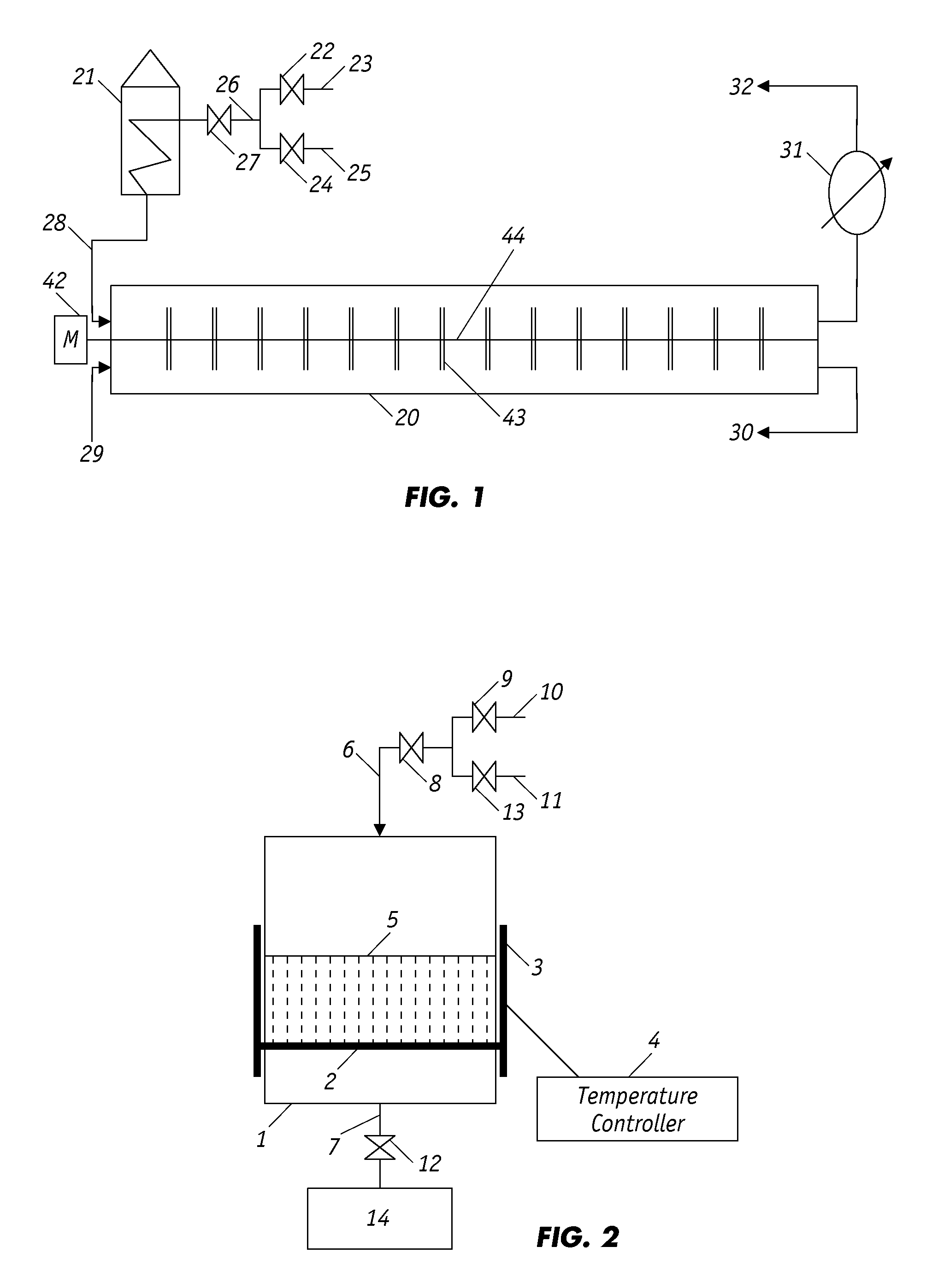
Figure 1 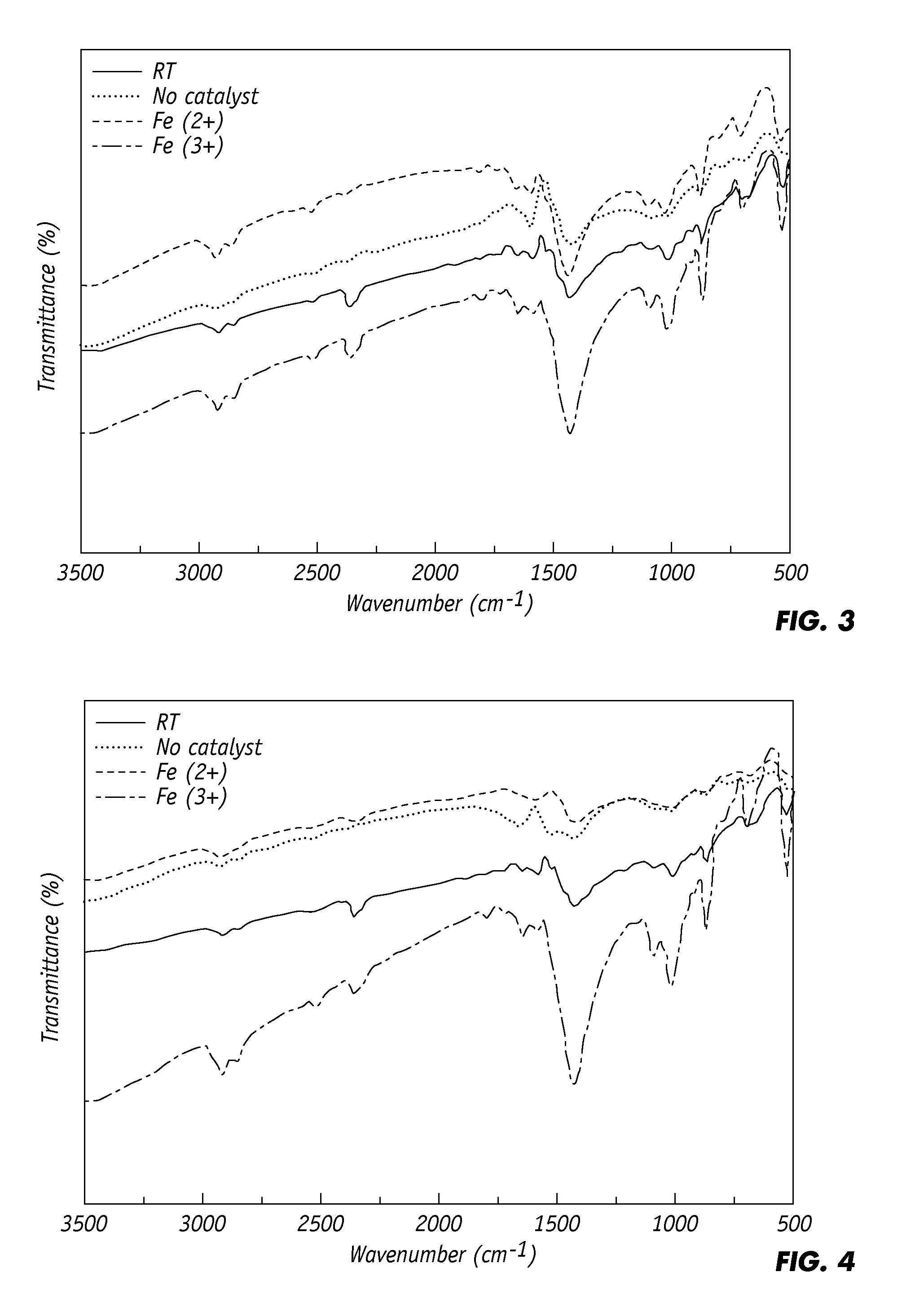
Figure 2 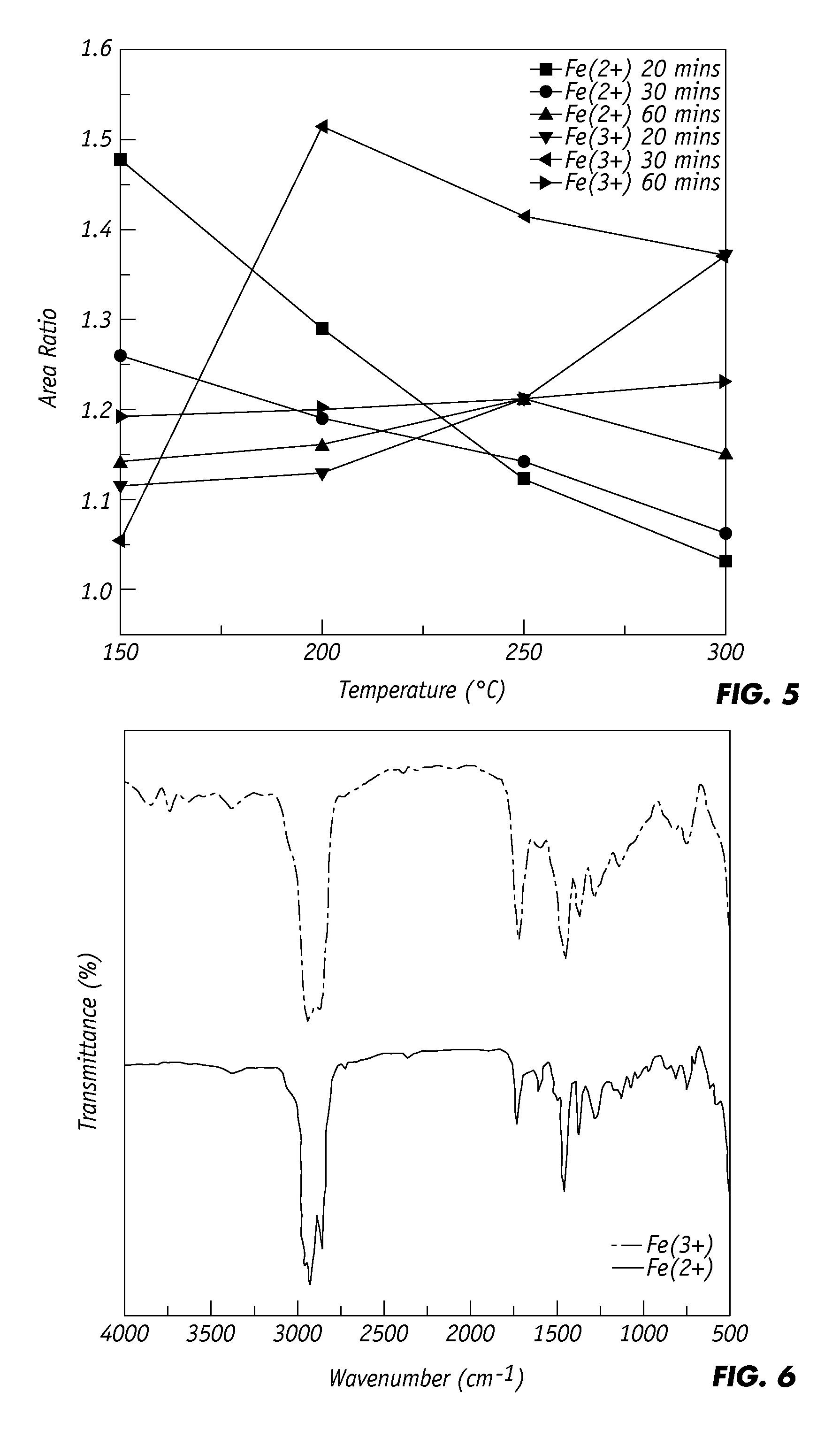
Figure 3
Abstract
Description
REFERENCE TO RELATED APPLICATIONS
[0001] This application is a continuation-in-part of U.S. patent application Ser. No. 13 / 078,913 filed on Apr. 1, 2011, which is incorporated herein and which is now U.S. Pat. No. 8,338,506.FIELD OF THE INVENTION
[0002] The present invention relates generally to rubberized concrete that is made from waste rubber tires that are surface treated through catalytic partial oxidization using metal oxide catalysts. Benefits of using catalytically oxidized crumb robber as compared to non-catalytically oxidized crumb rubber include superior mechanical strength and water-repelling capability, lower oxidation temperature and shorter oxidation time, and accelerated hydration times. Rubber oil (a gas condensate) co-produced in the catalytic oxidation serves as a bonding agent with properties that are equal to or better than that of the commercial superplasticizers.BACKGROUND OF THE INVENTION
[0003] Recycling and utilization of the rubber recovered from the waste tires...
Examples
example 1
[0038]100 grams of waste rubber tire particles ranging in size from 300-600 μm were premixed with 1 gram of FeO catalyst powder and then inserted into a cylindrical batch reactor, as shown in FIG. 1, which had a reaction zone of approximately 8.2 cm in diameter and 19.5 cm in height. A mixture of nitrogen and air with an oxygen concentration of 7.5×10⁻³ mole was fed into the reactor zone and through the porous crumb rubber bed at a controlled rate for a period of time sufficient to establish the desired oxygen concentration; thereafter, inlet valve 8 was closed, but the outlet valve (valve 12) remained open.
[0039]The vessel was then heated with an electrical heating ring to the partial oxidation temperature of 150, 200, 250 and 300° C. for separate experimental runs. The partial oxidation temperature was maintained and regulated by a relay controller as shown in FIG. 1. For each temperature, experimental runs were conducted separately for a partial oxidation time of 20, 30 and 60 mi...
example 2
[0041]Surface functional groups on the partially oxidized rubber samples produced in Ex. 1 with FeO or Fe2O3 catalyst and without catalyst, as well as non-oxidized as-received rubber samples were subject to FT-IR spectroscopy. From their FT-IR spectra, it appears that the best partial oxidation was generated with the FeO and Fe2O3 catalysts at low temperatures ranging from 150-200° C. and short reaction time ranging from 20-30 min.
[0042]FIG. 3 are FT-R spectra of (1) untreated crumb rubber and (2) treated crumb rubber oxidized at 150° C. and 20 min with no catalyst, with FeO catalyst, or with Fe2O3 catalyst under initial oxygen concentrations of 7.5×10⁻³ mole. All four curves show absorption in the vicinity of seven zones: 3,800-3,600 cm−1 by O—H bond stretching, 2,700-2,900 cm−1 and 850-950 cm−1 by C—H bond stretching, 1,780-1,660 cm−1 by C═O bond stretching, 1,500 cm−1 by C—H bond bending, 1,100-1,000 cm−1 by S═O stretching, 700-600 cm−1 by C—S bond stretching, and 550-450 cm−1 by...
example 3
[0044]To search for optimal partial oxidation conditions for treating the crumb rubber, the area of the stretching absorption of sp3 C—H bond and area of the stretching absorption of SOx (including SO2 and SO) bonds were integrated. As shown in FIG. 5, the area ratio of SOx / sp3 C—H, which is an index for partial oxidation in forming desirable surface SOx groups, is plotted against the partial oxidation temperature, for crumb rubber samples that were oxidized with 20, 30, and 60 min, reaction times using FeO (Fe(2+)) or Fe2O3 (Fe(3+)) catalysts. It is apparent that the maximum area ratio for Fe(2+) catalyst / 20 min. sample is approximately 1.48 at 150° C., which is among the highest of all the test results; the area ratio decreases sharply as the temperature rises from 200 to 300° C. The curve of the area ratio for the Fe(3+) catalyst / 30 min. sample also rises to a maximum at 200° C., another high point of all the test results (approximately 1.52). For a longer treatment time of 60 mi...