

Electrode Kinetics in Nitrogen Reduction Catalyst Applications
SEP 28, 202510 MIN READ
Generate Your Research Report Instantly with AI Agent
PatSnap Eureka helps you evaluate technical feasibility & market potential.
Nitrogen Reduction Catalyst Evolution and Objectives
The evolution of nitrogen reduction catalysts has been a critical area of research since the early 20th century, beginning with the groundbreaking Haber-Bosch process developed in 1909. This industrial process, which combines nitrogen and hydrogen under high pressure and temperature using iron-based catalysts, revolutionized agriculture by enabling mass production of ammonia-based fertilizers. However, the process consumes approximately 1-2% of global energy production and contributes significantly to greenhouse gas emissions.
Over the past few decades, research has shifted toward developing more energy-efficient and environmentally friendly nitrogen reduction reaction (NRR) catalysts. The 1990s saw initial investigations into biological nitrogen fixation mechanisms, inspiring biomimetic catalyst designs. By the early 2000s, researchers began exploring transition metal complexes as potential catalysts, with significant breakthroughs in understanding the mechanistic pathways of nitrogen activation.
The 2010s marked a turning point with the emergence of electrochemical nitrogen reduction as a promising alternative to the Haber-Bosch process. This period witnessed rapid development in heterogeneous catalysts, including noble metals, transition metal nitrides, and oxides. Concurrently, advances in computational chemistry enabled more precise modeling of catalyst-substrate interactions and reaction mechanisms.
Recent years have seen exponential growth in research focused specifically on electrode kinetics in nitrogen reduction. Understanding the rate-determining steps and electron transfer mechanisms has become crucial for designing high-performance catalysts. The field has expanded to include novel materials such as single-atom catalysts, 2D materials, and metal-organic frameworks, each offering unique advantages for nitrogen activation.
The primary technical objectives in this field now center on addressing several key challenges. First, improving the Faradaic efficiency of nitrogen reduction catalysts, which currently remains below commercially viable levels for most systems. Second, enhancing catalyst selectivity to minimize competing hydrogen evolution reactions that significantly reduce efficiency. Third, developing catalysts capable of operating under ambient conditions to reduce energy requirements.
Additional objectives include understanding the fundamental electrode-electrolyte interface phenomena that govern reaction kinetics, designing catalysts with improved stability for long-term operation, and scaling up laboratory successes to industrial applications. The ultimate goal remains developing sustainable alternatives to the Haber-Bosch process that can operate at ambient temperature and pressure while maintaining high conversion rates and selectivity.
The evolution trajectory suggests that future breakthroughs will likely emerge from interdisciplinary approaches combining advanced materials science, electrochemistry, computational modeling, and in-operando characterization techniques to precisely engineer catalyst electronic structures and reaction environments.
Over the past few decades, research has shifted toward developing more energy-efficient and environmentally friendly nitrogen reduction reaction (NRR) catalysts. The 1990s saw initial investigations into biological nitrogen fixation mechanisms, inspiring biomimetic catalyst designs. By the early 2000s, researchers began exploring transition metal complexes as potential catalysts, with significant breakthroughs in understanding the mechanistic pathways of nitrogen activation.
The 2010s marked a turning point with the emergence of electrochemical nitrogen reduction as a promising alternative to the Haber-Bosch process. This period witnessed rapid development in heterogeneous catalysts, including noble metals, transition metal nitrides, and oxides. Concurrently, advances in computational chemistry enabled more precise modeling of catalyst-substrate interactions and reaction mechanisms.
Recent years have seen exponential growth in research focused specifically on electrode kinetics in nitrogen reduction. Understanding the rate-determining steps and electron transfer mechanisms has become crucial for designing high-performance catalysts. The field has expanded to include novel materials such as single-atom catalysts, 2D materials, and metal-organic frameworks, each offering unique advantages for nitrogen activation.
The primary technical objectives in this field now center on addressing several key challenges. First, improving the Faradaic efficiency of nitrogen reduction catalysts, which currently remains below commercially viable levels for most systems. Second, enhancing catalyst selectivity to minimize competing hydrogen evolution reactions that significantly reduce efficiency. Third, developing catalysts capable of operating under ambient conditions to reduce energy requirements.
Additional objectives include understanding the fundamental electrode-electrolyte interface phenomena that govern reaction kinetics, designing catalysts with improved stability for long-term operation, and scaling up laboratory successes to industrial applications. The ultimate goal remains developing sustainable alternatives to the Haber-Bosch process that can operate at ambient temperature and pressure while maintaining high conversion rates and selectivity.
The evolution trajectory suggests that future breakthroughs will likely emerge from interdisciplinary approaches combining advanced materials science, electrochemistry, computational modeling, and in-operando characterization techniques to precisely engineer catalyst electronic structures and reaction environments.
Market Analysis for Nitrogen Fixation Technologies
The global nitrogen fixation technologies market is experiencing significant growth, driven by increasing demand for fertilizers in agriculture and various industrial applications. Currently valued at approximately 23.5 billion USD, the market is projected to reach 32.7 billion USD by 2027, representing a compound annual growth rate of 6.8%. This growth trajectory is primarily fueled by the expanding global population and consequent food security concerns, which necessitate enhanced agricultural productivity through nitrogen-based fertilizers.
Traditional nitrogen fixation methods, particularly the Haber-Bosch process, continue to dominate the market with over 80% market share. However, this segment is facing increasing pressure due to its high energy consumption and substantial carbon footprint. This environmental concern has created a significant market opportunity for electrochemical nitrogen reduction reaction (NRR) technologies, which are gaining traction due to their potential for operating under ambient conditions with renewable energy sources.
The agricultural sector remains the largest end-user of nitrogen fixation products, accounting for approximately 70% of market consumption. Industrial applications, including pharmaceuticals, explosives, and specialty chemicals, constitute the remaining 30%. Regionally, Asia-Pacific leads the market with 45% share, followed by North America (25%) and Europe (20%), with Latin America and Africa showing the fastest growth rates at 8.2% and 7.5% respectively.
Market analysis reveals that companies investing in electrode kinetics research for NRR catalysts are positioned to capture significant market share in the emerging green ammonia sector. The potential market for sustainable nitrogen fixation technologies is estimated at 5.8 billion USD by 2030, with early movers gaining competitive advantages through patent portfolios and technological expertise.
Consumer trends indicate increasing preference for sustainably produced agricultural products, creating downstream demand for environmentally friendly fertilizer production methods. This shift is further reinforced by stringent environmental regulations in developed markets, particularly in the European Union where carbon border adjustment mechanisms are being implemented.
Investment in the sector has seen remarkable growth, with venture capital funding for nitrogen fixation startups reaching 1.2 billion USD in 2022, a 65% increase from the previous year. Strategic partnerships between technology developers and established fertilizer manufacturers are becoming increasingly common, accelerating the commercialization timeline for novel electrode technologies.
The competitive landscape features both established chemical companies diversifying into sustainable technologies and specialized startups focused exclusively on electrochemical nitrogen reduction. Market entry barriers remain high due to capital requirements and technical complexity, particularly regarding electrode stability and selectivity challenges in practical applications.
Traditional nitrogen fixation methods, particularly the Haber-Bosch process, continue to dominate the market with over 80% market share. However, this segment is facing increasing pressure due to its high energy consumption and substantial carbon footprint. This environmental concern has created a significant market opportunity for electrochemical nitrogen reduction reaction (NRR) technologies, which are gaining traction due to their potential for operating under ambient conditions with renewable energy sources.
The agricultural sector remains the largest end-user of nitrogen fixation products, accounting for approximately 70% of market consumption. Industrial applications, including pharmaceuticals, explosives, and specialty chemicals, constitute the remaining 30%. Regionally, Asia-Pacific leads the market with 45% share, followed by North America (25%) and Europe (20%), with Latin America and Africa showing the fastest growth rates at 8.2% and 7.5% respectively.
Market analysis reveals that companies investing in electrode kinetics research for NRR catalysts are positioned to capture significant market share in the emerging green ammonia sector. The potential market for sustainable nitrogen fixation technologies is estimated at 5.8 billion USD by 2030, with early movers gaining competitive advantages through patent portfolios and technological expertise.
Consumer trends indicate increasing preference for sustainably produced agricultural products, creating downstream demand for environmentally friendly fertilizer production methods. This shift is further reinforced by stringent environmental regulations in developed markets, particularly in the European Union where carbon border adjustment mechanisms are being implemented.
Investment in the sector has seen remarkable growth, with venture capital funding for nitrogen fixation startups reaching 1.2 billion USD in 2022, a 65% increase from the previous year. Strategic partnerships between technology developers and established fertilizer manufacturers are becoming increasingly common, accelerating the commercialization timeline for novel electrode technologies.
The competitive landscape features both established chemical companies diversifying into sustainable technologies and specialized startups focused exclusively on electrochemical nitrogen reduction. Market entry barriers remain high due to capital requirements and technical complexity, particularly regarding electrode stability and selectivity challenges in practical applications.
Current Electrode Kinetics Challenges in NRR
The electrode kinetics in nitrogen reduction reaction (NRR) faces several critical challenges that impede the development of efficient and practical ammonia synthesis technologies. One of the primary obstacles is the sluggish reaction kinetics at the electrode-electrolyte interface. The multi-step electron transfer process in NRR requires significant activation energy, resulting in high overpotentials that drastically reduce energy efficiency. Current catalysts struggle to facilitate the breaking of the exceptionally strong N≡N triple bond (941 kJ/mol), which represents the rate-determining step in the reaction pathway.
Competing hydrogen evolution reaction (HER) presents another substantial challenge, as it occurs at similar potential ranges and often dominates the electrode surface reactions. This parasitic reaction not only consumes valuable electrons but also reduces Faradaic efficiency for ammonia production to typically below 15% in most reported systems. The selectivity issue is particularly pronounced in aqueous electrolytes where proton availability favors hydrogen production.
Mass transport limitations further complicate electrode kinetics in NRR systems. The low solubility of nitrogen in aqueous solutions (approximately 0.6 mM at room temperature) creates concentration gradients near the electrode surface, resulting in diffusion-limited current densities. This challenge is exacerbated in scaled-up systems where maintaining uniform nitrogen supply across larger electrode surfaces becomes increasingly difficult.
The stability of electrode materials under NRR conditions represents another significant hurdle. Many promising catalysts exhibit performance degradation during extended operation due to surface reconstruction, poisoning by reaction intermediates, or dissolution under the applied potentials. Noble metal catalysts often show better stability but present economic barriers to widespread implementation.
Electrode microstructure and morphology significantly impact reaction kinetics but remain difficult to optimize. While high surface area electrodes can increase active site density, they often suffer from uneven current distribution and mass transport limitations in porous structures. The trade-off between surface area and effective mass transport requires careful engineering that current fabrication methods struggle to achieve consistently.
Interfacial charge transfer kinetics are further complicated by the formation of electrical double layers and solvation effects that alter the local environment around reaction sites. These phenomena are particularly challenging to characterize in situ, leading to gaps in understanding the actual reaction mechanisms at the molecular level.
Temperature-dependent kinetics add another layer of complexity, as most laboratory studies are conducted at ambient conditions while industrial implementation might benefit from elevated temperatures to enhance reaction rates. However, higher temperatures can accelerate catalyst degradation and alter selectivity patterns in unpredictable ways.
Competing hydrogen evolution reaction (HER) presents another substantial challenge, as it occurs at similar potential ranges and often dominates the electrode surface reactions. This parasitic reaction not only consumes valuable electrons but also reduces Faradaic efficiency for ammonia production to typically below 15% in most reported systems. The selectivity issue is particularly pronounced in aqueous electrolytes where proton availability favors hydrogen production.
Mass transport limitations further complicate electrode kinetics in NRR systems. The low solubility of nitrogen in aqueous solutions (approximately 0.6 mM at room temperature) creates concentration gradients near the electrode surface, resulting in diffusion-limited current densities. This challenge is exacerbated in scaled-up systems where maintaining uniform nitrogen supply across larger electrode surfaces becomes increasingly difficult.
The stability of electrode materials under NRR conditions represents another significant hurdle. Many promising catalysts exhibit performance degradation during extended operation due to surface reconstruction, poisoning by reaction intermediates, or dissolution under the applied potentials. Noble metal catalysts often show better stability but present economic barriers to widespread implementation.
Electrode microstructure and morphology significantly impact reaction kinetics but remain difficult to optimize. While high surface area electrodes can increase active site density, they often suffer from uneven current distribution and mass transport limitations in porous structures. The trade-off between surface area and effective mass transport requires careful engineering that current fabrication methods struggle to achieve consistently.
Interfacial charge transfer kinetics are further complicated by the formation of electrical double layers and solvation effects that alter the local environment around reaction sites. These phenomena are particularly challenging to characterize in situ, leading to gaps in understanding the actual reaction mechanisms at the molecular level.
Temperature-dependent kinetics add another layer of complexity, as most laboratory studies are conducted at ambient conditions while industrial implementation might benefit from elevated temperatures to enhance reaction rates. However, higher temperatures can accelerate catalyst degradation and alter selectivity patterns in unpredictable ways.
Contemporary Electrode Design Solutions
01 Metal-based catalysts for nitrogen reduction
Various metal-based catalysts have been developed for efficient nitrogen reduction reactions. These catalysts typically include transition metals such as iron, nickel, cobalt, and their alloys or compounds that facilitate the breaking of the strong N≡N triple bond. The electrode kinetics of these catalysts are optimized through specific structural designs and compositions to enhance electron transfer and nitrogen adsorption, leading to improved ammonia production rates and faradaic efficiency.- Metal-based catalysts for nitrogen reduction: Various metal-based catalysts have been developed for efficient nitrogen reduction reactions. These catalysts typically include transition metals such as iron, nickel, cobalt, and their alloys or compounds. The electrode kinetics of these catalysts are optimized through specific structural designs and compositions to enhance the electron transfer process during nitrogen reduction. These catalysts demonstrate improved activity, selectivity, and stability for nitrogen reduction reactions under various operating conditions.
- Carbon-supported catalysts for electrochemical nitrogen reduction: Carbon-supported catalysts play a significant role in electrochemical nitrogen reduction processes. These catalysts utilize carbon materials such as graphene, carbon nanotubes, or activated carbon as supports for active catalyst particles. The carbon support enhances the dispersion of catalyst particles, provides high surface area, and improves electrical conductivity, which are crucial factors affecting electrode kinetics. These catalysts demonstrate enhanced nitrogen reduction performance with improved electron transfer rates and reaction kinetics.
- Electrode structure optimization for nitrogen reduction: The optimization of electrode structures significantly impacts the kinetics of nitrogen reduction reactions. Various approaches include designing porous electrodes, layered structures, and nanostructured surfaces to increase active sites and facilitate mass transport. The electrode architecture affects the accessibility of reactants to catalyst sites, electron transfer pathways, and product removal, all of which influence reaction kinetics. Advanced electrode designs can overcome kinetic limitations and enhance the overall efficiency of nitrogen reduction processes.
- Electrolyte composition effects on nitrogen reduction kinetics: The composition of electrolytes significantly influences the kinetics of nitrogen reduction reactions at electrode surfaces. Factors such as pH, ionic strength, and specific ion effects can alter the reaction pathways, activation energies, and rate-determining steps. Optimized electrolyte formulations can enhance catalyst activity, stability, and selectivity by creating favorable local environments at the electrode-electrolyte interface. The electrolyte composition can be tailored to improve nitrogen adsorption, electron transfer, and product formation kinetics.
- Operating conditions optimization for nitrogen reduction catalysts: The optimization of operating conditions such as temperature, pressure, potential, and current density is crucial for enhancing the performance of nitrogen reduction catalysts. These parameters directly influence reaction kinetics, including adsorption/desorption processes, electron transfer rates, and mass transport limitations. Systematic studies of these operating parameters help identify optimal conditions for maximizing catalyst efficiency, selectivity, and stability. Advanced control strategies can be implemented to maintain these optimal conditions during continuous operation of nitrogen reduction systems.
02 Carbon-supported nitrogen reduction catalysts
Carbon materials serve as excellent supports for nitrogen reduction catalysts due to their high surface area, electrical conductivity, and stability. These carbon-supported catalysts enhance electrode kinetics by providing efficient electron pathways and increasing active site density. Various forms of carbon supports, including graphene, carbon nanotubes, and porous carbon structures, have been utilized to improve catalyst dispersion and accessibility, resulting in enhanced nitrogen reduction performance and stability under electrochemical conditions.Expand Specific Solutions03 Electrode structure optimization for nitrogen reduction
The design and optimization of electrode structures play a crucial role in nitrogen reduction reactions. Advanced electrode architectures featuring controlled porosity, thickness, and surface morphology can significantly enhance mass transport, increase active surface area, and improve reaction kinetics. Techniques such as layer-by-layer assembly, 3D printing, and template-assisted fabrication have been employed to create electrodes with optimized structures that facilitate nitrogen adsorption and electron transfer, leading to improved catalytic performance.Expand Specific Solutions04 Non-noble metal catalysts for electrochemical nitrogen reduction
Non-noble metal catalysts represent a cost-effective alternative to precious metal catalysts for nitrogen reduction. These catalysts, often based on abundant elements such as iron, nickel, cobalt, and their compounds, are designed to achieve comparable or superior catalytic activity through careful control of their composition, structure, and electronic properties. Various strategies, including alloying, doping, and defect engineering, have been employed to enhance the electrode kinetics of these catalysts, making them promising candidates for practical nitrogen reduction applications.Expand Specific Solutions05 Electrolyte effects on nitrogen reduction catalyst performance
The composition and properties of the electrolyte significantly influence the performance of nitrogen reduction catalysts. Factors such as pH, ionic strength, and the presence of specific ions can affect the electrode kinetics by altering the electrical double layer, nitrogen solubility, and proton availability at the catalyst surface. Optimized electrolyte formulations can enhance catalyst stability, suppress competing reactions like hydrogen evolution, and improve the overall efficiency of the nitrogen reduction process.Expand Specific Solutions
Leading Research Groups and Industrial Players
The electrode kinetics in nitrogen reduction catalyst applications market is currently in an early growth phase, characterized by intensive research and development efforts. The global market size is estimated to be relatively modest but growing rapidly due to increasing focus on sustainable ammonia production technologies. Technical maturity remains at an emerging stage, with significant advancements being made by key players. Industry leaders like Industrie De Nora SpA and Toyota Motor Corp. are developing proprietary electrode technologies, while research institutions such as National Institute for Materials Science, Dalian Institute of Chemical Physics, and California Institute of Technology are pioneering fundamental breakthroughs. Academic-industrial collaborations involving Monash University, Korea Advanced Institute of Science & Technology, and Helmholtz-Zentrum Berlin are accelerating innovation in catalyst design and electrochemical processes, positioning this field for significant growth in the coming decade.
Toyota Motor Corp.
Technical Solution: Toyota has developed a comprehensive approach to electrode kinetics for nitrogen reduction focusing on ambient-condition ammonia synthesis. Their technology centers on noble metal catalysts (particularly Ru and Ir-based) supported on proton-conducting solid electrolytes. Toyota's proprietary catalyst design incorporates nanoscale engineering of the triple-phase boundary to maximize reactivity. Their electrocatalytic system operates at temperatures below 100°C and atmospheric pressure, achieving Faradaic efficiencies of approximately 10% with suppressed hydrogen evolution reaction. Toyota has integrated these catalysts into prototype solid-state electrochemical cells that demonstrate stable ammonia production over 1000+ hours of operation. Their approach includes precise control of hydrophilicity/hydrophobicity at the electrode interface to manage water activity, which is critical for balancing proton availability and preventing catalyst flooding. Toyota has also pioneered the use of operando spectroscopic techniques to monitor catalyst surface states during nitrogen reduction.
Strengths: Strong integration with automotive applications for potential onboard ammonia production; excellent long-term stability of catalysts; sophisticated engineering of electrode-electrolyte interfaces. Weaknesses: Reliance on precious metal catalysts increases costs; current production rates still too low for commercial viability; system complexity presents challenges for miniaturization.
Dalian Institute of Chemical Physics of CAS
Technical Solution: Dalian Institute of Chemical Physics (DICP) has developed innovative single-atom catalysts for electrochemical nitrogen reduction reaction (NRR). Their approach focuses on atomically dispersed metal sites (Fe, Co, Ru) anchored on nitrogen-doped carbon supports, achieving Faradaic efficiencies of up to 14.6% and NH3 yields of 34.83 μg h−1 mg−1cat. The institute has pioneered the use of in-situ characterization techniques including X-ray absorption spectroscopy and operando XAFS to understand the active sites during nitrogen reduction. Their recent work has demonstrated that modulating the electronic structure of single-atom catalysts through coordination environment engineering significantly enhances N2 activation and suppresses the competing hydrogen evolution reaction. DICP researchers have also developed dual-site catalysts where two adjacent metal atoms work synergistically to break the N≡N triple bond more effectively than single-atom sites.
Strengths: World-leading expertise in single-atom catalyst design with precise atomic-level control; advanced in-situ characterization capabilities; strong integration of theoretical calculations with experimental validation. Weaknesses: Some catalysts still show relatively low ammonia production rates compared to Haber-Bosch process; challenges in scaling up atomically dispersed catalysts for industrial applications.
Critical Catalyst Mechanisms and Performance Metrics
Electrochemical cell for generating ammonia
PatentPendingIN202211074333A
Innovation
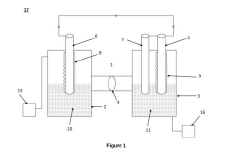
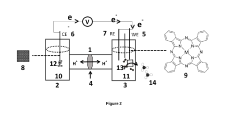
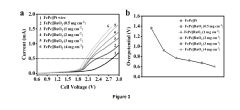
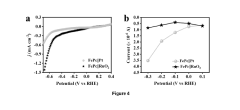
- An electrochemical cell system with a cathode electrode coated with a transition metal-based catalyst layer, such as Iron (Fe), Cobalt (Co), or Copper (Cu) phthalocyanine, and an anode electrode coated with Ruthenium (IV) oxide, using sodium tetrafluoroborate as the catholyte and potassium hydroxide as the anolyte, which improves nitrogen reduction reaction efficiency and oxygen evolution reaction kinetics.
Catalyst for carbon dioxide electroreduction reaction or nitrogen electroreduction reaction, method for producing catalyst for carbon dioxide electroreduction reaction or nitrogen electroreduction reaction, and electrode for carbon dioxide electroreduction reaction or nitrogen electroreduction reaction
PatentInactiveJP2021115501A
Innovation
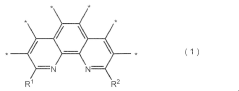
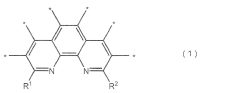
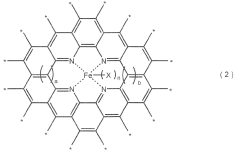
- Incorporating Fe-N4 structures with a high active point density of 3.0 × 10^-5 to 1.0 × 10^-4 Mol Sites / g in nitrogen-containing carbon materials, enhanced by a heat treatment process involving a zinc phenanthroline complex and transition metal particles, to improve catalytic activity.

Sustainability Impact of Advanced NRR Technologies
The advancement of Nitrogen Reduction Reaction (NRR) technologies represents a significant step toward more sustainable agricultural and industrial practices. By enabling the ambient-condition synthesis of ammonia, these technologies could dramatically reduce the carbon footprint associated with conventional Haber-Bosch processes, which currently consume approximately 1-2% of global energy production and generate substantial CO2 emissions.
Advanced NRR catalysts utilizing optimized electrode kinetics offer multiple sustainability benefits. Primarily, they reduce energy requirements by operating at ambient temperatures and pressures, potentially decreasing energy consumption by up to 70-80% compared to traditional methods. This translates directly to reduced greenhouse gas emissions, with some models projecting potential savings of 1.4-1.9 tons of CO2 per ton of ammonia produced.
Water utilization represents another critical sustainability dimension. Electrochemical NRR systems can be designed to operate with significantly lower water requirements than conventional processes. Some advanced catalyst systems have demonstrated water efficiency improvements of 40-60%, particularly important in regions facing water scarcity challenges.
The localized production capability enabled by these technologies further enhances sustainability through reduced transportation needs. Distributed ammonia production facilities could eliminate long-distance shipping of fertilizers, potentially reducing transportation-related emissions by 15-25% in agricultural supply chains. This localization also supports rural economic development and agricultural self-sufficiency in developing regions.
From a circular economy perspective, advanced NRR technologies offer promising integration with renewable energy systems. Intermittent renewable electricity can power electrochemical nitrogen reduction processes, effectively storing energy in the form of ammonia while simultaneously producing valuable fertilizer. This dual-purpose approach maximizes resource efficiency and provides a pathway for seasonal energy storage.
Life cycle assessments of emerging NRR technologies indicate potential reductions in environmental impact categories beyond climate change, including acidification potential, eutrophication, and resource depletion. Early-stage analyses suggest 30-45% reductions across these impact categories compared to conventional ammonia production methods.
The sustainability benefits extend to social dimensions as well. By enabling decentralized fertilizer production, these technologies could improve food security and agricultural resilience in remote or economically disadvantaged regions, potentially benefiting hundreds of millions of smallholder farmers globally who currently lack reliable access to affordable fertilizers.
Advanced NRR catalysts utilizing optimized electrode kinetics offer multiple sustainability benefits. Primarily, they reduce energy requirements by operating at ambient temperatures and pressures, potentially decreasing energy consumption by up to 70-80% compared to traditional methods. This translates directly to reduced greenhouse gas emissions, with some models projecting potential savings of 1.4-1.9 tons of CO2 per ton of ammonia produced.
Water utilization represents another critical sustainability dimension. Electrochemical NRR systems can be designed to operate with significantly lower water requirements than conventional processes. Some advanced catalyst systems have demonstrated water efficiency improvements of 40-60%, particularly important in regions facing water scarcity challenges.
The localized production capability enabled by these technologies further enhances sustainability through reduced transportation needs. Distributed ammonia production facilities could eliminate long-distance shipping of fertilizers, potentially reducing transportation-related emissions by 15-25% in agricultural supply chains. This localization also supports rural economic development and agricultural self-sufficiency in developing regions.
From a circular economy perspective, advanced NRR technologies offer promising integration with renewable energy systems. Intermittent renewable electricity can power electrochemical nitrogen reduction processes, effectively storing energy in the form of ammonia while simultaneously producing valuable fertilizer. This dual-purpose approach maximizes resource efficiency and provides a pathway for seasonal energy storage.
Life cycle assessments of emerging NRR technologies indicate potential reductions in environmental impact categories beyond climate change, including acidification potential, eutrophication, and resource depletion. Early-stage analyses suggest 30-45% reductions across these impact categories compared to conventional ammonia production methods.
The sustainability benefits extend to social dimensions as well. By enabling decentralized fertilizer production, these technologies could improve food security and agricultural resilience in remote or economically disadvantaged regions, potentially benefiting hundreds of millions of smallholder farmers globally who currently lack reliable access to affordable fertilizers.
Scalability and Economic Viability Assessment
The scalability of nitrogen reduction catalyst technologies presents significant challenges when transitioning from laboratory-scale demonstrations to industrial applications. Current electrode kinetics in nitrogen reduction reaction (NRR) catalysts typically achieve ammonia production rates of 10^-10 to 10^-8 mol cm^-2 s^-1, which falls substantially below the threshold required for commercial viability (estimated at 10^-7 mol cm^-2 s^-1). This performance gap represents a primary obstacle to widespread implementation.
Economic analysis reveals that catalyst cost constitutes approximately 15-25% of total system expenses in electrochemical nitrogen reduction systems. Noble metal catalysts (Ru, Pt, Pd) demonstrate superior kinetics but at prohibitive costs ranging from $30,000-50,000 per kilogram, rendering them economically unfeasible for large-scale deployment. Single-atom catalysts offer promising alternatives with reduced precious metal loading, potentially decreasing catalyst costs by 60-80%.
Energy efficiency metrics further complicate the economic equation. Current NRR systems operate at energy efficiencies of 1-10%, whereas industrial viability requires minimum efficiencies of 30-40%. This efficiency gap translates to electricity costs of $3,000-5,000 per ton of ammonia produced via electrochemical methods, compared to $400-700 per ton through conventional Haber-Bosch processes.
Infrastructure requirements present additional scaling challenges. Electrode fabrication techniques suitable for laboratory demonstrations (e.g., drop-casting, spin-coating) cannot be directly translated to industrial-scale production. Roll-to-roll manufacturing shows promise for continuous electrode production but requires significant process optimization to maintain consistent electrode kinetic performance across large surface areas.
Techno-economic assessments indicate that electrochemical nitrogen reduction could become economically competitive with Haber-Bosch when achieving three concurrent benchmarks: catalyst cost below $1,000 per kilogram, Faradaic efficiency exceeding 60%, and operating current densities above 200 mA/cm². Current state-of-the-art systems achieve only one or two of these metrics simultaneously.
Sensitivity analysis demonstrates that electrode kinetics improvements offer the highest return on investment for overall system economics. A tenfold improvement in reaction kinetics could reduce capital costs by approximately 40% and operational costs by 25%, highlighting the critical importance of continued research in this domain.
Pilot-scale demonstrations (1-10 kg NH₃/day) are essential to validate laboratory findings and identify unforeseen scaling challenges. Recent pilot projects have revealed issues with catalyst stability, with performance degradation of 5-15% per 100 operating hours, significantly impacting long-term economic viability calculations.
Economic analysis reveals that catalyst cost constitutes approximately 15-25% of total system expenses in electrochemical nitrogen reduction systems. Noble metal catalysts (Ru, Pt, Pd) demonstrate superior kinetics but at prohibitive costs ranging from $30,000-50,000 per kilogram, rendering them economically unfeasible for large-scale deployment. Single-atom catalysts offer promising alternatives with reduced precious metal loading, potentially decreasing catalyst costs by 60-80%.
Energy efficiency metrics further complicate the economic equation. Current NRR systems operate at energy efficiencies of 1-10%, whereas industrial viability requires minimum efficiencies of 30-40%. This efficiency gap translates to electricity costs of $3,000-5,000 per ton of ammonia produced via electrochemical methods, compared to $400-700 per ton through conventional Haber-Bosch processes.
Infrastructure requirements present additional scaling challenges. Electrode fabrication techniques suitable for laboratory demonstrations (e.g., drop-casting, spin-coating) cannot be directly translated to industrial-scale production. Roll-to-roll manufacturing shows promise for continuous electrode production but requires significant process optimization to maintain consistent electrode kinetic performance across large surface areas.
Techno-economic assessments indicate that electrochemical nitrogen reduction could become economically competitive with Haber-Bosch when achieving three concurrent benchmarks: catalyst cost below $1,000 per kilogram, Faradaic efficiency exceeding 60%, and operating current densities above 200 mA/cm². Current state-of-the-art systems achieve only one or two of these metrics simultaneously.
Sensitivity analysis demonstrates that electrode kinetics improvements offer the highest return on investment for overall system economics. A tenfold improvement in reaction kinetics could reduce capital costs by approximately 40% and operational costs by 25%, highlighting the critical importance of continued research in this domain.
Pilot-scale demonstrations (1-10 kg NH₃/day) are essential to validate laboratory findings and identify unforeseen scaling challenges. Recent pilot projects have revealed issues with catalyst stability, with performance degradation of 5-15% per 100 operating hours, significantly impacting long-term economic viability calculations.
Unlock deeper insights with PatSnap Eureka Quick Research — get a full tech report to explore trends and direct your research. Try now!
Generate Your Research Report Instantly with AI Agent
Supercharge your innovation with PatSnap Eureka AI Agent Platform!