How Does Solid State Battery Breakthrough Affect Thermal Stability?
OCT 24, 202510 MIN READ
Generate Your Research Report Instantly with AI Agent
PatSnap Eureka helps you evaluate technical feasibility & market potential.
Solid State Battery Thermal Stability Background and Objectives
Solid state batteries represent a significant evolution in energy storage technology, emerging as a promising alternative to conventional lithium-ion batteries with liquid electrolytes. The development trajectory of solid state battery technology spans several decades, with initial conceptual work dating back to the 1970s. However, substantial research acceleration has occurred only in the past decade, driven by increasing demands for safer, higher-capacity energy storage solutions across multiple industries.
The thermal stability characteristics of batteries have historically been a critical concern in energy storage applications. Conventional lithium-ion batteries with liquid electrolytes present inherent safety risks due to their flammability and potential for thermal runaway under certain conditions. This vulnerability has resulted in well-documented incidents across consumer electronics, electric vehicles, and grid storage applications, highlighting the urgent need for thermally stable alternatives.
Recent breakthroughs in solid state battery technology have fundamentally altered the thermal stability equation. By replacing liquid electrolytes with solid materials, these advanced batteries eliminate the primary source of thermal instability. The evolution of solid electrolyte materials has progressed from early polymer-based systems to more recent ceramic and glass-based compositions, each iteration improving thermal resistance properties while addressing challenges related to ion conductivity at operational temperatures.
The technical objectives for solid state battery development regarding thermal stability are multifaceted. Primary goals include achieving operational stability across a wider temperature range (-40°C to 100°C) than conventional batteries, eliminating thermal runaway risks even under extreme conditions such as physical damage or electrical abuse, and maintaining performance consistency throughout temperature fluctuations without requiring complex thermal management systems.
Industry benchmarks for thermal stability have evolved significantly, with current targets focusing on batteries that can withstand short-circuit conditions without ignition, maintain structural integrity during puncture tests, and demonstrate negligible capacity degradation after repeated thermal cycling. These objectives represent a substantial advancement over previous generation batteries, where thermal management was primarily focused on containment rather than prevention.
The technological trajectory indicates a convergence toward multi-layered approaches to thermal stability, incorporating innovations in electrolyte chemistry, electrode interface engineering, and battery architecture. This holistic approach recognizes that thermal stability is not solely a material property but emerges from the integrated design of the entire battery system.
Understanding the fundamental mechanisms by which solid state battery breakthroughs affect thermal stability requires examination of both material science advancements and system-level engineering innovations, establishing the foundation for subsequent analysis of specific technical solutions and market implications.
The thermal stability characteristics of batteries have historically been a critical concern in energy storage applications. Conventional lithium-ion batteries with liquid electrolytes present inherent safety risks due to their flammability and potential for thermal runaway under certain conditions. This vulnerability has resulted in well-documented incidents across consumer electronics, electric vehicles, and grid storage applications, highlighting the urgent need for thermally stable alternatives.
Recent breakthroughs in solid state battery technology have fundamentally altered the thermal stability equation. By replacing liquid electrolytes with solid materials, these advanced batteries eliminate the primary source of thermal instability. The evolution of solid electrolyte materials has progressed from early polymer-based systems to more recent ceramic and glass-based compositions, each iteration improving thermal resistance properties while addressing challenges related to ion conductivity at operational temperatures.
The technical objectives for solid state battery development regarding thermal stability are multifaceted. Primary goals include achieving operational stability across a wider temperature range (-40°C to 100°C) than conventional batteries, eliminating thermal runaway risks even under extreme conditions such as physical damage or electrical abuse, and maintaining performance consistency throughout temperature fluctuations without requiring complex thermal management systems.
Industry benchmarks for thermal stability have evolved significantly, with current targets focusing on batteries that can withstand short-circuit conditions without ignition, maintain structural integrity during puncture tests, and demonstrate negligible capacity degradation after repeated thermal cycling. These objectives represent a substantial advancement over previous generation batteries, where thermal management was primarily focused on containment rather than prevention.
The technological trajectory indicates a convergence toward multi-layered approaches to thermal stability, incorporating innovations in electrolyte chemistry, electrode interface engineering, and battery architecture. This holistic approach recognizes that thermal stability is not solely a material property but emerges from the integrated design of the entire battery system.
Understanding the fundamental mechanisms by which solid state battery breakthroughs affect thermal stability requires examination of both material science advancements and system-level engineering innovations, establishing the foundation for subsequent analysis of specific technical solutions and market implications.
Market Demand Analysis for Thermally Stable Energy Storage
The global energy storage market is witnessing unprecedented demand for thermally stable solutions, primarily driven by safety concerns in existing lithium-ion battery technologies. Market research indicates that the energy storage sector is projected to grow at a compound annual growth rate of 20-25% through 2030, with particular emphasis on technologies that address thermal runaway issues. This accelerated growth reflects increasing consumer awareness about battery safety following high-profile incidents involving conventional batteries in consumer electronics, electric vehicles, and grid storage applications.
Electric vehicle manufacturers represent the largest demand segment for thermally stable energy storage solutions. As EV adoption rates continue to climb globally, manufacturers are prioritizing battery technologies that eliminate fire risks while maintaining or improving energy density. Consumer surveys reveal that safety concerns rank among the top three factors influencing electric vehicle purchasing decisions, creating significant market pull for solid-state battery technologies that offer superior thermal stability.
The grid-scale energy storage market presents another substantial opportunity for thermally stable battery technologies. Utility companies are increasingly deploying large-scale battery systems to support renewable energy integration and grid stabilization. These installations, often located near population centers, face stringent safety requirements that conventional lithium-ion batteries struggle to meet without extensive cooling systems and protective measures.
Consumer electronics manufacturers are similarly seeking safer battery alternatives as devices become more powerful and compact. The wearable technology segment in particular demands batteries that can operate safely in close proximity to the human body under various environmental conditions, creating a premium market for thermally stable solutions.
Aviation and aerospace applications represent an emerging high-value market for thermally stable energy storage. These sectors require batteries that can withstand extreme temperature variations while maintaining absolute safety standards. The recent certification of electric aircraft designs has accelerated demand for battery technologies that eliminate thermal runaway risks entirely.
Market analysis reveals a significant price premium that customers are willing to pay for enhanced thermal stability. Studies indicate that industrial and commercial customers would accept a 15-30% cost increase for energy storage solutions that eliminate fire risks, while maintaining comparable performance metrics. This price tolerance creates a viable commercialization pathway for solid-state battery technologies despite their currently higher manufacturing costs.
Regional market assessment shows particularly strong demand in densely populated urban areas of Asia-Pacific and North America, where safety regulations are becoming increasingly stringent for energy storage installations. European markets demonstrate the highest willingness to adopt new technologies that align with sustainability goals while enhancing safety profiles.
Electric vehicle manufacturers represent the largest demand segment for thermally stable energy storage solutions. As EV adoption rates continue to climb globally, manufacturers are prioritizing battery technologies that eliminate fire risks while maintaining or improving energy density. Consumer surveys reveal that safety concerns rank among the top three factors influencing electric vehicle purchasing decisions, creating significant market pull for solid-state battery technologies that offer superior thermal stability.
The grid-scale energy storage market presents another substantial opportunity for thermally stable battery technologies. Utility companies are increasingly deploying large-scale battery systems to support renewable energy integration and grid stabilization. These installations, often located near population centers, face stringent safety requirements that conventional lithium-ion batteries struggle to meet without extensive cooling systems and protective measures.
Consumer electronics manufacturers are similarly seeking safer battery alternatives as devices become more powerful and compact. The wearable technology segment in particular demands batteries that can operate safely in close proximity to the human body under various environmental conditions, creating a premium market for thermally stable solutions.
Aviation and aerospace applications represent an emerging high-value market for thermally stable energy storage. These sectors require batteries that can withstand extreme temperature variations while maintaining absolute safety standards. The recent certification of electric aircraft designs has accelerated demand for battery technologies that eliminate thermal runaway risks entirely.
Market analysis reveals a significant price premium that customers are willing to pay for enhanced thermal stability. Studies indicate that industrial and commercial customers would accept a 15-30% cost increase for energy storage solutions that eliminate fire risks, while maintaining comparable performance metrics. This price tolerance creates a viable commercialization pathway for solid-state battery technologies despite their currently higher manufacturing costs.
Regional market assessment shows particularly strong demand in densely populated urban areas of Asia-Pacific and North America, where safety regulations are becoming increasingly stringent for energy storage installations. European markets demonstrate the highest willingness to adopt new technologies that align with sustainability goals while enhancing safety profiles.
Current Challenges in Solid State Battery Thermal Management
Despite significant advancements in solid-state battery technology, thermal management remains one of the most critical challenges hindering widespread commercialization. Current solid-state batteries face several thermal stability issues that require innovative solutions before mass market adoption becomes feasible.
The interface between solid electrolytes and electrodes presents a major thermal management challenge. Unlike liquid electrolytes that maintain consistent contact with electrode surfaces during temperature fluctuations, solid electrolytes can develop microcracks and delamination when subjected to thermal expansion and contraction cycles. This phenomenon creates resistance hotspots that exacerbate thermal runaway risks and degrade battery performance over time.
Thermal conductivity limitations of solid electrolyte materials constitute another significant obstacle. Most ceramic and polymer electrolytes exhibit substantially lower thermal conductivity than traditional liquid electrolytes, resulting in heat accumulation during high-rate charging and discharging operations. This heat buildup can accelerate degradation mechanisms and potentially compromise safety advantages that solid-state batteries theoretically offer.
Manufacturing inconsistencies further complicate thermal management efforts. Current production techniques struggle to create uniform solid electrolyte layers with consistent thickness and density. These variations create unpredictable thermal pathways throughout the battery structure, making systematic thermal management strategies difficult to implement effectively across production batches.
Dendrite formation under thermal stress remains problematic even in solid-state configurations. While solid electrolytes theoretically suppress dendrite growth, elevated temperatures can soften certain solid electrolyte materials, particularly polymer-based ones, potentially enabling lithium dendrite penetration. This phenomenon creates internal short circuits that generate localized heating and potential thermal runaway events.
Thermal gradient management across large-format cells presents additional engineering challenges. As solid-state batteries scale up for vehicle applications, maintaining uniform temperature distribution becomes increasingly difficult. Edge effects and thermal gradients can lead to uneven material expansion, mechanical stress, and accelerated degradation in specific regions of the battery.
Cooling system integration complexity has increased with solid-state designs. Traditional liquid cooling approaches must be reconceptualized for solid-state architectures, as heat transfer pathways differ fundamentally from conventional lithium-ion batteries. The higher operating temperatures of some solid-state chemistries require more sophisticated thermal management systems that add cost and complexity to battery pack designs.
Addressing these thermal management challenges requires interdisciplinary approaches combining materials science, electrochemistry, and mechanical engineering. Recent research focuses on composite electrolytes with enhanced thermal conductivity, interface engineering to maintain contact during thermal cycling, and novel cell designs that facilitate more effective heat dissipation pathways.
The interface between solid electrolytes and electrodes presents a major thermal management challenge. Unlike liquid electrolytes that maintain consistent contact with electrode surfaces during temperature fluctuations, solid electrolytes can develop microcracks and delamination when subjected to thermal expansion and contraction cycles. This phenomenon creates resistance hotspots that exacerbate thermal runaway risks and degrade battery performance over time.
Thermal conductivity limitations of solid electrolyte materials constitute another significant obstacle. Most ceramic and polymer electrolytes exhibit substantially lower thermal conductivity than traditional liquid electrolytes, resulting in heat accumulation during high-rate charging and discharging operations. This heat buildup can accelerate degradation mechanisms and potentially compromise safety advantages that solid-state batteries theoretically offer.
Manufacturing inconsistencies further complicate thermal management efforts. Current production techniques struggle to create uniform solid electrolyte layers with consistent thickness and density. These variations create unpredictable thermal pathways throughout the battery structure, making systematic thermal management strategies difficult to implement effectively across production batches.
Dendrite formation under thermal stress remains problematic even in solid-state configurations. While solid electrolytes theoretically suppress dendrite growth, elevated temperatures can soften certain solid electrolyte materials, particularly polymer-based ones, potentially enabling lithium dendrite penetration. This phenomenon creates internal short circuits that generate localized heating and potential thermal runaway events.
Thermal gradient management across large-format cells presents additional engineering challenges. As solid-state batteries scale up for vehicle applications, maintaining uniform temperature distribution becomes increasingly difficult. Edge effects and thermal gradients can lead to uneven material expansion, mechanical stress, and accelerated degradation in specific regions of the battery.
Cooling system integration complexity has increased with solid-state designs. Traditional liquid cooling approaches must be reconceptualized for solid-state architectures, as heat transfer pathways differ fundamentally from conventional lithium-ion batteries. The higher operating temperatures of some solid-state chemistries require more sophisticated thermal management systems that add cost and complexity to battery pack designs.
Addressing these thermal management challenges requires interdisciplinary approaches combining materials science, electrochemistry, and mechanical engineering. Recent research focuses on composite electrolytes with enhanced thermal conductivity, interface engineering to maintain contact during thermal cycling, and novel cell designs that facilitate more effective heat dissipation pathways.
Current Technical Solutions for Solid State Battery Thermal Issues
01 Electrolyte materials for thermal stability
Solid-state batteries can achieve improved thermal stability through the use of specialized electrolyte materials. These include ceramic electrolytes, polymer electrolytes, and composite electrolytes that maintain structural integrity and ion conductivity at elevated temperatures. The selection of thermally stable electrolyte materials is crucial for preventing thermal runaway and ensuring battery safety under various operating conditions.- Electrolyte materials for thermal stability: Specialized electrolyte materials can significantly enhance the thermal stability of solid-state batteries. These include ceramic-based solid electrolytes, polymer electrolytes with high thermal resistance, and composite electrolytes that combine the advantages of different materials. These electrolytes maintain ionic conductivity at elevated temperatures while preventing thermal runaway, making them crucial for safe battery operation under various thermal conditions.
- Interface engineering for heat resistance: Engineering the interfaces between electrodes and solid electrolytes is critical for thermal stability. Specialized coatings, buffer layers, and interface modifications can reduce impedance growth during thermal cycling and prevent unwanted reactions at high temperatures. These interface engineering approaches maintain contact between components during thermal expansion and contraction, ensuring consistent performance across a wide temperature range.
- Thermally stable electrode compositions: Advanced electrode compositions with enhanced thermal stability characteristics are essential for solid-state batteries operating in demanding environments. These include cathode materials with stable crystal structures at high temperatures, anodes designed to minimize volume changes during heating, and current collectors that maintain conductivity across temperature ranges. The electrode compositions often incorporate stabilizing additives that prevent phase transitions or decomposition at elevated temperatures.
- Battery architecture for heat dissipation: Innovative battery architectures can significantly improve thermal stability by facilitating efficient heat dissipation. These designs include integrated cooling channels, thermally conductive layers between cells, and optimized cell spacing. Some architectures incorporate phase-change materials that absorb excess heat during operation. The physical arrangement of components is engineered to minimize thermal gradients and hotspots that could lead to localized degradation.
- Thermal management systems and protective mechanisms: Comprehensive thermal management systems and protective mechanisms are integrated into solid-state batteries to maintain optimal operating temperatures. These include temperature sensors, thermal fuses, and electronic control systems that monitor and regulate battery temperature. Advanced battery management systems can detect thermal anomalies and implement protective measures such as current limitation or shutdown before critical temperatures are reached, preventing thermal runaway and ensuring long-term stability.
02 Interface engineering for thermal management
Interface engineering between electrodes and solid electrolytes plays a critical role in maintaining thermal stability of solid-state batteries. By designing stable interfaces that minimize impedance growth during thermal cycling, these batteries can withstand higher operating temperatures. Techniques include surface coatings, buffer layers, and gradient interfaces that accommodate thermal expansion differences between components.Expand Specific Solutions03 Cathode and anode materials with high thermal resistance
The development of electrode materials with inherent thermal stability contributes significantly to overall battery safety. These materials maintain structural integrity and electrochemical performance at elevated temperatures, preventing decomposition reactions that could lead to thermal runaway. Advanced cathode compositions and thermally stable anode materials are engineered to withstand temperature fluctuations without degradation.Expand Specific Solutions04 Thermal management systems and structures
Innovative thermal management systems are integrated into solid-state battery designs to regulate temperature distribution and dissipate heat effectively. These include passive cooling structures, heat-dissipating materials, and battery pack designs that minimize thermal gradients. Such systems prevent localized hotspots and maintain uniform temperature across the battery, enhancing overall thermal stability and extending battery lifespan.Expand Specific Solutions05 Safety mechanisms and thermal runaway prevention
Advanced safety mechanisms are incorporated into solid-state battery designs to prevent thermal runaway and enhance overall safety. These include thermal fuses, pressure relief structures, and self-limiting mechanisms that activate at critical temperatures. Additionally, specialized separator designs and battery management systems continuously monitor thermal conditions and can implement protective measures before thermal instability occurs.Expand Specific Solutions
Key Industry Players in Advanced Battery Development
The solid-state battery market is currently in an early growth phase, characterized by significant R&D investments but limited commercial deployment. Market size is projected to expand rapidly as thermal stability advantages drive adoption in electric vehicles and consumer electronics. Technologically, companies are at varying maturity levels: established players like Toyota, Samsung SDI, and LG Chem have advanced prototypes approaching commercialization, while specialized innovators such as Solid Power and Sakti3 focus on breakthrough materials. Research institutions including Forschungszentrum Jülich and Argonne National Laboratory provide critical scientific foundations. Automotive manufacturers (BMW, Toyota) are accelerating development through strategic partnerships to address thermal stability challenges that have historically limited lithium-ion battery performance and safety.
Solid Power Operating, Inc.
Technical Solution: Solid Power has developed a sulfide-based solid-state electrolyte technology that significantly enhances thermal stability compared to conventional lithium-ion batteries. Their approach uses a solid sulfide electrolyte that eliminates the need for flammable liquid components, allowing the battery to operate safely at temperatures exceeding 100°C without thermal runaway risks. The company's proprietary manufacturing process integrates this electrolyte with high-capacity silicon and lithium metal anodes, creating cells with energy densities above 400 Wh/kg. Solid Power's technology also incorporates a multi-layer cell architecture that physically separates electrodes even under extreme conditions, preventing short circuits that typically trigger thermal events. Recent testing demonstrated their batteries maintaining structural integrity at temperatures up to 130°C, far exceeding the 60°C safety threshold of conventional lithium-ion batteries.
Strengths: Superior thermal stability with demonstrated safety at temperatures exceeding 100°C; scalable manufacturing process compatible with existing lithium-ion production infrastructure; higher energy density potential. Weaknesses: Sulfide electrolytes are sensitive to moisture and air exposure, requiring specialized handling; mechanical stress at interfaces between solid components can create reliability challenges during cycling.
LG Chem Ltd.
Technical Solution: LG Chem has pioneered a composite solid electrolyte system that combines ceramic and polymer materials to address thermal stability challenges in solid-state batteries. Their technology utilizes a lithium-conducting ceramic (LLZO) embedded within a polymer matrix, creating a flexible yet thermally resistant electrolyte structure. This hybrid approach maintains ionic conductivity while providing mechanical flexibility to accommodate volume changes during cycling. LG Chem's solid-state cells incorporate proprietary interface engineering to minimize resistance between the electrolyte and electrodes, a critical factor in thermal performance. Their batteries have demonstrated stable operation at temperatures up to 90°C without cooling systems, compared to conventional lithium-ion batteries that require active cooling above 45°C. The company has also developed specialized cathode coatings that prevent unwanted side reactions at elevated temperatures, further enhancing thermal stability and extending cycle life in high-temperature environments.
Strengths: Hybrid electrolyte approach balances mechanical flexibility with thermal stability; established manufacturing capabilities allow for potential rapid scaling; comprehensive battery management systems optimize thermal performance. Weaknesses: Higher production costs compared to conventional lithium-ion batteries; composite electrolytes may still have lower ionic conductivity than liquid electrolytes at room temperature, affecting power performance.
Critical Patents and Research on Thermal Stability Mechanisms
Solid-state battery
PatentWO2024150603A1
Innovation
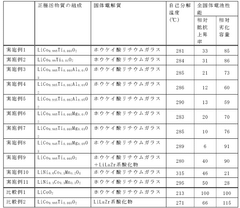
- A solid-state battery design featuring a positive electrode layer with a self-decomposition temperature of 215°C or higher, utilizing lithium borosilicate glass as a solid electrolyte, which stabilizes the positive electrode active material and maintains battery performance even at elevated temperatures.
Solid-state battery
PatentPendingUS20250316752A1
Innovation
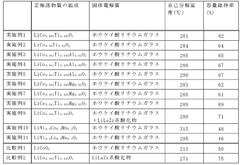
- A solid-state battery design with a positive electrode layer containing a positive electrode active material and a solid electrolyte, where the thermal weight reduction starting temperature is set to 220°C or higher and below 485°C, using lithium borosilicate glass as the solid electrolyte, to maintain suitable battery characteristics under high temperatures.


Safety Standards and Certification Requirements
The evolution of solid-state battery technology necessitates a comprehensive update to existing safety standards and certification requirements. Current regulatory frameworks, primarily designed for liquid electrolyte lithium-ion batteries, inadequately address the unique characteristics and potential failure modes of solid-state configurations. International standards organizations including IEC, UL, and ISO are actively developing new testing protocols specifically tailored to solid-state battery technologies.
These emerging standards focus particularly on thermal stability parameters, recognizing the inherent advantages solid-state batteries offer in this domain. Testing methodologies are being redesigned to evaluate thermal runaway resistance under various conditions, including mechanical stress, electrical abuse, and environmental extremes. The nail penetration test, for instance, is being modified to account for the different mechanical properties of solid electrolytes compared to liquid ones.
Certification requirements are expanding to include long-term stability assessments, as the degradation mechanisms of solid interfaces differ significantly from conventional batteries. Accelerated aging tests under thermal cycling conditions are becoming mandatory to verify the maintenance of the solid-electrolyte interface integrity over the battery's operational lifetime. This represents a paradigm shift from traditional certification approaches that primarily focused on immediate safety concerns rather than long-term stability.
Regulatory bodies worldwide are implementing tiered certification systems that recognize the varying levels of thermal stability improvements across different solid-state battery chemistries. Batteries demonstrating superior thermal stability profiles may qualify for less restrictive transportation and storage regulations, potentially reducing logistical costs and expanding market access for manufacturers.
The automotive industry has been particularly proactive in developing sector-specific standards for solid-state batteries, with organizations like SAE International establishing dedicated working groups. These efforts aim to create unified testing protocols that address the unique operational demands of electric vehicles, including rapid charging capabilities and extreme temperature resilience, while maintaining stringent safety requirements.
Manufacturers seeking certification for solid-state battery products must now demonstrate compliance with both established lithium battery safety standards and emerging solid-state-specific requirements. This dual compliance approach ensures comprehensive safety evaluation while the regulatory landscape continues to evolve alongside technological advancements in solid-state battery design and manufacturing.
These emerging standards focus particularly on thermal stability parameters, recognizing the inherent advantages solid-state batteries offer in this domain. Testing methodologies are being redesigned to evaluate thermal runaway resistance under various conditions, including mechanical stress, electrical abuse, and environmental extremes. The nail penetration test, for instance, is being modified to account for the different mechanical properties of solid electrolytes compared to liquid ones.
Certification requirements are expanding to include long-term stability assessments, as the degradation mechanisms of solid interfaces differ significantly from conventional batteries. Accelerated aging tests under thermal cycling conditions are becoming mandatory to verify the maintenance of the solid-electrolyte interface integrity over the battery's operational lifetime. This represents a paradigm shift from traditional certification approaches that primarily focused on immediate safety concerns rather than long-term stability.
Regulatory bodies worldwide are implementing tiered certification systems that recognize the varying levels of thermal stability improvements across different solid-state battery chemistries. Batteries demonstrating superior thermal stability profiles may qualify for less restrictive transportation and storage regulations, potentially reducing logistical costs and expanding market access for manufacturers.
The automotive industry has been particularly proactive in developing sector-specific standards for solid-state batteries, with organizations like SAE International establishing dedicated working groups. These efforts aim to create unified testing protocols that address the unique operational demands of electric vehicles, including rapid charging capabilities and extreme temperature resilience, while maintaining stringent safety requirements.
Manufacturers seeking certification for solid-state battery products must now demonstrate compliance with both established lithium battery safety standards and emerging solid-state-specific requirements. This dual compliance approach ensures comprehensive safety evaluation while the regulatory landscape continues to evolve alongside technological advancements in solid-state battery design and manufacturing.
Environmental Impact and Sustainability Considerations
The solid-state battery revolution represents a significant advancement in sustainable energy storage technology, offering substantial environmental benefits compared to conventional lithium-ion batteries. The improved thermal stability of solid-state batteries directly translates to enhanced safety profiles and reduced environmental risks associated with thermal runaway incidents, which can release toxic chemicals and cause fires in traditional battery systems.
From a lifecycle perspective, solid-state batteries demonstrate promising sustainability advantages. The elimination of flammable liquid electrolytes not only improves safety but also reduces the environmental footprint associated with the production and disposal of these hazardous materials. Additionally, many solid-state battery designs require fewer rare earth elements and toxic heavy metals, potentially alleviating supply chain pressures on critical minerals and reducing environmental degradation from mining activities.
The extended lifespan of solid-state batteries, enabled by their superior thermal stability, contributes significantly to sustainability efforts by reducing waste generation. Conventional lithium-ion batteries typically require replacement after 500-1,000 charge cycles, whereas solid-state technologies potentially offer 2-3 times longer operational lifespans. This longevity decreases the frequency of battery replacements and subsequently reduces electronic waste, addressing a growing environmental concern in the renewable energy sector.
Energy efficiency gains represent another environmental benefit of solid-state battery technology. The enhanced thermal stability allows these batteries to operate more efficiently across wider temperature ranges, reducing energy losses during charging and discharging processes. This improved efficiency translates to lower overall energy consumption throughout the battery lifecycle, contributing to reduced carbon emissions when considering the complete energy storage ecosystem.
Manufacturing processes for solid-state batteries are evolving toward more environmentally friendly methods. The elimination of certain toxic solvents used in conventional battery production reduces harmful emissions and workplace hazards. However, it should be noted that current solid-state manufacturing techniques often require higher processing temperatures, potentially increasing energy consumption during production. This represents an area where further innovation is needed to fully realize the environmental benefits of this technology.
End-of-life considerations also favor solid-state batteries from a sustainability perspective. Their simplified chemistry and construction may facilitate more effective recycling processes, enabling higher recovery rates of valuable materials. This closed-loop potential could significantly reduce the environmental impact of battery production by decreasing reliance on virgin material extraction and processing, which typically accounts for a substantial portion of battery-related environmental impacts.
From a lifecycle perspective, solid-state batteries demonstrate promising sustainability advantages. The elimination of flammable liquid electrolytes not only improves safety but also reduces the environmental footprint associated with the production and disposal of these hazardous materials. Additionally, many solid-state battery designs require fewer rare earth elements and toxic heavy metals, potentially alleviating supply chain pressures on critical minerals and reducing environmental degradation from mining activities.
The extended lifespan of solid-state batteries, enabled by their superior thermal stability, contributes significantly to sustainability efforts by reducing waste generation. Conventional lithium-ion batteries typically require replacement after 500-1,000 charge cycles, whereas solid-state technologies potentially offer 2-3 times longer operational lifespans. This longevity decreases the frequency of battery replacements and subsequently reduces electronic waste, addressing a growing environmental concern in the renewable energy sector.
Energy efficiency gains represent another environmental benefit of solid-state battery technology. The enhanced thermal stability allows these batteries to operate more efficiently across wider temperature ranges, reducing energy losses during charging and discharging processes. This improved efficiency translates to lower overall energy consumption throughout the battery lifecycle, contributing to reduced carbon emissions when considering the complete energy storage ecosystem.
Manufacturing processes for solid-state batteries are evolving toward more environmentally friendly methods. The elimination of certain toxic solvents used in conventional battery production reduces harmful emissions and workplace hazards. However, it should be noted that current solid-state manufacturing techniques often require higher processing temperatures, potentially increasing energy consumption during production. This represents an area where further innovation is needed to fully realize the environmental benefits of this technology.
End-of-life considerations also favor solid-state batteries from a sustainability perspective. Their simplified chemistry and construction may facilitate more effective recycling processes, enabling higher recovery rates of valuable materials. This closed-loop potential could significantly reduce the environmental impact of battery production by decreasing reliance on virgin material extraction and processing, which typically accounts for a substantial portion of battery-related environmental impacts.
Unlock deeper insights with PatSnap Eureka Quick Research — get a full tech report to explore trends and direct your research. Try now!
Generate Your Research Report Instantly with AI Agent
Supercharge your innovation with PatSnap Eureka AI Agent Platform!