How induction motors optimize performance in electric rail systems
AUG 18, 20259 MIN READ
Generate Your Research Report Instantly with AI Agent
Patsnap Eureka helps you evaluate technical feasibility & market potential.
Induction Motor Evolution in Rail Systems
The evolution of induction motors in rail systems has been a cornerstone of electric railway technology advancement. Initially introduced in the early 20th century, these motors have undergone significant transformations to meet the increasing demands of modern rail transportation.
In the 1920s and 1930s, the first generation of induction motors for rail applications emerged, primarily used in urban tram systems. These early motors were characterized by their simplicity and robustness but lacked the power and efficiency required for high-speed rail operations.
The 1950s and 1960s saw a major leap forward with the development of silicon-controlled rectifiers (SCRs) and power electronics. This technological breakthrough enabled more precise control of induction motors, leading to their wider adoption in mainline railways. The improved control systems allowed for better acceleration and deceleration, enhancing overall train performance.
During the 1970s and 1980s, advancements in semiconductor technology facilitated the introduction of voltage source inverters (VSIs). This innovation marked a significant milestone in induction motor evolution, as it allowed for variable frequency control, resulting in smoother operation and increased energy efficiency.
The 1990s brought about the era of vector control, also known as field-oriented control. This sophisticated control method enabled precise regulation of both motor torque and speed, further optimizing the performance of induction motors in rail applications. Vector control significantly improved the dynamic response of motors, particularly during acceleration and at low speeds.
In the early 2000s, the focus shifted towards energy efficiency and regenerative braking capabilities. Induction motors were redesigned to capture and reuse braking energy, substantially reducing overall energy consumption in rail systems. This period also saw the integration of advanced sensors and real-time monitoring systems, enabling predictive maintenance and enhancing reliability.
The past decade has witnessed the emergence of permanent magnet-assisted synchronous reluctance motors (PMaSynRM) as a hybrid solution, combining the benefits of induction motors with those of permanent magnet motors. These motors offer higher power density and improved efficiency, particularly at lower speeds, making them ideal for urban rail applications.
Today, research is focused on further enhancing the power density, efficiency, and reliability of induction motors for rail systems. Developments in materials science, such as the use of advanced magnetic materials and high-temperature superconductors, are paving the way for the next generation of electric traction motors.
In the 1920s and 1930s, the first generation of induction motors for rail applications emerged, primarily used in urban tram systems. These early motors were characterized by their simplicity and robustness but lacked the power and efficiency required for high-speed rail operations.
The 1950s and 1960s saw a major leap forward with the development of silicon-controlled rectifiers (SCRs) and power electronics. This technological breakthrough enabled more precise control of induction motors, leading to their wider adoption in mainline railways. The improved control systems allowed for better acceleration and deceleration, enhancing overall train performance.
During the 1970s and 1980s, advancements in semiconductor technology facilitated the introduction of voltage source inverters (VSIs). This innovation marked a significant milestone in induction motor evolution, as it allowed for variable frequency control, resulting in smoother operation and increased energy efficiency.
The 1990s brought about the era of vector control, also known as field-oriented control. This sophisticated control method enabled precise regulation of both motor torque and speed, further optimizing the performance of induction motors in rail applications. Vector control significantly improved the dynamic response of motors, particularly during acceleration and at low speeds.
In the early 2000s, the focus shifted towards energy efficiency and regenerative braking capabilities. Induction motors were redesigned to capture and reuse braking energy, substantially reducing overall energy consumption in rail systems. This period also saw the integration of advanced sensors and real-time monitoring systems, enabling predictive maintenance and enhancing reliability.
The past decade has witnessed the emergence of permanent magnet-assisted synchronous reluctance motors (PMaSynRM) as a hybrid solution, combining the benefits of induction motors with those of permanent magnet motors. These motors offer higher power density and improved efficiency, particularly at lower speeds, making them ideal for urban rail applications.
Today, research is focused on further enhancing the power density, efficiency, and reliability of induction motors for rail systems. Developments in materials science, such as the use of advanced magnetic materials and high-temperature superconductors, are paving the way for the next generation of electric traction motors.
Electric Rail Market Demand Analysis
The electric rail market has experienced significant growth in recent years, driven by increasing urbanization, environmental concerns, and the need for efficient public transportation systems. As cities worldwide grapple with traffic congestion and air pollution, electric rail systems have emerged as a sustainable and cost-effective solution. The demand for electric rail infrastructure is particularly strong in developing countries, where rapid urbanization is creating a pressing need for reliable mass transit options.
In established markets, there is a growing trend towards upgrading existing rail systems to incorporate more advanced electric technologies. This includes the implementation of regenerative braking systems, which can significantly improve energy efficiency and reduce operating costs. The integration of smart grid technologies and energy storage solutions is also driving demand for more sophisticated electric rail systems.
The global electric rail market is projected to continue its upward trajectory, with a compound annual growth rate (CAGR) expected to remain robust over the next decade. This growth is fueled by government initiatives to reduce carbon emissions and promote sustainable transportation alternatives. Many countries have set ambitious targets for electrifying their rail networks, which is creating substantial opportunities for manufacturers and suppliers in the electric rail sector.
The adoption of induction motors in electric rail systems is a key factor contributing to market growth. These motors offer several advantages over traditional DC motors, including improved reliability, reduced maintenance requirements, and enhanced energy efficiency. As rail operators seek to optimize their operations and reduce lifecycle costs, the demand for induction motor-based traction systems is expected to increase significantly.
The market for electric rail components, including induction motors, power electronics, and control systems, is also expanding rapidly. This is driven by the need for more advanced and efficient propulsion systems that can meet the demanding requirements of modern rail networks. Manufacturers are investing heavily in research and development to improve the performance and efficiency of induction motors, further driving market growth.
In terms of regional demand, Asia-Pacific is expected to be the fastest-growing market for electric rail systems, followed by Europe and North America. China, in particular, has made significant investments in expanding its high-speed rail network, creating substantial opportunities for electric rail technology providers. In Europe, the push towards rail electrification as part of broader decarbonization efforts is driving demand for advanced electric traction systems.
The increasing focus on energy efficiency and sustainability in the transportation sector is expected to continue driving demand for electric rail systems and components. As technology advances and economies of scale are realized, the cost-competitiveness of electric rail solutions is likely to improve further, accelerating market growth and adoption.
In established markets, there is a growing trend towards upgrading existing rail systems to incorporate more advanced electric technologies. This includes the implementation of regenerative braking systems, which can significantly improve energy efficiency and reduce operating costs. The integration of smart grid technologies and energy storage solutions is also driving demand for more sophisticated electric rail systems.
The global electric rail market is projected to continue its upward trajectory, with a compound annual growth rate (CAGR) expected to remain robust over the next decade. This growth is fueled by government initiatives to reduce carbon emissions and promote sustainable transportation alternatives. Many countries have set ambitious targets for electrifying their rail networks, which is creating substantial opportunities for manufacturers and suppliers in the electric rail sector.
The adoption of induction motors in electric rail systems is a key factor contributing to market growth. These motors offer several advantages over traditional DC motors, including improved reliability, reduced maintenance requirements, and enhanced energy efficiency. As rail operators seek to optimize their operations and reduce lifecycle costs, the demand for induction motor-based traction systems is expected to increase significantly.
The market for electric rail components, including induction motors, power electronics, and control systems, is also expanding rapidly. This is driven by the need for more advanced and efficient propulsion systems that can meet the demanding requirements of modern rail networks. Manufacturers are investing heavily in research and development to improve the performance and efficiency of induction motors, further driving market growth.
In terms of regional demand, Asia-Pacific is expected to be the fastest-growing market for electric rail systems, followed by Europe and North America. China, in particular, has made significant investments in expanding its high-speed rail network, creating substantial opportunities for electric rail technology providers. In Europe, the push towards rail electrification as part of broader decarbonization efforts is driving demand for advanced electric traction systems.
The increasing focus on energy efficiency and sustainability in the transportation sector is expected to continue driving demand for electric rail systems and components. As technology advances and economies of scale are realized, the cost-competitiveness of electric rail solutions is likely to improve further, accelerating market growth and adoption.
Current Challenges in Rail Traction Motors
Induction motors in electric rail systems face several significant challenges that impact their performance and efficiency. One of the primary issues is thermal management. As these motors operate at high power levels for extended periods, they generate substantial heat. Inadequate cooling can lead to reduced efficiency, increased wear, and potential failure. Engineers are constantly working on innovative cooling solutions, including advanced thermal materials and more efficient heat dissipation systems.
Another challenge is the need for high power density. Rail traction motors must deliver considerable power while maintaining a compact form factor to fit within the limited space available on trains. This requirement pushes the boundaries of motor design, necessitating the use of advanced materials and optimized electromagnetic configurations to maximize power output per unit volume.
The harsh operating environment of rail systems presents additional challenges. Traction motors are subjected to severe vibrations, shocks, and temperature fluctuations. These conditions can lead to accelerated wear, reduced reliability, and increased maintenance requirements. Developing motors that can withstand these extreme conditions without compromising performance is an ongoing challenge for manufacturers.
Energy efficiency is another critical concern. With the growing emphasis on sustainability in transportation, there is a pressing need to improve the overall efficiency of electric rail systems. This includes minimizing energy losses in the traction motors, which can significantly impact the system's overall energy consumption. Researchers are exploring advanced control algorithms and motor designs to optimize energy utilization across various operating conditions.
The variability in operating conditions also poses a challenge for induction motors in rail systems. Traction motors must perform efficiently across a wide range of speeds and loads, from initial acceleration to high-speed cruising. Designing motors that maintain high efficiency across this broad operating spectrum is a complex task that requires sophisticated control systems and adaptive motor designs.
Lastly, the integration of regenerative braking systems with induction motors presents both opportunities and challenges. While regenerative braking can significantly improve energy efficiency by recovering kinetic energy during deceleration, it also introduces additional complexity in motor control and power management. Optimizing the interplay between motor operation and regenerative braking to maximize energy recovery without compromising performance or reliability remains an active area of research and development in the field of electric rail traction.
Another challenge is the need for high power density. Rail traction motors must deliver considerable power while maintaining a compact form factor to fit within the limited space available on trains. This requirement pushes the boundaries of motor design, necessitating the use of advanced materials and optimized electromagnetic configurations to maximize power output per unit volume.
The harsh operating environment of rail systems presents additional challenges. Traction motors are subjected to severe vibrations, shocks, and temperature fluctuations. These conditions can lead to accelerated wear, reduced reliability, and increased maintenance requirements. Developing motors that can withstand these extreme conditions without compromising performance is an ongoing challenge for manufacturers.
Energy efficiency is another critical concern. With the growing emphasis on sustainability in transportation, there is a pressing need to improve the overall efficiency of electric rail systems. This includes minimizing energy losses in the traction motors, which can significantly impact the system's overall energy consumption. Researchers are exploring advanced control algorithms and motor designs to optimize energy utilization across various operating conditions.
The variability in operating conditions also poses a challenge for induction motors in rail systems. Traction motors must perform efficiently across a wide range of speeds and loads, from initial acceleration to high-speed cruising. Designing motors that maintain high efficiency across this broad operating spectrum is a complex task that requires sophisticated control systems and adaptive motor designs.
Lastly, the integration of regenerative braking systems with induction motors presents both opportunities and challenges. While regenerative braking can significantly improve energy efficiency by recovering kinetic energy during deceleration, it also introduces additional complexity in motor control and power management. Optimizing the interplay between motor operation and regenerative braking to maximize energy recovery without compromising performance or reliability remains an active area of research and development in the field of electric rail traction.
Optimization Techniques for Induction Motors
01 Efficiency improvement techniques
Various methods are employed to enhance the efficiency of induction motors. These include optimizing the motor design, using advanced materials for core and windings, implementing better cooling systems, and employing sophisticated control algorithms. Such improvements lead to reduced energy losses and increased overall performance.- Efficiency improvement techniques: Various methods are employed to enhance the efficiency of induction motors. These include optimizing the motor design, using advanced materials for core and windings, implementing better cooling systems, and employing sophisticated control algorithms. Such improvements lead to reduced energy consumption and better overall performance.
- Control systems for performance optimization: Advanced control systems play a crucial role in optimizing induction motor performance. These systems may include vector control, direct torque control, and adaptive control algorithms. They enable precise speed and torque regulation, improved dynamic response, and better energy efficiency across various operating conditions.
- Thermal management and cooling solutions: Effective thermal management is essential for maintaining optimal induction motor performance. This involves innovative cooling techniques such as advanced fan designs, liquid cooling systems, and heat pipe technologies. Proper thermal management prevents overheating, extends motor life, and ensures consistent performance under various load conditions.
- Fault diagnosis and predictive maintenance: Implementing fault diagnosis and predictive maintenance strategies significantly improves induction motor reliability and performance. These approaches utilize sensors, data analytics, and machine learning algorithms to detect potential issues early, schedule maintenance proactively, and prevent unexpected downtime.
- Integration with power electronics and smart grid systems: The integration of induction motors with advanced power electronics and smart grid systems enhances their overall performance and efficiency. This includes the use of variable frequency drives, regenerative braking systems, and intelligent power management techniques. Such integration allows for better energy utilization and improved motor control in various applications.
02 Control systems for performance optimization
Advanced control systems play a crucial role in optimizing induction motor performance. These systems may include vector control, direct torque control, and adaptive control algorithms. They enable precise speed and torque regulation, improved dynamic response, and enhanced energy efficiency across various operating conditions.Expand Specific Solutions03 Thermal management and cooling solutions
Effective thermal management is essential for maintaining optimal induction motor performance. This involves innovative cooling techniques such as advanced fan designs, liquid cooling systems, and heat pipe technology. Proper thermal management prevents overheating, extends motor life, and ensures consistent performance under varying load conditions.Expand Specific Solutions04 Rotor design and materials
Advancements in rotor design and materials significantly impact induction motor performance. This includes the use of high-quality magnetic materials, optimized rotor bar shapes, and innovative construction techniques. These improvements lead to reduced losses, enhanced torque characteristics, and improved overall efficiency.Expand Specific Solutions05 Diagnostic and monitoring systems
Sophisticated diagnostic and monitoring systems are crucial for maintaining optimal induction motor performance. These systems employ sensors, data analytics, and predictive maintenance algorithms to detect potential issues early, optimize operating parameters, and ensure consistent performance over the motor's lifetime.Expand Specific Solutions
Key Players in Rail Traction Systems
The electric rail systems market is in a mature stage, with a global market size expected to reach $11.95 billion by 2026. The technology for induction motors in rail applications is well-established, with ongoing innovations focusing on efficiency improvements and energy optimization. Key players like ALSTOM Transportation, Siemens Mobility, and Hitachi Ltd. are driving advancements in this field. These companies, along with others such as CRRC Zhuzhou Locomotive and Bombardier Transportation, are investing in research and development to enhance motor performance, reduce energy consumption, and improve overall system reliability in electric rail applications.
Hitachi Ltd.
Technical Solution: Hitachi has developed innovative solutions for optimizing induction motors in electric rail systems. Their approach includes the use of advanced materials and manufacturing techniques to reduce losses and improve power density. Hitachi has implemented sophisticated control algorithms that optimize motor performance across a wide range of operating conditions, including acceleration, constant speed, and braking[10]. The company has also focused on improving the thermal management of their motors, allowing for higher continuous power output. Hitachi's induction motors feature integrated condition monitoring systems that use AI and machine learning to predict maintenance needs and optimize performance over time. Additionally, they have developed energy recovery systems that capture and reuse braking energy, significantly improving overall system efficiency[11].
Strengths: Advanced materials, sophisticated control systems, and integrated AI-based monitoring. Weaknesses: Potential high initial costs and complexity in retrofitting existing systems.
Mitsubishi Electric Corp.
Technical Solution: Mitsubishi Electric has made significant advancements in induction motor technology for electric rail systems. Their approach includes the development of high-efficiency motors with optimized magnetic circuit designs and low-loss core materials. Mitsubishi has implemented advanced vector control techniques that provide precise torque and speed control, enhancing overall system performance[8]. The company has also focused on improving motor cooling systems, allowing for higher power output in compact designs. Mitsubishi's induction motors feature advanced insulation systems that improve reliability and longevity in harsh operating environments. Additionally, they have developed regenerative braking systems that significantly improve energy efficiency in rail applications[9].
Strengths: High efficiency, compact designs, and advanced control systems. Weaknesses: Potentially higher costs and complexity in integration with existing systems.
Innovations in Motor Control and Efficiency
Induction motor and railway vehicle
PatentWO2023021839A1
Innovation
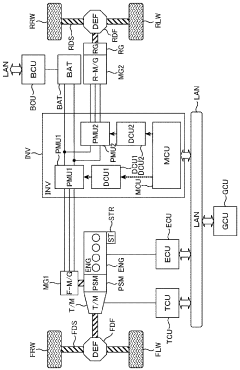
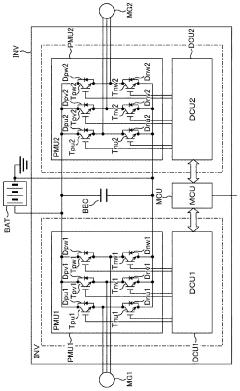
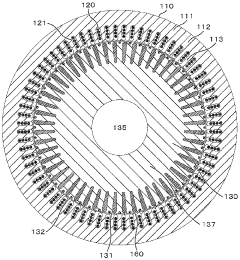
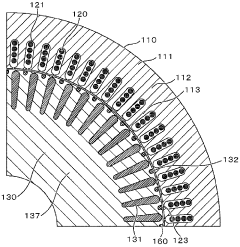
- The induction motor design incorporates a rotor with conductor rods and short-circuit rings formed by aluminum or copper die-casting, accompanied by an annular member with high tensile strength and conductivity, which reduces secondary resistance and enhances motor efficiency by matching thermal expansion coefficients and using materials like Cu-Cr and Ag-containing Cu alloys.


Induction motor, electric drive system, and electric vehicle comprising both
PatentWO2013129024A1
Innovation
- The induction motor is configured with a rotor having a squirrel cage winding with conductive bars and end rings that primarily interlink the fundamental flux, while the second bar is designed to short-circuit the third harmonic component, allowing for increased torque during acceleration without impairing cruising characteristics.
Energy Efficiency Regulations in Rail Transport
Energy efficiency regulations in rail transport have become increasingly stringent in recent years, driven by global efforts to reduce carbon emissions and combat climate change. These regulations directly impact the design and operation of electric rail systems, including the use of induction motors. The European Union, for instance, has set ambitious targets for reducing greenhouse gas emissions from transport by 60% by 2050 compared to 1990 levels. This has led to the implementation of strict energy efficiency standards for rail vehicles and infrastructure.
In the United States, the Federal Railroad Administration (FRA) has established energy efficiency requirements for passenger and freight rail operations. These regulations often focus on overall system efficiency, including propulsion systems, regenerative braking, and auxiliary power systems. Induction motors, as a key component of electric rail propulsion, are subject to these efficiency standards and must be optimized to meet or exceed regulatory requirements.
Japan, known for its advanced rail systems, has implemented its own set of energy efficiency regulations. The country's Top Runner Program sets efficiency standards for various products, including electric motors used in rail applications. These standards are periodically reviewed and tightened, pushing manufacturers to continually improve motor efficiency.
China, with its rapidly expanding high-speed rail network, has also introduced energy efficiency regulations for its rail systems. The country's 13th Five-Year Plan (2016-2020) included specific targets for reducing energy consumption in the transportation sector, with a focus on electrification and efficiency improvements in rail transport.
These regulations have spurred innovation in induction motor design and control strategies. Manufacturers are now focusing on developing high-efficiency motors that can operate at peak performance across a wide range of speeds and loads. Advanced materials, such as low-loss electrical steels and high-performance permanent magnets, are being incorporated into motor designs to reduce energy losses.
Furthermore, energy efficiency regulations have led to the adoption of sophisticated control systems for induction motors in rail applications. Variable frequency drives (VFDs) and vector control techniques are now commonly used to optimize motor performance under varying operating conditions. These control strategies allow for precise adjustment of motor speed and torque, resulting in improved energy efficiency and reduced power consumption.
The impact of these regulations extends beyond the motors themselves. Rail system designers are now taking a holistic approach to energy efficiency, considering factors such as regenerative braking, energy storage systems, and intelligent power management. This comprehensive approach ensures that induction motors are integrated into highly efficient overall rail systems, maximizing their performance while minimizing energy consumption.
In the United States, the Federal Railroad Administration (FRA) has established energy efficiency requirements for passenger and freight rail operations. These regulations often focus on overall system efficiency, including propulsion systems, regenerative braking, and auxiliary power systems. Induction motors, as a key component of electric rail propulsion, are subject to these efficiency standards and must be optimized to meet or exceed regulatory requirements.
Japan, known for its advanced rail systems, has implemented its own set of energy efficiency regulations. The country's Top Runner Program sets efficiency standards for various products, including electric motors used in rail applications. These standards are periodically reviewed and tightened, pushing manufacturers to continually improve motor efficiency.
China, with its rapidly expanding high-speed rail network, has also introduced energy efficiency regulations for its rail systems. The country's 13th Five-Year Plan (2016-2020) included specific targets for reducing energy consumption in the transportation sector, with a focus on electrification and efficiency improvements in rail transport.
These regulations have spurred innovation in induction motor design and control strategies. Manufacturers are now focusing on developing high-efficiency motors that can operate at peak performance across a wide range of speeds and loads. Advanced materials, such as low-loss electrical steels and high-performance permanent magnets, are being incorporated into motor designs to reduce energy losses.
Furthermore, energy efficiency regulations have led to the adoption of sophisticated control systems for induction motors in rail applications. Variable frequency drives (VFDs) and vector control techniques are now commonly used to optimize motor performance under varying operating conditions. These control strategies allow for precise adjustment of motor speed and torque, resulting in improved energy efficiency and reduced power consumption.
The impact of these regulations extends beyond the motors themselves. Rail system designers are now taking a holistic approach to energy efficiency, considering factors such as regenerative braking, energy storage systems, and intelligent power management. This comprehensive approach ensures that induction motors are integrated into highly efficient overall rail systems, maximizing their performance while minimizing energy consumption.
Environmental Impact of Induction Motor Systems
The environmental impact of induction motor systems in electric rail applications is a critical consideration in the pursuit of sustainable transportation solutions. These systems offer significant advantages in terms of energy efficiency and reduced emissions compared to traditional diesel-powered locomotives. Induction motors convert electrical energy into mechanical energy with high efficiency, typically ranging from 90% to 95%, which translates to lower energy consumption and reduced carbon footprint.
One of the primary environmental benefits of induction motor systems in electric rail is the reduction of direct emissions. Unlike diesel engines, electric motors produce zero on-site emissions, contributing to improved air quality in urban areas and along rail corridors. This is particularly important in densely populated regions where air pollution from transportation is a major concern.
The use of induction motors also allows for energy recuperation during braking, a feature known as regenerative braking. This process converts kinetic energy back into electrical energy, which can be fed back into the power grid or used by other trains on the same network. Regenerative braking can recover up to 30% of the energy used during acceleration, significantly improving the overall energy efficiency of the rail system.
Noise pollution is another environmental aspect where induction motor systems excel. Electric trains powered by induction motors are generally quieter than their diesel counterparts, reducing noise pollution along rail lines and in station areas. This contributes to a better quality of life for residents living near railway infrastructure and can help mitigate the need for extensive noise barriers.
However, it is important to consider the indirect environmental impacts associated with the electricity generation required to power these systems. The overall environmental benefit depends on the energy mix used to produce electricity. In regions with a high proportion of renewable energy sources, the environmental advantages of electric rail systems are more pronounced. Conversely, in areas heavily reliant on fossil fuels for electricity generation, the net environmental benefit may be reduced.
The manufacturing and disposal of induction motors and associated electrical components also have environmental implications. While these motors are generally long-lasting and require less maintenance than internal combustion engines, the production of rare earth magnets used in some high-performance motors can have significant environmental impacts. Proper recycling and disposal procedures are essential to minimize the environmental footprint of these systems at the end of their lifecycle.
In conclusion, induction motor systems in electric rail applications offer substantial environmental benefits, particularly in terms of reduced direct emissions, improved energy efficiency, and decreased noise pollution. However, a holistic approach considering the entire lifecycle and energy source is necessary to fully assess their environmental impact and ensure sustainable implementation in rail transportation systems.
One of the primary environmental benefits of induction motor systems in electric rail is the reduction of direct emissions. Unlike diesel engines, electric motors produce zero on-site emissions, contributing to improved air quality in urban areas and along rail corridors. This is particularly important in densely populated regions where air pollution from transportation is a major concern.
The use of induction motors also allows for energy recuperation during braking, a feature known as regenerative braking. This process converts kinetic energy back into electrical energy, which can be fed back into the power grid or used by other trains on the same network. Regenerative braking can recover up to 30% of the energy used during acceleration, significantly improving the overall energy efficiency of the rail system.
Noise pollution is another environmental aspect where induction motor systems excel. Electric trains powered by induction motors are generally quieter than their diesel counterparts, reducing noise pollution along rail lines and in station areas. This contributes to a better quality of life for residents living near railway infrastructure and can help mitigate the need for extensive noise barriers.
However, it is important to consider the indirect environmental impacts associated with the electricity generation required to power these systems. The overall environmental benefit depends on the energy mix used to produce electricity. In regions with a high proportion of renewable energy sources, the environmental advantages of electric rail systems are more pronounced. Conversely, in areas heavily reliant on fossil fuels for electricity generation, the net environmental benefit may be reduced.
The manufacturing and disposal of induction motors and associated electrical components also have environmental implications. While these motors are generally long-lasting and require less maintenance than internal combustion engines, the production of rare earth magnets used in some high-performance motors can have significant environmental impacts. Proper recycling and disposal procedures are essential to minimize the environmental footprint of these systems at the end of their lifecycle.
In conclusion, induction motor systems in electric rail applications offer substantial environmental benefits, particularly in terms of reduced direct emissions, improved energy efficiency, and decreased noise pollution. However, a holistic approach considering the entire lifecycle and energy source is necessary to fully assess their environmental impact and ensure sustainable implementation in rail transportation systems.
Unlock deeper insights with Patsnap Eureka Quick Research — get a full tech report to explore trends and direct your research. Try now!
Generate Your Research Report Instantly with AI Agent
Supercharge your innovation with Patsnap Eureka AI Agent Platform!