How Solid State Battery Breakthrough Revolutionizes Electronics?
OCT 24, 20259 MIN READ
Generate Your Research Report Instantly with AI Agent
PatSnap Eureka helps you evaluate technical feasibility & market potential.
Solid State Battery Evolution and Objectives
Solid state battery technology represents one of the most significant advancements in energy storage since the commercialization of lithium-ion batteries in the early 1990s. The evolution of this technology can be traced back to the 1970s when researchers first began exploring solid electrolytes as alternatives to liquid ones. However, it wasn't until the past decade that substantial breakthroughs in materials science and manufacturing techniques have accelerated development toward commercial viability.
The traditional lithium-ion battery architecture, while revolutionary in its time, has inherent limitations including safety concerns related to flammable liquid electrolytes, limited energy density, and degradation over charge cycles. Solid state batteries emerged as a potential solution by replacing liquid electrolytes with solid materials, promising enhanced safety, higher energy density, and longer lifespan.
From 2010 to 2015, research primarily focused on overcoming the fundamental challenge of ionic conductivity in solid electrolytes. The breakthrough came with the development of new ceramic and sulfide-based materials that approached the conductivity levels of liquid electrolytes while maintaining structural integrity. This period marked the transition from theoretical possibility to practical application.
Between 2016 and 2020, significant advancements occurred in addressing interface issues between electrodes and electrolytes, a critical barrier to commercialization. Researchers developed innovative coating technologies and composite materials that substantially improved the stability of these interfaces, reducing resistance and enhancing overall battery performance.
The current technological trajectory (2021-present) has shifted toward scaling production processes and integrating solid state batteries into various electronic applications. Major electronics manufacturers have begun investing heavily in this technology, recognizing its potential to revolutionize portable devices, electric vehicles, and renewable energy storage systems.
The primary objectives for solid state battery technology development include achieving energy densities exceeding 500 Wh/kg (more than double current lithium-ion capabilities), extending cycle life beyond 1,000 full charge-discharge cycles without significant degradation, reducing charging times to under 15 minutes for 80% capacity, and developing manufacturing processes that enable cost-competitive production at scale.
Another critical objective is temperature resilience, with researchers aiming to create batteries that operate efficiently across a wider temperature range (-20°C to 60°C) than conventional lithium-ion batteries, opening new applications in extreme environments. Additionally, there is a strong focus on sustainability, with efforts to reduce dependence on rare earth materials and develop recycling protocols specific to solid state battery components.
The traditional lithium-ion battery architecture, while revolutionary in its time, has inherent limitations including safety concerns related to flammable liquid electrolytes, limited energy density, and degradation over charge cycles. Solid state batteries emerged as a potential solution by replacing liquid electrolytes with solid materials, promising enhanced safety, higher energy density, and longer lifespan.
From 2010 to 2015, research primarily focused on overcoming the fundamental challenge of ionic conductivity in solid electrolytes. The breakthrough came with the development of new ceramic and sulfide-based materials that approached the conductivity levels of liquid electrolytes while maintaining structural integrity. This period marked the transition from theoretical possibility to practical application.
Between 2016 and 2020, significant advancements occurred in addressing interface issues between electrodes and electrolytes, a critical barrier to commercialization. Researchers developed innovative coating technologies and composite materials that substantially improved the stability of these interfaces, reducing resistance and enhancing overall battery performance.
The current technological trajectory (2021-present) has shifted toward scaling production processes and integrating solid state batteries into various electronic applications. Major electronics manufacturers have begun investing heavily in this technology, recognizing its potential to revolutionize portable devices, electric vehicles, and renewable energy storage systems.
The primary objectives for solid state battery technology development include achieving energy densities exceeding 500 Wh/kg (more than double current lithium-ion capabilities), extending cycle life beyond 1,000 full charge-discharge cycles without significant degradation, reducing charging times to under 15 minutes for 80% capacity, and developing manufacturing processes that enable cost-competitive production at scale.
Another critical objective is temperature resilience, with researchers aiming to create batteries that operate efficiently across a wider temperature range (-20°C to 60°C) than conventional lithium-ion batteries, opening new applications in extreme environments. Additionally, there is a strong focus on sustainability, with efforts to reduce dependence on rare earth materials and develop recycling protocols specific to solid state battery components.
Market Demand Analysis for Advanced Energy Storage
The global energy storage market is experiencing unprecedented growth, driven by the convergence of multiple industry trends and consumer demands. Current projections indicate the advanced energy storage market will reach $546 billion by 2035, with a compound annual growth rate of 19.7% between 2023 and 2035. This remarkable expansion is primarily fueled by the accelerating transition toward renewable energy sources, which inherently require efficient storage solutions to address intermittency challenges.
Solid-state battery technology represents a critical response to the limitations of conventional lithium-ion batteries that currently dominate the market. Consumer electronics manufacturers are actively seeking higher energy density solutions that can extend device runtime while simultaneously reducing form factor. Market research reveals that 78% of smartphone users identify battery life as their primary concern when purchasing new devices, creating substantial demand pull for next-generation storage technologies.
The electric vehicle sector constitutes another major demand driver, with projections showing EVs will represent 45% of new vehicle sales by 2030. Current lithium-ion technology faces significant challenges in meeting consumer expectations regarding charging speed, range anxiety, and safety concerns. Solid-state batteries address these pain points directly, with their potential to enable 80% charge in under 15 minutes and range extensions of 30-50% compared to conventional batteries.
Industrial and grid-scale applications represent the third significant market segment, valued at $89 billion in 2022 and expected to grow at 22.3% annually through 2030. Utility companies are increasingly mandated to incorporate energy storage into their infrastructure, with 29 states now having specific energy storage targets or incentives. The demand for longer duration storage (8+ hours) is particularly acute, an area where solid-state technology shows considerable promise.
Regional analysis indicates Asia-Pacific currently leads market demand, accounting for 43% of global advanced energy storage consumption, followed by North America (27%) and Europe (21%). However, Europe shows the fastest growth trajectory, driven by aggressive climate policies and renewable energy targets.
Consumer electronics remains the most immediate addressable market for solid-state battery implementation, with a potential market size of $37 billion by 2028. This segment offers lower barriers to entry compared to automotive applications, as certification requirements are less stringent and product lifecycles shorter, allowing faster technology iteration and market validation.
The market increasingly values total cost of ownership over initial purchase price, particularly in commercial applications. This shift benefits solid-state technology, which despite higher upfront costs, offers superior longevity with some prototypes demonstrating 5,000+ charge cycles without significant degradation—more than double the performance of premium lithium-ion alternatives.
Solid-state battery technology represents a critical response to the limitations of conventional lithium-ion batteries that currently dominate the market. Consumer electronics manufacturers are actively seeking higher energy density solutions that can extend device runtime while simultaneously reducing form factor. Market research reveals that 78% of smartphone users identify battery life as their primary concern when purchasing new devices, creating substantial demand pull for next-generation storage technologies.
The electric vehicle sector constitutes another major demand driver, with projections showing EVs will represent 45% of new vehicle sales by 2030. Current lithium-ion technology faces significant challenges in meeting consumer expectations regarding charging speed, range anxiety, and safety concerns. Solid-state batteries address these pain points directly, with their potential to enable 80% charge in under 15 minutes and range extensions of 30-50% compared to conventional batteries.
Industrial and grid-scale applications represent the third significant market segment, valued at $89 billion in 2022 and expected to grow at 22.3% annually through 2030. Utility companies are increasingly mandated to incorporate energy storage into their infrastructure, with 29 states now having specific energy storage targets or incentives. The demand for longer duration storage (8+ hours) is particularly acute, an area where solid-state technology shows considerable promise.
Regional analysis indicates Asia-Pacific currently leads market demand, accounting for 43% of global advanced energy storage consumption, followed by North America (27%) and Europe (21%). However, Europe shows the fastest growth trajectory, driven by aggressive climate policies and renewable energy targets.
Consumer electronics remains the most immediate addressable market for solid-state battery implementation, with a potential market size of $37 billion by 2028. This segment offers lower barriers to entry compared to automotive applications, as certification requirements are less stringent and product lifecycles shorter, allowing faster technology iteration and market validation.
The market increasingly values total cost of ownership over initial purchase price, particularly in commercial applications. This shift benefits solid-state technology, which despite higher upfront costs, offers superior longevity with some prototypes demonstrating 5,000+ charge cycles without significant degradation—more than double the performance of premium lithium-ion alternatives.
Technical Challenges in Solid State Battery Development
Despite significant advancements in solid-state battery technology, numerous technical challenges continue to impede widespread commercialization. The primary obstacle remains the solid electrolyte interface, where issues of ionic conductivity persist. Current solid electrolytes demonstrate conductivity levels approximately one order of magnitude lower than their liquid counterparts, resulting in diminished power density and slower charging capabilities. This fundamental limitation requires innovative materials engineering approaches to enhance ion mobility across solid-solid interfaces.
Material compatibility presents another significant hurdle, as the integration of solid electrolytes with both cathode and anode materials creates complex electrochemical interactions. The volume changes during charging and discharging cycles generate mechanical stress at these interfaces, leading to contact loss and capacity degradation over time. Researchers are exploring various interface engineering techniques, including buffer layers and gradient compositions, to mitigate these effects.
Manufacturing scalability remains particularly problematic for solid-state technology. Current laboratory-scale production methods, such as physical vapor deposition and pulsed laser deposition, yield excellent results but prove prohibitively expensive and time-consuming for mass production. Alternative approaches like tape casting and screen printing offer better scalability but often compromise performance metrics, creating a challenging trade-off between quality and manufacturability.
Dendrite formation, while theoretically eliminated in solid-state configurations, continues to manifest in practical implementations. Under high current densities, lithium metal can still penetrate certain solid electrolytes, particularly those with grain boundaries or microscopic defects. This phenomenon undermines the safety advantages that initially drove solid-state battery development and requires fundamental materials science breakthroughs to resolve.
Temperature sensitivity constitutes another significant technical barrier. Many promising solid electrolytes exhibit optimal conductivity only at elevated temperatures (>60°C), limiting their practical application in consumer electronics and electric vehicles. Conversely, some materials become brittle at lower temperatures, compromising mechanical integrity in cold environments. Developing electrolytes with consistent performance across a wide temperature range (-20°C to 60°C) remains an active research priority.
Cost factors further complicate development efforts. Current solid electrolyte materials often incorporate expensive elements like germanium, lanthanum, or zirconium. Similarly, the high-purity lithium metal often used for anodes carries significant cost implications. Finding abundant, low-cost alternative materials that maintain performance characteristics represents a critical challenge for commercial viability.
Cycle life limitations also persist, with many prototype solid-state batteries showing rapid capacity fade after several hundred cycles—far below the thousands of cycles achieved by conventional lithium-ion technologies. Understanding and mitigating degradation mechanisms at the molecular level remains essential for developing long-lasting solid-state solutions.
Material compatibility presents another significant hurdle, as the integration of solid electrolytes with both cathode and anode materials creates complex electrochemical interactions. The volume changes during charging and discharging cycles generate mechanical stress at these interfaces, leading to contact loss and capacity degradation over time. Researchers are exploring various interface engineering techniques, including buffer layers and gradient compositions, to mitigate these effects.
Manufacturing scalability remains particularly problematic for solid-state technology. Current laboratory-scale production methods, such as physical vapor deposition and pulsed laser deposition, yield excellent results but prove prohibitively expensive and time-consuming for mass production. Alternative approaches like tape casting and screen printing offer better scalability but often compromise performance metrics, creating a challenging trade-off between quality and manufacturability.
Dendrite formation, while theoretically eliminated in solid-state configurations, continues to manifest in practical implementations. Under high current densities, lithium metal can still penetrate certain solid electrolytes, particularly those with grain boundaries or microscopic defects. This phenomenon undermines the safety advantages that initially drove solid-state battery development and requires fundamental materials science breakthroughs to resolve.
Temperature sensitivity constitutes another significant technical barrier. Many promising solid electrolytes exhibit optimal conductivity only at elevated temperatures (>60°C), limiting their practical application in consumer electronics and electric vehicles. Conversely, some materials become brittle at lower temperatures, compromising mechanical integrity in cold environments. Developing electrolytes with consistent performance across a wide temperature range (-20°C to 60°C) remains an active research priority.
Cost factors further complicate development efforts. Current solid electrolyte materials often incorporate expensive elements like germanium, lanthanum, or zirconium. Similarly, the high-purity lithium metal often used for anodes carries significant cost implications. Finding abundant, low-cost alternative materials that maintain performance characteristics represents a critical challenge for commercial viability.
Cycle life limitations also persist, with many prototype solid-state batteries showing rapid capacity fade after several hundred cycles—far below the thousands of cycles achieved by conventional lithium-ion technologies. Understanding and mitigating degradation mechanisms at the molecular level remains essential for developing long-lasting solid-state solutions.
Current Solid State Battery Solutions
01 Advanced Electrolyte Materials for Solid State Batteries
Recent breakthroughs in solid electrolyte materials have significantly improved ionic conductivity and electrochemical stability in solid state batteries. These advanced electrolytes, including ceramic, polymer, and composite variants, enable faster ion transport between electrodes while maintaining structural integrity. The improved electrolyte formulations address key challenges such as interfacial resistance and dendrite formation, leading to enhanced battery performance and safety.- Novel electrolyte materials for solid-state batteries: Advanced electrolyte materials are being developed to enhance ionic conductivity and stability in solid-state batteries. These materials include ceramic electrolytes, polymer electrolytes, and composite electrolytes that facilitate efficient lithium-ion transport while maintaining mechanical integrity. The improved electrolytes address key challenges such as interfacial resistance and dendrite formation, leading to better battery performance and safety.
- Interface engineering for improved electrode-electrolyte contact: Breakthroughs in interface engineering focus on enhancing the contact between solid electrolytes and electrodes. These innovations include specialized coatings, buffer layers, and surface modifications that reduce interfacial resistance and improve ion transfer across boundaries. By optimizing the electrode-electrolyte interface, these technologies enable faster charging capabilities and longer cycle life for solid-state batteries.
- Advanced cathode materials for solid-state battery systems: Innovative cathode materials are being developed specifically for solid-state battery applications. These materials feature enhanced structural stability, improved energy density, and better compatibility with solid electrolytes. The advanced cathodes incorporate novel compositions and architectures that enable higher voltage operation and increased capacity retention, contributing to overall battery performance improvements.
- Manufacturing processes for solid-state battery production: Novel manufacturing techniques are being developed to address the challenges of solid-state battery production. These include advanced deposition methods, innovative assembly processes, and scalable fabrication techniques that enable the mass production of solid-state batteries. The manufacturing breakthroughs focus on creating uniform layers, ensuring good interfacial contact, and maintaining quality control throughout the production process.
- Anode innovations for dendrite suppression and enhanced performance: Significant advancements in anode technology focus on preventing lithium dendrite formation and improving cycling stability in solid-state batteries. These innovations include structured anodes, protective layers, and novel materials that enable stable lithium plating and stripping. By addressing the dendrite issue, these technologies enhance the safety and longevity of solid-state batteries while maintaining high energy density.
02 Novel Electrode Architectures and Interfaces
Innovative electrode designs and interface engineering represent significant advancements in solid state battery technology. These breakthroughs include structured cathode and anode materials with optimized morphologies, gradient compositions, and specialized coatings that improve contact with solid electrolytes. The enhanced electrode-electrolyte interfaces reduce resistance, improve cycling stability, and enable higher energy density while maintaining structural integrity during charge-discharge cycles.Expand Specific Solutions03 Manufacturing Process Innovations
Transformative manufacturing techniques have emerged for solid state battery production, overcoming traditional fabrication challenges. These innovations include advanced deposition methods, sintering processes, and assembly techniques that enable precise control over component thickness, uniformity, and interfacial properties. The improved manufacturing approaches reduce production costs, increase scalability, and enhance the consistency of solid state batteries while maintaining their performance advantages.Expand Specific Solutions04 High-Performance Composite Materials
Composite materials combining multiple functional components have emerged as a breakthrough approach for solid state batteries. These engineered composites integrate conductive additives, reinforcement structures, and specialized binding agents to create battery components with superior mechanical properties and electrochemical performance. The synergistic combinations address critical challenges like mechanical stress management, thermal stability, and interface optimization, resulting in batteries with extended cycle life and improved safety characteristics.Expand Specific Solutions05 Safety and Thermal Management Solutions
Advanced safety features and thermal management systems represent critical breakthroughs in solid state battery technology. These innovations include specialized protective layers, self-healing components, and integrated temperature regulation mechanisms that prevent thermal runaway and enhance operational stability. The improved safety designs enable solid state batteries to operate reliably under extreme conditions while maintaining performance, addressing key concerns for automotive and consumer electronics applications.Expand Specific Solutions
Key Industry Players and Competitive Landscape
The solid-state battery market is currently in an early growth phase, characterized by significant R&D investment but limited commercial deployment. Market size is projected to expand rapidly, reaching approximately $6-8 billion by 2030, driven by increasing demand for higher energy density and safer battery solutions across electronics and automotive sectors. Technologically, companies are at varying stages of maturity: established players like Toyota, Samsung, and Murata Manufacturing are advancing toward commercialization with significant patent portfolios, while specialized startups like Solid Power, PolyPlus, and Sila Nanotechnologies are developing breakthrough technologies. Major automotive manufacturers including Hyundai, Honda, and BMW are strategically investing in this technology to secure competitive advantages in electric vehicle markets, recognizing solid-state batteries as critical to next-generation electronics and transportation solutions.
Toyota Motor Corp.
Technical Solution: Toyota has pioneered a unique approach to solid-state batteries using a sulfide-based solid electrolyte system that enables superior ionic conductivity at room temperature. Their technology incorporates a proprietary interface engineering method that addresses the critical challenge of maintaining stable contact between the solid electrolyte and electrodes during charge-discharge cycles. Toyota's solid-state battery design utilizes a composite electrode structure that maximizes the contact area with the electrolyte while minimizing resistance. The company has demonstrated prototype cells achieving energy densities of approximately 400-500 Wh/kg, nearly double that of conventional lithium-ion batteries. Toyota's manufacturing approach leverages roll-to-roll processing techniques adapted from their existing battery production lines, potentially enabling cost-effective mass production once fully developed.
Strengths: Extensive experience in battery-electric vehicle integration; strong patent portfolio in solid-state technology; demonstrated prototype vehicles with solid-state batteries; significant R&D resources. Weaknesses: Timeline for mass commercialization has been repeatedly extended; challenges with electrolyte-electrode interface stability at high charging rates; cost remains significantly higher than conventional lithium-ion technology.
Solid Power Operating, Inc.
Technical Solution: Solid Power has developed a sulfide-based solid electrolyte technology that enables all-solid-state batteries with energy densities exceeding 400 Wh/kg. Their approach uses a proprietary sulfide solid electrolyte that conducts lithium ions at rates comparable to liquid electrolytes while eliminating flammable components. The company's manufacturing process is compatible with existing lithium-ion production infrastructure, allowing for cost-effective scaling. Their solid-state cells feature silicon-rich anodes and high-nickel cathodes, creating a platform that can accommodate next-generation battery chemistries including lithium metal anodes. Solid Power has demonstrated cells with over 800 charge cycles while maintaining 80% capacity, addressing one of the key challenges in solid-state battery development.
Strengths: Compatible with existing manufacturing infrastructure, reducing capital investment for commercialization; superior energy density compared to conventional lithium-ion batteries; enhanced safety profile due to non-flammable electrolyte. Weaknesses: Sulfide electrolytes are sensitive to moisture and air, requiring specialized handling; interface stability between electrolyte and electrodes remains challenging for long-term cycling.
Core Patents and Innovations in Solid Electrolytes
Rechargeable thin film battery and method for making the same
PatentInactiveUS6982132B1
Innovation
- The development of a method using ion beam assisted deposition (IBAD) to create dense, non-porous, inorganic thin film lithium batteries with controlled crystallographic orientation and crystallinity, enabling high lithium ion mobility and stability, and a low-temperature deposition process for anodes, cathodes, and electrolytes, along with in-situ defect repair capabilities.
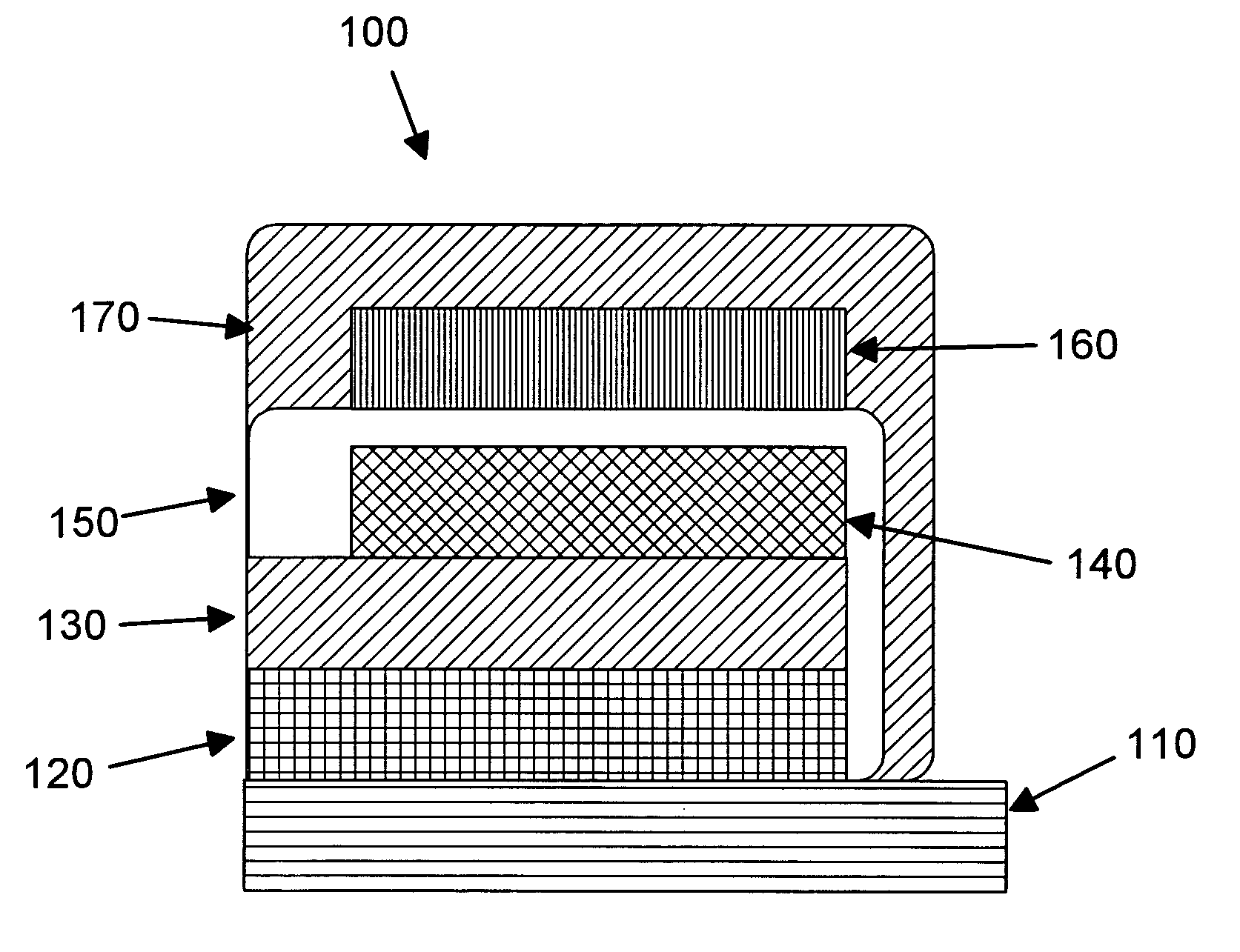
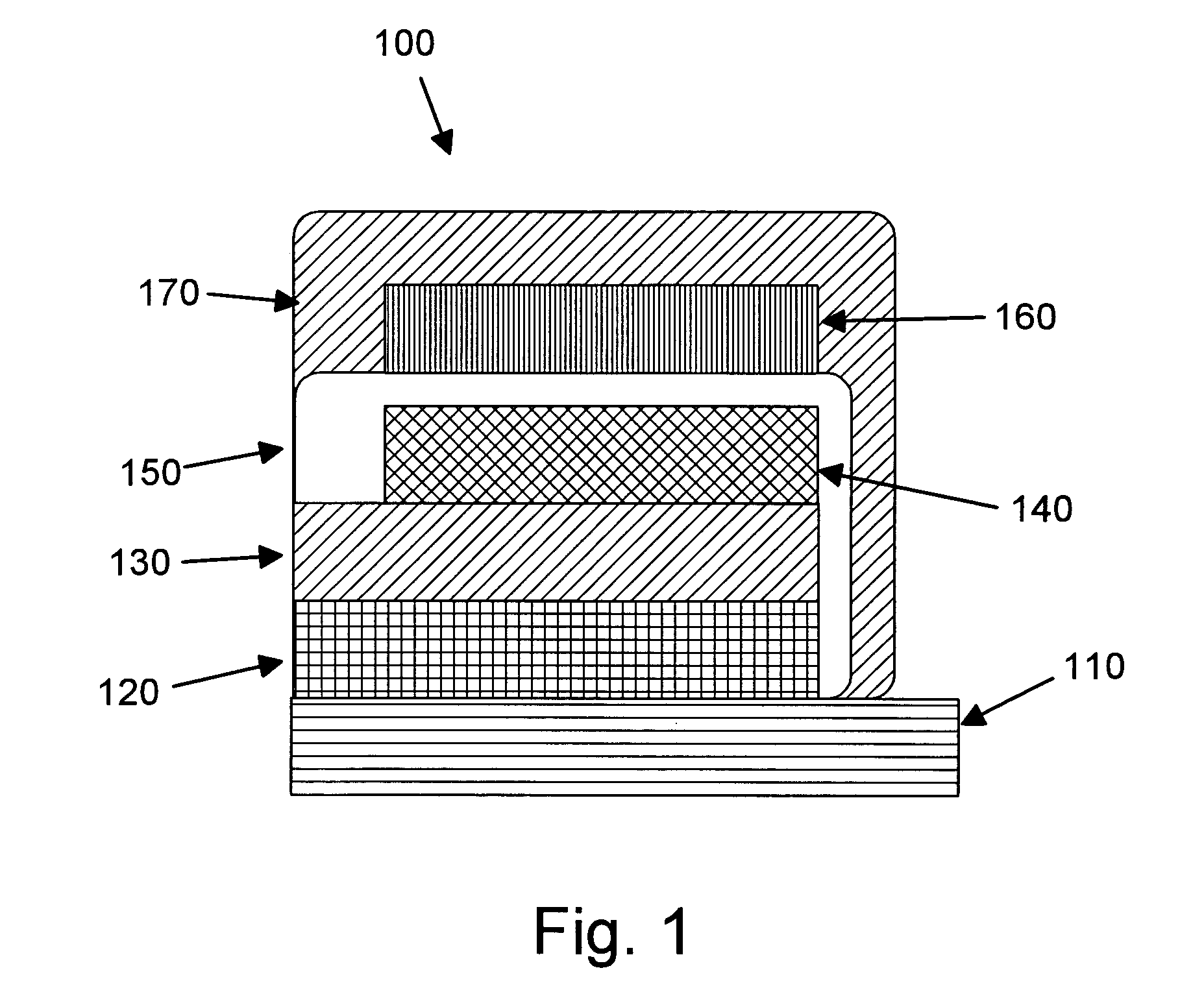
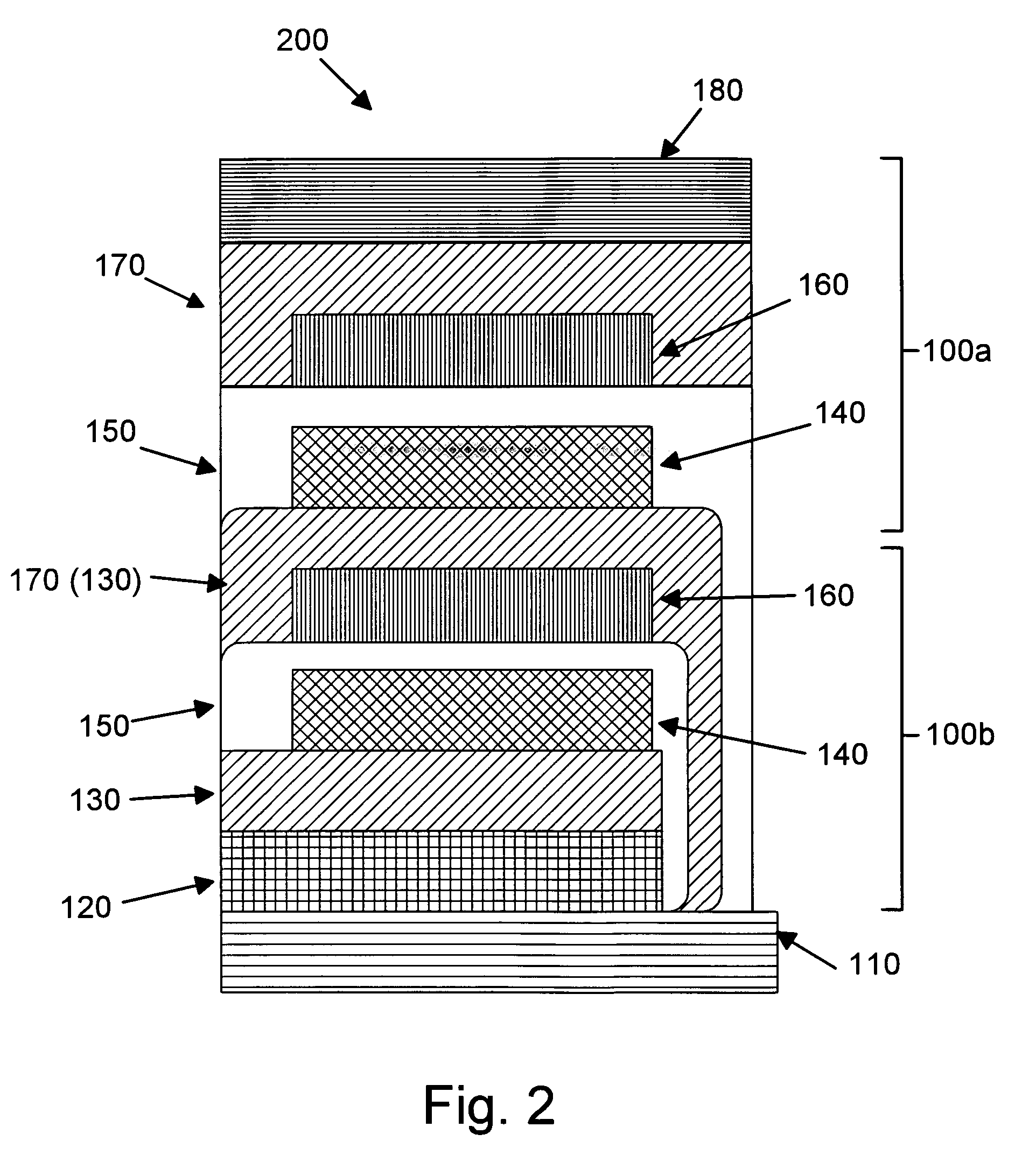

Monolithically integrated thin-film solid state lithium battery device having multiple layers of lithium electrochemical cells
PatentActiveUS20120058380A1
Innovation
- A method and device for fabricating a solid-state thin-film battery using a prismatic multilayer structure with specific layer thicknesses and materials, including a substrate, cathode and anode current collectors, electrolyte, and barrier layers, optimized through numerical techniques for enhanced energy density and stability.
Environmental Impact and Sustainability Factors
The transition to solid-state battery technology represents a significant advancement in sustainable energy storage solutions. Traditional lithium-ion batteries contain liquid electrolytes that pose environmental hazards due to their flammability and toxicity. Solid-state batteries eliminate these liquid components, substantially reducing the risk of leakage and environmental contamination during production, use, and disposal phases.
Manufacturing processes for solid-state batteries demonstrate promising environmental advantages. The production requires fewer toxic materials and solvents compared to conventional battery manufacturing. Studies indicate that solid-state battery production could potentially reduce harmful emissions by up to 40% when scaled to commercial levels. Additionally, the simplified manufacturing process may consume less energy, further decreasing the carbon footprint associated with battery production.
The extended lifecycle of solid-state batteries—estimated at 2-3 times longer than traditional lithium-ion counterparts—directly contributes to waste reduction in the electronics sector. This longevity translates to fewer replacement batteries entering the waste stream, addressing a critical environmental challenge as electronic waste continues to grow globally at approximately 3-5% annually.
Resource efficiency represents another key sustainability advantage. Solid-state technology may eventually reduce dependence on certain critical materials like cobalt, which has been associated with ethical mining concerns and supply chain vulnerabilities. Some advanced solid-state designs incorporate more abundant materials, potentially alleviating resource scarcity issues that plague current battery technologies.
End-of-life management for solid-state batteries presents both challenges and opportunities. Their composition may facilitate more efficient recycling processes, with preliminary research suggesting recovery rates for key materials could exceed 90% with appropriate recycling technologies. However, new recycling infrastructure will need development to handle these emerging battery types effectively.
The reduced fire risk associated with solid-state batteries also translates to environmental benefits by minimizing the potential for hazardous incidents during transportation, storage, and disposal. This safety profile could prevent contamination events that typically result from battery fires or explosions.
When evaluating full lifecycle impacts, solid-state batteries demonstrate potential for significant carbon emission reductions. Preliminary assessments suggest that electronics powered by these advanced batteries could reduce their operational carbon footprint by 15-25% through improved energy efficiency and reduced charging requirements.
Manufacturing processes for solid-state batteries demonstrate promising environmental advantages. The production requires fewer toxic materials and solvents compared to conventional battery manufacturing. Studies indicate that solid-state battery production could potentially reduce harmful emissions by up to 40% when scaled to commercial levels. Additionally, the simplified manufacturing process may consume less energy, further decreasing the carbon footprint associated with battery production.
The extended lifecycle of solid-state batteries—estimated at 2-3 times longer than traditional lithium-ion counterparts—directly contributes to waste reduction in the electronics sector. This longevity translates to fewer replacement batteries entering the waste stream, addressing a critical environmental challenge as electronic waste continues to grow globally at approximately 3-5% annually.
Resource efficiency represents another key sustainability advantage. Solid-state technology may eventually reduce dependence on certain critical materials like cobalt, which has been associated with ethical mining concerns and supply chain vulnerabilities. Some advanced solid-state designs incorporate more abundant materials, potentially alleviating resource scarcity issues that plague current battery technologies.
End-of-life management for solid-state batteries presents both challenges and opportunities. Their composition may facilitate more efficient recycling processes, with preliminary research suggesting recovery rates for key materials could exceed 90% with appropriate recycling technologies. However, new recycling infrastructure will need development to handle these emerging battery types effectively.
The reduced fire risk associated with solid-state batteries also translates to environmental benefits by minimizing the potential for hazardous incidents during transportation, storage, and disposal. This safety profile could prevent contamination events that typically result from battery fires or explosions.
When evaluating full lifecycle impacts, solid-state batteries demonstrate potential for significant carbon emission reductions. Preliminary assessments suggest that electronics powered by these advanced batteries could reduce their operational carbon footprint by 15-25% through improved energy efficiency and reduced charging requirements.
Manufacturing Scalability and Cost Analysis
The manufacturing scalability of solid-state batteries represents one of the most significant challenges in transitioning this revolutionary technology from laboratory to mass market. Current production methods for solid-state batteries remain largely confined to small-scale laboratory settings, with limited throughput and high unit costs. Industry analysis indicates that manufacturing costs for solid-state batteries currently exceed $400/kWh, compared to approximately $100-150/kWh for conventional lithium-ion batteries.
The primary manufacturing bottlenecks include the complex synthesis of solid electrolyte materials, difficulties in creating uniform and defect-free interfaces between battery components, and the need for specialized equipment operating under precisely controlled conditions. These challenges are compounded by the requirement for ultra-clean manufacturing environments to prevent contamination that could compromise battery performance and safety.
Several promising approaches are emerging to address these scalability issues. Roll-to-roll processing techniques, adapted from conventional battery manufacturing, show potential for continuous production of solid-state battery components. This approach could reduce production time by up to 70% compared to batch processing methods. Additionally, advances in ceramic processing technologies are enabling more efficient production of solid electrolytes with consistent quality and reduced defect rates.
Cost modeling projections suggest that with optimized manufacturing processes and economies of scale, solid-state battery costs could decrease to $150-200/kWh by 2025, and potentially reach cost parity with conventional lithium-ion batteries by 2030. This trajectory depends heavily on innovations in materials processing and equipment design, as well as the development of standardized manufacturing protocols.
Material costs represent approximately 65% of total production expenses, with solid electrolytes accounting for the largest portion. Research into alternative, more abundant materials and simplified synthesis routes could significantly reduce these costs. For instance, replacing rare elements with more common alternatives in solid electrolytes could decrease material costs by up to 40%.
Investment in manufacturing infrastructure presents another significant consideration. Industry estimates suggest that establishing a gigafactory-scale production facility for solid-state batteries requires capital expenditure of $1.5-2 billion, approximately 30% higher than equivalent lithium-ion facilities due to specialized equipment requirements. However, these facilities would likely achieve higher energy density output per square foot of manufacturing space, potentially offsetting some of the increased capital costs over time.
The primary manufacturing bottlenecks include the complex synthesis of solid electrolyte materials, difficulties in creating uniform and defect-free interfaces between battery components, and the need for specialized equipment operating under precisely controlled conditions. These challenges are compounded by the requirement for ultra-clean manufacturing environments to prevent contamination that could compromise battery performance and safety.
Several promising approaches are emerging to address these scalability issues. Roll-to-roll processing techniques, adapted from conventional battery manufacturing, show potential for continuous production of solid-state battery components. This approach could reduce production time by up to 70% compared to batch processing methods. Additionally, advances in ceramic processing technologies are enabling more efficient production of solid electrolytes with consistent quality and reduced defect rates.
Cost modeling projections suggest that with optimized manufacturing processes and economies of scale, solid-state battery costs could decrease to $150-200/kWh by 2025, and potentially reach cost parity with conventional lithium-ion batteries by 2030. This trajectory depends heavily on innovations in materials processing and equipment design, as well as the development of standardized manufacturing protocols.
Material costs represent approximately 65% of total production expenses, with solid electrolytes accounting for the largest portion. Research into alternative, more abundant materials and simplified synthesis routes could significantly reduce these costs. For instance, replacing rare elements with more common alternatives in solid electrolytes could decrease material costs by up to 40%.
Investment in manufacturing infrastructure presents another significant consideration. Industry estimates suggest that establishing a gigafactory-scale production facility for solid-state batteries requires capital expenditure of $1.5-2 billion, approximately 30% higher than equivalent lithium-ion facilities due to specialized equipment requirements. However, these facilities would likely achieve higher energy density output per square foot of manufacturing space, potentially offsetting some of the increased capital costs over time.
Unlock deeper insights with PatSnap Eureka Quick Research — get a full tech report to explore trends and direct your research. Try now!
Generate Your Research Report Instantly with AI Agent
Supercharge your innovation with PatSnap Eureka AI Agent Platform!