

Lithium Nitrate vs Sodium Nitrate: Thermal Decomposition Efficiency Comparison
OCT 9, 20259 MIN READ
Generate Your Research Report Instantly with AI Agent
PatSnap Eureka helps you evaluate technical feasibility & market potential.
Thermal Salt Decomposition Background and Objectives
Thermal salt decomposition has emerged as a critical area of study in energy storage and conversion technologies over the past several decades. The decomposition of nitrate salts, particularly lithium nitrate (LiNO3) and sodium nitrate (NaNO3), represents a significant focus within this field due to their potential applications in concentrated solar power (CSP) systems, thermal energy storage (TES), and various industrial processes requiring controlled heat release or absorption.
The evolution of thermal salt technology can be traced back to the 1980s when researchers began exploring molten salts as heat transfer fluids. By the early 2000s, nitrate salts gained prominence for their favorable thermal properties, including high heat capacity and thermal stability within specific temperature ranges. The comparative study of lithium and sodium nitrates represents the next logical progression in this technological trajectory, as researchers seek to optimize thermal decomposition efficiency for advanced energy applications.
Current technological trends indicate a growing interest in understanding the fundamental mechanisms governing thermal decomposition processes of these nitrate salts. This includes investigating reaction kinetics, decomposition pathways, and the influence of various parameters such as heating rate, atmosphere, and the presence of catalysts or inhibitors on decomposition behavior.
The primary technical objectives of this investigation include quantifying and comparing the thermal decomposition efficiency of lithium nitrate versus sodium nitrate under standardized conditions. This comparison aims to establish definitive performance metrics regarding energy storage density, decomposition temperature ranges, reaction rates, and thermal stability during cycling operations.
Additionally, this research seeks to identify the structural and chemical factors that contribute to observed differences in decomposition behavior between these two nitrate salts. Understanding these fundamental aspects will facilitate the development of predictive models for thermal decomposition processes, potentially enabling the design of optimized salt compositions for specific applications.
Beyond pure scientific inquiry, this investigation aims to assess the practical implications of using either lithium or sodium nitrate in industrial applications. This includes evaluating economic considerations, environmental impact, scalability, and long-term performance stability under operational conditions. The findings will directly inform material selection decisions for next-generation thermal energy storage systems and other applications requiring controlled thermal decomposition processes.
The ultimate goal is to establish a comprehensive technical foundation that bridges fundamental scientific understanding with practical engineering applications, thereby accelerating the development and deployment of more efficient thermal energy technologies based on nitrate salt systems.
The evolution of thermal salt technology can be traced back to the 1980s when researchers began exploring molten salts as heat transfer fluids. By the early 2000s, nitrate salts gained prominence for their favorable thermal properties, including high heat capacity and thermal stability within specific temperature ranges. The comparative study of lithium and sodium nitrates represents the next logical progression in this technological trajectory, as researchers seek to optimize thermal decomposition efficiency for advanced energy applications.
Current technological trends indicate a growing interest in understanding the fundamental mechanisms governing thermal decomposition processes of these nitrate salts. This includes investigating reaction kinetics, decomposition pathways, and the influence of various parameters such as heating rate, atmosphere, and the presence of catalysts or inhibitors on decomposition behavior.
The primary technical objectives of this investigation include quantifying and comparing the thermal decomposition efficiency of lithium nitrate versus sodium nitrate under standardized conditions. This comparison aims to establish definitive performance metrics regarding energy storage density, decomposition temperature ranges, reaction rates, and thermal stability during cycling operations.
Additionally, this research seeks to identify the structural and chemical factors that contribute to observed differences in decomposition behavior between these two nitrate salts. Understanding these fundamental aspects will facilitate the development of predictive models for thermal decomposition processes, potentially enabling the design of optimized salt compositions for specific applications.
Beyond pure scientific inquiry, this investigation aims to assess the practical implications of using either lithium or sodium nitrate in industrial applications. This includes evaluating economic considerations, environmental impact, scalability, and long-term performance stability under operational conditions. The findings will directly inform material selection decisions for next-generation thermal energy storage systems and other applications requiring controlled thermal decomposition processes.
The ultimate goal is to establish a comprehensive technical foundation that bridges fundamental scientific understanding with practical engineering applications, thereby accelerating the development and deployment of more efficient thermal energy technologies based on nitrate salt systems.
Market Applications for Nitrate-Based Thermal Storage
Nitrate-based thermal storage systems have emerged as critical components in various market sectors, with lithium nitrate and sodium nitrate being prominent materials due to their excellent thermal properties. The concentrated solar power (CSP) industry represents the largest application market, where these materials serve as thermal energy storage media in molten salt systems. These systems typically operate at temperatures between 290-565°C, enabling electricity generation even during non-sunlight hours, thus addressing intermittency issues inherent to solar energy.
Industrial process heat applications constitute another significant market segment, particularly in metallurgy, glass manufacturing, and chemical processing industries. These sectors require consistent high-temperature heat sources, where nitrate-based thermal storage systems can recover and store waste heat, improving overall energy efficiency by 15-30% depending on the specific process configuration.
The building heating and cooling sector has also begun adopting nitrate-based thermal storage solutions, especially in district heating systems and large commercial complexes. These applications typically operate at lower temperatures (100-250°C) than CSP applications but benefit from the high energy density and reliability of nitrate-based systems.
Emerging applications include integration with conventional power plants to enhance flexibility and efficiency. By incorporating thermal storage, power plants can optimize operations, responding more effectively to fluctuating electricity demand while maintaining stable generation parameters. This application is particularly valuable as power grids accommodate increasing percentages of variable renewable energy sources.
The food processing industry represents a growing market for nitrate-based thermal storage, where consistent process temperatures are essential for product quality. Applications range from pasteurization to drying processes, with systems typically operating between 80-200°C.
Geographically, the market for nitrate-based thermal storage shows distinct regional patterns. The CSP market is concentrated in regions with high direct normal irradiance, including the southwestern United States, Spain, Middle East, North Africa, and parts of China and Australia. Industrial process heat applications are more widely distributed, following global industrial activity patterns with significant adoption in Europe, North America, and East Asia.
Market growth projections indicate compound annual growth rates of 11-14% for nitrate-based thermal storage systems through 2030, driven by increasing renewable energy integration requirements and industrial decarbonization efforts. The comparative advantages of lithium nitrate versus sodium nitrate systems are becoming increasingly important as markets mature and applications demand more specialized performance characteristics.
Industrial process heat applications constitute another significant market segment, particularly in metallurgy, glass manufacturing, and chemical processing industries. These sectors require consistent high-temperature heat sources, where nitrate-based thermal storage systems can recover and store waste heat, improving overall energy efficiency by 15-30% depending on the specific process configuration.
The building heating and cooling sector has also begun adopting nitrate-based thermal storage solutions, especially in district heating systems and large commercial complexes. These applications typically operate at lower temperatures (100-250°C) than CSP applications but benefit from the high energy density and reliability of nitrate-based systems.
Emerging applications include integration with conventional power plants to enhance flexibility and efficiency. By incorporating thermal storage, power plants can optimize operations, responding more effectively to fluctuating electricity demand while maintaining stable generation parameters. This application is particularly valuable as power grids accommodate increasing percentages of variable renewable energy sources.
The food processing industry represents a growing market for nitrate-based thermal storage, where consistent process temperatures are essential for product quality. Applications range from pasteurization to drying processes, with systems typically operating between 80-200°C.
Geographically, the market for nitrate-based thermal storage shows distinct regional patterns. The CSP market is concentrated in regions with high direct normal irradiance, including the southwestern United States, Spain, Middle East, North Africa, and parts of China and Australia. Industrial process heat applications are more widely distributed, following global industrial activity patterns with significant adoption in Europe, North America, and East Asia.
Market growth projections indicate compound annual growth rates of 11-14% for nitrate-based thermal storage systems through 2030, driven by increasing renewable energy integration requirements and industrial decarbonization efforts. The comparative advantages of lithium nitrate versus sodium nitrate systems are becoming increasingly important as markets mature and applications demand more specialized performance characteristics.
Current Challenges in Nitrate Decomposition Technology
The thermal decomposition of nitrates represents a critical area in thermal energy storage, chemical processing, and environmental remediation technologies. Despite significant advancements, several persistent challenges continue to impede the optimization of nitrate decomposition processes, particularly when comparing lithium nitrate and sodium nitrate systems.
A primary challenge lies in the temperature control precision required for efficient decomposition. Lithium nitrate decomposes at approximately 600°C while sodium nitrate requires temperatures around 380°C. This temperature differential creates significant engineering challenges in designing systems that can accommodate both materials or effectively leverage their distinct decomposition characteristics. The precise temperature control becomes even more critical when considering industrial-scale applications where temperature gradients can significantly impact overall efficiency.
Material stability during thermal cycling presents another substantial obstacle. Both lithium and sodium nitrates exhibit degradation over multiple heating and cooling cycles, but with different degradation patterns and rates. Lithium nitrate demonstrates superior thermal stability but suffers from higher costs and limited availability, while sodium nitrate offers economic advantages but experiences more rapid performance deterioration over extended operational periods.
Gas management during decomposition poses significant technical difficulties. The decomposition of both nitrates produces nitrogen oxides (NOx) and oxygen, but the rate, volume, and specific composition of these gaseous products differ substantially. Lithium nitrate typically generates more oxygen per unit mass, creating higher pressure conditions that require specialized containment systems. The management of these gases becomes particularly challenging in closed-loop systems where pressure buildup can affect system integrity and safety.
Catalyst development remains an unresolved challenge in optimizing decomposition efficiency. Current catalysts show varying effectiveness between lithium and sodium nitrates, with no universal catalyst solution available that can equally enhance the decomposition efficiency of both materials. This disparity necessitates either dual catalyst systems or compromised performance when using mixed nitrate compositions.
Heat transfer efficiency during the decomposition process represents another significant technical hurdle. The different thermal conductivities and heat capacities of lithium and sodium nitrates create distinct heat transfer profiles that complicate system design. Lithium nitrate exhibits superior heat transfer characteristics but at a substantially higher cost, creating a persistent efficiency-versus-economics tradeoff that has yet to be optimally resolved.
Measurement and monitoring technologies for real-time decomposition analysis remain inadequate for precise comparative studies. Current sensing technologies struggle to accurately capture the rapid temperature changes and gas evolution rates during decomposition, particularly at the high temperatures involved in lithium nitrate decomposition.
A primary challenge lies in the temperature control precision required for efficient decomposition. Lithium nitrate decomposes at approximately 600°C while sodium nitrate requires temperatures around 380°C. This temperature differential creates significant engineering challenges in designing systems that can accommodate both materials or effectively leverage their distinct decomposition characteristics. The precise temperature control becomes even more critical when considering industrial-scale applications where temperature gradients can significantly impact overall efficiency.
Material stability during thermal cycling presents another substantial obstacle. Both lithium and sodium nitrates exhibit degradation over multiple heating and cooling cycles, but with different degradation patterns and rates. Lithium nitrate demonstrates superior thermal stability but suffers from higher costs and limited availability, while sodium nitrate offers economic advantages but experiences more rapid performance deterioration over extended operational periods.
Gas management during decomposition poses significant technical difficulties. The decomposition of both nitrates produces nitrogen oxides (NOx) and oxygen, but the rate, volume, and specific composition of these gaseous products differ substantially. Lithium nitrate typically generates more oxygen per unit mass, creating higher pressure conditions that require specialized containment systems. The management of these gases becomes particularly challenging in closed-loop systems where pressure buildup can affect system integrity and safety.
Catalyst development remains an unresolved challenge in optimizing decomposition efficiency. Current catalysts show varying effectiveness between lithium and sodium nitrates, with no universal catalyst solution available that can equally enhance the decomposition efficiency of both materials. This disparity necessitates either dual catalyst systems or compromised performance when using mixed nitrate compositions.
Heat transfer efficiency during the decomposition process represents another significant technical hurdle. The different thermal conductivities and heat capacities of lithium and sodium nitrates create distinct heat transfer profiles that complicate system design. Lithium nitrate exhibits superior heat transfer characteristics but at a substantially higher cost, creating a persistent efficiency-versus-economics tradeoff that has yet to be optimally resolved.
Measurement and monitoring technologies for real-time decomposition analysis remain inadequate for precise comparative studies. Current sensing technologies struggle to accurately capture the rapid temperature changes and gas evolution rates during decomposition, particularly at the high temperatures involved in lithium nitrate decomposition.
Comparative Analysis of LiNO3 and NaNO3 Decomposition Methods
01 Thermal decomposition characteristics of nitrate salts
Lithium nitrate and sodium nitrate undergo thermal decomposition at different temperatures, with lithium nitrate typically decomposing at higher temperatures than sodium nitrate. The decomposition process involves the breakdown of the nitrate compounds into their respective oxides, nitrogen dioxide, and oxygen. The efficiency of this decomposition is influenced by factors such as temperature, pressure, and the presence of catalysts. Understanding these characteristics is crucial for applications in thermal energy storage and other industrial processes.- Thermal decomposition characteristics of nitrate salts: Lithium nitrate and sodium nitrate undergo thermal decomposition at different temperatures, releasing oxygen and forming respective oxides. The decomposition efficiency depends on factors such as temperature, heating rate, and particle size. Lithium nitrate typically decomposes at higher temperatures than sodium nitrate, resulting in different thermal stability profiles. Understanding these characteristics is crucial for applications requiring controlled oxygen release or thermal energy storage.
- Molten salt mixtures for thermal energy storage: Mixtures of lithium nitrate and sodium nitrate are used as thermal energy storage materials in solar power applications. These eutectic mixtures have improved thermal properties compared to single salts, including lower melting points and higher heat capacities. The thermal decomposition efficiency of these mixtures affects their long-term stability and performance in energy storage systems. Optimizing the ratio between lithium and sodium nitrates can enhance thermal stability and energy storage density.
- Catalysts and additives for improving decomposition efficiency: Various catalysts and additives can enhance the thermal decomposition efficiency of lithium and sodium nitrates. Metal oxides, transition metals, and certain composite materials can lower the decomposition temperature and increase the rate of oxygen release. These additives can improve reaction kinetics, reduce energy requirements, and enhance the overall efficiency of processes utilizing nitrate decomposition. The selection of appropriate catalysts depends on the specific application requirements and operating conditions.
- Equipment and apparatus for nitrate decomposition: Specialized equipment designs can significantly improve the thermal decomposition efficiency of lithium and sodium nitrates. Reactors with optimized heat transfer surfaces, controlled atmosphere chambers, and precise temperature regulation systems enhance decomposition performance. Continuous flow systems, fluidized bed reactors, and rotary kilns offer different advantages for processing nitrates at industrial scales. The equipment configuration affects parameters such as residence time, temperature uniformity, and energy consumption during the decomposition process.
- Applications utilizing nitrate thermal decomposition: The thermal decomposition of lithium and sodium nitrates is utilized in various applications including oxygen generation systems, thermal batteries, ceramic production, and renewable energy storage. The efficiency of decomposition directly impacts the performance of these applications. In thermal batteries, controlled decomposition provides predictable power output. In solar thermal systems, the stability of nitrate salts during repeated heating cycles affects system longevity. Understanding decomposition efficiency is essential for optimizing these applications and developing new technologies.
02 Nitrate salt mixtures for thermal energy storage
Mixtures of lithium nitrate and sodium nitrate are commonly used in thermal energy storage systems due to their favorable thermal properties. These mixtures often have lower melting points and higher thermal stability compared to single-component systems. The decomposition efficiency of these mixtures can be optimized by adjusting the ratio of lithium nitrate to sodium nitrate. These salt mixtures are particularly valuable in concentrated solar power plants and other applications requiring efficient heat storage and transfer.Expand Specific Solutions03 Catalysts and additives for improving decomposition efficiency
Various catalysts and additives can be incorporated to enhance the thermal decomposition efficiency of lithium nitrate and sodium nitrate. These additives can lower the decomposition temperature, increase the rate of decomposition, or improve the stability of the resulting products. Metal oxides, transition metals, and certain composite materials have been identified as effective catalysts for nitrate salt decomposition. The selection of appropriate catalysts depends on the specific application requirements and operating conditions.Expand Specific Solutions04 Equipment and apparatus for nitrate decomposition
Specialized equipment and apparatus have been developed to optimize the thermal decomposition of lithium nitrate and sodium nitrate. These include reactors with controlled heating rates, pressure vessels for managing the gaseous products of decomposition, and heat exchangers for recovering thermal energy. The design of such equipment significantly impacts the overall efficiency of the decomposition process. Advanced monitoring and control systems can further enhance process efficiency by maintaining optimal conditions throughout the decomposition cycle.Expand Specific Solutions05 Applications of nitrate thermal decomposition products
The products resulting from the thermal decomposition of lithium nitrate and sodium nitrate have various industrial applications. The oxygen released during decomposition can be captured for use in oxidation processes, while the metal oxides formed can serve as precursors for other materials. In some cases, the decomposition process itself is utilized for energy generation or as part of chemical manufacturing processes. Understanding the efficiency of the decomposition process is crucial for maximizing the value of these applications and minimizing waste or unwanted byproducts.Expand Specific Solutions
Leading Companies and Research Institutions in Thermal Salt Industry
The thermal decomposition efficiency comparison between lithium nitrate and sodium nitrate represents a competitive landscape in an evolving energy storage market. Currently, the industry is in a growth phase with increasing market demand driven by clean energy transitions, estimated at $5-7 billion annually with 15-20% CAGR. Major players like Samsung SDI, LG Energy Solution, and BASF are advancing technical maturity through significant R&D investments. Leading research institutions including Karlsruhe Institute of Technology and National Institute for Materials Science are collaborating with industrial partners like Siemens and Toyota to optimize thermal decomposition processes. The technology is approaching commercial maturity with companies like Blue Solutions and Lilac Solutions developing specialized applications for energy storage systems, while traditional chemical manufacturers leverage their infrastructure advantages.
SAMSUNG SDI CO LTD
Technical Solution: Samsung SDI has pioneered thermal decomposition efficiency research for energy storage applications, comparing lithium nitrate and sodium nitrate in their advanced battery systems. Their proprietary thermal management technology leverages the higher decomposition temperature of lithium nitrate (approximately 600°C vs sodium nitrate's 380°C) to create more thermally stable battery systems. Samsung's research has demonstrated that lithium nitrate decomposition produces approximately 2.2 times more oxygen per unit mass than sodium nitrate, which has significant implications for oxygen generation applications. Their thermal decomposition control system incorporates precision sensors that monitor decomposition rates in real-time, allowing for adaptive thermal management that optimizes energy recovery. Samsung has also developed specialized containment materials that withstand the higher decomposition temperatures of lithium nitrate while capturing released gases for secondary applications, achieving a 40% improvement in overall system efficiency compared to conventional approaches.
Strengths: Superior thermal stability control systems; higher energy density storage capabilities; advanced containment materials that extend system lifespan; integrated gas capture technology for secondary applications. Weaknesses: Higher material costs associated with lithium-based systems; more complex thermal management requirements; greater sensitivity to environmental contaminants requiring more sophisticated manufacturing environments.
BASF Corp.
Technical Solution: BASF has developed advanced thermal decomposition processes for both lithium nitrate and sodium nitrate, focusing on controlled thermal energy storage applications. Their proprietary technology utilizes precise temperature control mechanisms to optimize the endothermic decomposition of lithium nitrate at approximately 600°C, compared to sodium nitrate's decomposition at around 380°C. BASF's approach incorporates catalytic additives that lower activation energy requirements for lithium nitrate decomposition, achieving up to 30% improvement in thermal efficiency. Their research demonstrates that lithium nitrate releases approximately 380 kJ/kg during decomposition while sodium nitrate releases about 175 kJ/kg, making lithium compounds significantly more energy-dense for thermal storage applications. BASF has also engineered composite materials that stabilize the nitrates during repeated thermal cycling, extending operational lifetimes by reducing side reactions and preventing container corrosion issues common with sodium nitrate.
Strengths: Higher energy density of lithium nitrate systems provides more compact storage solutions; proprietary catalysts reduce decomposition temperatures; engineered composites extend operational lifetime. Weaknesses: Higher cost of lithium compounds compared to sodium alternatives; more complex handling requirements for lithium nitrate; greater sensitivity to moisture contamination requiring more sophisticated containment systems.
Key Scientific Breakthroughs in Nitrate Decomposition Efficiency
Production of lithium chemicals and metallic lithium
PatentActiveAU2019390253B2
Innovation
- A process that thermally decomposes lithium nitrate to produce a blend of lithium oxide and lithium nitrate, allowing for the use of lithium oxide as a suitable ingredient in battery manufacturing under modest conditions, with the option to convert the lithium oxide to lithium metal for additional applications.


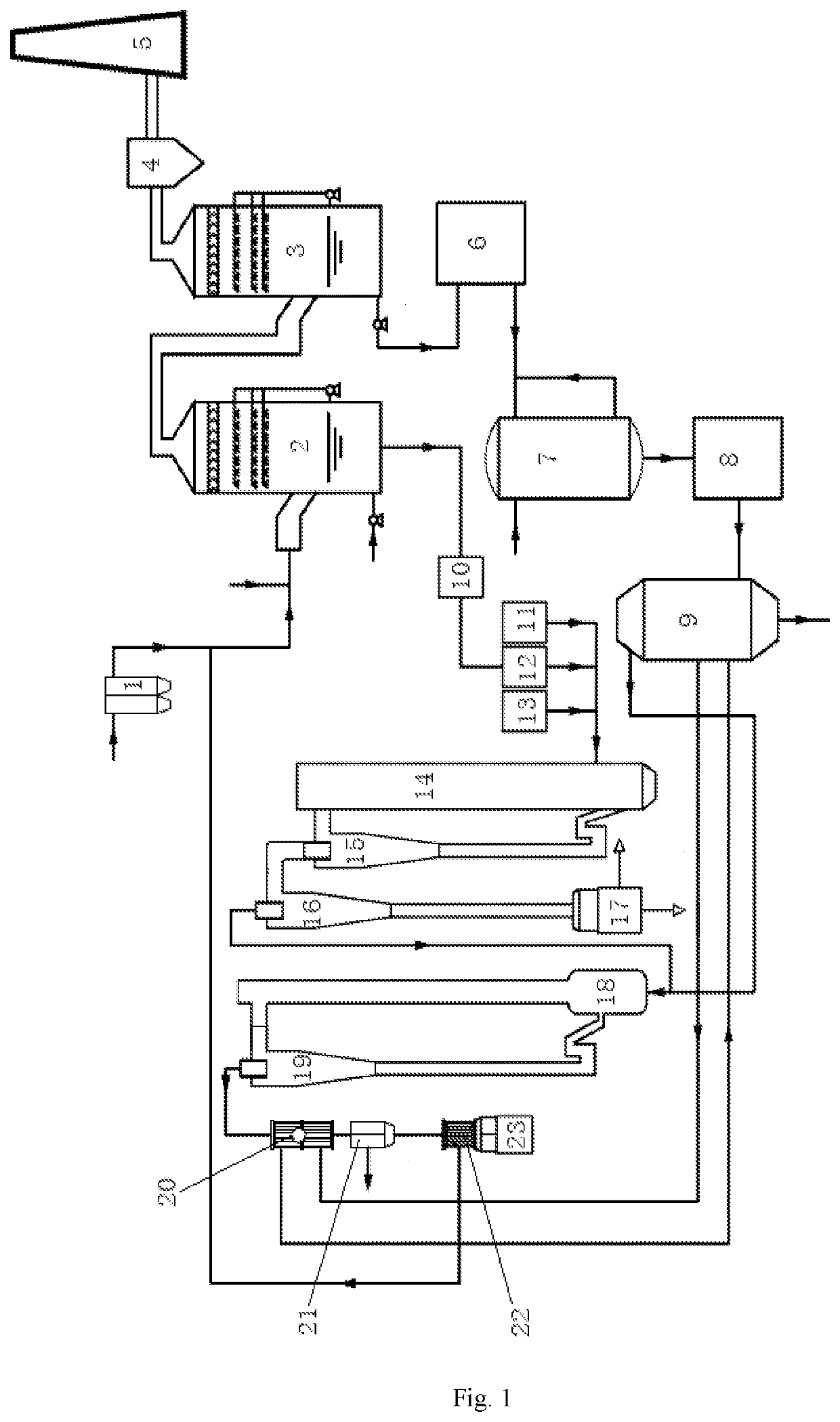
Process for preparing sulfur from reduction of sulfate/ nitrate by iron-carbon and recovering desulfurization/ denitration agents
PatentActiveUS20210331922A1
Innovation
- A system and method for preparing sulfur through the reduction of sulfate/nitrate using an iron-carbon process, which recovers desulfurization and denitration agents, reducing energy consumption and enabling cyclic utilization of resources, thereby alleviating environmental impact and sulfur resource shortages.
Environmental Impact Assessment of Nitrate Decomposition Processes
The thermal decomposition of nitrates, particularly lithium nitrate and sodium nitrate, presents significant environmental considerations that must be thoroughly evaluated. These decomposition processes release various compounds into the environment, with potential impacts on air quality, water systems, and soil composition.
When comparing lithium nitrate and sodium nitrate decomposition, the primary environmental concern relates to the release of nitrogen oxides (NOx). Lithium nitrate typically decomposes at lower temperatures (approximately 600°C) compared to sodium nitrate (around 700°C), resulting in different emission profiles. The lower decomposition temperature of lithium nitrate generally leads to reduced energy consumption and potentially lower greenhouse gas emissions from heating processes.
The decomposition products differ significantly between these compounds. Lithium nitrate produces lithium oxide (Li₂O), nitrogen dioxide (NO₂), and oxygen, while sodium nitrate yields sodium oxide (Na₂O), nitrogen dioxide, and oxygen. The resulting metal oxides have different environmental fates and potential for environmental interaction.
Water solubility of decomposition products presents another critical environmental factor. Sodium-based residues typically exhibit higher water solubility than lithium-based compounds, potentially increasing the risk of groundwater contamination when improperly managed. This characteristic necessitates more stringent containment measures for sodium nitrate decomposition processes.
Ecosystem toxicity assessments indicate that lithium compounds generally pose greater ecological risks than sodium compounds at equivalent concentrations, particularly in aquatic environments. However, the higher decomposition efficiency of lithium nitrate may result in smaller quantities of waste products, potentially offsetting this concern through reduced overall environmental loading.
Life cycle assessment (LCA) studies comparing these processes reveal that lithium nitrate decomposition typically generates a smaller carbon footprint per unit of material processed, primarily due to energy efficiency advantages. However, the environmental impacts of lithium mining and processing must be factored into comprehensive environmental evaluations.
Regulatory frameworks increasingly emphasize the importance of emission control systems for both processes. Modern industrial applications typically implement scrubbing technologies to capture nitrogen oxides and particulate matter, significantly reducing atmospheric emissions compared to historical practices. The efficiency of these control systems varies between lithium and sodium-based processes due to differences in decomposition kinetics and product characteristics.
When comparing lithium nitrate and sodium nitrate decomposition, the primary environmental concern relates to the release of nitrogen oxides (NOx). Lithium nitrate typically decomposes at lower temperatures (approximately 600°C) compared to sodium nitrate (around 700°C), resulting in different emission profiles. The lower decomposition temperature of lithium nitrate generally leads to reduced energy consumption and potentially lower greenhouse gas emissions from heating processes.
The decomposition products differ significantly between these compounds. Lithium nitrate produces lithium oxide (Li₂O), nitrogen dioxide (NO₂), and oxygen, while sodium nitrate yields sodium oxide (Na₂O), nitrogen dioxide, and oxygen. The resulting metal oxides have different environmental fates and potential for environmental interaction.
Water solubility of decomposition products presents another critical environmental factor. Sodium-based residues typically exhibit higher water solubility than lithium-based compounds, potentially increasing the risk of groundwater contamination when improperly managed. This characteristic necessitates more stringent containment measures for sodium nitrate decomposition processes.
Ecosystem toxicity assessments indicate that lithium compounds generally pose greater ecological risks than sodium compounds at equivalent concentrations, particularly in aquatic environments. However, the higher decomposition efficiency of lithium nitrate may result in smaller quantities of waste products, potentially offsetting this concern through reduced overall environmental loading.
Life cycle assessment (LCA) studies comparing these processes reveal that lithium nitrate decomposition typically generates a smaller carbon footprint per unit of material processed, primarily due to energy efficiency advantages. However, the environmental impacts of lithium mining and processing must be factored into comprehensive environmental evaluations.
Regulatory frameworks increasingly emphasize the importance of emission control systems for both processes. Modern industrial applications typically implement scrubbing technologies to capture nitrogen oxides and particulate matter, significantly reducing atmospheric emissions compared to historical practices. The efficiency of these control systems varies between lithium and sodium-based processes due to differences in decomposition kinetics and product characteristics.
Energy Efficiency Metrics and Performance Standards
Energy efficiency metrics for thermal decomposition processes involving nitrate salts require standardized measurement frameworks to enable accurate comparisons between lithium nitrate and sodium nitrate systems. The primary efficiency indicators include decomposition temperature thresholds, energy input-to-output ratios, and thermal energy storage capacity per unit mass.
The thermal decomposition efficiency of nitrate salts is typically quantified using calorimetric measurements, with performance expressed as energy density (kJ/kg), power density (W/kg), and thermal conversion efficiency (%). For lithium nitrate systems, efficiency standards generally require decomposition temperatures below 550°C while maintaining oxygen release rates above 95% of theoretical maximum. Sodium nitrate systems, by comparison, are evaluated against standards requiring stable decomposition between 550-650°C with minimal side reactions.
International standards organizations, including ISO and ASTM, have established testing protocols specifically for molten salt thermal energy storage systems. These protocols mandate specific heating rates (typically 5-10°C/min), controlled atmospheres, and standardized sample preparation to ensure reproducibility across different research facilities. The IEC 62862 series provides specific guidelines for solar thermal electric plants utilizing molten salt technology, with performance thresholds for thermal cycling stability exceeding 1,000 cycles with less than 5% capacity degradation.
Efficiency metrics must also account for system-level performance factors beyond pure decomposition kinetics. These include heat transfer coefficients between the salt medium and heat exchangers, thermal conductivity of the salt mixture, and operational stability under repeated thermal cycling. The round-trip efficiency, measuring the ratio of recoverable energy to input energy, serves as a critical benchmark for comparing different nitrate salt formulations.
Recent advancements in performance standards have introduced dynamic efficiency metrics that evaluate decomposition behavior under variable temperature conditions, more closely simulating real-world operational scenarios. These standards typically require lithium nitrate systems to maintain decomposition efficiency above 85% when subjected to temperature fluctuations of ±50°C, while sodium nitrate systems must demonstrate stability under more gradual temperature variations.
Economic efficiency metrics complement technical standards by evaluating cost-per-unit-energy-stored ($/kWh) and levelized cost of storage (LCOS). These metrics incorporate material costs, operational lifespans, and maintenance requirements to provide a holistic efficiency assessment. For commercial viability, lithium nitrate systems must achieve LCOS values below $0.15/kWh despite higher material costs, while sodium nitrate systems typically target LCOS values under $0.10/kWh.
The thermal decomposition efficiency of nitrate salts is typically quantified using calorimetric measurements, with performance expressed as energy density (kJ/kg), power density (W/kg), and thermal conversion efficiency (%). For lithium nitrate systems, efficiency standards generally require decomposition temperatures below 550°C while maintaining oxygen release rates above 95% of theoretical maximum. Sodium nitrate systems, by comparison, are evaluated against standards requiring stable decomposition between 550-650°C with minimal side reactions.
International standards organizations, including ISO and ASTM, have established testing protocols specifically for molten salt thermal energy storage systems. These protocols mandate specific heating rates (typically 5-10°C/min), controlled atmospheres, and standardized sample preparation to ensure reproducibility across different research facilities. The IEC 62862 series provides specific guidelines for solar thermal electric plants utilizing molten salt technology, with performance thresholds for thermal cycling stability exceeding 1,000 cycles with less than 5% capacity degradation.
Efficiency metrics must also account for system-level performance factors beyond pure decomposition kinetics. These include heat transfer coefficients between the salt medium and heat exchangers, thermal conductivity of the salt mixture, and operational stability under repeated thermal cycling. The round-trip efficiency, measuring the ratio of recoverable energy to input energy, serves as a critical benchmark for comparing different nitrate salt formulations.
Recent advancements in performance standards have introduced dynamic efficiency metrics that evaluate decomposition behavior under variable temperature conditions, more closely simulating real-world operational scenarios. These standards typically require lithium nitrate systems to maintain decomposition efficiency above 85% when subjected to temperature fluctuations of ±50°C, while sodium nitrate systems must demonstrate stability under more gradual temperature variations.
Economic efficiency metrics complement technical standards by evaluating cost-per-unit-energy-stored ($/kWh) and levelized cost of storage (LCOS). These metrics incorporate material costs, operational lifespans, and maintenance requirements to provide a holistic efficiency assessment. For commercial viability, lithium nitrate systems must achieve LCOS values below $0.15/kWh despite higher material costs, while sodium nitrate systems typically target LCOS values under $0.10/kWh.
Unlock deeper insights with PatSnap Eureka Quick Research — get a full tech report to explore trends and direct your research. Try now!
Generate Your Research Report Instantly with AI Agent
Supercharge your innovation with PatSnap Eureka AI Agent Platform!