
Quantifying Analyte Degradation in HPLC: Stability Metrics
SEP 19, 202510 MIN READ
Generate Your Research Report Instantly with AI Agent
Patsnap Eureka helps you evaluate technical feasibility & market potential.
HPLC Stability Analysis Background and Objectives
High-performance liquid chromatography (HPLC) has evolved significantly since its inception in the late 1960s, becoming an indispensable analytical technique in pharmaceutical, environmental, and food safety applications. The development trajectory of HPLC has been characterized by continuous improvements in column technology, detection methods, and data analysis capabilities, enabling increasingly sensitive and accurate quantification of analytes.
The stability of analytes during HPLC analysis represents a critical yet often overlooked aspect of analytical method development and validation. Analyte degradation can occur at various stages of the analytical process, including sample preparation, storage, and during chromatographic separation itself, potentially leading to inaccurate quantification and erroneous conclusions.
Recent technological advancements have highlighted the importance of developing standardized metrics for quantifying and monitoring analyte stability during HPLC analysis. The integration of advanced detection systems, such as diode array detectors (DAD) and mass spectrometry (MS), has provided researchers with powerful tools to monitor degradation products in real-time, offering unprecedented insights into degradation kinetics and mechanisms.
The primary objective of stability metrics development in HPLC is to establish robust, reproducible, and universally applicable parameters that can accurately quantify the extent of analyte degradation under various analytical conditions. These metrics aim to provide analysts with reliable indicators of sample integrity throughout the analytical workflow, enabling more informed decision-making regarding method suitability and data reliability.
Additionally, the development of stability metrics seeks to address the growing regulatory requirements for method validation in industries such as pharmaceuticals, where the demonstration of analyte stability is mandatory for method approval. The FDA, EMA, and other regulatory bodies have increasingly emphasized the importance of stability-indicating methods, driving the need for standardized approaches to quantify and report analyte degradation.
The evolution of computational tools and chemometric approaches has further expanded the possibilities for stability assessment, enabling multivariate analysis of complex degradation patterns and the development of predictive models for stability under various conditions. Machine learning algorithms are increasingly being applied to identify subtle degradation signatures that might be missed by traditional approaches.
Looking forward, the field aims to establish a comprehensive framework for stability metrics that can be seamlessly integrated into routine HPLC workflows, providing real-time feedback on analyte integrity and method performance. This framework would ideally combine experimental measurements with theoretical models to offer a holistic view of stability across diverse analyte classes and analytical conditions.
The stability of analytes during HPLC analysis represents a critical yet often overlooked aspect of analytical method development and validation. Analyte degradation can occur at various stages of the analytical process, including sample preparation, storage, and during chromatographic separation itself, potentially leading to inaccurate quantification and erroneous conclusions.
Recent technological advancements have highlighted the importance of developing standardized metrics for quantifying and monitoring analyte stability during HPLC analysis. The integration of advanced detection systems, such as diode array detectors (DAD) and mass spectrometry (MS), has provided researchers with powerful tools to monitor degradation products in real-time, offering unprecedented insights into degradation kinetics and mechanisms.
The primary objective of stability metrics development in HPLC is to establish robust, reproducible, and universally applicable parameters that can accurately quantify the extent of analyte degradation under various analytical conditions. These metrics aim to provide analysts with reliable indicators of sample integrity throughout the analytical workflow, enabling more informed decision-making regarding method suitability and data reliability.
Additionally, the development of stability metrics seeks to address the growing regulatory requirements for method validation in industries such as pharmaceuticals, where the demonstration of analyte stability is mandatory for method approval. The FDA, EMA, and other regulatory bodies have increasingly emphasized the importance of stability-indicating methods, driving the need for standardized approaches to quantify and report analyte degradation.
The evolution of computational tools and chemometric approaches has further expanded the possibilities for stability assessment, enabling multivariate analysis of complex degradation patterns and the development of predictive models for stability under various conditions. Machine learning algorithms are increasingly being applied to identify subtle degradation signatures that might be missed by traditional approaches.
Looking forward, the field aims to establish a comprehensive framework for stability metrics that can be seamlessly integrated into routine HPLC workflows, providing real-time feedback on analyte integrity and method performance. This framework would ideally combine experimental measurements with theoretical models to offer a holistic view of stability across diverse analyte classes and analytical conditions.
Market Demand for Analyte Degradation Quantification
The global market for High-Performance Liquid Chromatography (HPLC) stability metrics and analyte degradation quantification has experienced significant growth in recent years, driven primarily by increasing regulatory requirements and quality control standards across pharmaceutical, biotechnology, and food safety industries.
Pharmaceutical companies represent the largest market segment, with an estimated demand growth of 8.2% annually since 2019. This surge stems from stringent FDA and EMA regulations requiring comprehensive stability data for drug approval submissions. The implementation of ICH Q3B guidelines specifically mandates detailed reporting of degradation products, creating sustained demand for precise quantification methodologies.
Biotechnology firms constitute the fastest-growing segment, particularly those developing protein-based therapeutics and biologics. These complex molecules present unique stability challenges, with degradation pathways that are often multifaceted and difficult to characterize using traditional methods. Market research indicates that approximately 65% of biotech companies have increased their investment in advanced stability testing equipment and methodologies over the past three years.
Contract Research Organizations (CROs) have emerged as significant market players, offering specialized stability testing services to pharmaceutical companies. This outsourcing trend has created a specialized market niche estimated at $2.7 billion globally, with projected double-digit growth through 2027.
Food and beverage manufacturers represent an expanding market segment, particularly following implementation of more stringent food safety regulations worldwide. The need to quantify degradation of nutrients, additives, and contaminants has driven adoption of sophisticated HPLC stability metrics in quality control laboratories across this industry.
Academic and research institutions contribute substantially to market demand, particularly for innovative methodologies and reference standards. Their focus on developing novel approaches to quantify previously undetectable degradation products creates a continuous pipeline of new technologies entering commercial applications.
Geographically, North America dominates market demand (38%), followed by Europe (29%) and Asia-Pacific (24%). However, the fastest growth is observed in emerging markets, particularly India and China, where expanding pharmaceutical manufacturing capacity and strengthening regulatory frameworks are driving rapid adoption of advanced stability testing protocols.
The market is further stimulated by increasing complexity of drug formulations, including controlled-release mechanisms, combination products, and nanomedicines, all requiring more sophisticated degradation analysis capabilities than conventional dosage forms.
Pharmaceutical companies represent the largest market segment, with an estimated demand growth of 8.2% annually since 2019. This surge stems from stringent FDA and EMA regulations requiring comprehensive stability data for drug approval submissions. The implementation of ICH Q3B guidelines specifically mandates detailed reporting of degradation products, creating sustained demand for precise quantification methodologies.
Biotechnology firms constitute the fastest-growing segment, particularly those developing protein-based therapeutics and biologics. These complex molecules present unique stability challenges, with degradation pathways that are often multifaceted and difficult to characterize using traditional methods. Market research indicates that approximately 65% of biotech companies have increased their investment in advanced stability testing equipment and methodologies over the past three years.
Contract Research Organizations (CROs) have emerged as significant market players, offering specialized stability testing services to pharmaceutical companies. This outsourcing trend has created a specialized market niche estimated at $2.7 billion globally, with projected double-digit growth through 2027.
Food and beverage manufacturers represent an expanding market segment, particularly following implementation of more stringent food safety regulations worldwide. The need to quantify degradation of nutrients, additives, and contaminants has driven adoption of sophisticated HPLC stability metrics in quality control laboratories across this industry.
Academic and research institutions contribute substantially to market demand, particularly for innovative methodologies and reference standards. Their focus on developing novel approaches to quantify previously undetectable degradation products creates a continuous pipeline of new technologies entering commercial applications.
Geographically, North America dominates market demand (38%), followed by Europe (29%) and Asia-Pacific (24%). However, the fastest growth is observed in emerging markets, particularly India and China, where expanding pharmaceutical manufacturing capacity and strengthening regulatory frameworks are driving rapid adoption of advanced stability testing protocols.
The market is further stimulated by increasing complexity of drug formulations, including controlled-release mechanisms, combination products, and nanomedicines, all requiring more sophisticated degradation analysis capabilities than conventional dosage forms.
Current Challenges in HPLC Stability Testing
High-performance liquid chromatography (HPLC) stability testing faces numerous challenges that impede accurate quantification of analyte degradation. One primary obstacle is the inherent variability in sample preparation and handling procedures. Even minor inconsistencies in extraction methods, storage conditions, or sample reconstitution can significantly impact degradation rates, leading to misleading stability metrics. This variability becomes particularly problematic when attempting to establish standardized protocols across different laboratories or regulatory environments.
Temperature control represents another critical challenge in HPLC stability testing. Many analytes exhibit temperature-dependent degradation kinetics, yet maintaining precise temperature conditions throughout the entire analytical workflow—from sample preparation through chromatographic separation—remains difficult. Temperature fluctuations as small as 1-2°C can accelerate degradation processes, especially for thermolabile compounds, resulting in artificially elevated degradation rates that do not reflect real-world stability profiles.
Matrix effects continue to complicate stability assessments in complex biological or pharmaceutical samples. Co-eluting compounds can mask degradation products, interfere with peak integration, or catalyze further degradation reactions during analysis. These matrix-related interferences often necessitate extensive method development and validation efforts, increasing analytical complexity and resource requirements while potentially compromising data reliability.
The detection and quantification of degradation products presents substantial technical hurdles. Many degradation pathways yield products with significantly different physicochemical properties than the parent compound, requiring multiple detection methods or specialized analytical approaches. Some degradation products may exhibit poor UV absorption, necessitating mass spectrometric detection, which introduces additional variables and potential sources of error in quantitative assessments.
Time-dependent stability challenges are particularly problematic for HPLC analyses. Autosampler stability becomes a critical factor when analyzing large sample batches, as early-injected samples may show different degradation profiles compared to those analyzed hours later. This "queue time effect" can introduce systematic biases in stability metrics, especially for compounds with rapid degradation kinetics.
Regulatory compliance adds another layer of complexity to stability testing. Different regulatory bodies maintain varying requirements for stability data, forcing laboratories to develop multiple testing protocols. The ICH guidelines provide a framework, but interpretation and implementation vary considerably across different regions and product categories, creating inconsistencies in how stability metrics are calculated and reported.
Emerging challenges include the need for accelerated stability testing methods that accurately predict long-term stability while reducing development timelines. Current approaches often fail to account for complex degradation kinetics, particularly when multiple parallel degradation pathways exist. Additionally, the increasing complexity of biopharmaceuticals has introduced new stability concerns that traditional HPLC methods struggle to address comprehensively.
Temperature control represents another critical challenge in HPLC stability testing. Many analytes exhibit temperature-dependent degradation kinetics, yet maintaining precise temperature conditions throughout the entire analytical workflow—from sample preparation through chromatographic separation—remains difficult. Temperature fluctuations as small as 1-2°C can accelerate degradation processes, especially for thermolabile compounds, resulting in artificially elevated degradation rates that do not reflect real-world stability profiles.
Matrix effects continue to complicate stability assessments in complex biological or pharmaceutical samples. Co-eluting compounds can mask degradation products, interfere with peak integration, or catalyze further degradation reactions during analysis. These matrix-related interferences often necessitate extensive method development and validation efforts, increasing analytical complexity and resource requirements while potentially compromising data reliability.
The detection and quantification of degradation products presents substantial technical hurdles. Many degradation pathways yield products with significantly different physicochemical properties than the parent compound, requiring multiple detection methods or specialized analytical approaches. Some degradation products may exhibit poor UV absorption, necessitating mass spectrometric detection, which introduces additional variables and potential sources of error in quantitative assessments.
Time-dependent stability challenges are particularly problematic for HPLC analyses. Autosampler stability becomes a critical factor when analyzing large sample batches, as early-injected samples may show different degradation profiles compared to those analyzed hours later. This "queue time effect" can introduce systematic biases in stability metrics, especially for compounds with rapid degradation kinetics.
Regulatory compliance adds another layer of complexity to stability testing. Different regulatory bodies maintain varying requirements for stability data, forcing laboratories to develop multiple testing protocols. The ICH guidelines provide a framework, but interpretation and implementation vary considerably across different regions and product categories, creating inconsistencies in how stability metrics are calculated and reported.
Emerging challenges include the need for accelerated stability testing methods that accurately predict long-term stability while reducing development timelines. Current approaches often fail to account for complex degradation kinetics, particularly when multiple parallel degradation pathways exist. Additionally, the increasing complexity of biopharmaceuticals has introduced new stability concerns that traditional HPLC methods struggle to address comprehensively.
Established Protocols for Quantifying Analyte Degradation
01 HPLC methods for stability testing and degradation analysis
High-performance liquid chromatography techniques specifically developed for stability testing and quantification of degradation products in pharmaceutical compounds. These methods involve specialized column selection, mobile phase optimization, and detection parameters to accurately separate and quantify parent compounds from their degradation products. The approaches enable precise determination of degradation kinetics and can be validated according to regulatory guidelines for stability-indicating assays.- HPLC methods for stability testing and degradation analysis: High-performance liquid chromatography techniques specifically developed for stability testing and quantification of analyte degradation products. These methods enable precise measurement of compound breakdown over time under various storage conditions, providing critical data for shelf-life determination and stability assessments. The techniques typically involve specialized column selection, optimized mobile phase compositions, and validated detection parameters to accurately separate and quantify parent compounds from their degradation products.
- Forced degradation studies using HPLC quantification: Methodologies for conducting forced degradation studies where samples are deliberately exposed to stress conditions (heat, light, oxidation, pH extremes) to accelerate degradation, followed by HPLC analysis to quantify breakdown products. These approaches help identify potential degradation pathways, establish stability-indicating methods, and characterize degradation products. The techniques typically include specific sample preparation protocols, stress condition parameters, and specialized HPLC methods optimized for detecting degradation products.
- Novel detection systems for degradation product quantification: Advanced detection technologies integrated with HPLC systems for enhanced sensitivity and specificity in quantifying degradation products. These include specialized detectors such as photodiode array (PDA), mass spectrometry (MS), fluorescence, and electrochemical detection systems that enable identification and quantification of degradation products at lower concentrations. The integration of these detection systems with HPLC allows for improved characterization of complex degradation profiles and detection of previously unidentifiable breakdown products.
- Automated HPLC systems for degradation monitoring: Automated high-throughput HPLC systems designed specifically for continuous monitoring of analyte degradation over extended periods. These systems incorporate robotic sample handling, automated injection, and data processing capabilities to enable efficient analysis of multiple samples under various conditions. The automation reduces human error, increases throughput, and allows for real-time monitoring of degradation kinetics, providing more comprehensive degradation profiles for pharmaceutical and chemical compounds.
- Specialized HPLC column technologies for degradation analysis: Novel stationary phase technologies and column designs specifically optimized for separation and quantification of degradation products. These specialized columns feature unique selectivity, enhanced resolution, and improved stability for analyzing complex degradation mixtures. The column technologies include innovative particle designs, hybrid materials, and surface modifications that enable better separation of structurally similar degradation products, improving the accuracy and reliability of degradation quantification studies.
02 Forced degradation studies using HPLC quantification
Methodologies for conducting forced degradation studies where samples are deliberately exposed to stress conditions (heat, light, oxidation, pH extremes) and the resulting degradation products are analyzed using HPLC. These approaches help identify potential degradation pathways, establish degradation mechanisms, and develop stability-indicating analytical methods. The quantification techniques allow for determination of degradation rates and identification of structural transformations under various stress conditions.Expand Specific Solutions03 Specialized HPLC detection systems for degradation product analysis
Advanced detection systems coupled with HPLC for enhanced sensitivity and specificity in degradation product analysis. These include mass spectrometry (LC-MS/MS), photodiode array (PDA), fluorescence, and electrochemical detection systems that enable identification and quantification of degradation products at trace levels. The specialized detection approaches allow for structural elucidation of unknown degradants and can differentiate between closely related degradation compounds.Expand Specific Solutions04 HPLC method validation for degradation quantification
Comprehensive validation protocols for HPLC methods used in degradation studies, ensuring accuracy, precision, specificity, linearity, range, and robustness of the analytical procedures. These validation approaches follow regulatory guidelines and include parameters specific to degradation product analysis such as peak purity assessment, resolution factors between degradants, and mass balance considerations. The validated methods provide reliable quantification of degradation products across different sample matrices and storage conditions.Expand Specific Solutions05 Automated HPLC systems for high-throughput degradation analysis
Automated high-throughput HPLC systems designed for efficient processing of multiple samples in degradation studies. These systems incorporate automated sample preparation, injection, and data analysis capabilities to accelerate stability testing workflows. The automation technologies enable consistent analysis conditions across large sample sets, reducing variability and allowing for more comprehensive degradation profiling with minimal manual intervention.Expand Specific Solutions
Leading Organizations in HPLC Stability Analysis
The HPLC analyte degradation quantification market is in a growth phase, with increasing demand for stability metrics driven by pharmaceutical quality control requirements. The market is expanding as regulatory bodies emphasize stability-indicating methods, with an estimated global analytical instrumentation market exceeding $5 billion. Technologically, the field is moderately mature but evolving, with key players demonstrating varying levels of sophistication. Pharmaceutical companies like Novo Nordisk, Vertex, and Kyowa Kirin lead with advanced stability-indicating methods, while academic institutions such as Zhejiang University and University of Copenhagen contribute fundamental research. Instrumentation companies like Shimazu KK provide enabling technologies, creating a competitive landscape where collaboration between industry and academia drives innovation in degradation quantification methodologies.
Vertex Pharmaceuticals, Inc.
Technical Solution: Vertex Pharmaceuticals has pioneered an innovative approach to quantifying analyte degradation in HPLC through their Stability Prediction Algorithm (SPA) system. This technology combines traditional stability-indicating HPLC methods with machine learning algorithms to predict degradation pathways and rates with greater accuracy. Their system employs multiple detection methods simultaneously (UV, mass spectrometry, and charged aerosol detection) to create a multi-dimensional stability profile of analytes. Vertex's approach includes real-time monitoring of critical quality attributes during HPLC analysis, with automated flagging of unexpected degradation products. The company has developed proprietary mathematical models that can distinguish between actual chemical degradation and analytical variability, reducing false positives in stability testing. Their system calculates a "Degradation Quotient" (DQ) that integrates multiple stability parameters into a single metric, allowing for simplified comparison between different formulations or storage conditions. Vertex's technology also incorporates accelerated stability testing protocols that have been validated to correlate with real-time stability outcomes.
Strengths: Multi-detection approach provides comprehensive degradation profiling; machine learning algorithms improve prediction accuracy over time; integrated metrics simplify complex stability data interpretation. Weaknesses: Requires significant computational resources and specialized expertise; initial system validation is time-consuming; may be overly sophisticated for routine quality control applications.
Glaxo Group Ltd.
Technical Solution: Glaxo Group Ltd. has developed a comprehensive approach to quantifying analyte degradation in HPLC, focusing on pharmaceutical stability testing. Their methodology incorporates multiple stability-indicating metrics including peak area reduction tracking, degradation kinetics modeling, and formation of degradation products. The company employs specialized software algorithms that can detect and quantify even minor degradation products at concentrations as low as 0.05% of the main analyte. Their approach includes stress testing under various conditions (temperature, pH, oxidation) to establish stability thresholds and shelf-life predictions. Glaxo has implemented automated systems that continuously monitor stability parameters during method development and validation, ensuring that degradation pathways are fully characterized before product release. Their technology also incorporates reference standard calibration curves with internal standards to compensate for instrument variability, enhancing the accuracy of degradation measurements.
Strengths: Highly sensitive detection of degradation products with advanced algorithm support; comprehensive stress testing protocols that exceed regulatory requirements; automated monitoring systems reducing human error. Weaknesses: Complex methodology requiring specialized training and equipment; higher implementation costs compared to simpler stability testing approaches; potentially longer analysis times due to comprehensive testing protocols.
Key Technological Innovations in Stability Metrics
Preparation of samples for LC-MS/MS using magnetic particles
PatentActiveUS7815803B2
Innovation
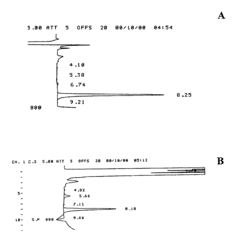
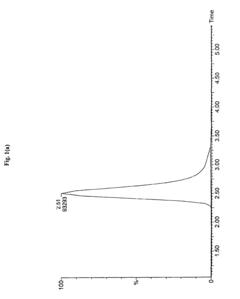
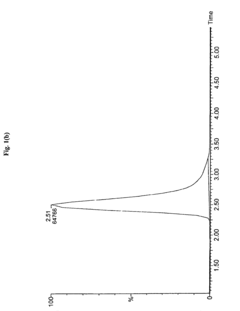
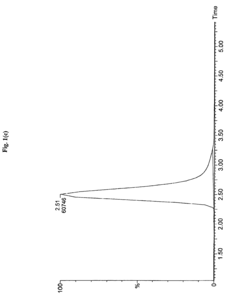
- The use of functionalized magnetic particles with a hydrophobic surface for extracting low molecular weight compounds from complex biological samples, allowing for reversible binding and efficient enrichment of analytes, even in the presence of abundant lipids, peptides, and proteins, with minimal particle quantities required.
System for the Simultaneous Monitoring of Constituents of an Electroplating Bath
PatentPendingUS20240133074A1
Innovation
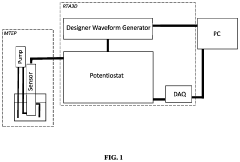
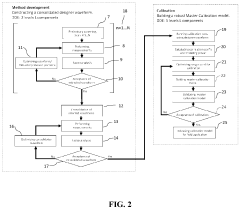
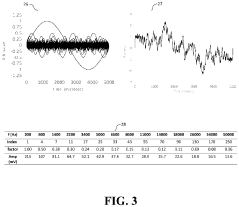
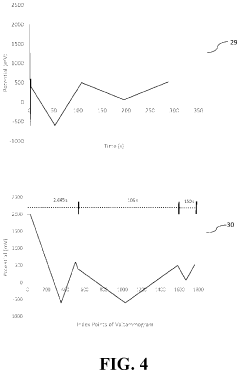
- The development of novel second-order, consolidated voltammetric waveforms combined with chemometric analysis and data compression techniques allows for the simultaneous measurement and analysis of all electroplating bath constituents without pretreatment, using a multi-frequency, variable amplitude waveform to generate a diagnostic voltammetric output that captures the synergistic interactions and maintains process control within the electroplating process.
Regulatory Compliance in Pharmaceutical Stability Testing
Regulatory compliance forms the cornerstone of pharmaceutical stability testing, establishing stringent frameworks that ensure the safety, efficacy, and quality of drug products throughout their shelf life. The International Conference on Harmonisation (ICH) guidelines, particularly ICH Q1A(R2), provide comprehensive directives for stability testing of new drug substances and products. These guidelines mandate specific storage conditions, testing frequencies, and analytical parameters that must be monitored to accurately quantify analyte degradation in HPLC analyses.
The FDA's Code of Federal Regulations (21 CFR Part 211) further reinforces these requirements, specifically addressing stability testing protocols and documentation standards. Pharmaceutical companies must demonstrate that their analytical methods for quantifying degradation are validated according to ICH Q2(R1) guidelines, which outline criteria for method specificity, accuracy, precision, linearity, and robustness when measuring stability-indicating parameters.
European Medicines Agency (EMA) regulations complement these frameworks with additional emphasis on forced degradation studies to identify potential degradation products and establish stability-indicating methods. These studies are crucial for developing appropriate stability metrics that can accurately quantify analyte degradation rates and patterns under various environmental conditions.
Regulatory bodies increasingly require pharmaceutical manufacturers to implement Quality by Design (QbD) principles in stability testing programs. This approach necessitates the development of scientifically sound stability metrics that can reliably predict product performance throughout its lifecycle. Companies must establish appropriate statistical methods for trend analysis of stability data, as outlined in ICH Q1E, to determine shelf life and storage conditions based on quantitative degradation measurements.
The Pharmaceutical Inspection Co-operation Scheme (PIC/S) provides additional guidance on stability testing compliance, emphasizing the importance of data integrity in stability studies. This includes requirements for secure electronic data management systems, audit trails, and validation of computerized systems used in HPLC stability testing.
Regulatory agencies also mandate periodic stability testing of commercial products to verify continued compliance with specifications. This ongoing assessment requires robust stability metrics capable of detecting subtle changes in product quality over time. Companies must establish scientifically justified acceptance criteria for stability tests based on thorough understanding of degradation kinetics and potential impact on safety and efficacy.
Non-compliance with these regulatory requirements can result in significant consequences, including product recalls, manufacturing shutdowns, and regulatory actions. Therefore, pharmaceutical companies must invest in developing comprehensive stability programs with appropriate metrics for quantifying analyte degradation that satisfy both scientific rigor and regulatory expectations.
The FDA's Code of Federal Regulations (21 CFR Part 211) further reinforces these requirements, specifically addressing stability testing protocols and documentation standards. Pharmaceutical companies must demonstrate that their analytical methods for quantifying degradation are validated according to ICH Q2(R1) guidelines, which outline criteria for method specificity, accuracy, precision, linearity, and robustness when measuring stability-indicating parameters.
European Medicines Agency (EMA) regulations complement these frameworks with additional emphasis on forced degradation studies to identify potential degradation products and establish stability-indicating methods. These studies are crucial for developing appropriate stability metrics that can accurately quantify analyte degradation rates and patterns under various environmental conditions.
Regulatory bodies increasingly require pharmaceutical manufacturers to implement Quality by Design (QbD) principles in stability testing programs. This approach necessitates the development of scientifically sound stability metrics that can reliably predict product performance throughout its lifecycle. Companies must establish appropriate statistical methods for trend analysis of stability data, as outlined in ICH Q1E, to determine shelf life and storage conditions based on quantitative degradation measurements.
The Pharmaceutical Inspection Co-operation Scheme (PIC/S) provides additional guidance on stability testing compliance, emphasizing the importance of data integrity in stability studies. This includes requirements for secure electronic data management systems, audit trails, and validation of computerized systems used in HPLC stability testing.
Regulatory agencies also mandate periodic stability testing of commercial products to verify continued compliance with specifications. This ongoing assessment requires robust stability metrics capable of detecting subtle changes in product quality over time. Companies must establish scientifically justified acceptance criteria for stability tests based on thorough understanding of degradation kinetics and potential impact on safety and efficacy.
Non-compliance with these regulatory requirements can result in significant consequences, including product recalls, manufacturing shutdowns, and regulatory actions. Therefore, pharmaceutical companies must invest in developing comprehensive stability programs with appropriate metrics for quantifying analyte degradation that satisfy both scientific rigor and regulatory expectations.
Data Management Solutions for Stability Studies
Effective data management is crucial for stability studies in HPLC analysis, particularly when quantifying analyte degradation. Current solutions incorporate specialized laboratory information management systems (LIMS) that are specifically designed to track sample stability over time. These systems enable automated data collection, storage, and retrieval, significantly reducing manual errors and improving data integrity throughout the stability testing lifecycle.
Integration capabilities with analytical instruments represent a key advancement in stability data management. Modern solutions offer direct interfaces with HPLC systems, allowing for automatic transfer of chromatographic data into centralized databases. This seamless integration eliminates transcription errors and provides real-time monitoring of stability parameters, enabling analysts to identify degradation trends as they emerge rather than retrospectively.
Statistical analysis tools embedded within these data management platforms facilitate sophisticated trend analysis of stability data. These tools apply regression models to quantify degradation rates, calculate shelf-life predictions, and determine confidence intervals for stability metrics. Machine learning algorithms are increasingly being incorporated to detect anomalous degradation patterns that might indicate unexpected instability mechanisms or analytical method failures.
Regulatory compliance features constitute another essential component of stability data management solutions. Systems now incorporate audit trails, electronic signatures, and version control mechanisms that satisfy FDA 21 CFR Part 11 requirements. These features ensure data integrity while documenting all changes made to stability protocols, specifications, and results throughout the study duration.
Cloud-based stability data management solutions have emerged as a significant trend, offering scalable storage capacity and enabling collaborative access across multiple laboratory sites. These platforms provide secure, remote access to stability data, facilitating global collaboration on stability studies while maintaining appropriate access controls and data security measures.
Visualization tools represent a particularly valuable aspect of modern stability data management. Interactive dashboards display degradation trends, stability-indicating parameters, and out-of-specification results in graphical formats that enhance data interpretation. These visualizations help scientists quickly identify critical stability issues and make informed decisions about formulation adjustments or storage condition modifications.
Future developments in stability data management are focusing on predictive analytics capabilities that can forecast degradation patterns based on early stability data. These advanced algorithms promise to reduce the time required for stability assessments by accurately predicting long-term stability from accelerated testing data, potentially revolutionizing the efficiency of pharmaceutical development timelines.
Integration capabilities with analytical instruments represent a key advancement in stability data management. Modern solutions offer direct interfaces with HPLC systems, allowing for automatic transfer of chromatographic data into centralized databases. This seamless integration eliminates transcription errors and provides real-time monitoring of stability parameters, enabling analysts to identify degradation trends as they emerge rather than retrospectively.
Statistical analysis tools embedded within these data management platforms facilitate sophisticated trend analysis of stability data. These tools apply regression models to quantify degradation rates, calculate shelf-life predictions, and determine confidence intervals for stability metrics. Machine learning algorithms are increasingly being incorporated to detect anomalous degradation patterns that might indicate unexpected instability mechanisms or analytical method failures.
Regulatory compliance features constitute another essential component of stability data management solutions. Systems now incorporate audit trails, electronic signatures, and version control mechanisms that satisfy FDA 21 CFR Part 11 requirements. These features ensure data integrity while documenting all changes made to stability protocols, specifications, and results throughout the study duration.
Cloud-based stability data management solutions have emerged as a significant trend, offering scalable storage capacity and enabling collaborative access across multiple laboratory sites. These platforms provide secure, remote access to stability data, facilitating global collaboration on stability studies while maintaining appropriate access controls and data security measures.
Visualization tools represent a particularly valuable aspect of modern stability data management. Interactive dashboards display degradation trends, stability-indicating parameters, and out-of-specification results in graphical formats that enhance data interpretation. These visualizations help scientists quickly identify critical stability issues and make informed decisions about formulation adjustments or storage condition modifications.
Future developments in stability data management are focusing on predictive analytics capabilities that can forecast degradation patterns based on early stability data. These advanced algorithms promise to reduce the time required for stability assessments by accurately predicting long-term stability from accelerated testing data, potentially revolutionizing the efficiency of pharmaceutical development timelines.
Unlock deeper insights with Patsnap Eureka Quick Research — get a full tech report to explore trends and direct your research. Try now!
Generate Your Research Report Instantly with AI Agent
Supercharge your innovation with Patsnap Eureka AI Agent Platform!