Regulatory Considerations for Solid State Battery Breakthrough
OCT 24, 202510 MIN READ
Generate Your Research Report Instantly with AI Agent
Patsnap Eureka helps you evaluate technical feasibility & market potential.
Solid State Battery Technology Background and Objectives
Solid state batteries represent a significant evolution in energy storage technology, emerging from decades of research into safer and more efficient alternatives to conventional lithium-ion batteries. The development trajectory began in the 1970s with initial explorations of solid electrolytes, progressing through various material innovations to today's advanced prototypes. This technology promises to address critical limitations of liquid-electrolyte batteries, particularly regarding safety, energy density, and charging capabilities.
The fundamental innovation of solid state batteries lies in replacing flammable liquid electrolytes with solid materials, eliminating leakage risks and significantly reducing fire hazards. This structural change enables more compact designs with higher energy densities, potentially increasing capacity by 50-100% compared to conventional lithium-ion batteries. Additionally, solid electrolytes can support lithium metal anodes, further enhancing energy density and performance metrics.
Current technological objectives focus on overcoming persistent challenges in solid electrolyte materials, particularly regarding ionic conductivity at room temperature and mechanical stability during cycling. Research aims to develop electrolyte materials that maintain high conductivity while addressing interface issues between electrodes and electrolytes. Manufacturing scalability represents another critical objective, as current laboratory processes must transition to cost-effective mass production methods.
The regulatory landscape surrounding solid state batteries is evolving alongside the technology itself. Safety standards and certification processes designed for conventional batteries require adaptation to address the unique characteristics and failure modes of solid state systems. Regulatory considerations include thermal runaway prevention, mechanical integrity under stress conditions, and long-term stability assessments.
International standardization bodies, including ISO, IEC, and UL, are actively developing new testing protocols and safety standards specific to solid state technology. These emerging frameworks aim to establish consistent evaluation criteria for manufacturers while ensuring consumer safety. Regulatory readiness will significantly impact commercialization timelines, as certification processes may become rate-limiting factors in market entry.
The technology roadmap anticipates progressive improvements in performance metrics, with initial commercial applications focusing on consumer electronics before expanding to electric vehicles and grid storage. Near-term objectives include achieving energy densities exceeding 400 Wh/kg, cycle life beyond 1,000 cycles, and manufacturing costs approaching $100/kWh—metrics that would position solid state batteries as transformative technologies across multiple industries.
The fundamental innovation of solid state batteries lies in replacing flammable liquid electrolytes with solid materials, eliminating leakage risks and significantly reducing fire hazards. This structural change enables more compact designs with higher energy densities, potentially increasing capacity by 50-100% compared to conventional lithium-ion batteries. Additionally, solid electrolytes can support lithium metal anodes, further enhancing energy density and performance metrics.
Current technological objectives focus on overcoming persistent challenges in solid electrolyte materials, particularly regarding ionic conductivity at room temperature and mechanical stability during cycling. Research aims to develop electrolyte materials that maintain high conductivity while addressing interface issues between electrodes and electrolytes. Manufacturing scalability represents another critical objective, as current laboratory processes must transition to cost-effective mass production methods.
The regulatory landscape surrounding solid state batteries is evolving alongside the technology itself. Safety standards and certification processes designed for conventional batteries require adaptation to address the unique characteristics and failure modes of solid state systems. Regulatory considerations include thermal runaway prevention, mechanical integrity under stress conditions, and long-term stability assessments.
International standardization bodies, including ISO, IEC, and UL, are actively developing new testing protocols and safety standards specific to solid state technology. These emerging frameworks aim to establish consistent evaluation criteria for manufacturers while ensuring consumer safety. Regulatory readiness will significantly impact commercialization timelines, as certification processes may become rate-limiting factors in market entry.
The technology roadmap anticipates progressive improvements in performance metrics, with initial commercial applications focusing on consumer electronics before expanding to electric vehicles and grid storage. Near-term objectives include achieving energy densities exceeding 400 Wh/kg, cycle life beyond 1,000 cycles, and manufacturing costs approaching $100/kWh—metrics that would position solid state batteries as transformative technologies across multiple industries.
Market Demand Analysis for Solid State Batteries
The global market for solid state batteries is experiencing unprecedented growth, driven by increasing demand for safer, higher-capacity energy storage solutions across multiple industries. Current market projections indicate that the solid state battery market will reach approximately $8 billion by 2026, with a compound annual growth rate exceeding 34% between 2021 and 2026. This remarkable growth trajectory reflects the significant advantages these batteries offer over conventional lithium-ion technologies.
Electric vehicle manufacturers represent the primary demand driver, as they seek battery technologies that can extend range while reducing safety concerns. Major automotive companies including Toyota, Volkswagen, and BMW have made substantial investments in solid state battery technology, recognizing its potential to overcome the limitations of current battery systems. The automotive sector alone is expected to account for over 40% of the total solid state battery market by 2025.
Consumer electronics constitutes another significant market segment, with manufacturers seeking higher energy density and improved safety profiles for smartphones, laptops, and wearable devices. The miniaturization trend in electronics has created demand for batteries that can deliver more power in smaller form factors, a need that solid state technology is uniquely positioned to address.
The renewable energy sector presents an emerging but rapidly growing market for solid state batteries. As grid-scale energy storage becomes increasingly critical for integrating intermittent renewable sources, the enhanced safety characteristics and longer cycle life of solid state batteries make them particularly attractive for stationary storage applications. Industry analysts project that this segment could grow at rates exceeding 45% annually through 2030.
Regulatory considerations are significantly influencing market demand patterns. Increasingly stringent safety regulations for lithium-ion batteries, particularly following high-profile thermal runaway incidents, have accelerated interest in solid state alternatives. In Europe, proposed regulations under the EU Battery Directive specifically favor technologies with improved safety profiles and reduced environmental impact, creating a regulatory environment that advantages solid state technology.
The aerospace and defense sectors represent premium market segments with specific requirements for high-performance energy storage. These industries prioritize reliability and safety under extreme conditions, creating demand for advanced solid state solutions despite higher initial costs. Market research indicates willingness to pay premium prices for batteries that meet stringent performance and safety requirements in these specialized applications.
Regional analysis reveals that Asia-Pacific currently leads market demand, with Japan and South Korea at the forefront of both production and consumption. However, North America and Europe are experiencing the fastest growth rates, driven by automotive sector investments and supportive regulatory frameworks designed to accelerate electric vehicle adoption and grid modernization initiatives.
Electric vehicle manufacturers represent the primary demand driver, as they seek battery technologies that can extend range while reducing safety concerns. Major automotive companies including Toyota, Volkswagen, and BMW have made substantial investments in solid state battery technology, recognizing its potential to overcome the limitations of current battery systems. The automotive sector alone is expected to account for over 40% of the total solid state battery market by 2025.
Consumer electronics constitutes another significant market segment, with manufacturers seeking higher energy density and improved safety profiles for smartphones, laptops, and wearable devices. The miniaturization trend in electronics has created demand for batteries that can deliver more power in smaller form factors, a need that solid state technology is uniquely positioned to address.
The renewable energy sector presents an emerging but rapidly growing market for solid state batteries. As grid-scale energy storage becomes increasingly critical for integrating intermittent renewable sources, the enhanced safety characteristics and longer cycle life of solid state batteries make them particularly attractive for stationary storage applications. Industry analysts project that this segment could grow at rates exceeding 45% annually through 2030.
Regulatory considerations are significantly influencing market demand patterns. Increasingly stringent safety regulations for lithium-ion batteries, particularly following high-profile thermal runaway incidents, have accelerated interest in solid state alternatives. In Europe, proposed regulations under the EU Battery Directive specifically favor technologies with improved safety profiles and reduced environmental impact, creating a regulatory environment that advantages solid state technology.
The aerospace and defense sectors represent premium market segments with specific requirements for high-performance energy storage. These industries prioritize reliability and safety under extreme conditions, creating demand for advanced solid state solutions despite higher initial costs. Market research indicates willingness to pay premium prices for batteries that meet stringent performance and safety requirements in these specialized applications.
Regional analysis reveals that Asia-Pacific currently leads market demand, with Japan and South Korea at the forefront of both production and consumption. However, North America and Europe are experiencing the fastest growth rates, driven by automotive sector investments and supportive regulatory frameworks designed to accelerate electric vehicle adoption and grid modernization initiatives.
Current Technical Challenges in Solid State Battery Development
Despite significant advancements in solid-state battery technology, several critical technical challenges continue to impede widespread commercialization. The interface stability between solid electrolytes and electrodes represents one of the most formidable obstacles. Unlike liquid electrolytes that maintain consistent contact with electrode surfaces during cycling, solid electrolytes struggle to maintain intimate contact, leading to increased interfacial resistance and reduced battery performance over time. This challenge is particularly pronounced during volume changes that occur during charging and cycling.
Manufacturing scalability presents another significant hurdle. Current laboratory-scale production methods for solid electrolytes and battery assemblies are difficult to translate to mass production environments. The precision required for thin-film deposition, the complexity of maintaining uniform thickness, and the challenges in creating defect-free interfaces all contribute to manufacturing difficulties that impact yield rates and production costs.
Ion conductivity at room temperature remains substantially lower in solid electrolytes compared to their liquid counterparts. While some materials show promising conductivity at elevated temperatures, achieving comparable performance at ambient conditions has proven elusive. This limitation directly affects power density and charging capabilities, restricting practical applications where rapid charging is essential.
Mechanical stress management during cycling represents a persistent challenge. The volume changes during lithium intercalation/deintercalation create mechanical stresses that can lead to fractures in the solid electrolyte or delamination at interfaces. These mechanical failures compromise both safety and longevity, undermining two of the primary advantages solid-state batteries promise to deliver.
Material cost and availability pose significant barriers to commercialization. Many promising solid electrolytes rely on rare or expensive elements, making large-scale production economically challenging. For instance, garnet-type electrolytes containing lanthanum and zirconium face cost constraints that limit their commercial viability without significant material innovations or supply chain developments.
Processing compatibility issues arise when integrating solid-state technology with existing battery manufacturing infrastructure. The high temperatures often required for sintering ceramic electrolytes can degrade other battery components, necessitating entirely new manufacturing approaches and equipment investments.
Dendrite formation, contrary to early expectations, has not been eliminated in solid-state configurations. Recent research has revealed that lithium metal can still penetrate certain solid electrolytes along grain boundaries or through microscopic defects, potentially creating short circuits and safety hazards that undermine the technology's safety advantages.
Manufacturing scalability presents another significant hurdle. Current laboratory-scale production methods for solid electrolytes and battery assemblies are difficult to translate to mass production environments. The precision required for thin-film deposition, the complexity of maintaining uniform thickness, and the challenges in creating defect-free interfaces all contribute to manufacturing difficulties that impact yield rates and production costs.
Ion conductivity at room temperature remains substantially lower in solid electrolytes compared to their liquid counterparts. While some materials show promising conductivity at elevated temperatures, achieving comparable performance at ambient conditions has proven elusive. This limitation directly affects power density and charging capabilities, restricting practical applications where rapid charging is essential.
Mechanical stress management during cycling represents a persistent challenge. The volume changes during lithium intercalation/deintercalation create mechanical stresses that can lead to fractures in the solid electrolyte or delamination at interfaces. These mechanical failures compromise both safety and longevity, undermining two of the primary advantages solid-state batteries promise to deliver.
Material cost and availability pose significant barriers to commercialization. Many promising solid electrolytes rely on rare or expensive elements, making large-scale production economically challenging. For instance, garnet-type electrolytes containing lanthanum and zirconium face cost constraints that limit their commercial viability without significant material innovations or supply chain developments.
Processing compatibility issues arise when integrating solid-state technology with existing battery manufacturing infrastructure. The high temperatures often required for sintering ceramic electrolytes can degrade other battery components, necessitating entirely new manufacturing approaches and equipment investments.
Dendrite formation, contrary to early expectations, has not been eliminated in solid-state configurations. Recent research has revealed that lithium metal can still penetrate certain solid electrolytes along grain boundaries or through microscopic defects, potentially creating short circuits and safety hazards that undermine the technology's safety advantages.
Current Technical Solutions for Solid State Battery Implementation
01 Solid-state electrolyte materials and compositions
Solid-state batteries utilize various electrolyte materials to enable ion transport between electrodes without liquid components. These materials include ceramic electrolytes, polymer electrolytes, and composite electrolytes that combine different materials to optimize performance. The composition of these electrolytes is critical for achieving high ionic conductivity, mechanical stability, and electrochemical stability at the electrode interfaces, which directly impacts battery performance and safety.- Solid-state electrolyte compositions and structures: Solid-state batteries utilize specialized electrolyte compositions that enable ion transport without liquid components. These electrolytes typically consist of ceramic, glass, or polymer materials that provide ionic conductivity while maintaining structural integrity. Advanced compositions may incorporate composite structures combining different materials to optimize conductivity, mechanical strength, and electrochemical stability at the electrode interfaces.
- Electrode-electrolyte interface engineering: A critical aspect of solid-state battery performance is the interface between electrodes and the solid electrolyte. Engineering approaches focus on reducing interfacial resistance, preventing dendrite formation, and ensuring good contact between components. This includes surface modifications, buffer layers, and specialized coatings that improve ion transfer across boundaries while maintaining mechanical integrity during cycling.
- Manufacturing processes for solid-state batteries: Novel manufacturing techniques are essential for commercial viability of solid-state batteries. These include specialized deposition methods, sintering processes, and assembly techniques that ensure proper component integration while maintaining the integrity of the solid materials. Advanced manufacturing approaches address challenges in scaling production while ensuring consistent performance and reducing defects in the final battery structure.
- Cathode and anode materials for solid-state applications: Electrode materials for solid-state batteries require specific properties different from those in liquid electrolyte systems. These materials must maintain good contact with the solid electrolyte, accommodate volume changes during cycling, and provide high energy density. Innovations include specialized active materials, conductive additives, and structural designs that optimize ion and electron transport while maintaining mechanical stability.
- Battery system integration and thermal management: Solid-state batteries require specific approaches to system integration and thermal management. These include specialized cell packaging, battery management systems adapted for solid-state characteristics, and thermal regulation strategies. Innovations focus on maintaining optimal operating temperatures, preventing thermal runaway, and ensuring uniform performance across battery packs while leveraging the inherent safety advantages of solid-state technology.
02 Electrode-electrolyte interface engineering
Interface engineering between electrodes and solid electrolytes is crucial for solid-state batteries to reduce interfacial resistance and improve ion transfer. Techniques include surface coatings, buffer layers, and specialized interface materials that enhance contact and compatibility between components. These approaches address challenges such as mechanical stress during cycling and chemical incompatibilities that can lead to increased impedance and reduced battery performance.Expand Specific Solutions03 Manufacturing processes and assembly techniques
Advanced manufacturing processes for solid-state batteries include dry and wet processing methods, hot pressing, tape casting, and various deposition techniques. These processes focus on creating thin, uniform layers with good interfacial contact while maintaining structural integrity. Assembly techniques address challenges such as stack pressure maintenance, layer alignment, and packaging that can withstand mechanical stress during operation while preventing moisture ingress.Expand Specific Solutions04 Cathode and anode materials optimization
Electrode materials for solid-state batteries require specific properties to function effectively with solid electrolytes. High-capacity cathode materials like nickel-rich layered oxides and sulfur-based compounds are being developed with modified structures to accommodate solid-state configurations. Similarly, anode materials including lithium metal, silicon, and various carbon-based materials are being optimized to address volume changes during cycling and to improve interfacial stability with solid electrolytes.Expand Specific Solutions05 Cell design and architecture innovations
Novel cell designs for solid-state batteries focus on optimizing power density, energy density, and thermal management. These include bipolar configurations, 3D architectures, and integrated designs that minimize inactive components. Structural innovations address mechanical stress during cycling, improve current collection efficiency, and enhance overall battery performance. Advanced architectures also incorporate features to maintain stack pressure and accommodate volume changes during operation.Expand Specific Solutions
Key Industry Players in Solid State Battery Research
The solid state battery market is in an early growth phase, characterized by significant R&D investments but limited commercial deployment. Market size is projected to expand rapidly as automotive manufacturers like Honda, Hyundai, and Kia seek alternatives to conventional lithium-ion batteries. Technologically, the field shows varying maturity levels across players. QuantumScape and Sila Nanotechnologies lead in innovative approaches, while established battery manufacturers like CATL, LG Energy Solution, and Samsung are leveraging their manufacturing expertise to accelerate development. Traditional electronics companies including Murata, TDK, and Samsung Electro-Mechanics are focusing on component-level innovations. Academic institutions and research organizations such as University of California and Georgia Tech Research Corp are contributing fundamental breakthroughs, creating a competitive landscape balanced between startups, established manufacturers, and research entities.
Contemporary Amperex Technology Co., Ltd.
Technical Solution: CATL has developed a comprehensive regulatory strategy for their solid-state battery technology that addresses both domestic Chinese regulations and international standards. Their approach focuses on their hybrid solid-liquid electrolyte technology as a transitional solution that can be certified under existing regulatory frameworks while gradually introducing fully solid-state components[5]. CATL has established specialized regulatory compliance teams that work closely with Chinese authorities to develop national standards for solid-state batteries, positioning themselves to influence regulatory development. The company implements a staged regulatory approval process that begins with less stringent applications (consumer electronics) before moving to more heavily regulated sectors like automotive and grid storage. CATL's regulatory strategy includes extensive safety validation testing that demonstrates the reduced fire and explosion risks of their solid-state technology compared to conventional lithium-ion batteries[6]. They have also developed specialized transportation protocols for their solid-state battery materials that address the unique handling requirements of solid electrolytes, particularly those sensitive to moisture or air exposure.
Strengths: Strong influence in Chinese regulatory development and standardization processes. Their staged approach to market entry allows for regulatory learning and adaptation before targeting heavily regulated applications. Weaknesses: International regulatory harmonization challenges may create barriers to global market expansion, particularly in regions with different safety certification requirements than those in China.
QuantumScape Corp.
Technical Solution: QuantumScape has developed a proprietary solid-state lithium-metal battery technology that eliminates the need for conventional separators and anode host materials. Their regulatory approach focuses on addressing safety standards through their ceramic separator technology that prevents dendrite formation while enabling faster charging capabilities[1]. The company has established a comprehensive regulatory compliance framework that addresses both existing lithium-ion battery regulations and anticipates future solid-state specific requirements. QuantumScape works closely with regulatory bodies like the UN Transportation of Dangerous Goods Sub-Committee to develop appropriate testing protocols for solid-state batteries that differ fundamentally from conventional lithium-ion technologies[2]. Their regulatory strategy includes extensive safety testing beyond standard requirements, demonstrating thermal stability advantages that could potentially lead to less stringent transportation and storage regulations for their products.
Strengths: Established relationships with regulatory bodies and proactive approach to safety standard development. Their ceramic separator technology provides inherent safety advantages that may lead to streamlined regulatory approval. Weaknesses: As a pioneer in the field, they face the challenge of navigating regulatory frameworks not specifically designed for solid-state technology, potentially causing delays in commercialization timelines.
Critical Patents and Innovations in Solid State Battery Technology
Method of manufacturing a solid-state lithium battery and a battery manufactured by the method
PatentActiveUS20230044416A1
Innovation
- A method involving the coating of anode and cathode units with solid-state electrolyte precursors, followed by pressing them together at elevated temperatures and mechanical pressure to form a pre-final solid-state battery unit, with controlled heating and pressure to manage redundant water and hydrogen, ensuring the formation of an integral solid-state electrolyte.
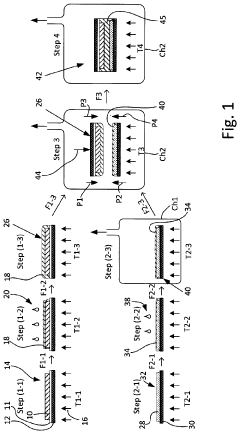
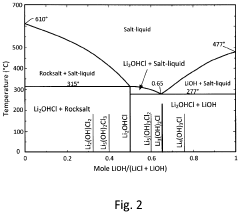
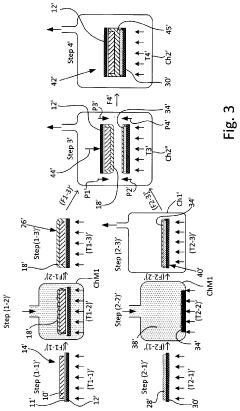
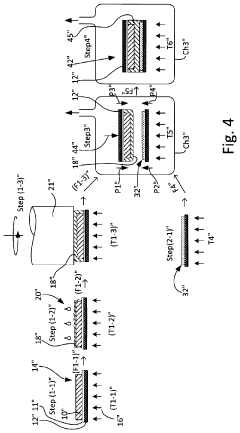
Pulsed mode apparatus with mismatched battery
PatentActiveUS20150372359A1
Innovation
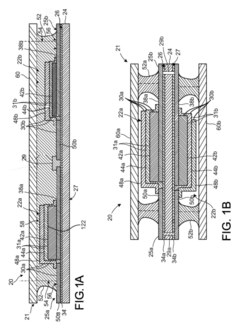
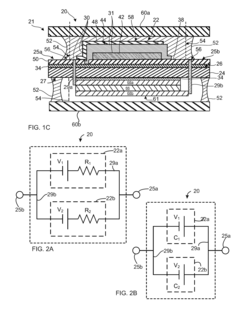
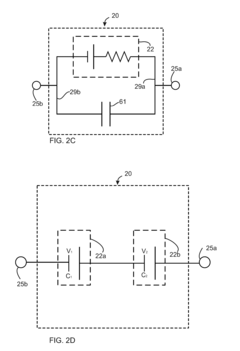
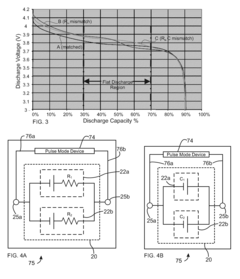
- A mismatched battery configuration is introduced, where two battery cells with different internal resistances and charge capacities are connected in parallel, allowing the cell with lower resistance to power a device during the on-time and the higher resistance cell to recharge during the off-time, thereby enhancing current output.
Regulatory Framework and Compliance Requirements for Battery Technologies
The regulatory landscape for battery technologies is complex and multifaceted, with frameworks varying significantly across global regions. For solid-state batteries, which represent a breakthrough technology with potentially transformative safety and performance characteristics, navigating these regulatory requirements is particularly critical for market entry and commercial success.
In the United States, the Department of Energy (DOE) and the Consumer Product Safety Commission (CPSC) establish primary regulatory guidelines for battery technologies. The UN38.3 testing requirements for lithium batteries remain applicable to solid-state variants, though modifications may be necessary to address their unique characteristics. The Environmental Protection Agency (EPA) also maintains oversight regarding the environmental impact of battery production and disposal processes.
The European Union implements more stringent regulatory frameworks through the Battery Directive (2006/66/EC) and its recent update, the Battery Regulation (2023), which introduces comprehensive sustainability requirements including carbon footprint declarations, recycled content mandates, and due diligence obligations for raw materials. Solid-state battery manufacturers must demonstrate compliance with these evolving standards, particularly regarding end-of-life management and material recovery.
In Asia, Japan's regulatory approach emphasizes safety standards through the Ministry of Economy, Trade and Industry (METI), while China's battery regulations focus on production quality and environmental impact through GB standards. South Korea has established the K-Battery industry standard, which includes specific provisions that may require adaptation for solid-state technologies.
Transportation regulations present significant compliance challenges, with the International Air Transport Association (IATA) Dangerous Goods Regulations and the International Maritime Dangerous Goods (IMDG) Code governing battery shipment. While solid-state batteries may offer inherent safety advantages over conventional lithium-ion batteries, they must still undergo rigorous testing to qualify for any regulatory exemptions.
Emerging regulatory considerations specific to solid-state batteries include the need for standardized testing protocols that address their unique failure modes and safety characteristics. The absence of liquid electrolytes may necessitate revised thermal runaway testing methodologies and updated safety certification processes. Additionally, regulations concerning the novel materials used in solid-state electrolytes, particularly those containing rare earth elements or specialized ceramics, may require specific environmental and health impact assessments.
For manufacturers pursuing solid-state battery commercialization, establishing early engagement with regulatory bodies is essential to navigate this complex landscape efficiently and avoid costly compliance issues during later development stages.
In the United States, the Department of Energy (DOE) and the Consumer Product Safety Commission (CPSC) establish primary regulatory guidelines for battery technologies. The UN38.3 testing requirements for lithium batteries remain applicable to solid-state variants, though modifications may be necessary to address their unique characteristics. The Environmental Protection Agency (EPA) also maintains oversight regarding the environmental impact of battery production and disposal processes.
The European Union implements more stringent regulatory frameworks through the Battery Directive (2006/66/EC) and its recent update, the Battery Regulation (2023), which introduces comprehensive sustainability requirements including carbon footprint declarations, recycled content mandates, and due diligence obligations for raw materials. Solid-state battery manufacturers must demonstrate compliance with these evolving standards, particularly regarding end-of-life management and material recovery.
In Asia, Japan's regulatory approach emphasizes safety standards through the Ministry of Economy, Trade and Industry (METI), while China's battery regulations focus on production quality and environmental impact through GB standards. South Korea has established the K-Battery industry standard, which includes specific provisions that may require adaptation for solid-state technologies.
Transportation regulations present significant compliance challenges, with the International Air Transport Association (IATA) Dangerous Goods Regulations and the International Maritime Dangerous Goods (IMDG) Code governing battery shipment. While solid-state batteries may offer inherent safety advantages over conventional lithium-ion batteries, they must still undergo rigorous testing to qualify for any regulatory exemptions.
Emerging regulatory considerations specific to solid-state batteries include the need for standardized testing protocols that address their unique failure modes and safety characteristics. The absence of liquid electrolytes may necessitate revised thermal runaway testing methodologies and updated safety certification processes. Additionally, regulations concerning the novel materials used in solid-state electrolytes, particularly those containing rare earth elements or specialized ceramics, may require specific environmental and health impact assessments.
For manufacturers pursuing solid-state battery commercialization, establishing early engagement with regulatory bodies is essential to navigate this complex landscape efficiently and avoid costly compliance issues during later development stages.
Safety Standards and Testing Protocols for Solid State Batteries
The development of solid state batteries represents a significant advancement in energy storage technology, necessitating comprehensive safety standards and testing protocols to ensure their safe integration into commercial applications. Current regulatory frameworks designed for conventional lithium-ion batteries with liquid electrolytes are insufficient for addressing the unique characteristics and potential failure modes of solid state batteries.
Regulatory bodies worldwide, including the International Electrotechnical Commission (IEC), Underwriters Laboratories (UL), and various national standards organizations, are actively developing specialized testing protocols for solid state batteries. These protocols focus on thermal stability assessment, mechanical integrity under stress conditions, and electrochemical performance boundaries that differ substantially from traditional battery technologies.
Key safety testing requirements emerging for solid state batteries include thermal runaway resistance evaluation, which typically involves subjecting cells to extreme temperature conditions (ranging from -40°C to over 150°C) to assess stability. Unlike conventional batteries, solid state variants demonstrate significantly different thermal propagation patterns, requiring modified testing methodologies to accurately evaluate safety margins.
Mechanical testing protocols are being enhanced to address the unique physical properties of solid electrolytes, which may exhibit brittleness or deformation characteristics distinct from liquid systems. These tests include puncture resistance, crush tolerance, and vibration endurance under various operational conditions to simulate real-world scenarios.
Cycle life and aging tests are being recalibrated to account for the different degradation mechanisms in solid state systems. Standard protocols now incorporate extended cycling under varied charge/discharge rates and environmental conditions to evaluate long-term safety performance and identify potential failure precursors specific to solid electrolyte interfaces.
Electrical safety standards are evolving to address the higher voltage tolerance and different short-circuit behaviors of solid state batteries. These include modified overcharge protection requirements and updated electrical isolation specifications that reflect the unique conductivity properties of solid electrolytes.
Harmonization efforts are underway to establish globally recognized standards, with organizations like the Global Battery Alliance and the International Organization for Standardization (ISO) working to develop unified testing frameworks. These collaborative initiatives aim to create consistent safety benchmarks that can accelerate regulatory approval processes across different jurisdictions.
Manufacturers seeking to commercialize solid state battery technology must navigate this evolving regulatory landscape, often participating in pre-standardization research to inform the development of appropriate testing methodologies. This proactive engagement with regulatory bodies has become essential for expediting the path to market while ensuring robust safety validation.
Regulatory bodies worldwide, including the International Electrotechnical Commission (IEC), Underwriters Laboratories (UL), and various national standards organizations, are actively developing specialized testing protocols for solid state batteries. These protocols focus on thermal stability assessment, mechanical integrity under stress conditions, and electrochemical performance boundaries that differ substantially from traditional battery technologies.
Key safety testing requirements emerging for solid state batteries include thermal runaway resistance evaluation, which typically involves subjecting cells to extreme temperature conditions (ranging from -40°C to over 150°C) to assess stability. Unlike conventional batteries, solid state variants demonstrate significantly different thermal propagation patterns, requiring modified testing methodologies to accurately evaluate safety margins.
Mechanical testing protocols are being enhanced to address the unique physical properties of solid electrolytes, which may exhibit brittleness or deformation characteristics distinct from liquid systems. These tests include puncture resistance, crush tolerance, and vibration endurance under various operational conditions to simulate real-world scenarios.
Cycle life and aging tests are being recalibrated to account for the different degradation mechanisms in solid state systems. Standard protocols now incorporate extended cycling under varied charge/discharge rates and environmental conditions to evaluate long-term safety performance and identify potential failure precursors specific to solid electrolyte interfaces.
Electrical safety standards are evolving to address the higher voltage tolerance and different short-circuit behaviors of solid state batteries. These include modified overcharge protection requirements and updated electrical isolation specifications that reflect the unique conductivity properties of solid electrolytes.
Harmonization efforts are underway to establish globally recognized standards, with organizations like the Global Battery Alliance and the International Organization for Standardization (ISO) working to develop unified testing frameworks. These collaborative initiatives aim to create consistent safety benchmarks that can accelerate regulatory approval processes across different jurisdictions.
Manufacturers seeking to commercialize solid state battery technology must navigate this evolving regulatory landscape, often participating in pre-standardization research to inform the development of appropriate testing methodologies. This proactive engagement with regulatory bodies has become essential for expediting the path to market while ensuring robust safety validation.
Unlock deeper insights with Patsnap Eureka Quick Research — get a full tech report to explore trends and direct your research. Try now!
Generate Your Research Report Instantly with AI Agent
Supercharge your innovation with Patsnap Eureka AI Agent Platform!