Ethyl Propanoate in Molecular Dynamics of Lipid Bilayers
JUL 22, 20259 MIN READ
Generate Your Research Report Instantly with AI Agent
Patsnap Eureka helps you evaluate technical feasibility & market potential.
Ethyl Propanoate MD Background and Objectives
Ethyl propanoate, also known as ethyl propionate, has emerged as a significant compound in the study of molecular dynamics of lipid bilayers. This research area has gained prominence due to its potential applications in various fields, including drug delivery, membrane biophysics, and nanotechnology. The investigation of ethyl propanoate's behavior in lipid bilayers provides crucial insights into membrane permeability, molecular interactions, and the overall dynamics of biological membranes.
The historical development of this field can be traced back to the early studies of lipid bilayers in the mid-20th century. As computational power and molecular dynamics simulation techniques advanced, researchers began to explore the interactions between small molecules and lipid membranes more extensively. Ethyl propanoate, with its unique chemical properties and biological relevance, has become a model compound for such studies.
The primary objective of researching ethyl propanoate in the molecular dynamics of lipid bilayers is to elucidate the mechanisms by which this molecule interacts with and permeates through biological membranes. This understanding is crucial for developing more effective drug delivery systems, as many pharmaceuticals must cross lipid bilayers to reach their intended targets. Additionally, this research aims to shed light on the fundamental principles governing membrane organization and function.
Recent technological advancements have significantly enhanced our ability to study these systems. High-performance computing and sophisticated simulation algorithms now allow for more accurate and longer timescale simulations of lipid bilayers and their interactions with small molecules like ethyl propanoate. Experimental techniques such as nuclear magnetic resonance (NMR) spectroscopy and fluorescence microscopy have also evolved, providing complementary data to validate and refine computational models.
The current research landscape is characterized by a multidisciplinary approach, combining computational simulations with experimental validation. Scientists are particularly interested in understanding how the chemical structure of ethyl propanoate influences its behavior in lipid bilayers, including its partitioning between aqueous and lipid phases, its orientation within the membrane, and its effects on membrane properties such as fluidity and thickness.
Looking ahead, the field is moving towards more complex and realistic membrane models, incorporating multiple lipid species and membrane proteins to better mimic biological systems. There is also a growing interest in using machine learning techniques to analyze the vast amounts of data generated by molecular dynamics simulations, potentially uncovering new patterns and relationships in lipid-small molecule interactions.
In conclusion, the research on ethyl propanoate in molecular dynamics of lipid bilayers represents a critical area of study with far-reaching implications. By advancing our understanding of how this compound interacts with membranes, we can gain valuable insights into broader questions of membrane biology and drug delivery, paving the way for innovative therapeutic strategies and improved understanding of cellular processes.
The historical development of this field can be traced back to the early studies of lipid bilayers in the mid-20th century. As computational power and molecular dynamics simulation techniques advanced, researchers began to explore the interactions between small molecules and lipid membranes more extensively. Ethyl propanoate, with its unique chemical properties and biological relevance, has become a model compound for such studies.
The primary objective of researching ethyl propanoate in the molecular dynamics of lipid bilayers is to elucidate the mechanisms by which this molecule interacts with and permeates through biological membranes. This understanding is crucial for developing more effective drug delivery systems, as many pharmaceuticals must cross lipid bilayers to reach their intended targets. Additionally, this research aims to shed light on the fundamental principles governing membrane organization and function.
Recent technological advancements have significantly enhanced our ability to study these systems. High-performance computing and sophisticated simulation algorithms now allow for more accurate and longer timescale simulations of lipid bilayers and their interactions with small molecules like ethyl propanoate. Experimental techniques such as nuclear magnetic resonance (NMR) spectroscopy and fluorescence microscopy have also evolved, providing complementary data to validate and refine computational models.
The current research landscape is characterized by a multidisciplinary approach, combining computational simulations with experimental validation. Scientists are particularly interested in understanding how the chemical structure of ethyl propanoate influences its behavior in lipid bilayers, including its partitioning between aqueous and lipid phases, its orientation within the membrane, and its effects on membrane properties such as fluidity and thickness.
Looking ahead, the field is moving towards more complex and realistic membrane models, incorporating multiple lipid species and membrane proteins to better mimic biological systems. There is also a growing interest in using machine learning techniques to analyze the vast amounts of data generated by molecular dynamics simulations, potentially uncovering new patterns and relationships in lipid-small molecule interactions.
In conclusion, the research on ethyl propanoate in molecular dynamics of lipid bilayers represents a critical area of study with far-reaching implications. By advancing our understanding of how this compound interacts with membranes, we can gain valuable insights into broader questions of membrane biology and drug delivery, paving the way for innovative therapeutic strategies and improved understanding of cellular processes.
Market Applications of Lipid Bilayer Simulations
Lipid bilayer simulations have found extensive applications in various market sectors, particularly in the pharmaceutical and biotechnology industries. These simulations provide crucial insights into the behavior of cell membranes and their interactions with different molecules, making them invaluable tools for drug discovery and development processes.
In the pharmaceutical industry, lipid bilayer simulations are widely used to predict drug-membrane interactions, which is essential for understanding drug absorption, distribution, and efficacy. By simulating how potential drug candidates interact with lipid bilayers, researchers can optimize drug formulations and delivery systems, potentially reducing the time and cost associated with drug development. This application has significant market potential, as it can lead to more efficient drug discovery processes and improved drug candidates.
The cosmetics and personal care industry also benefits from lipid bilayer simulations. These simulations help in the development of advanced skincare products by providing insights into how various ingredients interact with the skin's lipid barrier. This knowledge enables the creation of more effective moisturizers, anti-aging products, and other skincare formulations, addressing a growing market demand for science-backed beauty solutions.
In the food industry, lipid bilayer simulations are used to study the encapsulation and delivery of nutrients and flavors. This application is particularly relevant for the development of functional foods and nutraceuticals, where controlled release of bioactive compounds is crucial. The market for such products is expanding, driven by increasing consumer interest in health-promoting foods.
Biotechnology companies utilize lipid bilayer simulations in the development of liposomal drug delivery systems and gene therapy vectors. These simulations help in optimizing the design of liposomes and other lipid-based nanocarriers, which are essential for targeted drug delivery and gene therapy applications. As personalized medicine and gene therapies gain traction, the market demand for these simulation-based approaches is expected to grow significantly.
The agricultural sector is another emerging market for lipid bilayer simulations. These simulations are used to study the interaction of pesticides and herbicides with plant cell membranes, aiding in the development of more effective and environmentally friendly crop protection products. This application addresses the growing need for sustainable agricultural practices and reduced environmental impact of agrochemicals.
In the energy sector, lipid bilayer simulations are being applied to the development of biofuels and bio-inspired materials. By understanding the properties of lipid membranes, researchers can design more efficient biofuel production processes and develop novel biomimetic materials with applications in energy storage and conversion.
As computational power continues to increase and simulation techniques become more sophisticated, the market applications of lipid bilayer simulations are expected to expand further. This growth will likely be driven by the increasing demand for personalized medicine, sustainable technologies, and more efficient research and development processes across various industries.
In the pharmaceutical industry, lipid bilayer simulations are widely used to predict drug-membrane interactions, which is essential for understanding drug absorption, distribution, and efficacy. By simulating how potential drug candidates interact with lipid bilayers, researchers can optimize drug formulations and delivery systems, potentially reducing the time and cost associated with drug development. This application has significant market potential, as it can lead to more efficient drug discovery processes and improved drug candidates.
The cosmetics and personal care industry also benefits from lipid bilayer simulations. These simulations help in the development of advanced skincare products by providing insights into how various ingredients interact with the skin's lipid barrier. This knowledge enables the creation of more effective moisturizers, anti-aging products, and other skincare formulations, addressing a growing market demand for science-backed beauty solutions.
In the food industry, lipid bilayer simulations are used to study the encapsulation and delivery of nutrients and flavors. This application is particularly relevant for the development of functional foods and nutraceuticals, where controlled release of bioactive compounds is crucial. The market for such products is expanding, driven by increasing consumer interest in health-promoting foods.
Biotechnology companies utilize lipid bilayer simulations in the development of liposomal drug delivery systems and gene therapy vectors. These simulations help in optimizing the design of liposomes and other lipid-based nanocarriers, which are essential for targeted drug delivery and gene therapy applications. As personalized medicine and gene therapies gain traction, the market demand for these simulation-based approaches is expected to grow significantly.
The agricultural sector is another emerging market for lipid bilayer simulations. These simulations are used to study the interaction of pesticides and herbicides with plant cell membranes, aiding in the development of more effective and environmentally friendly crop protection products. This application addresses the growing need for sustainable agricultural practices and reduced environmental impact of agrochemicals.
In the energy sector, lipid bilayer simulations are being applied to the development of biofuels and bio-inspired materials. By understanding the properties of lipid membranes, researchers can design more efficient biofuel production processes and develop novel biomimetic materials with applications in energy storage and conversion.
As computational power continues to increase and simulation techniques become more sophisticated, the market applications of lipid bilayer simulations are expected to expand further. This growth will likely be driven by the increasing demand for personalized medicine, sustainable technologies, and more efficient research and development processes across various industries.
Current Challenges in Lipid Bilayer MD
Molecular dynamics (MD) simulations of lipid bilayers have become an essential tool in understanding the complex behavior of biological membranes. However, several challenges persist in accurately modeling these systems, particularly when incorporating small molecules like ethyl propanoate. One of the primary difficulties lies in the accurate representation of lipid-lipid and lipid-solvent interactions. The force fields used in MD simulations often struggle to capture the subtle balance of forces that govern membrane properties, leading to discrepancies between simulated and experimental results.
Another significant challenge is the computational cost associated with simulating large, complex lipid systems over biologically relevant timescales. Lipid bilayers exhibit slow dynamics, with many important processes occurring on microsecond to millisecond timescales. Current computational resources often limit simulations to nanosecond or microsecond timescales, potentially missing critical long-term behaviors or rare events.
The inclusion of small molecules like ethyl propanoate introduces additional complexities. Accurately modeling the interactions between these molecules and the lipid bilayer requires careful parameterization and validation. Many existing force fields are not optimized for such specific interactions, leading to potential inaccuracies in predicting the behavior of these systems.
Furthermore, the heterogeneity of biological membranes poses a significant challenge. Real membranes contain a diverse array of lipid species, proteins, and other biomolecules. Simulating this complexity while maintaining computational feasibility remains a formidable task. Simplified models often fail to capture the full range of membrane behaviors, while more complex models become computationally intractable.
The treatment of water and ions in lipid bilayer simulations also presents ongoing challenges. The behavior of water at the membrane interface and the distribution of ions near the membrane surface are critical for many biological processes. However, accurately representing these interactions in MD simulations remains difficult, with many models struggling to reproduce experimental observations.
Lastly, the validation of MD simulations against experimental data remains a persistent challenge. While simulations can provide atomic-level detail, directly comparing these results to experimental measurements is not always straightforward. This is particularly true for dynamic properties and rare events, which may be difficult to observe experimentally or simulate computationally. Developing robust methods for validating simulation results against experimental data is crucial for advancing the field and ensuring the reliability of MD simulations in studying lipid bilayers and their interactions with molecules like ethyl propanoate.
Another significant challenge is the computational cost associated with simulating large, complex lipid systems over biologically relevant timescales. Lipid bilayers exhibit slow dynamics, with many important processes occurring on microsecond to millisecond timescales. Current computational resources often limit simulations to nanosecond or microsecond timescales, potentially missing critical long-term behaviors or rare events.
The inclusion of small molecules like ethyl propanoate introduces additional complexities. Accurately modeling the interactions between these molecules and the lipid bilayer requires careful parameterization and validation. Many existing force fields are not optimized for such specific interactions, leading to potential inaccuracies in predicting the behavior of these systems.
Furthermore, the heterogeneity of biological membranes poses a significant challenge. Real membranes contain a diverse array of lipid species, proteins, and other biomolecules. Simulating this complexity while maintaining computational feasibility remains a formidable task. Simplified models often fail to capture the full range of membrane behaviors, while more complex models become computationally intractable.
The treatment of water and ions in lipid bilayer simulations also presents ongoing challenges. The behavior of water at the membrane interface and the distribution of ions near the membrane surface are critical for many biological processes. However, accurately representing these interactions in MD simulations remains difficult, with many models struggling to reproduce experimental observations.
Lastly, the validation of MD simulations against experimental data remains a persistent challenge. While simulations can provide atomic-level detail, directly comparing these results to experimental measurements is not always straightforward. This is particularly true for dynamic properties and rare events, which may be difficult to observe experimentally or simulate computationally. Developing robust methods for validating simulation results against experimental data is crucial for advancing the field and ensuring the reliability of MD simulations in studying lipid bilayers and their interactions with molecules like ethyl propanoate.
Existing MD Methods for Ethyl Propanoate
01 Molecular dynamics simulations of ethyl propanoate
Molecular dynamics simulations are used to study the behavior and properties of ethyl propanoate at the molecular level. These simulations can provide insights into the molecule's structure, interactions, and dynamics in various environments, helping to understand its physical and chemical properties.- Molecular dynamics simulations of ethyl propanoate: Molecular dynamics simulations are used to study the behavior and properties of ethyl propanoate at the molecular level. These simulations can provide insights into the molecule's structure, interactions, and dynamics in various environments, helping to understand its physical and chemical properties.
- Synthesis and purification of ethyl propanoate: Various methods for synthesizing and purifying ethyl propanoate are explored. These processes may involve different catalysts, reaction conditions, and purification techniques to obtain high-quality ethyl propanoate for industrial or research applications.
- Applications of ethyl propanoate in chemical processes: Ethyl propanoate is used in various chemical processes and applications. Its molecular dynamics and properties make it suitable for use as a solvent, flavoring agent, or intermediate in the production of other chemicals.
- Computational methods for studying ethyl propanoate: Advanced computational methods are employed to study the molecular dynamics of ethyl propanoate. These may include quantum mechanical calculations, force field parameterization, and machine learning approaches to predict and analyze the molecule's behavior.
- Ethyl propanoate interactions with other molecules: Research focuses on understanding how ethyl propanoate interacts with other molecules in various systems. This includes studying its behavior in mixtures, its role in chemical reactions, and its interactions with biological molecules or materials.
02 Synthesis and characterization of ethyl propanoate
Methods for synthesizing ethyl propanoate and techniques for characterizing its properties are explored. This includes various reaction pathways, purification methods, and analytical techniques to determine the compound's purity and structural characteristics.Expand Specific Solutions03 Applications of ethyl propanoate in chemical processes
Ethyl propanoate finds applications in various chemical processes, including as a solvent, flavoring agent, or intermediate in organic synthesis. Its molecular dynamics play a role in determining its effectiveness and behavior in these applications.Expand Specific Solutions04 Computational methods for predicting ethyl propanoate properties
Advanced computational methods, including quantum mechanical calculations and machine learning approaches, are employed to predict and analyze the properties of ethyl propanoate. These methods can complement experimental studies and provide insights into molecular behavior.Expand Specific Solutions05 Environmental and biological interactions of ethyl propanoate
Studies on the environmental fate and biological interactions of ethyl propanoate, including its biodegradation, ecotoxicology, and potential health effects. Molecular dynamics simulations can help understand these interactions at the molecular level.Expand Specific Solutions
Key Players in MD Simulation Software
The research on Ethyl Propanoate in Molecular Dynamics of Lipid Bilayers is in an early developmental stage, with a relatively small but growing market. The technology is still emerging, with varying levels of maturity among key players. Companies like Apollo Endosurgery and JADO Technologies are pioneering innovative approaches, while established institutions such as Max Planck Society and Tsinghua University contribute significant research. The field is characterized by collaborations between academia and industry, with organizations like Oxford University Innovation and Yissum Research Development Company bridging the gap between research and commercialization. As the technology advances, it is expected to attract more attention from pharmaceutical and biotechnology companies, potentially expanding its market reach and applications.
Max Planck Gesellschaft zur Förderung der Wissenschaften eV
Technical Solution: Max Planck Society has developed advanced molecular dynamics simulations to study the behavior of ethyl propanoate in lipid bilayers. Their approach combines atomistic and coarse-grained models to capture both detailed molecular interactions and larger-scale membrane dynamics. They utilize specialized force fields optimized for lipid-small molecule interactions, allowing for accurate representation of ethyl propanoate's partitioning and diffusion within the bilayer [1]. The simulations incorporate enhanced sampling techniques like umbrella sampling to calculate free energy profiles of ethyl propanoate across the membrane [3]. Additionally, they employ long timescale simulations (>100 ns) to observe spontaneous permeation events and calculate permeability coefficients [5].
Strengths: High-resolution atomistic simulations provide detailed molecular insights. Advanced sampling techniques allow access to rare events and thermodynamic properties. Weaknesses: Computationally expensive, limiting system size and timescales that can be studied.
Dresden University of Technology
Technical Solution: Dresden University of Technology has developed a multiscale modeling approach to study ethyl propanoate interactions with lipid bilayers. They combine quantum mechanical calculations, molecular dynamics simulations, and continuum models to span multiple time and length scales. At the quantum level, they perform density functional theory calculations to parameterize force fields specific to ethyl propanoate-lipid interactions [2]. Their molecular dynamics simulations utilize these custom force fields in both all-atom and coarse-grained representations. They have also developed mesoscale models to study the impact of ethyl propanoate on membrane properties like fluidity and phase behavior [4]. Their approach allows for systematic bridging between molecular-level interactions and macroscopic membrane properties.
Strengths: Multiscale approach provides a comprehensive view from molecular to mesoscale. Custom force fields improve accuracy for ethyl propanoate interactions. Weaknesses: Complexity in integrating different scales and validating across levels.
Core Innovations in Lipid Bilayer Modeling
Magnetic nanosystem and method to produce the nanosystem
PatentWO2020217231A2
Innovation
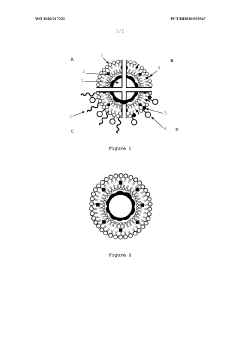
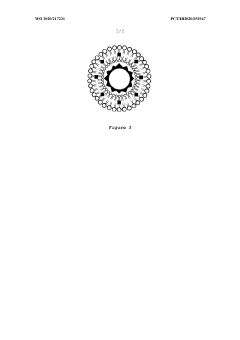
- Development of magnetoliposomes with a lipid bilayer surrounding superparamagnetic nanoparticles made of alkaline earth metals, specifically magnesium, calcium, and strontium ferrites, which are synthesized independently of the calcination step to maintain magnetic properties and have a well-defined morphology, size distribution, and shape anisotropy for enhanced magnetic response and drug delivery.
Computational Resources for MD Simulations
Molecular dynamics (MD) simulations of lipid bilayers, including those involving ethyl propanoate, require substantial computational resources due to the complexity and scale of the systems involved. High-performance computing (HPC) facilities are essential for conducting these simulations efficiently and accurately. Many research institutions and universities provide access to supercomputing clusters specifically designed for MD simulations.
Cloud computing platforms have also become increasingly popular for MD simulations. Services like Amazon Web Services (AWS), Google Cloud Platform (GCP), and Microsoft Azure offer scalable resources that can be tailored to the specific needs of lipid bilayer simulations. These platforms provide flexibility in terms of hardware configurations and software environments, allowing researchers to optimize their computational setup for ethyl propanoate and lipid bilayer interactions.
GPU acceleration has revolutionized MD simulations, significantly reducing computation times. NVIDIA's CUDA-enabled GPUs are widely used in conjunction with MD software packages like GROMACS, NAMD, and AMBER. For simulations involving ethyl propanoate in lipid bilayers, GPU acceleration can be particularly beneficial due to the large number of atoms and long simulation times often required.
Specialized MD software packages play a crucial role in utilizing computational resources effectively. GROMACS, known for its high performance on both CPUs and GPUs, is frequently used for lipid bilayer simulations. NAMD, developed by the Theoretical and Computational Biophysics Group at the University of Illinois at Urbana-Champaign, is another popular choice, offering excellent scalability across multiple processors.
Data management and storage solutions are vital components of the computational infrastructure for MD simulations. High-speed, large-capacity storage systems are necessary to handle the vast amounts of trajectory data generated during simulations of ethyl propanoate in lipid bilayers. Parallel file systems like Lustre or BeeGFS are often employed in HPC environments to manage these data-intensive workloads efficiently.
Visualization tools form an essential part of the computational ecosystem for analyzing MD simulation results. Software like VMD (Visual Molecular Dynamics) and PyMOL enable researchers to visualize and interpret the complex interactions between ethyl propanoate and lipid bilayers. These tools often leverage GPU acceleration to render large molecular systems smoothly, enhancing the analysis process.
Cloud computing platforms have also become increasingly popular for MD simulations. Services like Amazon Web Services (AWS), Google Cloud Platform (GCP), and Microsoft Azure offer scalable resources that can be tailored to the specific needs of lipid bilayer simulations. These platforms provide flexibility in terms of hardware configurations and software environments, allowing researchers to optimize their computational setup for ethyl propanoate and lipid bilayer interactions.
GPU acceleration has revolutionized MD simulations, significantly reducing computation times. NVIDIA's CUDA-enabled GPUs are widely used in conjunction with MD software packages like GROMACS, NAMD, and AMBER. For simulations involving ethyl propanoate in lipid bilayers, GPU acceleration can be particularly beneficial due to the large number of atoms and long simulation times often required.
Specialized MD software packages play a crucial role in utilizing computational resources effectively. GROMACS, known for its high performance on both CPUs and GPUs, is frequently used for lipid bilayer simulations. NAMD, developed by the Theoretical and Computational Biophysics Group at the University of Illinois at Urbana-Champaign, is another popular choice, offering excellent scalability across multiple processors.
Data management and storage solutions are vital components of the computational infrastructure for MD simulations. High-speed, large-capacity storage systems are necessary to handle the vast amounts of trajectory data generated during simulations of ethyl propanoate in lipid bilayers. Parallel file systems like Lustre or BeeGFS are often employed in HPC environments to manage these data-intensive workloads efficiently.
Visualization tools form an essential part of the computational ecosystem for analyzing MD simulation results. Software like VMD (Visual Molecular Dynamics) and PyMOL enable researchers to visualize and interpret the complex interactions between ethyl propanoate and lipid bilayers. These tools often leverage GPU acceleration to render large molecular systems smoothly, enhancing the analysis process.
Validation of MD Simulation Results
Validation of molecular dynamics (MD) simulation results is a critical step in ensuring the reliability and accuracy of computational studies on ethyl propanoate in lipid bilayers. This process involves comparing simulation outcomes with experimental data and established theoretical models to confirm the validity of the computational approach.
One primary method for validating MD simulations is through the comparison of structural properties. For lipid bilayers containing ethyl propanoate, this includes analyzing parameters such as bilayer thickness, area per lipid, and order parameters. These simulated values should align closely with experimental measurements obtained through techniques like X-ray scattering or NMR spectroscopy. Any significant deviations may indicate potential issues with the simulation parameters or force fields used.
Dynamic properties also play a crucial role in validation. Diffusion coefficients of ethyl propanoate within the lipid bilayer, as well as lipid lateral diffusion rates, can be calculated from MD trajectories and compared to experimental values obtained through fluorescence recovery after photobleaching (FRAP) or pulsed-field gradient NMR. Additionally, the rotational correlation times of specific molecular groups can be assessed and validated against NMR relaxation measurements.
Thermodynamic properties provide another avenue for validation. The free energy of transfer for ethyl propanoate between water and the lipid bilayer can be computed using methods like umbrella sampling or thermodynamic integration. These results should be consistent with experimentally determined partition coefficients. Furthermore, the temperature-dependent behavior of the system, including phase transitions, should be accurately reproduced in the simulations.
Spectroscopic properties offer yet another validation approach. Simulated infrared and Raman spectra of the lipid-ethyl propanoate system can be generated and compared with experimental spectroscopic data. This comparison helps ensure that the molecular interactions and dynamics are accurately represented in the simulation.
Lastly, the reproducibility of results across different simulation packages and force fields is an important aspect of validation. Running parallel simulations using alternative software or parameter sets can help identify any systematic biases or errors in the computational approach. Consistency across these various methods strengthens the overall validity of the simulation results.
By employing these diverse validation techniques, researchers can establish a high degree of confidence in their MD simulations of ethyl propanoate in lipid bilayers. This comprehensive approach ensures that the computational results provide meaningful insights into the molecular-level behavior of these complex systems, supporting further advancements in fields such as drug delivery, membrane biophysics, and materials science.
One primary method for validating MD simulations is through the comparison of structural properties. For lipid bilayers containing ethyl propanoate, this includes analyzing parameters such as bilayer thickness, area per lipid, and order parameters. These simulated values should align closely with experimental measurements obtained through techniques like X-ray scattering or NMR spectroscopy. Any significant deviations may indicate potential issues with the simulation parameters or force fields used.
Dynamic properties also play a crucial role in validation. Diffusion coefficients of ethyl propanoate within the lipid bilayer, as well as lipid lateral diffusion rates, can be calculated from MD trajectories and compared to experimental values obtained through fluorescence recovery after photobleaching (FRAP) or pulsed-field gradient NMR. Additionally, the rotational correlation times of specific molecular groups can be assessed and validated against NMR relaxation measurements.
Thermodynamic properties provide another avenue for validation. The free energy of transfer for ethyl propanoate between water and the lipid bilayer can be computed using methods like umbrella sampling or thermodynamic integration. These results should be consistent with experimentally determined partition coefficients. Furthermore, the temperature-dependent behavior of the system, including phase transitions, should be accurately reproduced in the simulations.
Spectroscopic properties offer yet another validation approach. Simulated infrared and Raman spectra of the lipid-ethyl propanoate system can be generated and compared with experimental spectroscopic data. This comparison helps ensure that the molecular interactions and dynamics are accurately represented in the simulation.
Lastly, the reproducibility of results across different simulation packages and force fields is an important aspect of validation. Running parallel simulations using alternative software or parameter sets can help identify any systematic biases or errors in the computational approach. Consistency across these various methods strengthens the overall validity of the simulation results.
By employing these diverse validation techniques, researchers can establish a high degree of confidence in their MD simulations of ethyl propanoate in lipid bilayers. This comprehensive approach ensures that the computational results provide meaningful insights into the molecular-level behavior of these complex systems, supporting further advancements in fields such as drug delivery, membrane biophysics, and materials science.
Unlock deeper insights with Patsnap Eureka Quick Research — get a full tech report to explore trends and direct your research. Try now!
Generate Your Research Report Instantly with AI Agent
Supercharge your innovation with Patsnap Eureka AI Agent Platform!