Solid State Battery Breakthrough and its Impact on Semiconductor Technologies
OCT 24, 20259 MIN READ
Generate Your Research Report Instantly with AI Agent
Patsnap Eureka helps you evaluate technical feasibility & market potential.
Solid State Battery Evolution and Objectives
Solid state batteries represent a revolutionary advancement in energy storage technology, evolving from traditional lithium-ion batteries that use liquid electrolytes. The development trajectory began in the 1970s with initial research into solid electrolytes, but significant progress has only materialized in the past decade. This evolution has been driven by increasing demands for higher energy density, improved safety, and longer lifespan in battery technologies across multiple industries, particularly in electric vehicles and portable electronics.
The fundamental shift from liquid to solid electrolytes addresses critical limitations of conventional batteries, including dendrite formation, thermal runaway risks, and energy density constraints. Early solid-state designs faced challenges with ion conductivity at room temperature, manufacturing scalability, and interface stability between electrodes and electrolytes. Recent breakthroughs in materials science, particularly in ceramic and polymer-based solid electrolytes, have overcome many of these obstacles.
Current research objectives focus on achieving commercial viability through cost reduction and manufacturing scalability. Key technical goals include enhancing ionic conductivity to match or exceed liquid electrolytes, extending cycle life beyond 1,000 full charge-discharge cycles, and enabling operation across wider temperature ranges (-20°C to 80°C). Additionally, researchers aim to increase energy density to over 500 Wh/kg, nearly double that of current lithium-ion technologies.
The semiconductor industry intersects with solid-state battery development in several critical areas. Advanced manufacturing techniques from semiconductor fabrication, such as thin-film deposition and precise material layering, are being adapted for solid-state battery production. This technological convergence creates opportunities for integrated power solutions in semiconductor devices, potentially enabling on-chip energy storage with superior performance characteristics.
Looking forward, the roadmap for solid-state battery technology includes achieving cost parity with conventional lithium-ion batteries by 2025-2027, followed by widespread commercial adoption across multiple sectors by 2030. The ultimate objective is to develop "beyond lithium" solid-state technologies incorporating alternative materials like sodium, magnesium, or sulfur to further enhance performance while reducing reliance on scarce resources.
This technological evolution carries significant implications for sustainable energy transition, potentially accelerating electric vehicle adoption and enabling more efficient renewable energy storage solutions. The synergy between solid-state battery advancements and semiconductor technologies promises to reshape multiple industries while addressing critical energy storage challenges of the 21st century.
The fundamental shift from liquid to solid electrolytes addresses critical limitations of conventional batteries, including dendrite formation, thermal runaway risks, and energy density constraints. Early solid-state designs faced challenges with ion conductivity at room temperature, manufacturing scalability, and interface stability between electrodes and electrolytes. Recent breakthroughs in materials science, particularly in ceramic and polymer-based solid electrolytes, have overcome many of these obstacles.
Current research objectives focus on achieving commercial viability through cost reduction and manufacturing scalability. Key technical goals include enhancing ionic conductivity to match or exceed liquid electrolytes, extending cycle life beyond 1,000 full charge-discharge cycles, and enabling operation across wider temperature ranges (-20°C to 80°C). Additionally, researchers aim to increase energy density to over 500 Wh/kg, nearly double that of current lithium-ion technologies.
The semiconductor industry intersects with solid-state battery development in several critical areas. Advanced manufacturing techniques from semiconductor fabrication, such as thin-film deposition and precise material layering, are being adapted for solid-state battery production. This technological convergence creates opportunities for integrated power solutions in semiconductor devices, potentially enabling on-chip energy storage with superior performance characteristics.
Looking forward, the roadmap for solid-state battery technology includes achieving cost parity with conventional lithium-ion batteries by 2025-2027, followed by widespread commercial adoption across multiple sectors by 2030. The ultimate objective is to develop "beyond lithium" solid-state technologies incorporating alternative materials like sodium, magnesium, or sulfur to further enhance performance while reducing reliance on scarce resources.
This technological evolution carries significant implications for sustainable energy transition, potentially accelerating electric vehicle adoption and enabling more efficient renewable energy storage solutions. The synergy between solid-state battery advancements and semiconductor technologies promises to reshape multiple industries while addressing critical energy storage challenges of the 21st century.
Market Analysis for Next-Generation Energy Storage
The global energy storage market is experiencing unprecedented growth, driven by the increasing adoption of renewable energy sources and the electrification of transportation. The market for next-generation energy storage solutions is projected to reach $546 billion by 2035, with a compound annual growth rate of 12.3% from 2023 to 2035. Solid-state batteries represent one of the most promising segments within this market, with forecasts suggesting they could capture up to 25% of the total battery market by 2030.
Consumer electronics currently dominates the demand for advanced energy storage solutions, accounting for approximately 38% of the market share. However, electric vehicles are rapidly becoming the primary growth driver, with demand expected to increase by 300% over the next decade. Grid storage applications are also expanding significantly, particularly in regions with high renewable energy penetration such as Europe, California, and parts of Asia.
Regionally, Asia-Pacific leads the market with 45% share, primarily due to the strong manufacturing base in China, Japan, and South Korea. North America follows with 28%, while Europe accounts for 22% of the global market. The remaining 5% is distributed across other regions, with notable growth in the Middle East and Africa.
The solid-state battery segment is attracting substantial investment, with venture capital funding exceeding $8.7 billion in 2022 alone. Major automotive manufacturers have committed over $30 billion to solid-state battery development programs, recognizing their potential to revolutionize electric vehicle performance and safety.
Market analysis indicates that the integration of solid-state batteries with semiconductor technologies is creating new market opportunities. The enhanced power management capabilities enabled by advanced semiconductors could improve battery efficiency by up to 30%, extending the operational life of energy storage systems and reducing total ownership costs.
Consumer willingness to pay a premium for longer-lasting, faster-charging batteries remains strong, with surveys indicating that 67% of potential electric vehicle buyers would pay 15-20% more for vehicles equipped with solid-state batteries. This premium pricing potential is driving significant commercial interest in accelerating technology development.
Market barriers include scaling manufacturing processes, securing critical materials supply chains, and addressing regulatory uncertainties. The dependency on rare earth materials presents a potential constraint, with lithium, cobalt, and nickel supplies facing increasing pressure as demand grows. However, solid-state technologies may reduce dependency on some of these materials, potentially alleviating supply chain vulnerabilities.
Consumer electronics currently dominates the demand for advanced energy storage solutions, accounting for approximately 38% of the market share. However, electric vehicles are rapidly becoming the primary growth driver, with demand expected to increase by 300% over the next decade. Grid storage applications are also expanding significantly, particularly in regions with high renewable energy penetration such as Europe, California, and parts of Asia.
Regionally, Asia-Pacific leads the market with 45% share, primarily due to the strong manufacturing base in China, Japan, and South Korea. North America follows with 28%, while Europe accounts for 22% of the global market. The remaining 5% is distributed across other regions, with notable growth in the Middle East and Africa.
The solid-state battery segment is attracting substantial investment, with venture capital funding exceeding $8.7 billion in 2022 alone. Major automotive manufacturers have committed over $30 billion to solid-state battery development programs, recognizing their potential to revolutionize electric vehicle performance and safety.
Market analysis indicates that the integration of solid-state batteries with semiconductor technologies is creating new market opportunities. The enhanced power management capabilities enabled by advanced semiconductors could improve battery efficiency by up to 30%, extending the operational life of energy storage systems and reducing total ownership costs.
Consumer willingness to pay a premium for longer-lasting, faster-charging batteries remains strong, with surveys indicating that 67% of potential electric vehicle buyers would pay 15-20% more for vehicles equipped with solid-state batteries. This premium pricing potential is driving significant commercial interest in accelerating technology development.
Market barriers include scaling manufacturing processes, securing critical materials supply chains, and addressing regulatory uncertainties. The dependency on rare earth materials presents a potential constraint, with lithium, cobalt, and nickel supplies facing increasing pressure as demand grows. However, solid-state technologies may reduce dependency on some of these materials, potentially alleviating supply chain vulnerabilities.
Technical Barriers and Global Development Status
Solid state battery technology faces several significant technical barriers that have hindered its widespread commercial adoption. The primary challenge remains the solid-state electrolyte's ionic conductivity, which typically falls below that of liquid electrolytes at room temperature. This conductivity gap necessitates operation at elevated temperatures to achieve comparable performance, limiting practical applications. Additionally, the solid-state interface between electrodes and electrolytes presents complex stability issues, with mechanical stress during charging and discharging cycles leading to contact loss and performance degradation over time.
Manufacturing scalability represents another substantial hurdle. Current production methods for solid electrolytes are predominantly laboratory-scale processes that prove difficult to translate to mass production environments. The precision required for uniform thin-film deposition and the specialized equipment needed for high-temperature sintering processes significantly increase production costs compared to conventional lithium-ion batteries.
Material compatibility issues further complicate development efforts. Many promising solid electrolytes react unfavorably with high-capacity electrode materials, particularly at the lithium metal anode interface where dendrite formation remains problematic despite the solid barrier. These reactions create resistive layers that impede ion transport and diminish overall battery performance.
Globally, solid state battery development exhibits distinct regional characteristics. Japan maintains leadership in fundamental research and patents, with companies like Toyota and Panasonic making significant investments in sulfide-based electrolytes. South Korea focuses on oxide-based systems, with Samsung and LG Chem advancing manufacturing techniques for thin-film solid electrolytes compatible with semiconductor fabrication processes.
The United States demonstrates strength in university-industry partnerships, with notable progress in polymer-ceramic composite electrolytes through programs funded by the Department of Energy. European development centers around Germany and France, where automotive manufacturers have established dedicated research facilities targeting solid state technologies specifically designed for electric vehicles.
China has rapidly accelerated its position through substantial government investment in both research institutions and manufacturing infrastructure, particularly focusing on scaling production technologies. This global landscape reveals a technology at different maturity levels across regions, with Japan and South Korea generally leading in patents and prototype demonstrations, while China advances rapidly in manufacturing capability.
The semiconductor industry's involvement has intensified recently, with companies leveraging their expertise in thin-film deposition, nanoscale material engineering, and precision manufacturing to address solid state battery challenges. This convergence has accelerated development of integrated power solutions that could eventually enable on-chip energy storage for advanced semiconductor applications.
Manufacturing scalability represents another substantial hurdle. Current production methods for solid electrolytes are predominantly laboratory-scale processes that prove difficult to translate to mass production environments. The precision required for uniform thin-film deposition and the specialized equipment needed for high-temperature sintering processes significantly increase production costs compared to conventional lithium-ion batteries.
Material compatibility issues further complicate development efforts. Many promising solid electrolytes react unfavorably with high-capacity electrode materials, particularly at the lithium metal anode interface where dendrite formation remains problematic despite the solid barrier. These reactions create resistive layers that impede ion transport and diminish overall battery performance.
Globally, solid state battery development exhibits distinct regional characteristics. Japan maintains leadership in fundamental research and patents, with companies like Toyota and Panasonic making significant investments in sulfide-based electrolytes. South Korea focuses on oxide-based systems, with Samsung and LG Chem advancing manufacturing techniques for thin-film solid electrolytes compatible with semiconductor fabrication processes.
The United States demonstrates strength in university-industry partnerships, with notable progress in polymer-ceramic composite electrolytes through programs funded by the Department of Energy. European development centers around Germany and France, where automotive manufacturers have established dedicated research facilities targeting solid state technologies specifically designed for electric vehicles.
China has rapidly accelerated its position through substantial government investment in both research institutions and manufacturing infrastructure, particularly focusing on scaling production technologies. This global landscape reveals a technology at different maturity levels across regions, with Japan and South Korea generally leading in patents and prototype demonstrations, while China advances rapidly in manufacturing capability.
The semiconductor industry's involvement has intensified recently, with companies leveraging their expertise in thin-film deposition, nanoscale material engineering, and precision manufacturing to address solid state battery challenges. This convergence has accelerated development of integrated power solutions that could eventually enable on-chip energy storage for advanced semiconductor applications.
Current Solid-State Electrolyte Solutions
01 Solid-state electrolyte materials and compositions
Solid-state batteries utilize various electrolyte materials to enable ion transport between electrodes without liquid components. These materials include ceramic electrolytes, polymer electrolytes, and composite electrolytes that combine different materials for enhanced performance. The composition of these electrolytes is critical for achieving high ionic conductivity, mechanical stability, and compatibility with electrode materials, which directly impacts battery performance and safety.- Solid-state electrolyte materials and compositions: Solid-state batteries utilize various electrolyte materials to enable ion transport between electrodes without liquid components. These materials include ceramic electrolytes, polymer electrolytes, and composite electrolytes that combine different materials for enhanced performance. The composition of these electrolytes is critical for achieving high ionic conductivity, mechanical stability, and electrochemical stability across a wide temperature range, which directly impacts the overall battery performance and safety.
- Interface engineering and electrode-electrolyte contact optimization: A critical challenge in solid-state batteries is managing the interface between the solid electrolyte and electrodes. Interface engineering techniques focus on reducing contact resistance, preventing unwanted chemical reactions, and maintaining physical contact during cycling. Methods include surface coatings, buffer layers, and specialized manufacturing processes that enhance the electrode-electrolyte interface stability, which is essential for long cycle life and high-rate capability in solid-state batteries.
- Manufacturing processes and assembly techniques: The production of solid-state batteries requires specialized manufacturing processes that differ significantly from conventional liquid-electrolyte battery production. These include dry processing methods, hot pressing, tape casting, and advanced deposition techniques. The assembly process must address challenges such as achieving uniform layers, maintaining proper component alignment, and creating effective seals while ensuring scalability for commercial production.
- Cathode and anode materials for solid-state applications: Electrode materials for solid-state batteries must be specifically designed to function effectively with solid electrolytes. High-capacity cathode materials like lithium nickel manganese cobalt oxide (NMC) and lithium iron phosphate (LFP) are being adapted for solid-state configurations. Similarly, anode materials range from lithium metal to silicon and graphite variants that are compatible with solid electrolytes. These materials must maintain structural stability while allowing efficient ion transport at the solid-solid interfaces.
- Safety enhancements and thermal management: Solid-state batteries offer inherent safety advantages over liquid-electrolyte batteries by eliminating flammable components. However, they still require thermal management systems to prevent overheating during fast charging and high-power applications. Innovations in this area include specialized battery pack designs, heat dissipation structures, and monitoring systems that ensure safe operation across various conditions while maximizing the inherent safety benefits of the solid-state architecture.
02 Electrode-electrolyte interface engineering
The interface between electrodes and solid electrolytes represents a critical challenge in solid-state battery development. Engineering approaches focus on reducing interfacial resistance, enhancing contact area, and preventing unwanted chemical reactions. Techniques include surface coatings, buffer layers, and specialized manufacturing processes that create stable interfaces while maintaining efficient ion transport across boundaries, ultimately improving battery cycle life and performance.Expand Specific Solutions03 Manufacturing methods for solid-state batteries
Advanced manufacturing techniques are essential for producing high-performance solid-state batteries at scale. These methods include dry and wet processing of materials, specialized pressing and sintering techniques, thin-film deposition, and novel assembly approaches. Manufacturing innovations focus on creating uniform layers, ensuring good interfacial contact, and developing processes that can be scaled for commercial production while maintaining quality and performance.Expand Specific Solutions04 Anode and cathode materials for solid-state batteries
Electrode materials for solid-state batteries are specifically designed to work with solid electrolytes and overcome challenges unique to all-solid configurations. Anode materials include lithium metal, silicon-based composites, and graphite derivatives modified for solid-state applications. Cathode developments focus on high-energy materials with improved stability against solid electrolytes, often incorporating protective coatings or dopants to enhance performance and prevent degradation during cycling.Expand Specific Solutions05 Battery architecture and cell design
The overall architecture and design of solid-state battery cells significantly impact their performance, safety, and manufacturability. Innovations include novel stacking arrangements, pressure management systems, thermal management solutions, and packaging designs that accommodate the unique properties of solid components. Cell designs must address challenges like volume changes during cycling, mechanical stress distribution, and efficient current collection while maximizing energy density and minimizing inactive components.Expand Specific Solutions
Leading Companies and Competitive Landscape
Solid state battery technology is currently in the early growth phase, with a projected market size of $6-8 billion by 2030. The competitive landscape is characterized by diverse players including established electronics manufacturers (Murata, Samsung Electro-Mechanics), automotive companies (Honda, Hyundai, Kia), and specialized battery developers (QuantumScape, Solid Power). Technical maturity varies significantly across companies, with QuantumScape and Solid Power leading in dedicated solid-state battery development, while traditional semiconductor players like NXP and Toshiba are leveraging their expertise to address integration challenges. Research institutions such as Fraunhofer-Gesellschaft and CNRS are contributing fundamental breakthroughs, creating a dynamic ecosystem where cross-industry collaboration is increasingly vital for commercialization success.
Uchicago Argonne LLC
Technical Solution: Argonne National Laboratory has developed advanced solid-state electrolyte materials focusing on oxide and sulfide-based systems for next-generation batteries. Their research includes novel composite electrolytes that combine the mechanical strength of oxides with the high ionic conductivity of sulfides. Argonne's scientists have pioneered the use of atomic layer deposition (ALD) to create ultra-thin protective coatings at the electrode-electrolyte interfaces, addressing one of the key challenges in solid-state battery technology. Their materials science approach has yielded solid electrolytes with room temperature ionic conductivities approaching 10 mS/cm, comparable to liquid electrolytes. Argonne has also developed advanced characterization techniques including in-situ X-ray tomography and neutron imaging to visualize and understand degradation mechanisms in solid-state batteries during operation. Their computational modeling capabilities have enabled the prediction of new electrolyte compositions with optimized properties, accelerating the discovery process for improved solid-state battery materials.
Strengths: World-class research facilities enabling fundamental understanding of solid-state battery mechanisms; multidisciplinary approach combining materials science, electrochemistry, and computational modeling; strong partnerships with industry for technology transfer. Weaknesses: As a research institution, faces challenges in scaling technologies to commercial production; research-focused approach may prioritize scientific discovery over manufacturing practicality; longer timeline to market compared to dedicated battery manufacturers.
Svolt Energy Technology Co., Ltd.
Technical Solution: Svolt has developed a hybrid solid-state battery technology that combines the advantages of conventional lithium-ion batteries with solid-state components. Their approach utilizes a semi-solid electrolyte system that maintains high ionic conductivity while improving safety characteristics compared to fully liquid systems. Svolt's technology incorporates a proprietary cathode material with higher nickel content (over 80%) to achieve energy densities exceeding 350 Wh/kg. The company has invested in advanced manufacturing processes that enable the production of large-format solid-state cells suitable for automotive applications. Their solid-state technology features a modified interface layer between the cathode and electrolyte that reduces interfacial resistance, a common challenge in solid-state systems. Svolt has also developed specialized packaging techniques that accommodate the volume changes during cycling while maintaining the mechanical integrity of the solid-state components. The company has announced plans to scale production of their solid-state batteries to gigawatt-hour capacity by 2025, positioning them as a significant player in the automotive battery market.
Strengths: Practical hybrid approach that balances performance with manufacturability; established manufacturing capabilities that can be adapted to solid-state production; strong automotive industry connections for market entry; competitive energy density. Weaknesses: Hybrid approach may not deliver the full safety and energy density benefits of true solid-state technology; relatively new entrant to solid-state technology compared to some competitors; potential intellectual property limitations in a crowded field.
Key Patents and Scientific Breakthroughs
Solid state battery, battery pack, vehicle, power storage system, electric tool and electronic apparatus
PatentWO2018092370A1
Innovation
- Incorporating materials with a glass transition point below 500°C in the positive electrode, negative electrode, current collecting, solid electrolyte, and insulating layers, with a volume ratio of 10-60% and minimizing the difference between maximum and minimum content to reduce thermal stress and prevent deformation.


High-voltage lithium-ion battery with a wide electrochemical window of polymer electrolytes
PatentPendingUS20250096321A1
Innovation
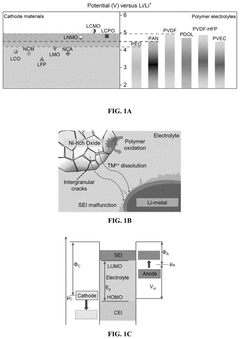
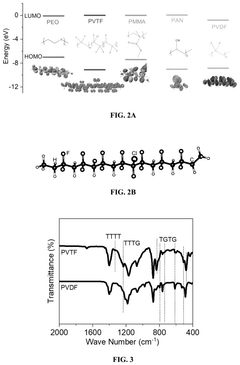
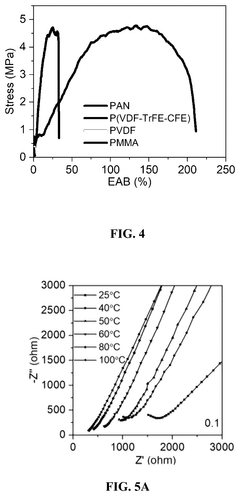
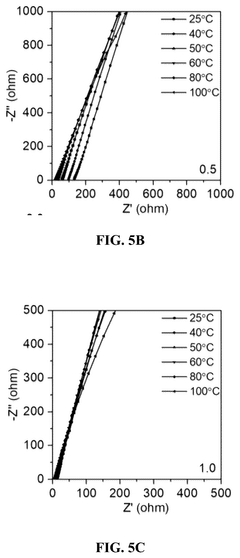
- A PVTF-based solid polymer electrolyte is developed, incorporating a polymer matrix with a sacrificial additive like lithium difluorophosphate, which expands the electrochemical window to 5.68 V and stabilizes Ni-rich cathodes, enabling consistent cycling performance and high-capacity retention.
Semiconductor Integration Opportunities
The integration of solid-state battery technology with semiconductor manufacturing processes presents unprecedented opportunities for both industries. As semiconductor fabrication facilities already possess many of the tools and expertise required for solid-state battery production, there exists significant potential for manufacturing synergies. The similar thin-film deposition techniques used in both fields could enable semiconductor companies to diversify their product portfolios by incorporating solid-state battery production lines with minimal additional capital investment.
The miniaturization capabilities inherent to semiconductor manufacturing can be leveraged to develop micro-batteries for IoT devices, medical implants, and other space-constrained applications. These integrated power solutions could revolutionize device design by eliminating the traditional separation between power source and electronics, leading to more compact and efficient products.
From a materials perspective, the development of solid electrolytes compatible with semiconductor processing opens new avenues for on-chip power integration. Silicon-based solid electrolytes, in particular, show promise for seamless integration with existing semiconductor technologies, potentially enabling power-on-chip solutions that have long been considered the holy grail of portable electronics.
Advanced packaging technologies developed for semiconductor applications, such as through-silicon vias (TSVs) and 3D integration techniques, can be adapted for solid-state battery construction to create higher energy density solutions. This cross-pollination of technologies could accelerate the development of both fields simultaneously.
The integration also presents opportunities for intelligent power management systems that combine battery technology with advanced semiconductor control circuits. These systems could optimize charging cycles, extend battery lifespan, and provide real-time monitoring capabilities far beyond what is possible with current battery technologies.
For semiconductor manufacturers facing market saturation in traditional segments, diversification into solid-state battery components offers a strategic growth path. Companies with expertise in materials science and precision manufacturing are particularly well-positioned to capitalize on this convergence, potentially creating new revenue streams while leveraging existing core competencies.
The development of integrated battery-semiconductor solutions could also enable new computing architectures where power constraints have traditionally limited performance, such as in edge computing devices and autonomous systems requiring long-duration operation without external power sources.
The miniaturization capabilities inherent to semiconductor manufacturing can be leveraged to develop micro-batteries for IoT devices, medical implants, and other space-constrained applications. These integrated power solutions could revolutionize device design by eliminating the traditional separation between power source and electronics, leading to more compact and efficient products.
From a materials perspective, the development of solid electrolytes compatible with semiconductor processing opens new avenues for on-chip power integration. Silicon-based solid electrolytes, in particular, show promise for seamless integration with existing semiconductor technologies, potentially enabling power-on-chip solutions that have long been considered the holy grail of portable electronics.
Advanced packaging technologies developed for semiconductor applications, such as through-silicon vias (TSVs) and 3D integration techniques, can be adapted for solid-state battery construction to create higher energy density solutions. This cross-pollination of technologies could accelerate the development of both fields simultaneously.
The integration also presents opportunities for intelligent power management systems that combine battery technology with advanced semiconductor control circuits. These systems could optimize charging cycles, extend battery lifespan, and provide real-time monitoring capabilities far beyond what is possible with current battery technologies.
For semiconductor manufacturers facing market saturation in traditional segments, diversification into solid-state battery components offers a strategic growth path. Companies with expertise in materials science and precision manufacturing are particularly well-positioned to capitalize on this convergence, potentially creating new revenue streams while leveraging existing core competencies.
The development of integrated battery-semiconductor solutions could also enable new computing architectures where power constraints have traditionally limited performance, such as in edge computing devices and autonomous systems requiring long-duration operation without external power sources.
Manufacturing Scalability Challenges
The scaling of solid-state battery manufacturing represents one of the most significant hurdles in transitioning this promising technology from laboratory to mass production. Current manufacturing processes for solid-state batteries remain largely experimental and small-scale, with production volumes insufficient to meet the demands of commercial applications, particularly in the automotive and consumer electronics sectors.
A primary challenge lies in the fabrication of solid electrolytes with consistent quality and performance characteristics. Unlike liquid electrolytes that can easily conform to various cell geometries, solid electrolytes require precise manufacturing techniques to ensure uniform thickness, density, and interfacial contact with electrodes. The semiconductor industry's expertise in thin-film deposition and precision manufacturing could potentially address these challenges, but adaptation of these techniques for battery production requires substantial process engineering.
Material handling during manufacturing presents another critical obstacle. Many solid electrolyte materials are sensitive to moisture and air, necessitating controlled manufacturing environments similar to semiconductor clean rooms. This requirement significantly increases production costs and complexity, limiting the number of facilities capable of manufacturing these components at scale.
Interface engineering between the solid electrolyte and electrodes remains problematic at industrial scales. Laboratory-scale successes often fail to translate to mass production due to difficulties in maintaining consistent interfacial contact across larger surface areas. The formation of voids or delamination during scaling can lead to performance degradation and safety concerns.
Equipment development for solid-state battery manufacturing lags behind demand. While the semiconductor industry has established equipment suppliers for wafer processing, equivalent specialized equipment for solid-state battery production remains underdeveloped. This equipment gap creates bottlenecks in scaling production and increases capital expenditure requirements for manufacturers.
Cost factors present perhaps the most immediate barrier to commercialization. Current production methods result in solid-state batteries that cost 5-8 times more than conventional lithium-ion batteries. Achieving cost parity will require not only technical innovations but also economies of scale that can only be realized through high-volume production.
Integration with existing manufacturing infrastructure presents another dimension of the scalability challenge. Companies with substantial investments in conventional battery production facilities face difficult decisions regarding retrofitting existing lines versus building entirely new production facilities dedicated to solid-state technology.
A primary challenge lies in the fabrication of solid electrolytes with consistent quality and performance characteristics. Unlike liquid electrolytes that can easily conform to various cell geometries, solid electrolytes require precise manufacturing techniques to ensure uniform thickness, density, and interfacial contact with electrodes. The semiconductor industry's expertise in thin-film deposition and precision manufacturing could potentially address these challenges, but adaptation of these techniques for battery production requires substantial process engineering.
Material handling during manufacturing presents another critical obstacle. Many solid electrolyte materials are sensitive to moisture and air, necessitating controlled manufacturing environments similar to semiconductor clean rooms. This requirement significantly increases production costs and complexity, limiting the number of facilities capable of manufacturing these components at scale.
Interface engineering between the solid electrolyte and electrodes remains problematic at industrial scales. Laboratory-scale successes often fail to translate to mass production due to difficulties in maintaining consistent interfacial contact across larger surface areas. The formation of voids or delamination during scaling can lead to performance degradation and safety concerns.
Equipment development for solid-state battery manufacturing lags behind demand. While the semiconductor industry has established equipment suppliers for wafer processing, equivalent specialized equipment for solid-state battery production remains underdeveloped. This equipment gap creates bottlenecks in scaling production and increases capital expenditure requirements for manufacturers.
Cost factors present perhaps the most immediate barrier to commercialization. Current production methods result in solid-state batteries that cost 5-8 times more than conventional lithium-ion batteries. Achieving cost parity will require not only technical innovations but also economies of scale that can only be realized through high-volume production.
Integration with existing manufacturing infrastructure presents another dimension of the scalability challenge. Companies with substantial investments in conventional battery production facilities face difficult decisions regarding retrofitting existing lines versus building entirely new production facilities dedicated to solid-state technology.
Unlock deeper insights with Patsnap Eureka Quick Research — get a full tech report to explore trends and direct your research. Try now!
Generate Your Research Report Instantly with AI Agent
Supercharge your innovation with Patsnap Eureka AI Agent Platform!