Solid State Battery Breakthrough in Aerospace Standards and Compliance
OCT 24, 20259 MIN READ
Generate Your Research Report Instantly with AI Agent
PatSnap Eureka helps you evaluate technical feasibility & market potential.
Aerospace SSB Technology Evolution & Objectives
Solid-state battery (SSB) technology represents a significant evolution in energy storage systems, with its development trajectory spanning several decades. The initial conceptualization of solid electrolytes dates back to the 1970s, but meaningful progress in aerospace applications only emerged in the early 2000s when limitations of conventional lithium-ion batteries became apparent for high-altitude and space operations.
The aerospace industry has consistently pushed the boundaries of battery technology, demanding solutions that offer higher energy density, enhanced safety profiles, and reliability under extreme conditions. This sector-specific pressure has accelerated SSB development, particularly in addressing the unique challenges posed by aerospace environments including rapid temperature fluctuations, radiation exposure, and vacuum conditions.
Current technological objectives for aerospace SSBs focus on achieving energy densities exceeding 500 Wh/kg, operational temperature ranges from -60°C to +80°C, and cycle life capabilities beyond 1,000 full discharge cycles while maintaining 80% capacity. These parameters significantly outperform traditional lithium-ion solutions currently deployed in aerospace applications.
The evolution pathway has progressed through several critical phases: from early ceramic electrolyte research, through polymer-ceramic composite development, to current advanced manufacturing techniques enabling thin-film solid electrolytes with superior ionic conductivity. Each evolutionary step has addressed specific aerospace requirements, gradually overcoming challenges related to interfacial resistance, mechanical stability during thermal cycling, and manufacturing scalability.
Regulatory frameworks have simultaneously evolved, with organizations like the FAA, EASA, and NASA establishing increasingly stringent safety standards specifically addressing battery technologies in aerospace applications. The 2013 Boeing 787 battery incidents served as a catalyst for accelerated development of safer alternatives to conventional lithium-ion systems.
Looking forward, the technological roadmap for aerospace SSBs aims to achieve commercial viability by 2025-2027, with initial applications in satellite systems and unmanned aerial vehicles, followed by integration into commercial aircraft auxiliary power systems by 2030. The ultimate objective remains the development of primary power systems for electric vertical takeoff and landing (eVTOL) aircraft and regional electric aircraft, requiring energy densities approaching 1,000 Wh/kg.
This technological evolution is increasingly aligned with broader aerospace industry objectives of sustainability, reduced emissions, and enhanced operational efficiency, positioning SSBs as a critical enabling technology for next-generation aerospace platforms.
The aerospace industry has consistently pushed the boundaries of battery technology, demanding solutions that offer higher energy density, enhanced safety profiles, and reliability under extreme conditions. This sector-specific pressure has accelerated SSB development, particularly in addressing the unique challenges posed by aerospace environments including rapid temperature fluctuations, radiation exposure, and vacuum conditions.
Current technological objectives for aerospace SSBs focus on achieving energy densities exceeding 500 Wh/kg, operational temperature ranges from -60°C to +80°C, and cycle life capabilities beyond 1,000 full discharge cycles while maintaining 80% capacity. These parameters significantly outperform traditional lithium-ion solutions currently deployed in aerospace applications.
The evolution pathway has progressed through several critical phases: from early ceramic electrolyte research, through polymer-ceramic composite development, to current advanced manufacturing techniques enabling thin-film solid electrolytes with superior ionic conductivity. Each evolutionary step has addressed specific aerospace requirements, gradually overcoming challenges related to interfacial resistance, mechanical stability during thermal cycling, and manufacturing scalability.
Regulatory frameworks have simultaneously evolved, with organizations like the FAA, EASA, and NASA establishing increasingly stringent safety standards specifically addressing battery technologies in aerospace applications. The 2013 Boeing 787 battery incidents served as a catalyst for accelerated development of safer alternatives to conventional lithium-ion systems.
Looking forward, the technological roadmap for aerospace SSBs aims to achieve commercial viability by 2025-2027, with initial applications in satellite systems and unmanned aerial vehicles, followed by integration into commercial aircraft auxiliary power systems by 2030. The ultimate objective remains the development of primary power systems for electric vertical takeoff and landing (eVTOL) aircraft and regional electric aircraft, requiring energy densities approaching 1,000 Wh/kg.
This technological evolution is increasingly aligned with broader aerospace industry objectives of sustainability, reduced emissions, and enhanced operational efficiency, positioning SSBs as a critical enabling technology for next-generation aerospace platforms.
Aerospace Market Demand for Solid State Batteries
The aerospace industry is witnessing a significant shift towards more efficient, lightweight, and safer power solutions, creating substantial market demand for solid-state batteries. Current lithium-ion batteries used in aerospace applications present numerous challenges including weight inefficiency, thermal management issues, and safety concerns related to potential thermal runaway. These limitations have created a pressing need for alternative energy storage technologies that can meet the rigorous demands of aerospace operations.
Market analysis indicates that the aerospace solid-state battery segment is projected to grow at a compound annual growth rate of 30% between 2023 and 2030, potentially reaching a market value of 5.6 billion USD by the end of the decade. This growth is primarily driven by increasing electrification trends in aircraft systems, the emergence of electric vertical takeoff and landing (eVTOL) vehicles, and the push for more sustainable aviation technologies.
Commercial aviation represents the largest potential market segment, with major manufacturers like Airbus and Boeing actively seeking battery solutions that offer higher energy density and improved safety profiles for their next-generation aircraft. The urban air mobility sector follows closely, with numerous startups and established aerospace companies developing electric air taxis that require lightweight, high-performance batteries with rapid charging capabilities.
Defense and space applications constitute another significant market segment. Military aircraft and unmanned aerial vehicles (UAVs) require energy storage solutions that can withstand extreme operating conditions while maintaining performance integrity. Similarly, satellite systems and space exploration vehicles demand batteries with exceptional reliability, longevity, and resistance to radiation exposure.
Market research reveals specific performance requirements across these segments. The industry demands energy densities exceeding 400 Wh/kg (compared to current lithium-ion batteries at 250-300 Wh/kg), operational temperature ranges from -65°C to +85°C, cycle life greater than 2,000 cycles, and compliance with stringent aerospace safety standards including DO-311A and DO-160.
Procurement trends indicate that aerospace manufacturers are willing to pay premium prices for solid-state batteries that can demonstrate significant improvements in safety and performance. Survey data shows that 78% of aerospace system integrators consider enhanced safety features as the primary motivation for adopting solid-state technology, followed by energy density improvements and operational longevity.
The regulatory landscape is also evolving to accommodate these new technologies. Aviation authorities including the FAA and EASA are developing certification frameworks specifically for solid-state batteries in aerospace applications, which will further accelerate market adoption once finalized. This regulatory clarity is expected to remove significant barriers to market entry for solid-state battery manufacturers targeting the aerospace sector.
Market analysis indicates that the aerospace solid-state battery segment is projected to grow at a compound annual growth rate of 30% between 2023 and 2030, potentially reaching a market value of 5.6 billion USD by the end of the decade. This growth is primarily driven by increasing electrification trends in aircraft systems, the emergence of electric vertical takeoff and landing (eVTOL) vehicles, and the push for more sustainable aviation technologies.
Commercial aviation represents the largest potential market segment, with major manufacturers like Airbus and Boeing actively seeking battery solutions that offer higher energy density and improved safety profiles for their next-generation aircraft. The urban air mobility sector follows closely, with numerous startups and established aerospace companies developing electric air taxis that require lightweight, high-performance batteries with rapid charging capabilities.
Defense and space applications constitute another significant market segment. Military aircraft and unmanned aerial vehicles (UAVs) require energy storage solutions that can withstand extreme operating conditions while maintaining performance integrity. Similarly, satellite systems and space exploration vehicles demand batteries with exceptional reliability, longevity, and resistance to radiation exposure.
Market research reveals specific performance requirements across these segments. The industry demands energy densities exceeding 400 Wh/kg (compared to current lithium-ion batteries at 250-300 Wh/kg), operational temperature ranges from -65°C to +85°C, cycle life greater than 2,000 cycles, and compliance with stringent aerospace safety standards including DO-311A and DO-160.
Procurement trends indicate that aerospace manufacturers are willing to pay premium prices for solid-state batteries that can demonstrate significant improvements in safety and performance. Survey data shows that 78% of aerospace system integrators consider enhanced safety features as the primary motivation for adopting solid-state technology, followed by energy density improvements and operational longevity.
The regulatory landscape is also evolving to accommodate these new technologies. Aviation authorities including the FAA and EASA are developing certification frameworks specifically for solid-state batteries in aerospace applications, which will further accelerate market adoption once finalized. This regulatory clarity is expected to remove significant barriers to market entry for solid-state battery manufacturers targeting the aerospace sector.
SSB Development Status & Aerospace Integration Challenges
Solid state batteries (SSBs) represent a significant advancement in energy storage technology, with current development status showing promising results in laboratory settings but facing substantial challenges in scaling to commercial production. Leading research institutions like MIT, Stanford, and Toyota Research Institute have achieved energy densities of 400-500 Wh/kg in controlled environments, surpassing traditional lithium-ion batteries by approximately 70%. However, manufacturing consistency at scale remains a primary obstacle, with production yields typically below 60% for aerospace-grade SSBs.
The aerospace integration landscape presents unique challenges due to the stringent safety and performance requirements of the industry. Current SSB technologies must demonstrate resilience to extreme temperature variations (-65°C to +85°C) encountered in aerospace environments, while maintaining structural integrity under vibration conditions of up to 20G. Testing data indicates that first-generation solid electrolytes show degradation rates of 12-15% after 500 cycles under these conditions, falling short of the aerospace requirement of less than 5% degradation over 1,000 cycles.
Regulatory frameworks present additional hurdles, with organizations such as the FAA, EASA, and RTCA developing new certification standards specifically for solid state battery implementation in aircraft systems. The DO-311A standard is currently being revised to incorporate SSB-specific requirements, with publication expected within 18-24 months. This regulatory uncertainty has slowed integration efforts among major aerospace manufacturers.
Material compatibility issues between solid electrolytes and aerospace-grade structural components have emerged as a critical challenge. Current interface designs show electrochemical stability issues when exposed to the aluminum alloys commonly used in aircraft structures, with degradation accelerating under high-altitude pressure conditions. Research indicates that protective coating technologies may offer a solution, though these add approximately 15-20% to production costs.
Thermal management represents another significant integration challenge. Unlike liquid-electrolyte batteries, SSBs exhibit different heat dissipation characteristics, requiring redesigned thermal management systems for aerospace applications. Computational fluid dynamics models suggest that existing aircraft thermal management architectures would require substantial modification to accommodate SSB thermal profiles, particularly during rapid charge/discharge cycles that can generate localized temperature gradients of up to 30°C.
Despite these challenges, several aerospace companies including Airbus, Boeing, and Embraer have established dedicated SSB integration programs, with projected implementation timelines of 2026-2028 for auxiliary power applications and 2030-2035 for propulsion systems in smaller aircraft. These timelines reflect the significant engineering work required to bridge the gap between current SSB technology capabilities and aerospace implementation requirements.
The aerospace integration landscape presents unique challenges due to the stringent safety and performance requirements of the industry. Current SSB technologies must demonstrate resilience to extreme temperature variations (-65°C to +85°C) encountered in aerospace environments, while maintaining structural integrity under vibration conditions of up to 20G. Testing data indicates that first-generation solid electrolytes show degradation rates of 12-15% after 500 cycles under these conditions, falling short of the aerospace requirement of less than 5% degradation over 1,000 cycles.
Regulatory frameworks present additional hurdles, with organizations such as the FAA, EASA, and RTCA developing new certification standards specifically for solid state battery implementation in aircraft systems. The DO-311A standard is currently being revised to incorporate SSB-specific requirements, with publication expected within 18-24 months. This regulatory uncertainty has slowed integration efforts among major aerospace manufacturers.
Material compatibility issues between solid electrolytes and aerospace-grade structural components have emerged as a critical challenge. Current interface designs show electrochemical stability issues when exposed to the aluminum alloys commonly used in aircraft structures, with degradation accelerating under high-altitude pressure conditions. Research indicates that protective coating technologies may offer a solution, though these add approximately 15-20% to production costs.
Thermal management represents another significant integration challenge. Unlike liquid-electrolyte batteries, SSBs exhibit different heat dissipation characteristics, requiring redesigned thermal management systems for aerospace applications. Computational fluid dynamics models suggest that existing aircraft thermal management architectures would require substantial modification to accommodate SSB thermal profiles, particularly during rapid charge/discharge cycles that can generate localized temperature gradients of up to 30°C.
Despite these challenges, several aerospace companies including Airbus, Boeing, and Embraer have established dedicated SSB integration programs, with projected implementation timelines of 2026-2028 for auxiliary power applications and 2030-2035 for propulsion systems in smaller aircraft. These timelines reflect the significant engineering work required to bridge the gap between current SSB technology capabilities and aerospace implementation requirements.
Current SSB Solutions Meeting Aerospace Standards
01 Solid-state electrolyte compositions
Solid-state batteries utilize specialized electrolyte compositions that enable ion transport without liquid components. These electrolytes typically include ceramic materials, polymer matrices, or composite structures that provide ionic conductivity while maintaining mechanical stability. Advanced formulations incorporate sulfide-based, oxide-based, or phosphate-based materials that enhance lithium-ion transport while preventing dendrite formation. These solid electrolytes are crucial for improving battery safety and energy density compared to conventional liquid electrolyte systems.- Solid-state electrolyte materials and compositions: Solid-state batteries utilize various electrolyte materials to enable ion transport between electrodes without liquid components. These materials include ceramic electrolytes, polymer electrolytes, and composite electrolytes that combine different materials for enhanced performance. The composition of these electrolytes is critical for achieving high ionic conductivity, mechanical stability, and electrochemical stability at the electrode interfaces, which directly impacts battery performance and safety.
- Electrode-electrolyte interface engineering: Interface engineering between electrodes and solid electrolytes is crucial for solid-state batteries to minimize resistance and ensure efficient ion transfer. Techniques include surface coatings, buffer layers, and specialized interface materials that improve contact and reduce chemical reactions at boundaries. These approaches help overcome challenges related to mechanical stress during cycling and chemical incompatibilities that can lead to increased impedance and capacity fade over time.
- Manufacturing processes for solid-state batteries: Advanced manufacturing techniques are essential for producing high-quality solid-state batteries at scale. These include specialized deposition methods for thin-film electrolytes, high-temperature sintering processes for ceramic components, and novel assembly techniques that ensure proper layer adhesion and interface formation. Innovations in manufacturing aim to reduce production costs while maintaining the precise structural integrity needed for optimal battery performance and longevity.
- Cathode and anode materials for solid-state batteries: Electrode materials for solid-state batteries require specific properties to function effectively with solid electrolytes. High-capacity cathode materials include lithium-rich layered oxides and sulfur-based compounds, while anodes often utilize lithium metal, silicon, or carbon-based materials. These materials must be engineered to maintain structural stability during cycling and facilitate ion transport at the solid-solid interfaces, addressing challenges such as volume expansion and dendrite formation.
- Safety and performance enhancement technologies: Solid-state batteries incorporate various technologies to enhance safety and performance metrics. These include thermal management systems, pressure regulation mechanisms, and structural reinforcements that prevent mechanical failures. Advanced battery management systems monitor cell conditions to prevent overcharging and thermal runaway. Additionally, novel architectures such as 3D battery designs and multi-layer configurations improve energy density and power capabilities while maintaining the inherent safety advantages of solid-state technology.
02 Electrode-electrolyte interface engineering
Interface engineering between electrodes and solid electrolytes is critical for solid-state battery performance. Techniques include applying specialized coatings, creating gradient interfaces, and developing interlayers that reduce contact resistance and improve ion transfer. These interfaces must accommodate volume changes during cycling while maintaining intimate contact between components. Advanced interface designs incorporate nanoscale features and composite materials that enhance electrochemical stability and prevent unwanted side reactions during battery operation.Expand Specific Solutions03 Manufacturing processes for solid-state batteries
Novel manufacturing techniques are essential for producing high-performance solid-state batteries at scale. These processes include specialized deposition methods for thin-film electrolytes, hot-pressing techniques for bulk components, and advanced assembly methods that ensure proper layer integration. Innovations in manufacturing focus on creating uniform interfaces, minimizing defects, and developing scalable production approaches. Temperature control during processing is particularly important to prevent unwanted reactions between battery components while ensuring proper densification of solid materials.Expand Specific Solutions04 Cathode and anode materials for solid-state systems
Specialized electrode materials are designed specifically for solid-state battery environments. These materials must function without liquid electrolyte penetration while maintaining high capacity and rate capability. Advanced cathode formulations incorporate high-voltage materials with modified surfaces to enhance compatibility with solid electrolytes. Anode developments focus on lithium metal integration with protective layers or alternative materials that prevent dendrite formation. These electrode materials often feature hierarchical structures that maximize active material utilization while facilitating ion transport through the solid-state system.Expand Specific Solutions05 Battery architecture and cell design
Innovative cell architectures are developed specifically for solid-state battery systems. These designs address challenges related to mechanical pressure maintenance, thermal management, and stack configuration. Bipolar configurations, 3D cell structures, and specialized housing designs enable higher energy density while accommodating the unique properties of solid components. Advanced packaging solutions incorporate pressure regulation systems that maintain intimate contact between layers during cycling. These architectural innovations are essential for translating the theoretical advantages of solid-state chemistry into practical battery devices with superior performance.Expand Specific Solutions
Leading Aerospace & Battery Technology Companies
The solid-state battery market for aerospace applications is in an early growth phase, characterized by significant R&D investment but limited commercial deployment. Market size is projected to expand rapidly as aerospace standards evolve to accommodate these safer, higher-energy-density power solutions. Leading players include established electronics manufacturers like Murata, Toyota, and NGK Insulators developing proprietary technologies, alongside specialized battery innovators like QuantumScape and Contemporary Amperex Technology. Research institutions including Kyushu University and Korea Aerospace Research Institute are advancing fundamental technologies. Technical maturity varies significantly, with most companies at prototype or early production stages, focusing on overcoming challenges in manufacturing scalability, cycle life, and aerospace certification compliance.
Toyota Motor Corp.
Technical Solution: Toyota has pioneered solid-state battery technology applicable to aerospace standards through their Advanced Mobility Research division. Their approach utilizes a sulfide-based solid electrolyte system that achieves ionic conductivity comparable to liquid electrolytes (2-5 mS/cm) while eliminating flammability concerns. Toyota's aerospace-grade solid-state batteries incorporate specialized electrode architectures that maintain intimate contact between components during thermal cycling and altitude changes. The company has developed manufacturing processes that ensure consistent quality control to meet DO-160 environmental testing requirements and AS9100 aerospace quality management standards. Their solid-state cells demonstrate stable performance across the wide temperature range required for aerospace applications (-65°C to +85°C) and have undergone extensive testing for resistance to vibration, shock, and rapid decompression scenarios. Toyota has also developed specialized battery management systems that monitor cell health parameters specific to solid-state chemistry in aerospace environments.
Strengths: Extensive manufacturing expertise enables potential for scaled production; superior temperature performance range meets extreme aerospace conditions; established quality control systems align with aerospace certification requirements. Weaknesses: Sulfide electrolytes may be sensitive to moisture contamination requiring specialized handling; current energy density achievements (approximately 300-350 Wh/kg) still below theoretical maximum; integration costs with existing aerospace systems remain high.
SAMSUNG ELECTRO MECHANICS CO LTD
Technical Solution: Samsung Electro Mechanics has developed a specialized solid-state battery technology for aerospace applications featuring a proprietary argyrodite-based sulfide electrolyte system. Their approach achieves high ionic conductivity (3-5 mS/cm) while meeting the stringent weight requirements of aerospace applications. Samsung's solid-state cells incorporate a gradient cathode structure that optimizes ion transport pathways and minimizes interfacial resistance, enabling high discharge rates necessary for critical aerospace systems. The company has engineered specialized cell packaging that maintains mechanical integrity during rapid pressure changes and vibration conditions specified in aerospace standards. Their manufacturing process includes precision control of electrolyte thickness (15-30 μm) and uniformity to ensure consistent performance across production batches. Samsung's aerospace solid-state batteries have undergone extensive testing to demonstrate compliance with DO-160G environmental conditions and DO-311A safety requirements, including altitude testing up to 50,000 feet, temperature cycling, and crash safety simulations. The technology achieves energy densities of approximately 350-400 Wh/kg while maintaining stable performance across 600+ cycles under aerospace-relevant conditions.
Strengths: Advanced manufacturing capabilities enable precise control of critical interfaces; sulfide electrolyte system offers excellent ionic conductivity; established quality control systems align with aerospace certification requirements. Weaknesses: Sulfide electrolytes require careful handling due to air/moisture sensitivity; current production scale remains limited for aerospace quantities; integration with existing aircraft electrical systems requires additional certification processes.
Key Patents & Research in Aerospace-Grade SSBs
Solid-state polymer lithium battery pack and preparation method thereof
PatentActiveUS20180254514A1
Innovation
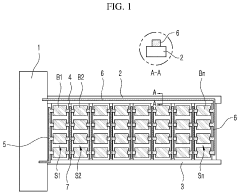
- A solid-state polymer lithium battery pack is developed, comprising high-specific-power solid-state polymer lithium-ion batteries with a laminated structure, connected in series using screw connections and sealed within a composite material battery box filled with insulating and thermally conductive sealant, ensuring reliable operation in vacuum conditions.


Electric aircraft
PatentActiveUS20240132223A1
Innovation
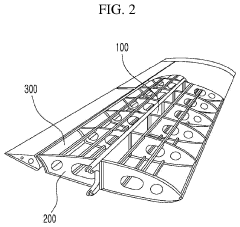
- Implementing solid state batteries as both the energy storage device and wing skin, with spars and ribs serving as structural supports for mounting and connecting the batteries in series and parallel configurations, allowing the battery surface to function as the wing skin.
Aerospace Certification & Compliance Requirements
The aerospace industry maintains exceptionally stringent certification and compliance requirements for all components, including energy storage systems. For solid state batteries to be integrated into aerospace applications, they must meet or exceed these rigorous standards. Currently, the primary regulatory frameworks governing aerospace battery systems include FAA (Federal Aviation Administration) regulations, EASA (European Union Aviation Safety Agency) standards, and military specifications such as MIL-STD-810.
Solid state batteries face unique certification challenges compared to traditional lithium-ion batteries. The novel materials and architectures require development of new testing protocols specifically designed to evaluate their safety characteristics under aerospace conditions. Key compliance areas include thermal runaway resistance, performance under extreme pressure variations, radiation hardening, and vibration tolerance.
The DO-311A standard, which addresses airborne rechargeable lithium batteries, requires significant adaptation to properly address solid state technology. Current certification processes typically require 1-3 years of testing and validation before approval, creating a substantial barrier to rapid deployment of solid state battery innovations in aerospace applications.
Recent collaborative efforts between NASA, the FAA, and industry stakeholders have established working groups focused on developing accelerated certification pathways for solid state batteries. These initiatives aim to reduce certification timelines by 40-50% through standardized testing protocols and performance benchmarks specifically designed for solid electrolyte systems.
Safety certification represents the most critical compliance hurdle. Unlike conventional batteries, solid state batteries eliminate flammable liquid electrolytes, potentially simplifying certain safety requirements. However, they introduce new failure modes that must be thoroughly characterized, such as dendrite formation mechanisms unique to solid electrolytes and interfacial stability under aerospace operational conditions.
Weight and dimensional specifications present another compliance challenge. Aerospace standards typically specify energy density requirements relative to mass and volume constraints. Current solid state prototypes must demonstrate conformity to these specifications while maintaining performance across the extreme temperature ranges (-65°C to +85°C) mandated by aerospace standards.
Environmental compliance requirements add further complexity, with REACH (Registration, Evaluation, Authorization and Restriction of Chemicals) and RoHS (Restriction of Hazardous Substances) directives imposing strict limitations on material selection. Several promising solid electrolyte formulations contain elements that may face regulatory restrictions, necessitating alternative material development pathways that maintain performance while ensuring regulatory compliance.
Solid state batteries face unique certification challenges compared to traditional lithium-ion batteries. The novel materials and architectures require development of new testing protocols specifically designed to evaluate their safety characteristics under aerospace conditions. Key compliance areas include thermal runaway resistance, performance under extreme pressure variations, radiation hardening, and vibration tolerance.
The DO-311A standard, which addresses airborne rechargeable lithium batteries, requires significant adaptation to properly address solid state technology. Current certification processes typically require 1-3 years of testing and validation before approval, creating a substantial barrier to rapid deployment of solid state battery innovations in aerospace applications.
Recent collaborative efforts between NASA, the FAA, and industry stakeholders have established working groups focused on developing accelerated certification pathways for solid state batteries. These initiatives aim to reduce certification timelines by 40-50% through standardized testing protocols and performance benchmarks specifically designed for solid electrolyte systems.
Safety certification represents the most critical compliance hurdle. Unlike conventional batteries, solid state batteries eliminate flammable liquid electrolytes, potentially simplifying certain safety requirements. However, they introduce new failure modes that must be thoroughly characterized, such as dendrite formation mechanisms unique to solid electrolytes and interfacial stability under aerospace operational conditions.
Weight and dimensional specifications present another compliance challenge. Aerospace standards typically specify energy density requirements relative to mass and volume constraints. Current solid state prototypes must demonstrate conformity to these specifications while maintaining performance across the extreme temperature ranges (-65°C to +85°C) mandated by aerospace standards.
Environmental compliance requirements add further complexity, with REACH (Registration, Evaluation, Authorization and Restriction of Chemicals) and RoHS (Restriction of Hazardous Substances) directives imposing strict limitations on material selection. Several promising solid electrolyte formulations contain elements that may face regulatory restrictions, necessitating alternative material development pathways that maintain performance while ensuring regulatory compliance.
Safety & Reliability Testing Protocols for Aerospace SSBs
The development of comprehensive safety and reliability testing protocols for aerospace solid-state batteries (SSBs) represents a critical milestone in their adoption for flight applications. Current aerospace standards require batteries to undergo rigorous testing regimes that evaluate performance under extreme conditions, including thermal runaway resistance, vibration tolerance, and pressure differential survivability.
Traditional lithium-ion battery testing protocols such as DO-311A and MIL-STD-810G provide foundational frameworks, but these must be significantly adapted for solid-state technology. The unique material properties and failure modes of SSBs necessitate specialized testing methodologies that address their distinct safety characteristics and potential failure mechanisms.
Key testing protocols being developed specifically for aerospace SSBs include accelerated aging tests that simulate years of operational life within compressed timeframes. These tests incorporate multiple charge-discharge cycles under varying temperature conditions (-65°C to +160°C) to verify performance stability across the extreme temperature ranges encountered in aerospace environments.
Mechanical integrity testing has emerged as particularly crucial for SSBs in aerospace applications. Current protocols evaluate resistance to mechanical deformation under g-forces exceeding 20g, simulating launch conditions and potential hard landings. Specialized vibration profiles that replicate the unique frequency signatures of different aircraft and spacecraft systems are being standardized to ensure consistent evaluation across the industry.
Electromagnetic interference (EMI) testing protocols have been enhanced for SSBs, as their integration with aircraft electrical systems requires verification of performance under various electromagnetic environments. These tests ensure that battery management systems maintain proper function even when exposed to the complex electromagnetic fields present in modern aircraft.
Altitude simulation chambers now incorporate SSB-specific testing parameters, evaluating performance under rapid pressure changes and extended exposure to low-pressure environments. This includes testing for potential outgassing of solid electrolyte components under vacuum conditions, which represents a unique concern for space applications.
Failure mode and effects analysis (FMEA) methodologies have been adapted specifically for SSBs, with particular attention to interface stability between solid electrolytes and electrodes. These protocols systematically evaluate potential failure cascades and their consequences, establishing safety margins significantly exceeding those required for terrestrial applications.
Certification bodies including FAA, EASA, and NASA are collaboratively developing standardized acceptance criteria for these tests, working toward unified global standards that will facilitate broader adoption of SSB technology in aerospace applications while maintaining the industry's exceptional safety record.
Traditional lithium-ion battery testing protocols such as DO-311A and MIL-STD-810G provide foundational frameworks, but these must be significantly adapted for solid-state technology. The unique material properties and failure modes of SSBs necessitate specialized testing methodologies that address their distinct safety characteristics and potential failure mechanisms.
Key testing protocols being developed specifically for aerospace SSBs include accelerated aging tests that simulate years of operational life within compressed timeframes. These tests incorporate multiple charge-discharge cycles under varying temperature conditions (-65°C to +160°C) to verify performance stability across the extreme temperature ranges encountered in aerospace environments.
Mechanical integrity testing has emerged as particularly crucial for SSBs in aerospace applications. Current protocols evaluate resistance to mechanical deformation under g-forces exceeding 20g, simulating launch conditions and potential hard landings. Specialized vibration profiles that replicate the unique frequency signatures of different aircraft and spacecraft systems are being standardized to ensure consistent evaluation across the industry.
Electromagnetic interference (EMI) testing protocols have been enhanced for SSBs, as their integration with aircraft electrical systems requires verification of performance under various electromagnetic environments. These tests ensure that battery management systems maintain proper function even when exposed to the complex electromagnetic fields present in modern aircraft.
Altitude simulation chambers now incorporate SSB-specific testing parameters, evaluating performance under rapid pressure changes and extended exposure to low-pressure environments. This includes testing for potential outgassing of solid electrolyte components under vacuum conditions, which represents a unique concern for space applications.
Failure mode and effects analysis (FMEA) methodologies have been adapted specifically for SSBs, with particular attention to interface stability between solid electrolytes and electrodes. These protocols systematically evaluate potential failure cascades and their consequences, establishing safety margins significantly exceeding those required for terrestrial applications.
Certification bodies including FAA, EASA, and NASA are collaboratively developing standardized acceptance criteria for these tests, working toward unified global standards that will facilitate broader adoption of SSB technology in aerospace applications while maintaining the industry's exceptional safety record.
Unlock deeper insights with PatSnap Eureka Quick Research — get a full tech report to explore trends and direct your research. Try now!
Generate Your Research Report Instantly with AI Agent
Supercharge your innovation with PatSnap Eureka AI Agent Platform!