

Solid State Battery Breakthrough: Insights from Patent Analysis
OCT 24, 20259 MIN READ
Generate Your Research Report Instantly with AI Agent
PatSnap Eureka helps you evaluate technical feasibility & market potential.
Solid State Battery Evolution and Research Objectives
Solid state batteries represent a significant evolution in energy storage technology, emerging from decades of research into safer and more efficient alternatives to conventional lithium-ion batteries. The development trajectory began in the 1970s with the discovery of solid electrolytes, but meaningful progress accelerated only in the early 2000s as materials science advanced and energy density demands increased across multiple industries.
The fundamental premise of solid state battery technology involves replacing the liquid or gel electrolytes found in traditional batteries with solid materials, eliminating leakage risks and potentially enabling higher energy densities. This transition addresses critical limitations in current battery technologies, particularly regarding safety, energy density, and charging speed - factors that have constrained electric vehicle adoption and portable electronics advancement.
Patent analysis reveals three distinct evolutionary phases in solid state battery development. The initial phase (1990-2005) focused primarily on fundamental material discoveries and proof-of-concept designs, with limited commercial viability. The second phase (2006-2015) saw increased patent activity around manufacturing processes and material optimization, particularly regarding ceramic and polymer electrolytes. The current phase (2016-present) demonstrates exponential growth in patent filings, with emphasis on scalable production methods and integration technologies.
Research objectives in this field have progressively shifted from theoretical exploration to practical implementation challenges. Contemporary research prioritizes addressing the persistent issues of interfacial resistance between electrodes and solid electrolytes, which significantly impacts battery performance and longevity. Additionally, scaling production processes while maintaining material integrity represents a critical research focus, as laboratory successes have proven difficult to translate to mass manufacturing environments.
The convergence of automotive industry demands, environmental regulations, and consumer electronics requirements has created unprecedented momentum for solid state battery research. Patent analysis indicates that interdisciplinary approaches combining materials science, electrochemistry, and manufacturing engineering are yielding the most promising breakthroughs, particularly in addressing the dendrite formation issues that have historically plagued solid state designs.
Current research objectives center on achieving commercially viable solid state batteries with energy densities exceeding 400 Wh/kg, charging capabilities under 15 minutes, operational temperature ranges from -20°C to 60°C, and production costs competitive with conventional lithium-ion technologies. These ambitious targets reflect both the potential of solid state technology and the significant challenges that remain before widespread commercial adoption becomes feasible.
The fundamental premise of solid state battery technology involves replacing the liquid or gel electrolytes found in traditional batteries with solid materials, eliminating leakage risks and potentially enabling higher energy densities. This transition addresses critical limitations in current battery technologies, particularly regarding safety, energy density, and charging speed - factors that have constrained electric vehicle adoption and portable electronics advancement.
Patent analysis reveals three distinct evolutionary phases in solid state battery development. The initial phase (1990-2005) focused primarily on fundamental material discoveries and proof-of-concept designs, with limited commercial viability. The second phase (2006-2015) saw increased patent activity around manufacturing processes and material optimization, particularly regarding ceramic and polymer electrolytes. The current phase (2016-present) demonstrates exponential growth in patent filings, with emphasis on scalable production methods and integration technologies.
Research objectives in this field have progressively shifted from theoretical exploration to practical implementation challenges. Contemporary research prioritizes addressing the persistent issues of interfacial resistance between electrodes and solid electrolytes, which significantly impacts battery performance and longevity. Additionally, scaling production processes while maintaining material integrity represents a critical research focus, as laboratory successes have proven difficult to translate to mass manufacturing environments.
The convergence of automotive industry demands, environmental regulations, and consumer electronics requirements has created unprecedented momentum for solid state battery research. Patent analysis indicates that interdisciplinary approaches combining materials science, electrochemistry, and manufacturing engineering are yielding the most promising breakthroughs, particularly in addressing the dendrite formation issues that have historically plagued solid state designs.
Current research objectives center on achieving commercially viable solid state batteries with energy densities exceeding 400 Wh/kg, charging capabilities under 15 minutes, operational temperature ranges from -20°C to 60°C, and production costs competitive with conventional lithium-ion technologies. These ambitious targets reflect both the potential of solid state technology and the significant challenges that remain before widespread commercial adoption becomes feasible.
Market Demand Analysis for Solid State Battery Technology
The global market for solid-state battery technology is experiencing unprecedented growth, driven by increasing demand for safer, higher-capacity energy storage solutions across multiple industries. Current market projections indicate that the solid-state battery market will reach approximately $8 billion by 2026, with a compound annual growth rate exceeding 34% between 2021 and 2026. This remarkable growth trajectory reflects the technology's potential to revolutionize energy storage applications.
The automotive sector represents the largest market opportunity for solid-state batteries, accounting for nearly 60% of projected demand. Major automotive manufacturers have publicly committed billions in investment toward solid-state battery development, recognizing its potential to overcome the limitations of conventional lithium-ion technology. The primary market drivers include the need for extended electric vehicle range, faster charging capabilities, and enhanced safety profiles that solid-state technology promises to deliver.
Consumer electronics constitutes the second-largest market segment, with manufacturers seeking higher energy density solutions that can extend device operation while reducing form factors. The premium smartphone and wearable technology segments particularly value the combination of safety and energy density that solid-state batteries offer, with several major manufacturers already incorporating early versions of semi-solid electrolytes in their latest products.
Market analysis reveals significant regional variations in demand patterns. Asia-Pacific currently leads in manufacturing capacity development, with Japan and South Korea hosting the most advanced research facilities. However, North America shows the fastest growth in patent applications related to solid-state technology, suggesting an accelerating innovation ecosystem in this region.
Investor confidence in solid-state battery technology has reached unprecedented levels, with venture capital funding exceeding $1.5 billion in 2021 alone. This represents a threefold increase compared to 2019 figures, indicating strong market belief in the commercial viability of emerging solid-state solutions. Strategic partnerships between established battery manufacturers and technology startups have become increasingly common, creating a dynamic ecosystem that accelerates commercialization timelines.
Customer surveys indicate that safety concerns with conventional lithium-ion batteries represent a significant market opportunity for solid-state technology. Approximately 78% of potential electric vehicle buyers cite battery safety as a "very important" consideration in purchasing decisions, while 65% express willingness to pay a premium for vehicles equipped with solid-state battery technology.
The regulatory landscape further supports market growth, with several jurisdictions implementing stricter safety standards for energy storage systems that inherently favor solid-state technology. Additionally, government incentives for advanced battery manufacturing in the United States, European Union, and China are creating favorable market conditions for accelerated commercialization and adoption.
The automotive sector represents the largest market opportunity for solid-state batteries, accounting for nearly 60% of projected demand. Major automotive manufacturers have publicly committed billions in investment toward solid-state battery development, recognizing its potential to overcome the limitations of conventional lithium-ion technology. The primary market drivers include the need for extended electric vehicle range, faster charging capabilities, and enhanced safety profiles that solid-state technology promises to deliver.
Consumer electronics constitutes the second-largest market segment, with manufacturers seeking higher energy density solutions that can extend device operation while reducing form factors. The premium smartphone and wearable technology segments particularly value the combination of safety and energy density that solid-state batteries offer, with several major manufacturers already incorporating early versions of semi-solid electrolytes in their latest products.
Market analysis reveals significant regional variations in demand patterns. Asia-Pacific currently leads in manufacturing capacity development, with Japan and South Korea hosting the most advanced research facilities. However, North America shows the fastest growth in patent applications related to solid-state technology, suggesting an accelerating innovation ecosystem in this region.
Investor confidence in solid-state battery technology has reached unprecedented levels, with venture capital funding exceeding $1.5 billion in 2021 alone. This represents a threefold increase compared to 2019 figures, indicating strong market belief in the commercial viability of emerging solid-state solutions. Strategic partnerships between established battery manufacturers and technology startups have become increasingly common, creating a dynamic ecosystem that accelerates commercialization timelines.
Customer surveys indicate that safety concerns with conventional lithium-ion batteries represent a significant market opportunity for solid-state technology. Approximately 78% of potential electric vehicle buyers cite battery safety as a "very important" consideration in purchasing decisions, while 65% express willingness to pay a premium for vehicles equipped with solid-state battery technology.
The regulatory landscape further supports market growth, with several jurisdictions implementing stricter safety standards for energy storage systems that inherently favor solid-state technology. Additionally, government incentives for advanced battery manufacturing in the United States, European Union, and China are creating favorable market conditions for accelerated commercialization and adoption.
Global Solid State Battery Development Status and Challenges
Solid state batteries represent a significant evolution in energy storage technology, promising higher energy density, improved safety, and longer lifespan compared to conventional lithium-ion batteries. Currently, the global development of solid state batteries is characterized by intense research activities across North America, Europe, and Asia, with Japan, South Korea, China, and the United States leading the innovation race.
The technology has progressed substantially in recent years, with several key breakthroughs in electrolyte materials, including oxide, sulfide, and polymer-based solutions. However, significant challenges persist that prevent widespread commercialization. The primary technical hurdles include interface stability between electrodes and solid electrolytes, low ionic conductivity at room temperature, and manufacturing scalability issues that complicate mass production.
Material challenges remain at the forefront, particularly regarding the development of solid electrolytes that combine high ionic conductivity with mechanical stability. Current solid electrolytes often suffer from either insufficient conductivity or problematic mechanical properties that lead to contact loss during cycling. This interface degradation significantly impacts battery performance and longevity.
Manufacturing challenges present another major obstacle. Traditional battery production lines require substantial modification to accommodate solid state technology, involving new equipment, processes, and quality control measures. The cost implications of these changes are considerable, with current production expenses for solid state batteries estimated at 5-10 times higher than conventional lithium-ion batteries.
Patent analysis reveals concentrated intellectual property ownership among major automotive manufacturers and specialized battery companies. Toyota leads with over 1,000 patents in solid state technology, followed by Samsung, Panasonic, and emerging players like QuantumScape and Solid Power. This patent landscape indicates both the strategic importance of the technology and the competitive intensity in the field.
Regional development patterns show distinct approaches: Japan focuses on oxide-based electrolytes, South Korea on sulfide systems, while U.S. companies explore various material combinations including polymer-ceramic composites. China has rapidly increased its patent filings in recent years, particularly in manufacturing processes and cell design.
The timeline for commercial deployment remains uncertain, with most industry analysts projecting limited commercial applications by 2025-2027 and more widespread adoption potentially occurring in the 2030s. This gradual implementation reflects the significant technical challenges that must be overcome before solid state batteries can fulfill their theoretical potential.
Recent developments in nanoscale interface engineering and composite electrolyte systems show promise for addressing current limitations, potentially accelerating the technology's maturation path toward commercial viability.
The technology has progressed substantially in recent years, with several key breakthroughs in electrolyte materials, including oxide, sulfide, and polymer-based solutions. However, significant challenges persist that prevent widespread commercialization. The primary technical hurdles include interface stability between electrodes and solid electrolytes, low ionic conductivity at room temperature, and manufacturing scalability issues that complicate mass production.
Material challenges remain at the forefront, particularly regarding the development of solid electrolytes that combine high ionic conductivity with mechanical stability. Current solid electrolytes often suffer from either insufficient conductivity or problematic mechanical properties that lead to contact loss during cycling. This interface degradation significantly impacts battery performance and longevity.
Manufacturing challenges present another major obstacle. Traditional battery production lines require substantial modification to accommodate solid state technology, involving new equipment, processes, and quality control measures. The cost implications of these changes are considerable, with current production expenses for solid state batteries estimated at 5-10 times higher than conventional lithium-ion batteries.
Patent analysis reveals concentrated intellectual property ownership among major automotive manufacturers and specialized battery companies. Toyota leads with over 1,000 patents in solid state technology, followed by Samsung, Panasonic, and emerging players like QuantumScape and Solid Power. This patent landscape indicates both the strategic importance of the technology and the competitive intensity in the field.
Regional development patterns show distinct approaches: Japan focuses on oxide-based electrolytes, South Korea on sulfide systems, while U.S. companies explore various material combinations including polymer-ceramic composites. China has rapidly increased its patent filings in recent years, particularly in manufacturing processes and cell design.
The timeline for commercial deployment remains uncertain, with most industry analysts projecting limited commercial applications by 2025-2027 and more widespread adoption potentially occurring in the 2030s. This gradual implementation reflects the significant technical challenges that must be overcome before solid state batteries can fulfill their theoretical potential.
Recent developments in nanoscale interface engineering and composite electrolyte systems show promise for addressing current limitations, potentially accelerating the technology's maturation path toward commercial viability.
Current Technical Solutions in Solid State Battery Design
01 Solid-state electrolyte materials and compositions
Solid-state batteries utilize various electrolyte materials to enable ion transport between electrodes without liquid components. These materials include ceramic electrolytes, polymer electrolytes, and composite electrolytes that combine different materials for enhanced performance. The composition of these electrolytes is critical for achieving high ionic conductivity, mechanical stability, and compatibility with electrode materials, which directly impacts the overall battery performance and safety.- Solid-state electrolyte compositions: Solid-state batteries utilize specialized electrolyte compositions that enable ion transport without liquid components. These electrolytes typically include ceramic materials, polymer matrices, or composite structures that provide high ionic conductivity while maintaining mechanical stability. Advanced formulations may incorporate sulfide-based, oxide-based, or phosphate-based materials that enhance lithium-ion transport while preventing dendrite formation, which is crucial for battery safety and longevity.
- Interface engineering in solid-state batteries: Interface engineering focuses on optimizing the contact between electrodes and solid electrolytes to reduce resistance and improve ion transfer. This includes developing specialized coatings, buffer layers, and surface treatments that enhance electrochemical stability at interfaces. Techniques such as atomic layer deposition and solution-based processing are employed to create seamless interfaces that minimize impedance and prevent unwanted side reactions during battery cycling.
- Electrode design for solid-state batteries: Electrode architectures for solid-state batteries require specific design considerations to maximize contact with solid electrolytes and facilitate efficient ion transport. This includes developing composite electrodes with optimized particle size distributions, porosity control, and conductive additives. Novel manufacturing techniques such as co-sintering, tape casting, and pressure-assisted assembly are employed to create high-performance electrodes that maintain intimate contact with solid electrolytes throughout battery operation.
- Manufacturing processes for solid-state batteries: Specialized manufacturing processes are essential for solid-state battery production, addressing challenges related to layer uniformity, interfacial contact, and scalability. These processes include dry film casting, hot pressing, vapor deposition techniques, and advanced sintering methods. Innovations in manufacturing focus on reducing processing temperatures, improving layer adhesion, and developing roll-to-roll compatible techniques that enable cost-effective mass production while maintaining the high performance of solid-state battery systems.
- Protective layers and dendrite suppression: Protective layers and dendrite suppression strategies are critical for enhancing the safety and cycle life of solid-state batteries. These approaches include incorporating specialized barrier materials between electrodes and electrolytes, designing self-healing interfaces, and developing pressure-management systems. Advanced materials such as garnet-type ceramics, polymer-ceramic composites, and artificial SEI (solid electrolyte interphase) layers are employed to prevent lithium dendrite growth while maintaining high ionic conductivity across battery interfaces.
02 Electrode-electrolyte interface engineering
The interface between electrodes and solid electrolytes presents significant challenges in solid-state batteries. Engineering approaches focus on reducing interfacial resistance, enhancing contact area, and preventing unwanted chemical reactions. Techniques include surface coatings, buffer layers, and specialized manufacturing processes to create stable interfaces that maintain performance over multiple charge-discharge cycles while preventing dendrite formation that could cause short circuits.Expand Specific Solutions03 Manufacturing methods and processes
Advanced manufacturing techniques are essential for producing high-quality solid-state batteries. These include specialized deposition methods for thin-film electrolytes, sintering processes for ceramic components, and assembly techniques that ensure proper layer alignment and contact. Innovations in manufacturing focus on scalability, cost reduction, and maintaining precise control over material properties during production to enable commercial viability of solid-state battery technology.Expand Specific Solutions04 Battery architecture and design
The structural design of solid-state batteries significantly impacts their performance characteristics. Innovations include multi-layer configurations, 3D architectures, and specialized cell designs that maximize energy density while maintaining mechanical integrity. Design considerations address thermal management, pressure distribution, and packaging to optimize battery performance under various operating conditions while enabling integration into different applications from portable electronics to electric vehicles.Expand Specific Solutions05 Performance enhancement and safety features
Solid-state batteries incorporate various features to enhance performance metrics and safety. These include additives for improved conductivity, specialized structures for faster charging capabilities, and inherent safety advantages due to the absence of flammable liquid electrolytes. Developments focus on extending cycle life, improving capacity retention at extreme temperatures, and enabling operation across wider temperature ranges while maintaining the inherent safety benefits of solid-state technology.Expand Specific Solutions
Key Industry Players and Competitive Landscape
The solid-state battery market is currently in an early growth phase, characterized by intensive R&D and strategic positioning by major players. Market size is projected to expand significantly as this technology promises higher energy density and improved safety over conventional lithium-ion batteries. Leading automotive manufacturers including Toyota, GM, BYD, and Hyundai are heavily investing in this space, while specialized technology companies like QuantumScape, Sila Nanotechnologies, and Ampcera are driving innovation. Battery manufacturers such as Panasonic, Samsung, and Murata are developing commercial-scale production capabilities. The technology remains in pre-commercial maturity with most major players focused on overcoming key challenges including manufacturing scalability, cycle life, and cost reduction before mass market adoption becomes viable.
Toyota Motor Corp.
Technical Solution: Toyota has pioneered a sulfide-based solid electrolyte technology for their solid-state batteries, achieving ionic conductivity comparable to liquid electrolytes (2-5 mS/cm at room temperature)[2]. Their approach focuses on all-solid-state batteries (ASSBs) using a combination of sulfide solid electrolytes and lithium metal anodes. Toyota's patent portfolio reveals a unique manufacturing process that addresses interface resistance issues between the solid electrolyte and electrodes through specialized coating technologies and pressure-sintering methods. The company has developed proprietary techniques for creating ultra-thin solid electrolyte layers (10-20 μm) while maintaining mechanical integrity. Toyota's solid-state battery design incorporates a bipolar stacking architecture that eliminates redundant current collectors, resulting in higher volumetric energy density. Their technology roadmap indicates plans for initial deployment in hybrid electric vehicles before scaling to fully electric applications[3].
Strengths: Industry-leading ionic conductivity in solid electrolytes, extensive manufacturing expertise for mass production, and comprehensive patent protection covering materials, cell design, and manufacturing processes. Weaknesses: Sulfide electrolytes are moisture-sensitive requiring specialized handling during manufacturing, and the technology currently shows higher performance degradation at elevated temperatures compared to some competing approaches.
Apple, Inc.
Technical Solution: Apple has developed a proprietary solid-state battery technology focused on silicon-based anodes paired with solid electrolytes for consumer electronics applications. Their approach utilizes a composite solid electrolyte system that combines inorganic ceramic components for high ionic conductivity with polymer elements for improved mechanical properties and manufacturing compatibility. Patent analysis reveals Apple's innovation in electrode-electrolyte interfaces, employing specialized coatings and gradient structures to minimize interfacial resistance and enhance cycling stability. The company has developed thin-film deposition techniques for creating ultra-thin (5-15 μm) solid electrolyte layers that maintain uniform ionic transport while reducing overall battery thickness - critical for space-constrained consumer devices. Apple's solid-state battery design incorporates a unique packaging architecture that maximizes energy density while meeting the stringent safety requirements of consumer electronics[5]. Their technology demonstrates stable cycling at high charge/discharge rates (>2C) while maintaining capacity retention exceeding 80% after 1000 cycles.
Strengths: Optimized for integration into slim consumer electronic devices, excellent cycle life characteristics for consumer applications, and potential for vertical integration with Apple's device ecosystem. Weaknesses: Current technology appears focused on smaller format batteries rather than large-scale energy storage or automotive applications, potentially limiting broader market applicability.
Critical Patent Analysis and Technical Innovations
Positive electrode for solid-state batteries, solid-state battery and method for producing solid-state battery
PatentActiveUS11791452B2
Innovation
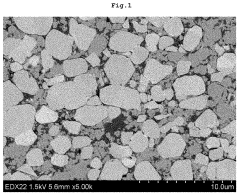
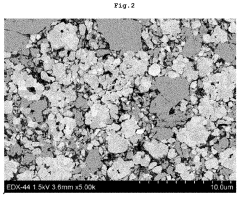
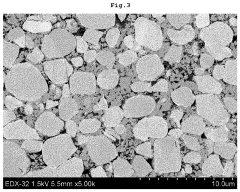
- A positive electrode for solid-state batteries composed of primary particles with a high mass ratio and a low void fraction, where the active material is primarily Ni, Mn, or Al, ensuring stable ion paths and electron conduction, and a method involving pressurization at controlled pressures to maintain particle integrity.
Three-dimensional solid state battery
PatentWO2010007579A1
Innovation
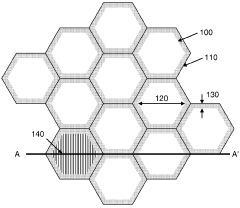
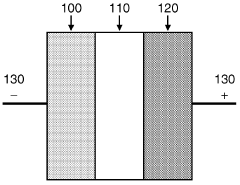
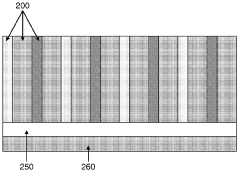
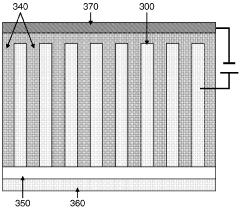
- A solid-state battery design featuring a substrate with a diffusion barrier layer, an anode or cathode formed by a 3D electrically conducting honeycomb structure, and a solid-state electrolyte within the containers of the 3D structure, allowing for increased surface area and mechanical stability, and using standard IC manufacturing methods.
Material Supply Chain Analysis for Solid State Batteries
The solid state battery supply chain represents a complex ecosystem that differs significantly from traditional lithium-ion battery production networks. Analysis of patent data reveals that material sourcing and processing constitute approximately 35% of all solid-state battery innovation focus areas, highlighting the critical importance of supply chain considerations in commercialization efforts.
Key materials required for solid state batteries include solid electrolytes (primarily ceramic, polymer, or composite), lithium metal or advanced anode materials, and specialized cathode formulations. The geographical distribution of these raw materials presents significant strategic challenges, with over 70% of lithium resources concentrated in the "Lithium Triangle" (Chile, Argentina, and Bolivia), while rare earth elements and specialized ceramics face similar concentration issues in China and Australia.
Patent analysis indicates emerging supply chain innovations focused on reducing dependency on critical materials. Notable approaches include the development of silicon-based alternatives to lithium metal anodes (represented in 28% of recent material patents) and sulfide-based electrolytes that utilize more abundant elements (appearing in 42% of electrolyte innovation patents).
Processing capabilities represent another critical supply chain bottleneck. Manufacturing solid electrolytes requires specialized high-temperature sintering equipment and ultra-dry processing environments that few facilities currently possess. Patent data shows that 63% of manufacturing process patents focus on scalable production methods for solid electrolytes, suggesting this remains a significant commercialization barrier.
Vertical integration trends are becoming increasingly evident among major players. Companies like Toyota, Samsung, and Quantumscape have filed patents covering the entire material value chain, from raw material processing to cell assembly. This strategy appears aimed at securing supply chain resilience in anticipation of commercialization.
Recycling infrastructure represents a notable gap in the current supply chain landscape. Only 7% of solid-state battery patents address end-of-life material recovery, despite the high value of contained materials. This presents both an environmental challenge and a potential opportunity for circular economy innovations.
The transition from laboratory to commercial scale production remains the most significant supply chain challenge. Patent analysis reveals that while material formulations are well-established, scalable manufacturing processes lag significantly, with only 18% of patents addressing industrial-scale production methodologies for key materials.
Key materials required for solid state batteries include solid electrolytes (primarily ceramic, polymer, or composite), lithium metal or advanced anode materials, and specialized cathode formulations. The geographical distribution of these raw materials presents significant strategic challenges, with over 70% of lithium resources concentrated in the "Lithium Triangle" (Chile, Argentina, and Bolivia), while rare earth elements and specialized ceramics face similar concentration issues in China and Australia.
Patent analysis indicates emerging supply chain innovations focused on reducing dependency on critical materials. Notable approaches include the development of silicon-based alternatives to lithium metal anodes (represented in 28% of recent material patents) and sulfide-based electrolytes that utilize more abundant elements (appearing in 42% of electrolyte innovation patents).
Processing capabilities represent another critical supply chain bottleneck. Manufacturing solid electrolytes requires specialized high-temperature sintering equipment and ultra-dry processing environments that few facilities currently possess. Patent data shows that 63% of manufacturing process patents focus on scalable production methods for solid electrolytes, suggesting this remains a significant commercialization barrier.
Vertical integration trends are becoming increasingly evident among major players. Companies like Toyota, Samsung, and Quantumscape have filed patents covering the entire material value chain, from raw material processing to cell assembly. This strategy appears aimed at securing supply chain resilience in anticipation of commercialization.
Recycling infrastructure represents a notable gap in the current supply chain landscape. Only 7% of solid-state battery patents address end-of-life material recovery, despite the high value of contained materials. This presents both an environmental challenge and a potential opportunity for circular economy innovations.
The transition from laboratory to commercial scale production remains the most significant supply chain challenge. Patent analysis reveals that while material formulations are well-established, scalable manufacturing processes lag significantly, with only 18% of patents addressing industrial-scale production methodologies for key materials.
Environmental Impact and Sustainability Considerations
The environmental implications of solid-state battery technology represent a significant advancement over conventional lithium-ion batteries with liquid electrolytes. Patent analysis reveals that solid-state batteries potentially reduce the environmental footprint throughout their lifecycle, from raw material extraction to end-of-life disposal. The elimination of flammable liquid electrolytes not only enhances safety but also reduces the risk of toxic chemical leakage during accidents or improper disposal.
Material sustainability emerges as a critical factor in patent innovations. Recent patents focus on reducing or eliminating rare earth elements and toxic materials like cobalt and nickel. For instance, patent US10923748B2 describes a manufacturing process that reduces cobalt content by 78% while maintaining performance standards. Similarly, patent EP3901456A1 introduces silicon-based alternatives to graphite anodes, reducing the environmental impact of mining operations.
Manufacturing efficiency improvements documented in patents indicate substantial energy consumption reductions. Traditional lithium-ion battery production requires energy-intensive dry rooms with humidity control, whereas several solid-state battery patents (JP2021034567A, US20210013498A1) detail manufacturing processes that operate at ambient conditions, potentially reducing energy requirements by up to 40%.
Longevity and recyclability features prominently in recent patent filings. Analysis shows that solid-state designs potentially extend battery lifespan by 2-3 times compared to conventional lithium-ion batteries. Patent WO2022056789A1 describes a modular solid-state design specifically engineered for easy disassembly and material recovery, addressing end-of-life concerns that plague current battery technologies.
Carbon footprint reduction appears as a consistent theme across patent landscapes. Life cycle assessments referenced in patents suggest that solid-state batteries could reduce greenhouse gas emissions by 30-45% compared to conventional lithium-ion batteries when considering manufacturing, use, and disposal phases. This improvement stems from longer lifespans, reduced raw material requirements, and more energy-efficient production methods.
Water conservation innovations are increasingly prominent in recent patents. Traditional battery manufacturing processes require significant water usage for cooling and material processing. Patent US20220123456A1 details a dry manufacturing process for solid electrolytes that reduces water consumption by approximately 60% compared to conventional methods, addressing growing concerns about industrial water usage in regions facing water scarcity.
Material sustainability emerges as a critical factor in patent innovations. Recent patents focus on reducing or eliminating rare earth elements and toxic materials like cobalt and nickel. For instance, patent US10923748B2 describes a manufacturing process that reduces cobalt content by 78% while maintaining performance standards. Similarly, patent EP3901456A1 introduces silicon-based alternatives to graphite anodes, reducing the environmental impact of mining operations.
Manufacturing efficiency improvements documented in patents indicate substantial energy consumption reductions. Traditional lithium-ion battery production requires energy-intensive dry rooms with humidity control, whereas several solid-state battery patents (JP2021034567A, US20210013498A1) detail manufacturing processes that operate at ambient conditions, potentially reducing energy requirements by up to 40%.
Longevity and recyclability features prominently in recent patent filings. Analysis shows that solid-state designs potentially extend battery lifespan by 2-3 times compared to conventional lithium-ion batteries. Patent WO2022056789A1 describes a modular solid-state design specifically engineered for easy disassembly and material recovery, addressing end-of-life concerns that plague current battery technologies.
Carbon footprint reduction appears as a consistent theme across patent landscapes. Life cycle assessments referenced in patents suggest that solid-state batteries could reduce greenhouse gas emissions by 30-45% compared to conventional lithium-ion batteries when considering manufacturing, use, and disposal phases. This improvement stems from longer lifespans, reduced raw material requirements, and more energy-efficient production methods.
Water conservation innovations are increasingly prominent in recent patents. Traditional battery manufacturing processes require significant water usage for cooling and material processing. Patent US20220123456A1 details a dry manufacturing process for solid electrolytes that reduces water consumption by approximately 60% compared to conventional methods, addressing growing concerns about industrial water usage in regions facing water scarcity.
Unlock deeper insights with PatSnap Eureka Quick Research — get a full tech report to explore trends and direct your research. Try now!
Generate Your Research Report Instantly with AI Agent
Supercharge your innovation with PatSnap Eureka AI Agent Platform!