

Solid State Battery Breakthrough: Materials and Semiconductor Advances
OCT 24, 20259 MIN READ
Generate Your Research Report Instantly with AI Agent
PatSnap Eureka helps you evaluate technical feasibility & market potential.
Solid State Battery Evolution and Objectives
Solid state batteries represent a revolutionary advancement in energy storage technology, evolving from traditional lithium-ion batteries that use liquid electrolytes. The development trajectory began in the 1970s with the discovery of solid electrolytes, but significant progress has accelerated dramatically over the past decade. This evolution has been driven by increasing demands for higher energy density, improved safety, and longer lifespan in battery technologies across multiple industries, particularly electric vehicles and portable electronics.
The fundamental shift from liquid to solid electrolytes addresses critical limitations of conventional batteries, including dendrite formation, thermal runaway risks, and energy density constraints. Early solid-state battery prototypes demonstrated the concept's viability but suffered from manufacturing complexities and poor ionic conductivity at room temperature. Recent breakthroughs in materials science, particularly in ceramic and polymer-based solid electrolytes, have overcome many of these initial barriers.
Current technological objectives focus on developing solid electrolyte materials that combine high ionic conductivity with mechanical stability and electrochemical compatibility with electrode materials. Specifically, sulfide-based, oxide-based, and polymer-based electrolytes each present unique advantages and challenges that researchers are actively addressing. The integration of semiconductor manufacturing techniques has emerged as a promising approach to overcome production scalability issues.
The convergence of battery chemistry with semiconductor processing techniques represents a particularly promising direction. Thin-film deposition methods borrowed from the semiconductor industry enable precise control over material interfaces and compositions, critical factors in solid-state battery performance. This cross-disciplinary approach aims to leverage established semiconductor manufacturing infrastructure to accelerate commercialization timelines.
Key technical objectives include achieving ionic conductivity exceeding 10^-3 S/cm at room temperature, extending cycle life beyond 1,000 cycles with minimal capacity degradation, and developing manufacturing processes capable of cost-effective mass production. Additionally, researchers aim to increase energy density to over 500 Wh/kg, nearly double that of current lithium-ion technologies, while simultaneously improving safety by eliminating flammable components.
The ultimate goal is to create a commercially viable solid-state battery technology that can be manufactured at scale, offering superior performance across multiple metrics compared to conventional batteries. This would enable transformative applications in electric vehicles (extending range to 500+ miles), consumer electronics (faster charging, longer life), and grid storage (improved safety and longevity). Success in this field could fundamentally reshape energy storage paradigms and accelerate the transition to electrified transportation and renewable energy systems.
The fundamental shift from liquid to solid electrolytes addresses critical limitations of conventional batteries, including dendrite formation, thermal runaway risks, and energy density constraints. Early solid-state battery prototypes demonstrated the concept's viability but suffered from manufacturing complexities and poor ionic conductivity at room temperature. Recent breakthroughs in materials science, particularly in ceramic and polymer-based solid electrolytes, have overcome many of these initial barriers.
Current technological objectives focus on developing solid electrolyte materials that combine high ionic conductivity with mechanical stability and electrochemical compatibility with electrode materials. Specifically, sulfide-based, oxide-based, and polymer-based electrolytes each present unique advantages and challenges that researchers are actively addressing. The integration of semiconductor manufacturing techniques has emerged as a promising approach to overcome production scalability issues.
The convergence of battery chemistry with semiconductor processing techniques represents a particularly promising direction. Thin-film deposition methods borrowed from the semiconductor industry enable precise control over material interfaces and compositions, critical factors in solid-state battery performance. This cross-disciplinary approach aims to leverage established semiconductor manufacturing infrastructure to accelerate commercialization timelines.
Key technical objectives include achieving ionic conductivity exceeding 10^-3 S/cm at room temperature, extending cycle life beyond 1,000 cycles with minimal capacity degradation, and developing manufacturing processes capable of cost-effective mass production. Additionally, researchers aim to increase energy density to over 500 Wh/kg, nearly double that of current lithium-ion technologies, while simultaneously improving safety by eliminating flammable components.
The ultimate goal is to create a commercially viable solid-state battery technology that can be manufactured at scale, offering superior performance across multiple metrics compared to conventional batteries. This would enable transformative applications in electric vehicles (extending range to 500+ miles), consumer electronics (faster charging, longer life), and grid storage (improved safety and longevity). Success in this field could fundamentally reshape energy storage paradigms and accelerate the transition to electrified transportation and renewable energy systems.
Market Demand Analysis for Advanced Energy Storage
The global energy storage market is experiencing unprecedented growth, driven by the convergence of renewable energy integration, electrification of transportation, and increasing demand for portable electronics. Current projections indicate the advanced energy storage market will reach $546 billion by 2035, with a compound annual growth rate of 19.7% between 2023 and 2035. Solid-state battery technology represents a particularly promising segment within this expanding market.
Consumer electronics continues to be a significant driver of demand for advanced energy storage solutions. With the proliferation of smartphones, tablets, wearables, and other portable devices, manufacturers are seeking battery technologies that offer higher energy density, faster charging capabilities, and enhanced safety profiles. The consumer electronics segment alone is expected to consume approximately 30% of advanced battery production by 2030.
The electric vehicle (EV) sector presents perhaps the most compelling market opportunity for solid-state battery technology. As global automotive manufacturers commit to electrification targets, the demand for batteries that overcome current lithium-ion limitations has intensified. Industry analysts forecast that the EV battery market will grow from $46 billion in 2022 to over $200 billion by 2030, with solid-state technologies potentially capturing 25% of this market by 2035 if current technical challenges can be overcome.
Grid-scale energy storage represents another substantial growth vector, particularly as renewable energy penetration increases worldwide. Utility companies and grid operators require storage solutions with longer duration capabilities, improved cycling performance, and reduced fire risk. The grid storage market is projected to expand at 24% annually through 2030, reaching approximately $30 billion, with advanced battery chemistries including solid-state technologies positioned to address specific use cases.
Regional analysis reveals varying adoption patterns and market opportunities. Asia-Pacific currently dominates manufacturing capacity for advanced energy storage, with China, Japan, and South Korea leading production. However, significant investments in North America and Europe aim to establish regional supply chains, driven by energy security concerns and industrial policy initiatives like the U.S. Inflation Reduction Act and European Battery Alliance.
Consumer and regulatory demands for sustainability are also reshaping market requirements. Batteries with reduced environmental footprints, improved recyclability, and ethical material sourcing are commanding premium positions. This trend particularly benefits solid-state technologies that can potentially eliminate or reduce dependence on controversial materials like cobalt while offering longer service lifetimes that improve lifecycle sustainability metrics.
Consumer electronics continues to be a significant driver of demand for advanced energy storage solutions. With the proliferation of smartphones, tablets, wearables, and other portable devices, manufacturers are seeking battery technologies that offer higher energy density, faster charging capabilities, and enhanced safety profiles. The consumer electronics segment alone is expected to consume approximately 30% of advanced battery production by 2030.
The electric vehicle (EV) sector presents perhaps the most compelling market opportunity for solid-state battery technology. As global automotive manufacturers commit to electrification targets, the demand for batteries that overcome current lithium-ion limitations has intensified. Industry analysts forecast that the EV battery market will grow from $46 billion in 2022 to over $200 billion by 2030, with solid-state technologies potentially capturing 25% of this market by 2035 if current technical challenges can be overcome.
Grid-scale energy storage represents another substantial growth vector, particularly as renewable energy penetration increases worldwide. Utility companies and grid operators require storage solutions with longer duration capabilities, improved cycling performance, and reduced fire risk. The grid storage market is projected to expand at 24% annually through 2030, reaching approximately $30 billion, with advanced battery chemistries including solid-state technologies positioned to address specific use cases.
Regional analysis reveals varying adoption patterns and market opportunities. Asia-Pacific currently dominates manufacturing capacity for advanced energy storage, with China, Japan, and South Korea leading production. However, significant investments in North America and Europe aim to establish regional supply chains, driven by energy security concerns and industrial policy initiatives like the U.S. Inflation Reduction Act and European Battery Alliance.
Consumer and regulatory demands for sustainability are also reshaping market requirements. Batteries with reduced environmental footprints, improved recyclability, and ethical material sourcing are commanding premium positions. This trend particularly benefits solid-state technologies that can potentially eliminate or reduce dependence on controversial materials like cobalt while offering longer service lifetimes that improve lifecycle sustainability metrics.
Current Challenges in Solid State Battery Technology
Despite significant advancements in solid-state battery technology, several critical challenges continue to impede widespread commercialization. The most prominent obstacle remains the solid electrolyte interface, where high impedance at the electrode-electrolyte boundary restricts ion transport efficiency. This interface resistance leads to diminished power density and slower charging capabilities compared to conventional lithium-ion batteries, making solid-state batteries currently unsuitable for high-power applications.
Material stability presents another significant hurdle, particularly regarding the dendrite formation phenomenon. Even with solid electrolytes, lithium dendrites can still penetrate through grain boundaries and defects, potentially causing short circuits and safety hazards. This contradicts the initial safety promises of solid-state technology and necessitates further materials engineering solutions.
Manufacturing scalability continues to challenge industrial adoption. Current production methods for solid electrolytes and electrode-electrolyte assemblies remain largely laboratory-focused, with limited transferability to mass production environments. The precision required for uniform thin-film deposition and the high temperatures needed for ceramic electrolyte sintering create substantial cost barriers and yield inconsistencies in large-scale manufacturing scenarios.
Cycle life degradation mechanisms in solid-state systems remain incompletely understood. Volume changes during cycling create mechanical stress at interfaces, leading to contact loss between components and accelerated performance deterioration. This mechanical instability represents a fundamental materials science challenge requiring innovative approaches to maintain structural integrity throughout thousands of charge-discharge cycles.
Cost factors present perhaps the most immediate barrier to market entry. Current solid-state battery prototypes utilize expensive materials like lithium metal and specialized ceramic or polymer electrolytes, resulting in production costs significantly higher than conventional lithium-ion batteries. The semiconductor industry's experience with similar high-purity materials processing suggests potential pathways for cost reduction, but substantial process optimization remains necessary.
Temperature sensitivity further complicates practical implementation. Many promising solid electrolytes exhibit optimal ionic conductivity only at elevated temperatures, limiting their functionality in real-world applications across varied environmental conditions. Developing electrolyte materials that maintain high conductivity across broader temperature ranges represents a critical research priority.
Integration challenges with existing battery manufacturing infrastructure create additional barriers to adoption. The transition from liquid to solid-state systems requires substantial retooling and process development, representing significant capital investment for battery manufacturers already operating at scale with conventional technologies.
Material stability presents another significant hurdle, particularly regarding the dendrite formation phenomenon. Even with solid electrolytes, lithium dendrites can still penetrate through grain boundaries and defects, potentially causing short circuits and safety hazards. This contradicts the initial safety promises of solid-state technology and necessitates further materials engineering solutions.
Manufacturing scalability continues to challenge industrial adoption. Current production methods for solid electrolytes and electrode-electrolyte assemblies remain largely laboratory-focused, with limited transferability to mass production environments. The precision required for uniform thin-film deposition and the high temperatures needed for ceramic electrolyte sintering create substantial cost barriers and yield inconsistencies in large-scale manufacturing scenarios.
Cycle life degradation mechanisms in solid-state systems remain incompletely understood. Volume changes during cycling create mechanical stress at interfaces, leading to contact loss between components and accelerated performance deterioration. This mechanical instability represents a fundamental materials science challenge requiring innovative approaches to maintain structural integrity throughout thousands of charge-discharge cycles.
Cost factors present perhaps the most immediate barrier to market entry. Current solid-state battery prototypes utilize expensive materials like lithium metal and specialized ceramic or polymer electrolytes, resulting in production costs significantly higher than conventional lithium-ion batteries. The semiconductor industry's experience with similar high-purity materials processing suggests potential pathways for cost reduction, but substantial process optimization remains necessary.
Temperature sensitivity further complicates practical implementation. Many promising solid electrolytes exhibit optimal ionic conductivity only at elevated temperatures, limiting their functionality in real-world applications across varied environmental conditions. Developing electrolyte materials that maintain high conductivity across broader temperature ranges represents a critical research priority.
Integration challenges with existing battery manufacturing infrastructure create additional barriers to adoption. The transition from liquid to solid-state systems requires substantial retooling and process development, representing significant capital investment for battery manufacturers already operating at scale with conventional technologies.
Existing Material Solutions and Architectures
01 Solid electrolyte materials for solid-state batteries
Solid electrolyte materials are crucial components in solid-state batteries, offering improved safety and energy density compared to liquid electrolytes. These materials include ceramic, glass, and polymer-based electrolytes with high ionic conductivity and low electronic conductivity. Advanced solid electrolytes enable faster ion transport while maintaining mechanical stability and compatibility with electrode materials, which is essential for high-performance solid-state batteries.- Solid electrolyte materials for solid-state batteries: Various solid electrolyte materials can be used in solid-state batteries to improve performance and safety. These materials include ceramic electrolytes, polymer electrolytes, and composite electrolytes that offer high ionic conductivity while preventing dendrite formation. The solid electrolytes serve as both the separator and the medium for ion transport, eliminating the need for flammable liquid electrolytes and enhancing battery safety and energy density.
- Integration of semiconductor technology in battery management: Semiconductor devices are integrated into solid-state battery systems for advanced battery management. These semiconductor components include sensors, control circuits, and power management ICs that monitor and regulate battery parameters such as temperature, voltage, and current. The integration of semiconductor technology enables more efficient operation, longer battery life, and enhanced safety features through precise control of charging and discharging processes.
- Electrode materials and interfaces for solid-state batteries: Advanced electrode materials and interface engineering are crucial for solid-state battery performance. Novel cathode and anode materials are designed to work effectively with solid electrolytes, while interface modifications reduce resistance at the electrode-electrolyte boundaries. These innovations address challenges such as volume changes during cycling and mechanical stress, resulting in improved energy density, faster charging capabilities, and extended cycle life.
- Manufacturing processes for solid-state battery components: Specialized manufacturing techniques are developed for producing solid-state battery components with semiconductor precision. These processes include thin-film deposition, atomic layer deposition, and advanced sintering methods that enable the fabrication of uniform, defect-free layers. Semiconductor manufacturing approaches are adapted for battery production to achieve precise control over material properties, dimensions, and interfaces, resulting in higher performance and reliability.
- Hybrid and composite materials combining battery and semiconductor properties: Innovative hybrid and composite materials that combine properties of both battery materials and semiconductors are being developed. These materials can simultaneously store energy and perform electronic functions, enabling new device architectures and functionalities. By integrating semiconductor characteristics into battery materials or vice versa, these composites facilitate better integration of energy storage with electronic components, leading to more compact and efficient energy systems for various applications.
02 Electrode materials and interfaces in solid-state batteries
The development of specialized electrode materials and optimization of electrode-electrolyte interfaces are critical for solid-state battery performance. These innovations address challenges such as interfacial resistance and volume changes during cycling. Advanced cathode and anode materials are designed to maintain good contact with solid electrolytes while providing high energy density. Interface engineering techniques help reduce impedance and improve the overall electrochemical performance of solid-state batteries.Expand Specific Solutions03 Semiconductor integration with solid-state battery technology
The integration of semiconductor technology with solid-state batteries enables advanced power management and control systems. Semiconductor materials and devices are used to enhance battery monitoring, charging protocols, and thermal management. This integration allows for the development of smart battery systems with improved efficiency and reliability. Semiconductor processing techniques are also being adapted for solid-state battery manufacturing to achieve better performance and miniaturization.Expand Specific Solutions04 Manufacturing processes for solid-state battery materials
Innovative manufacturing processes are being developed to produce high-quality solid-state battery materials at scale. These include advanced deposition techniques, sintering methods, and composite formation approaches that enable the creation of thin, uniform layers with optimal interfaces. Precision manufacturing processes help address challenges related to material homogeneity, layer thickness control, and defect minimization, which are essential for achieving consistent battery performance and longevity.Expand Specific Solutions05 Composite and hybrid materials for enhanced battery performance
Composite and hybrid materials combine the advantages of different material classes to overcome limitations of single-component systems in solid-state batteries. These materials often integrate polymers, ceramics, and other functional additives to achieve improved ionic conductivity, mechanical properties, and electrochemical stability. The strategic design of composite structures helps address interface challenges while maintaining high energy density and safety, leading to better overall battery performance and longer cycle life.Expand Specific Solutions
Leading Companies in Solid State Battery Development
The solid-state battery market is currently in an early growth phase, characterized by significant R&D investments but limited commercial deployment. Market size is projected to expand rapidly as automotive manufacturers like Toyota, Honda, and FAW pursue electrification strategies. Technical maturity varies across players, with established electronics companies (Samsung, Murata, Toshiba) leveraging semiconductor expertise to address materials challenges. Battery specialists LG Energy Solution and RiseSun MGL are advancing electrode-electrolyte interfaces, while academic institutions (University of Michigan, Nanjing University) contribute fundamental research. Research collaborations between automotive OEMs and technology providers are accelerating development, though manufacturing scalability remains a key challenge before widespread commercialization can occur.
LG Energy Solution Ltd.
Technical Solution: LG Energy Solution has developed an innovative approach to solid-state batteries using a composite structure that combines ceramic and polymer electrolytes. Their technology incorporates semiconductor manufacturing techniques to create ultra-thin layers of solid electrolytes with precisely controlled interfaces. LG's solid-state design features a proprietary coating technology that enhances the stability of the lithium metal anode interface, addressing one of the key challenges in solid-state battery development. The company utilizes advanced materials science to develop new cathode materials specifically optimized for solid-state architectures. LG has invested heavily in pilot production facilities and has demonstrated prototype cells with energy densities exceeding 900 Wh/L, representing a significant improvement over conventional lithium-ion batteries[2]. Their roadmap includes introducing solid-state batteries for consumer electronics by 2026, followed by automotive applications.
Strengths: Strong integration with existing battery manufacturing infrastructure; expertise in mass production techniques; established relationships with major automotive OEMs. Weaknesses: Less mature technology compared to some competitors; challenges with cycle life at elevated temperatures; higher initial production costs requiring further optimization.
Toyota Motor Corp.
Technical Solution: Toyota has pioneered solid-state battery technology with over 1,000 patents in this field. Their approach focuses on sulfide-based solid electrolytes that enable higher energy density and faster charging capabilities. Toyota's solid-state battery design incorporates a unique semiconductor interface layer between the cathode and solid electrolyte to improve ion conductivity and reduce resistance. The company has developed a proprietary manufacturing process that addresses the critical challenge of creating stable interfaces between solid electrolytes and electrodes. Toyota has announced plans to commercialize their solid-state battery technology by 2025, with initial applications in hybrid vehicles before expanding to full electric vehicles. Their batteries reportedly achieve twice the energy density of conventional lithium-ion batteries while reducing charging time to approximately 10 minutes[1][3].
Strengths: Industry-leading patent portfolio; demonstrated prototype vehicles with solid-state batteries; established manufacturing expertise. Weaknesses: Challenges with scaling production to commercial levels; higher production costs compared to conventional lithium-ion batteries; temperature sensitivity issues that still need to be resolved for mass-market applications.
Critical Patents in Solid-Semiconductor Interfaces
Positive electrode for solid-state batteries, solid-state battery and method for producing solid-state battery
PatentActiveUS11791452B2
Innovation
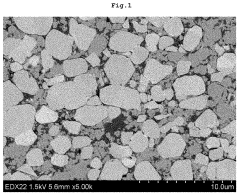
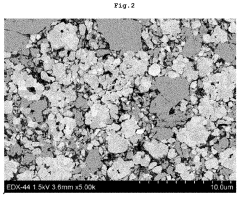
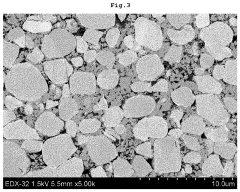
- A positive electrode for solid-state batteries composed of primary particles with a high mass ratio and a low void fraction, where the active material is primarily Ni, Mn, or Al, ensuring stable ion paths and electron conduction, and a method involving pressurization at controlled pressures to maintain particle integrity.
Pulsed mode apparatus with mismatched battery
PatentActiveUS20150372359A1
Innovation
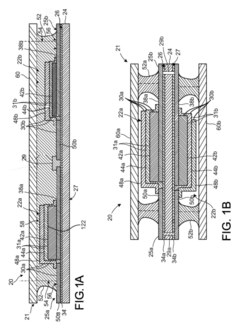
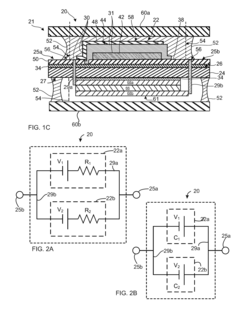
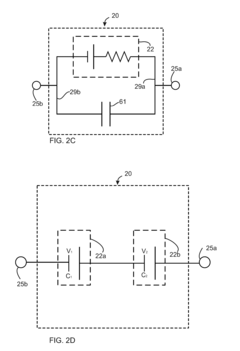
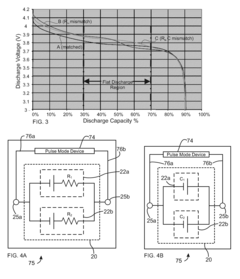
- A mismatched battery configuration is introduced, where two battery cells with different internal resistances and charge capacities are connected in parallel, allowing the cell with lower resistance to power a device during the on-time and the higher resistance cell to recharge during the off-time, thereby enhancing current output.
Manufacturing Scalability Assessment
The scalability of solid-state battery manufacturing represents a critical challenge in transitioning from laboratory prototypes to commercial production. Current manufacturing processes for solid-state batteries remain predominantly experimental, with limited throughput and high production costs that exceed $250/kWh, significantly higher than conventional lithium-ion batteries. This cost differential presents a substantial barrier to market entry despite the performance advantages of solid-state technology.
Material processing constitutes a primary scalability challenge. The production of high-purity solid electrolytes requires precise control of synthesis conditions, with contamination tolerances measured in parts per million. Semiconductor manufacturing techniques have been adapted for electrolyte deposition, but these processes typically operate at throughputs incompatible with battery production volumes. The integration of these materials into full cells introduces additional complexity, as interface formation between electrodes and solid electrolytes demands nanometer-level precision across square meters of active area.
Equipment infrastructure represents another significant hurdle. While conventional lithium-ion battery manufacturing leverages decades of process optimization and established equipment supply chains, solid-state battery production requires specialized tools for handling brittle ceramic components and maintaining ultra-dry processing environments. The capital expenditure for establishing production lines exceeds $100 million per gigawatt-hour of capacity, approximately double that of conventional battery facilities.
Recent advances in manufacturing technology show promising developments. Roll-to-roll processing techniques adapted from thin-film electronics manufacturing have demonstrated the potential to increase production rates by an order of magnitude. These approaches enable continuous production of thin solid electrolyte layers with thicknesses below 20 micrometers while maintaining the necessary mechanical and electrochemical properties. Additionally, co-sintering methods that simultaneously process cathode and electrolyte materials have reduced process steps by 30%, potentially lowering manufacturing costs.
Scaling projections indicate that with current technological trajectories, solid-state battery production costs could approach $100/kWh by 2025, making them competitive with advanced lithium-ion batteries. However, this timeline assumes continued investment in manufacturing process development and successful resolution of key technical challenges, particularly in the areas of interface engineering and defect management during high-volume production.
The semiconductor industry's experience with scaling precision manufacturing processes provides valuable insights for solid-state battery production. Adaptation of semiconductor equipment for battery manufacturing could accelerate the learning curve, particularly in areas such as thin film deposition, quality control systems, and automated handling of sensitive materials.
Material processing constitutes a primary scalability challenge. The production of high-purity solid electrolytes requires precise control of synthesis conditions, with contamination tolerances measured in parts per million. Semiconductor manufacturing techniques have been adapted for electrolyte deposition, but these processes typically operate at throughputs incompatible with battery production volumes. The integration of these materials into full cells introduces additional complexity, as interface formation between electrodes and solid electrolytes demands nanometer-level precision across square meters of active area.
Equipment infrastructure represents another significant hurdle. While conventional lithium-ion battery manufacturing leverages decades of process optimization and established equipment supply chains, solid-state battery production requires specialized tools for handling brittle ceramic components and maintaining ultra-dry processing environments. The capital expenditure for establishing production lines exceeds $100 million per gigawatt-hour of capacity, approximately double that of conventional battery facilities.
Recent advances in manufacturing technology show promising developments. Roll-to-roll processing techniques adapted from thin-film electronics manufacturing have demonstrated the potential to increase production rates by an order of magnitude. These approaches enable continuous production of thin solid electrolyte layers with thicknesses below 20 micrometers while maintaining the necessary mechanical and electrochemical properties. Additionally, co-sintering methods that simultaneously process cathode and electrolyte materials have reduced process steps by 30%, potentially lowering manufacturing costs.
Scaling projections indicate that with current technological trajectories, solid-state battery production costs could approach $100/kWh by 2025, making them competitive with advanced lithium-ion batteries. However, this timeline assumes continued investment in manufacturing process development and successful resolution of key technical challenges, particularly in the areas of interface engineering and defect management during high-volume production.
The semiconductor industry's experience with scaling precision manufacturing processes provides valuable insights for solid-state battery production. Adaptation of semiconductor equipment for battery manufacturing could accelerate the learning curve, particularly in areas such as thin film deposition, quality control systems, and automated handling of sensitive materials.
Safety and Environmental Impact Analysis
Solid state batteries represent a significant advancement in energy storage technology, offering potential improvements in safety profiles compared to conventional lithium-ion batteries with liquid electrolytes. The elimination of flammable liquid electrolytes substantially reduces fire and explosion risks, addressing one of the most critical safety concerns in current battery technologies. This inherent safety advantage makes solid state batteries particularly valuable for applications in electric vehicles, where battery integrity during accidents is paramount.
From an environmental perspective, solid state battery technologies demonstrate several promising advantages. The materials used in these batteries typically have lower toxicity profiles than traditional battery components. Many solid electrolytes under development utilize earth-abundant elements rather than rare or environmentally problematic materials, potentially reducing the ecological footprint of battery production. Additionally, the extended cycle life and improved stability of solid state batteries contribute to reduced waste generation over time, as fewer replacement batteries are needed throughout a product's lifetime.
Manufacturing processes for solid state batteries may also offer environmental benefits through reduced energy consumption and fewer hazardous chemicals. The semiconductor industry's established clean manufacturing techniques, when applied to solid state battery production, can minimize environmental contamination and worker exposure to dangerous substances. However, comprehensive life cycle assessments are still needed to fully quantify these potential advantages compared to conventional battery manufacturing.
Recycling considerations represent another important environmental dimension. The simplified architecture and reduced number of components in some solid state battery designs could facilitate more efficient end-of-life recovery of valuable materials. Research indicates that certain solid electrolyte materials may be more readily recyclable than the complex mixtures found in conventional batteries, though commercial-scale recycling processes specifically optimized for solid state batteries remain underdeveloped.
Regulatory frameworks worldwide are beginning to acknowledge the distinct safety and environmental profiles of solid state batteries. Several jurisdictions are developing modified testing protocols and safety standards that recognize the reduced fire risks of these technologies. This regulatory evolution may accelerate adoption by reducing compliance burdens while maintaining appropriate safety oversight. However, as with any emerging technology, ongoing vigilance is necessary to identify and address any unforeseen environmental or safety concerns that may emerge as deployment scales.
From an environmental perspective, solid state battery technologies demonstrate several promising advantages. The materials used in these batteries typically have lower toxicity profiles than traditional battery components. Many solid electrolytes under development utilize earth-abundant elements rather than rare or environmentally problematic materials, potentially reducing the ecological footprint of battery production. Additionally, the extended cycle life and improved stability of solid state batteries contribute to reduced waste generation over time, as fewer replacement batteries are needed throughout a product's lifetime.
Manufacturing processes for solid state batteries may also offer environmental benefits through reduced energy consumption and fewer hazardous chemicals. The semiconductor industry's established clean manufacturing techniques, when applied to solid state battery production, can minimize environmental contamination and worker exposure to dangerous substances. However, comprehensive life cycle assessments are still needed to fully quantify these potential advantages compared to conventional battery manufacturing.
Recycling considerations represent another important environmental dimension. The simplified architecture and reduced number of components in some solid state battery designs could facilitate more efficient end-of-life recovery of valuable materials. Research indicates that certain solid electrolyte materials may be more readily recyclable than the complex mixtures found in conventional batteries, though commercial-scale recycling processes specifically optimized for solid state batteries remain underdeveloped.
Regulatory frameworks worldwide are beginning to acknowledge the distinct safety and environmental profiles of solid state batteries. Several jurisdictions are developing modified testing protocols and safety standards that recognize the reduced fire risks of these technologies. This regulatory evolution may accelerate adoption by reducing compliance burdens while maintaining appropriate safety oversight. However, as with any emerging technology, ongoing vigilance is necessary to identify and address any unforeseen environmental or safety concerns that may emerge as deployment scales.
Unlock deeper insights with PatSnap Eureka Quick Research — get a full tech report to explore trends and direct your research. Try now!
Generate Your Research Report Instantly with AI Agent
Supercharge your innovation with PatSnap Eureka AI Agent Platform!