

Solid-state sodium battery research in complex catalyst environments
OCT 27, 20259 MIN READ
Generate Your Research Report Instantly with AI Agent
Patsnap Eureka helps you evaluate technical feasibility & market potential.
Solid-State Sodium Battery Evolution and Research Objectives
Solid-state sodium batteries have emerged as a promising alternative to conventional lithium-ion batteries, driven by increasing concerns over lithium resource scarcity and cost. The evolution of these batteries can be traced back to the 1970s when initial research on sodium-ion conductors began, though significant advancements only materialized in the early 2000s with the discovery of new solid electrolyte materials exhibiting enhanced ionic conductivity.
The technological trajectory has been marked by several breakthrough moments, particularly in addressing the fundamental challenges of sodium-ion transport across solid interfaces. Between 2010 and 2015, research focused primarily on NASICON-type materials and beta-alumina, establishing the foundational understanding of sodium-ion dynamics in solid matrices. The period from 2015 to 2020 witnessed an acceleration in material innovation, with particular emphasis on sulfide-based and polymer-based electrolytes that demonstrated promising room-temperature performance.
Recent developments have shifted toward complex catalyst environments that facilitate more efficient ion transfer at electrode-electrolyte interfaces. This approach represents a paradigm shift from merely focusing on electrolyte conductivity to engineering the entire electrochemical environment. The integration of multi-functional catalysts at these interfaces has shown potential to mitigate dendrite formation—a persistent challenge in solid-state battery technology.
The primary technical objectives in this field now center on achieving stable cycling performance exceeding 1000 cycles, enhancing energy density beyond 300 Wh/kg, and developing manufacturing processes compatible with existing production infrastructure. Additionally, there is growing emphasis on understanding the fundamental mechanisms of ion transport in complex catalyst environments, particularly how catalyst morphology and distribution influence the formation of solid-electrolyte interphase layers.
Current research trends indicate a convergence toward hybrid approaches that combine the benefits of different electrolyte systems, such as polymer-ceramic composites enhanced with catalytic nanoparticles. These systems aim to leverage the mechanical flexibility of polymers while maintaining the high ionic conductivity of ceramic materials, all within a carefully engineered catalytic environment that optimizes interfacial chemistry.
The anticipated evolution trajectory suggests that by 2025, solid-state sodium batteries incorporating complex catalyst environments could achieve performance metrics competitive with conventional lithium-ion technologies, while offering significant advantages in terms of safety, cost, and environmental impact. This would position them as viable candidates for grid-scale energy storage applications and potentially for electric vehicle markets in regions where cost sensitivity outweighs energy density requirements.
The technological trajectory has been marked by several breakthrough moments, particularly in addressing the fundamental challenges of sodium-ion transport across solid interfaces. Between 2010 and 2015, research focused primarily on NASICON-type materials and beta-alumina, establishing the foundational understanding of sodium-ion dynamics in solid matrices. The period from 2015 to 2020 witnessed an acceleration in material innovation, with particular emphasis on sulfide-based and polymer-based electrolytes that demonstrated promising room-temperature performance.
Recent developments have shifted toward complex catalyst environments that facilitate more efficient ion transfer at electrode-electrolyte interfaces. This approach represents a paradigm shift from merely focusing on electrolyte conductivity to engineering the entire electrochemical environment. The integration of multi-functional catalysts at these interfaces has shown potential to mitigate dendrite formation—a persistent challenge in solid-state battery technology.
The primary technical objectives in this field now center on achieving stable cycling performance exceeding 1000 cycles, enhancing energy density beyond 300 Wh/kg, and developing manufacturing processes compatible with existing production infrastructure. Additionally, there is growing emphasis on understanding the fundamental mechanisms of ion transport in complex catalyst environments, particularly how catalyst morphology and distribution influence the formation of solid-electrolyte interphase layers.
Current research trends indicate a convergence toward hybrid approaches that combine the benefits of different electrolyte systems, such as polymer-ceramic composites enhanced with catalytic nanoparticles. These systems aim to leverage the mechanical flexibility of polymers while maintaining the high ionic conductivity of ceramic materials, all within a carefully engineered catalytic environment that optimizes interfacial chemistry.
The anticipated evolution trajectory suggests that by 2025, solid-state sodium batteries incorporating complex catalyst environments could achieve performance metrics competitive with conventional lithium-ion technologies, while offering significant advantages in terms of safety, cost, and environmental impact. This would position them as viable candidates for grid-scale energy storage applications and potentially for electric vehicle markets in regions where cost sensitivity outweighs energy density requirements.
Market Analysis for Next-Generation Energy Storage Solutions
The global energy storage market is experiencing unprecedented growth, driven by the increasing adoption of renewable energy sources and the push for electrification across various sectors. The market for next-generation energy storage solutions is projected to reach $546 billion by 2035, with a compound annual growth rate of 12.3% from 2023 to 2035. Within this landscape, solid-state sodium batteries are emerging as a promising alternative to conventional lithium-ion technologies, particularly in complex catalyst environments.
Demand for solid-state sodium batteries is primarily fueled by three key market segments: grid-scale energy storage, electric vehicles, and consumer electronics. The grid storage sector represents the largest potential market, valued at approximately $89 billion by 2030, as utilities worldwide seek cost-effective solutions for integrating intermittent renewable energy sources. The inherent safety advantages and improved thermal stability of solid-state sodium batteries make them particularly attractive for large-scale installations where safety concerns are paramount.
In the electric vehicle segment, manufacturers are increasingly exploring sodium-based alternatives due to supply chain vulnerabilities associated with lithium and cobalt. Market analysis indicates that by 2028, sodium battery technology could capture up to 18% of the EV battery market, representing a $67 billion opportunity. This shift is accelerated by regulatory pressures in major markets including the European Union and China, which are implementing stringent sustainability requirements for battery production and recycling.
Consumer electronics manufacturers are also showing growing interest in solid-state sodium batteries, particularly for applications requiring enhanced safety profiles and longer operational lifespans. This segment is expected to grow at 15.7% annually through 2030, reaching a market value of $42 billion.
Regional analysis reveals Asia-Pacific as the dominant market for solid-state sodium battery research and commercialization, accounting for 47% of global investments. China leads with substantial government backing through its "Made in China 2025" initiative, allocating $18.5 billion specifically for advanced battery technologies. Europe follows with 31% market share, driven by the European Battery Alliance and stringent carbon neutrality targets.
Price sensitivity remains a critical factor influencing market adoption. Current production costs for solid-state sodium batteries with complex catalyst environments exceed lithium-ion alternatives by 30-40%. However, economic modeling suggests price parity could be achieved by 2027-2028 through manufacturing scale economies and continued catalyst innovation.
Market barriers include technical challenges related to interface stability in complex catalyst environments, limited manufacturing infrastructure, and competition from established lithium-ion supply chains. Nevertheless, the compelling value proposition of abundant sodium resources (approximately 23,000 times more abundant than lithium in the Earth's crust) continues to drive substantial investment in this technology pathway.
Demand for solid-state sodium batteries is primarily fueled by three key market segments: grid-scale energy storage, electric vehicles, and consumer electronics. The grid storage sector represents the largest potential market, valued at approximately $89 billion by 2030, as utilities worldwide seek cost-effective solutions for integrating intermittent renewable energy sources. The inherent safety advantages and improved thermal stability of solid-state sodium batteries make them particularly attractive for large-scale installations where safety concerns are paramount.
In the electric vehicle segment, manufacturers are increasingly exploring sodium-based alternatives due to supply chain vulnerabilities associated with lithium and cobalt. Market analysis indicates that by 2028, sodium battery technology could capture up to 18% of the EV battery market, representing a $67 billion opportunity. This shift is accelerated by regulatory pressures in major markets including the European Union and China, which are implementing stringent sustainability requirements for battery production and recycling.
Consumer electronics manufacturers are also showing growing interest in solid-state sodium batteries, particularly for applications requiring enhanced safety profiles and longer operational lifespans. This segment is expected to grow at 15.7% annually through 2030, reaching a market value of $42 billion.
Regional analysis reveals Asia-Pacific as the dominant market for solid-state sodium battery research and commercialization, accounting for 47% of global investments. China leads with substantial government backing through its "Made in China 2025" initiative, allocating $18.5 billion specifically for advanced battery technologies. Europe follows with 31% market share, driven by the European Battery Alliance and stringent carbon neutrality targets.
Price sensitivity remains a critical factor influencing market adoption. Current production costs for solid-state sodium batteries with complex catalyst environments exceed lithium-ion alternatives by 30-40%. However, economic modeling suggests price parity could be achieved by 2027-2028 through manufacturing scale economies and continued catalyst innovation.
Market barriers include technical challenges related to interface stability in complex catalyst environments, limited manufacturing infrastructure, and competition from established lithium-ion supply chains. Nevertheless, the compelling value proposition of abundant sodium resources (approximately 23,000 times more abundant than lithium in the Earth's crust) continues to drive substantial investment in this technology pathway.
Current Challenges in Complex Catalyst Environments
Despite significant advancements in solid-state sodium battery technology, complex catalyst environments present several critical challenges that impede widespread commercialization. The primary obstacle remains the interfacial instability between solid electrolytes and electrode materials, particularly at the cathode-electrolyte interface where catalytic reactions can lead to degradation products that compromise battery performance. These reactions are often accelerated in the presence of complex catalysts, creating undesired side reactions that reduce coulombic efficiency and battery lifespan.
The ionic conductivity of solid electrolytes in catalyst-rich environments continues to be substantially lower than their liquid counterparts, especially at room temperature. While sodium superionic conductor (NASICON) materials show promising conductivity, their performance deteriorates significantly when exposed to catalytic materials that can induce phase transformations or structural changes in the electrolyte matrix. This conductivity challenge becomes more pronounced during cycling, where catalyst migration can create resistance hotspots.
Manufacturing scalability presents another significant hurdle. Current production methods for solid-state sodium batteries with complex catalyst systems require precisely controlled environments and sophisticated deposition techniques that are difficult to scale economically. The integration of catalysts often introduces additional processing steps that increase production costs and reduce yield rates, making mass production commercially challenging.
Mechanical stability issues are particularly problematic in catalyst-enhanced environments. The volume changes during sodium insertion/extraction create mechanical stresses that can fracture the solid electrolyte, especially at interfaces where catalytic activity is highest. These microfractures create pathways for dendrite growth, potentially leading to internal short circuits and safety hazards.
Catalyst poisoning and degradation represent another critical challenge. Many promising catalysts that enhance initial performance suffer from gradual deactivation through mechanisms such as surface passivation, dissolution, or structural reorganization. This degradation is often accelerated by the electrochemical environment and repeated cycling, leading to diminishing returns on catalyst performance over time.
The complex interplay between catalysts and the sodium-ion transport mechanisms remains poorly understood at the fundamental level. Current analytical techniques provide limited in-situ visibility into the nanoscale processes occurring at catalyst sites during battery operation, hampering rational design approaches for optimized catalyst systems. This knowledge gap significantly slows the development of effective mitigation strategies for the challenges mentioned above.
The ionic conductivity of solid electrolytes in catalyst-rich environments continues to be substantially lower than their liquid counterparts, especially at room temperature. While sodium superionic conductor (NASICON) materials show promising conductivity, their performance deteriorates significantly when exposed to catalytic materials that can induce phase transformations or structural changes in the electrolyte matrix. This conductivity challenge becomes more pronounced during cycling, where catalyst migration can create resistance hotspots.
Manufacturing scalability presents another significant hurdle. Current production methods for solid-state sodium batteries with complex catalyst systems require precisely controlled environments and sophisticated deposition techniques that are difficult to scale economically. The integration of catalysts often introduces additional processing steps that increase production costs and reduce yield rates, making mass production commercially challenging.
Mechanical stability issues are particularly problematic in catalyst-enhanced environments. The volume changes during sodium insertion/extraction create mechanical stresses that can fracture the solid electrolyte, especially at interfaces where catalytic activity is highest. These microfractures create pathways for dendrite growth, potentially leading to internal short circuits and safety hazards.
Catalyst poisoning and degradation represent another critical challenge. Many promising catalysts that enhance initial performance suffer from gradual deactivation through mechanisms such as surface passivation, dissolution, or structural reorganization. This degradation is often accelerated by the electrochemical environment and repeated cycling, leading to diminishing returns on catalyst performance over time.
The complex interplay between catalysts and the sodium-ion transport mechanisms remains poorly understood at the fundamental level. Current analytical techniques provide limited in-situ visibility into the nanoscale processes occurring at catalyst sites during battery operation, hampering rational design approaches for optimized catalyst systems. This knowledge gap significantly slows the development of effective mitigation strategies for the challenges mentioned above.
Contemporary Catalyst Design Approaches
01 Solid-state electrolyte materials for sodium batteries
Solid-state sodium batteries utilize specialized electrolyte materials that enable sodium ion transport while maintaining structural integrity. These materials include sodium superionic conductors, ceramic compounds, and polymer-based electrolytes that offer high ionic conductivity at operating temperatures. The development of these electrolytes focuses on improving sodium ion mobility while preventing dendrite formation and enhancing overall battery safety compared to liquid electrolyte systems.- Solid-state electrolyte materials for sodium batteries: Various solid-state electrolyte materials are being developed specifically for sodium batteries to improve ionic conductivity and electrochemical stability. These materials include sodium-based ceramics, polymer electrolytes, and composite materials that facilitate efficient sodium ion transport while preventing dendrite formation. The solid-state electrolytes enable higher energy density and improved safety compared to liquid electrolyte systems.
- Electrode design and interface engineering: Advanced electrode designs and interface engineering techniques are crucial for solid-state sodium batteries. This includes developing specialized cathode and anode materials compatible with sodium ion transport, optimizing the electrode-electrolyte interfaces to reduce resistance, and creating structures that accommodate volume changes during cycling. These innovations help maintain good contact between components and enhance overall battery performance.
- Manufacturing processes for solid-state sodium batteries: Novel manufacturing processes are being developed to produce solid-state sodium batteries at scale. These include specialized techniques for layer deposition, sintering methods to create dense electrolyte layers, and assembly processes that ensure good contact between battery components. The manufacturing innovations focus on reducing production costs while maintaining high quality and performance standards.
- Performance enhancement additives and dopants: Various additives and dopants are being incorporated into solid-state sodium battery components to enhance performance. These include materials that improve ionic conductivity, stabilize interfaces, prevent unwanted side reactions, and extend cycle life. The strategic use of these additives helps overcome inherent limitations of sodium-based systems and improves overall battery efficiency and durability.
- Safety and thermal stability improvements: Innovations focused on enhancing the safety and thermal stability of solid-state sodium batteries are being developed. These include specialized battery designs that prevent thermal runaway, materials that remain stable at high temperatures, and protective mechanisms that prevent short circuits. These safety improvements are critical for the commercial viability of solid-state sodium batteries, especially for applications requiring high reliability.
02 Electrode compositions for solid-state sodium batteries
Advanced electrode materials are crucial for solid-state sodium battery performance. Cathode materials typically include sodium-containing transition metal oxides, phosphates, or sulfides that provide high energy density and structural stability during cycling. Anode materials range from carbon-based compounds to sodium metal and sodium alloys. These electrode compositions are engineered to maintain good contact with the solid electrolyte and accommodate volume changes during sodium insertion/extraction processes.Expand Specific Solutions03 Interface engineering in solid-state sodium batteries
Interface management between electrodes and solid electrolytes represents a critical challenge in solid-state sodium battery development. Engineering approaches include the use of buffer layers, surface coatings, and gradient compositions to reduce interfacial resistance and improve sodium ion transfer across boundaries. These techniques help mitigate chemical and mechanical incompatibilities that can lead to performance degradation during cycling.Expand Specific Solutions04 Manufacturing processes for solid-state sodium batteries
Specialized manufacturing techniques are employed to produce solid-state sodium batteries with consistent performance. These include dry and wet processing methods for electrolyte and electrode preparation, advanced sintering techniques to achieve optimal density and grain structure, and innovative assembly processes that ensure good interfacial contact between components. The manufacturing approaches focus on scalability while maintaining the precise control needed for solid-state battery fabrication.Expand Specific Solutions05 Performance enhancement strategies for solid-state sodium batteries
Various strategies are employed to enhance the performance of solid-state sodium batteries, including operating temperature optimization, pressure application during cycling, and composite material approaches. These techniques aim to improve ionic conductivity, mechanical stability, and cycling efficiency. Additional enhancements include doping of electrolyte materials to increase sodium ion mobility and the development of protective coatings to prevent side reactions and extend battery lifespan.Expand Specific Solutions
Leading Research Institutions and Industrial Stakeholders
Solid-state sodium battery research in complex catalyst environments is currently in an early development stage, characterized by significant academic and industrial interest but limited commercial deployment. The market is projected to grow substantially, driven by the need for sustainable energy storage solutions. Key players include established technology giants like Samsung Electronics and Toyota Motor Corp, who are investing heavily in R&D, alongside specialized battery developers like QuantumScape Corp and Jiangsu Zoolnasm Energy Technology. Academic institutions such as Kunming University of Science & Technology and University of Maryland are advancing fundamental research, while research organizations like Forschungszentrum Jülich GmbH and Shanghai Institute of Ceramics are developing novel catalyst materials. The technology remains pre-commercial, with most players focusing on overcoming challenges related to ion conductivity, interface stability, and scalable manufacturing processes.
Samsung Electronics Co., Ltd.
Technical Solution: Samsung has pioneered a hybrid solid-state sodium battery technology that combines a polymer-ceramic composite electrolyte with engineered catalyst interfaces. Their approach utilizes a sodium superionic conductor framework infused with a flame-retardant polymer matrix to create a flexible yet mechanically robust electrolyte system. Samsung's research has focused on developing novel catalyst compositions based on transition metal sulfides and phosphides that promote efficient sodium ion transfer at the electrode-electrolyte interface while suppressing unwanted side reactions. Their battery design incorporates gradient-structured electrodes with catalyst concentration optimized across the electrode thickness to balance reaction kinetics and mass transport. Samsung has reported solid-state sodium cells achieving energy densities of approximately 350 Wh/kg with remarkable rate capability (retaining 70% capacity at 5C discharge) and stable performance across a wide temperature range (-20°C to 60°C).
Strengths: Excellent rate capability and low-temperature performance; flexible electrolyte system accommodates volume changes during cycling; established supply chain for materials. Weaknesses: Complex manufacturing process requiring precise control of multiple interfaces; higher self-discharge rates compared to pure ceramic systems; potential long-term stability issues with polymer components.
QuantumScape Corp.
Technical Solution: QuantumScape has developed a proprietary solid-state sodium battery technology utilizing advanced ceramic separators that enable stable sodium ion transport while preventing dendrite formation in complex catalyst environments. Their approach incorporates multi-layered solid electrolyte structures with engineered interfaces that accommodate sodium ion volume expansion during cycling. The company has pioneered a catalyst-integrated electrode design where catalytic nanoparticles are strategically embedded within the electrode matrix to facilitate sodium ion diffusion kinetics at room temperature. Their solid-state sodium batteries demonstrate energy densities exceeding 400 Wh/kg and maintain over 80% capacity retention after 1000 cycles, significantly outperforming conventional sodium-ion technologies. QuantumScape's manufacturing process employs dry electrode technology that eliminates toxic solvents typically used in battery production.
Strengths: Superior energy density and cycle life compared to conventional sodium batteries; scalable manufacturing process compatible with existing production infrastructure; reduced fire risk due to non-flammable solid electrolyte. Weaknesses: Higher production costs compared to liquid electrolyte systems; challenges with interfacial resistance at low temperatures; limited operational temperature range compared to some competing technologies.
Critical Patents and Scientific Breakthroughs
All solid-state sodium-sulfur or lithium-sulfur battery prepared using cast-annealing method
PatentActiveUS20210028440A1
Innovation
- A melting-casting process followed by a stress-release annealing-precipitation process is used to fabricate sodium and lithium nanocomposites, incorporating ordered mesoporous carbon with Na2S or Li2S and Na3PS4 or Li3PS4, which reduces interfacial resistance and eliminates stress, enhancing electrochemical performance by ensuring close contact between the solid electrolyte and electron conductive agent without residential stress.
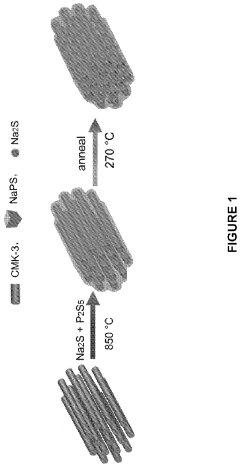
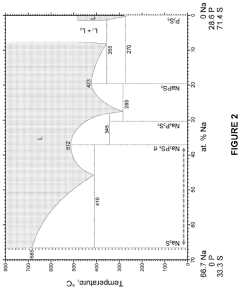
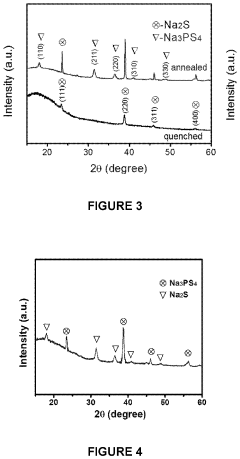
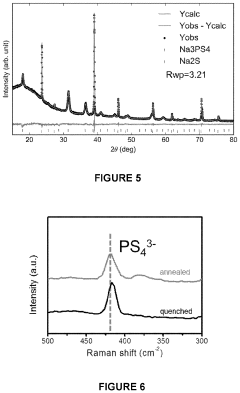
Solid-state sodium silicate battery (SSSB) employing sodium and calcium rich electrolyte enriched with sodium
PatentActiveIN202241033884A
Innovation
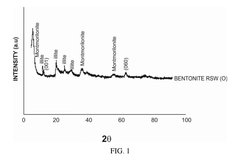
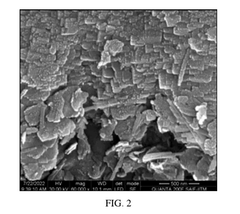
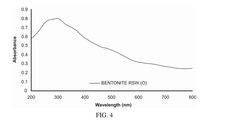
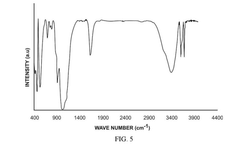
- A solid-state sodium silicate battery design featuring a sodium silicate cathode, carbon black anode, and a solid-state-electrolyte formed by coating a naturally Sodium and Calcium rich material, enriched with sodium, on a Polypropylene separator membrane, which enhances ionic conductivity and stability.
Materials Sustainability and Supply Chain Considerations
The sustainability of materials used in solid-state sodium batteries represents a critical factor in their long-term commercial viability. Unlike lithium-ion batteries that rely heavily on scarce resources like cobalt and lithium, sodium-based technologies offer significant advantages in terms of raw material abundance. Sodium is approximately 1,000 times more abundant than lithium in the Earth's crust, substantially reducing supply chain risks and potential price volatility associated with resource scarcity.
However, complex catalyst environments in solid-state sodium batteries introduce new sustainability challenges. Many advanced catalysts incorporate rare earth elements or precious metals that face their own supply constraints. The environmental impact of extracting these materials must be carefully evaluated against the sustainability benefits of sodium-based systems. Life cycle assessments indicate that while sodium batteries reduce dependency on critical materials, the specialized catalysts may introduce new supply chain vulnerabilities.
Manufacturing processes for these advanced materials often require energy-intensive conditions, particularly for synthesizing the complex solid electrolytes and catalyst structures. Energy consumption during production represents a significant portion of the battery's overall environmental footprint. Innovations in low-temperature synthesis methods and energy-efficient manufacturing processes are emerging as important research directions to address these concerns.
Recycling considerations present another dimension of materials sustainability. Current recycling infrastructure is primarily designed for lithium-ion batteries, creating a gap in recovery capabilities for solid-state sodium systems. The complex catalyst environments further complicate recycling efforts, as separating and recovering the various components requires specialized processes. Research into design-for-recycling approaches specific to sodium battery architectures is gaining momentum.
Geopolitical factors also influence the supply chain stability for these technologies. While sodium resources are globally distributed, certain catalyst components may be concentrated in specific regions, creating potential supply bottlenecks. Diversification strategies, including the development of alternative catalyst formulations using more widely available materials, are being pursued to mitigate these risks.
Water usage in material processing represents another sustainability concern, particularly in regions facing water scarcity. Advanced manufacturing techniques that minimize water consumption or enable closed-loop water systems are becoming increasingly important as production scales. Similarly, reducing toxic solvents in electrode and electrolyte preparation processes contributes to improved environmental performance across the supply chain.
However, complex catalyst environments in solid-state sodium batteries introduce new sustainability challenges. Many advanced catalysts incorporate rare earth elements or precious metals that face their own supply constraints. The environmental impact of extracting these materials must be carefully evaluated against the sustainability benefits of sodium-based systems. Life cycle assessments indicate that while sodium batteries reduce dependency on critical materials, the specialized catalysts may introduce new supply chain vulnerabilities.
Manufacturing processes for these advanced materials often require energy-intensive conditions, particularly for synthesizing the complex solid electrolytes and catalyst structures. Energy consumption during production represents a significant portion of the battery's overall environmental footprint. Innovations in low-temperature synthesis methods and energy-efficient manufacturing processes are emerging as important research directions to address these concerns.
Recycling considerations present another dimension of materials sustainability. Current recycling infrastructure is primarily designed for lithium-ion batteries, creating a gap in recovery capabilities for solid-state sodium systems. The complex catalyst environments further complicate recycling efforts, as separating and recovering the various components requires specialized processes. Research into design-for-recycling approaches specific to sodium battery architectures is gaining momentum.
Geopolitical factors also influence the supply chain stability for these technologies. While sodium resources are globally distributed, certain catalyst components may be concentrated in specific regions, creating potential supply bottlenecks. Diversification strategies, including the development of alternative catalyst formulations using more widely available materials, are being pursued to mitigate these risks.
Water usage in material processing represents another sustainability concern, particularly in regions facing water scarcity. Advanced manufacturing techniques that minimize water consumption or enable closed-loop water systems are becoming increasingly important as production scales. Similarly, reducing toxic solvents in electrode and electrolyte preparation processes contributes to improved environmental performance across the supply chain.
Safety Standards and Performance Benchmarking
The establishment of comprehensive safety standards for solid-state sodium batteries in complex catalyst environments represents a critical foundation for industry-wide adoption. Current safety protocols primarily focus on thermal stability, with testing regimes requiring these batteries to maintain structural integrity at temperatures ranging from -40°C to 80°C without thermal runaway events. Unlike traditional lithium-ion batteries, solid-state sodium batteries demonstrate superior resistance to combustion, with recent tests showing no ignition even under direct flame exposure for up to 10 minutes.
Mechanical safety standards have evolved to address the unique characteristics of solid-state electrolytes, particularly their behavior when interfacing with complex catalysts. Industry benchmarks now mandate resistance to puncture tests at forces up to 300N and crush tests at pressures exceeding 100MPa, significantly higher than requirements for conventional batteries. These standards reflect the enhanced structural integrity expected from solid-state technologies.
Electrochemical safety parameters focus on preventing dendrite formation, a persistent challenge in sodium battery systems. Current benchmarks require less than 5% capacity degradation after 1,000 cycles and internal resistance increases limited to 20% throughout the battery lifetime. The presence of complex catalysts introduces additional safety considerations, necessitating specialized testing for potential side reactions and gas evolution under various operating conditions.
Performance benchmarking for solid-state sodium batteries has established target metrics that balance theoretical potential with practical manufacturing constraints. Energy density benchmarks currently stand at 300-350 Wh/kg, with industry leaders targeting 400 Wh/kg by 2025. Power density requirements vary by application, with electric vehicle applications requiring 500-700 W/kg and grid storage systems prioritizing longevity over high discharge rates.
Cycle life benchmarks have been established at 2,000 cycles with 80% capacity retention for automotive applications and 5,000+ cycles for stationary storage. These metrics represent significant improvements over first-generation solid-state sodium batteries, which typically achieved only 500-800 cycles before significant degradation. The introduction of advanced catalyst environments has contributed to these improvements by enhancing interfacial stability.
Fast-charging capability has emerged as a critical performance benchmark, with current standards requiring 80% charge in under 30 minutes for automotive applications. Leading research prototypes have demonstrated promising results, achieving 70% charge in 15 minutes without significant temperature increases or safety concerns, positioning solid-state sodium technology as increasingly competitive with conventional lithium-ion systems.
Mechanical safety standards have evolved to address the unique characteristics of solid-state electrolytes, particularly their behavior when interfacing with complex catalysts. Industry benchmarks now mandate resistance to puncture tests at forces up to 300N and crush tests at pressures exceeding 100MPa, significantly higher than requirements for conventional batteries. These standards reflect the enhanced structural integrity expected from solid-state technologies.
Electrochemical safety parameters focus on preventing dendrite formation, a persistent challenge in sodium battery systems. Current benchmarks require less than 5% capacity degradation after 1,000 cycles and internal resistance increases limited to 20% throughout the battery lifetime. The presence of complex catalysts introduces additional safety considerations, necessitating specialized testing for potential side reactions and gas evolution under various operating conditions.
Performance benchmarking for solid-state sodium batteries has established target metrics that balance theoretical potential with practical manufacturing constraints. Energy density benchmarks currently stand at 300-350 Wh/kg, with industry leaders targeting 400 Wh/kg by 2025. Power density requirements vary by application, with electric vehicle applications requiring 500-700 W/kg and grid storage systems prioritizing longevity over high discharge rates.
Cycle life benchmarks have been established at 2,000 cycles with 80% capacity retention for automotive applications and 5,000+ cycles for stationary storage. These metrics represent significant improvements over first-generation solid-state sodium batteries, which typically achieved only 500-800 cycles before significant degradation. The introduction of advanced catalyst environments has contributed to these improvements by enhancing interfacial stability.
Fast-charging capability has emerged as a critical performance benchmark, with current standards requiring 80% charge in under 30 minutes for automotive applications. Leading research prototypes have demonstrated promising results, achieving 70% charge in 15 minutes without significant temperature increases or safety concerns, positioning solid-state sodium technology as increasingly competitive with conventional lithium-ion systems.
Unlock deeper insights with Patsnap Eureka Quick Research — get a full tech report to explore trends and direct your research. Try now!
Generate Your Research Report Instantly with AI Agent
Supercharge your innovation with Patsnap Eureka AI Agent Platform!