
Method for realizing vehicle self-guidance rapidly
A vehicle navigation and self-navigation technology, which is applied in the field of rapid vehicle self-navigation, can solve the problems of increased communication time and cost, large data volume, etc., and achieve the effect of reducing the amount of transmitted data
- Summary
- Abstract
- Description
- Claims
- Application Information
AI Technical Summary
Problems solved by technology
Method used
Image

Examples
Embodiment Construction
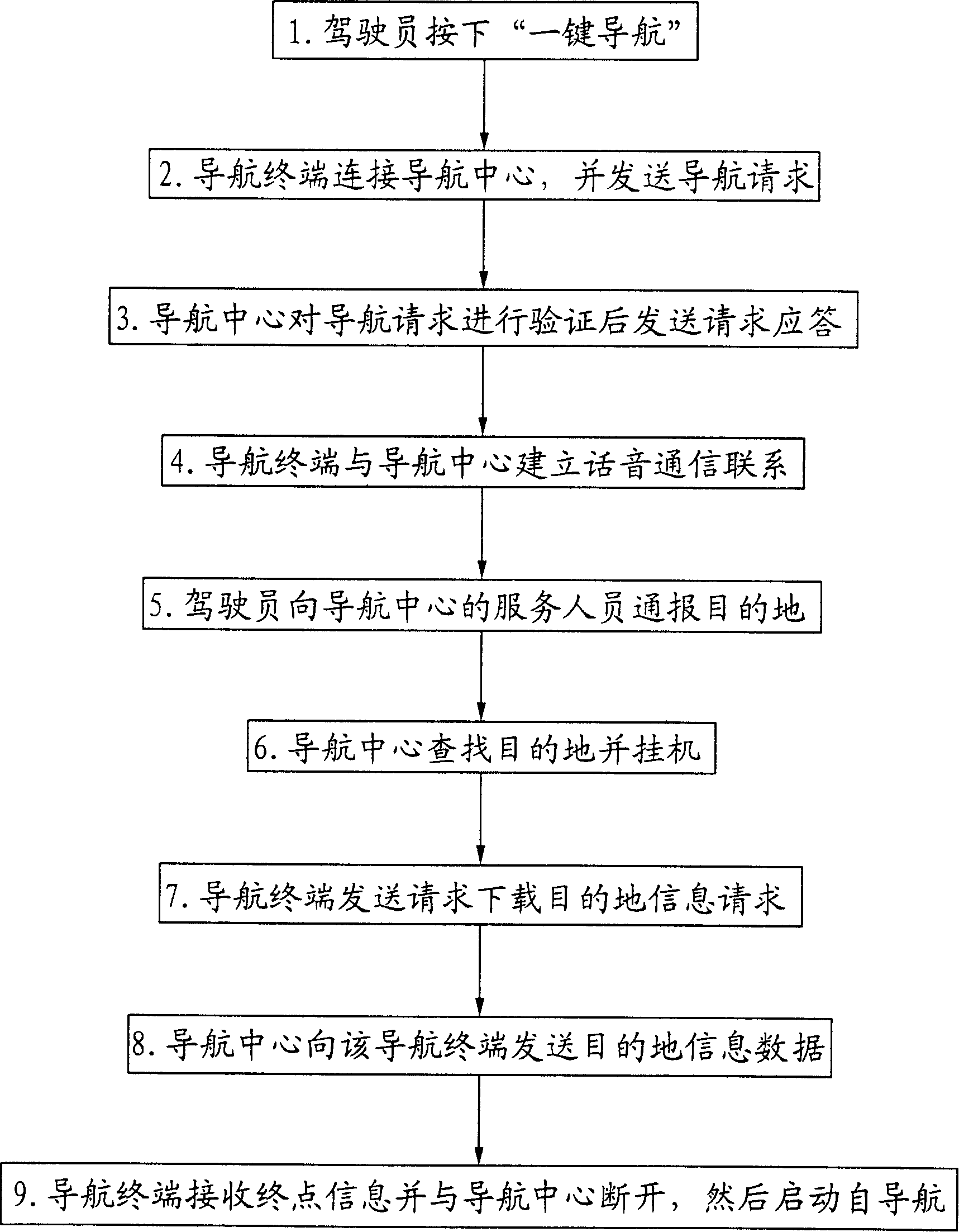
[0017] The method for quickly realizing vehicle self-navigation in the present invention includes:
[0018] 1. The vehicle navigation terminal requests navigation services from the navigation center through the wireless communication module;
[0019] 2. The driver uses the voice communication of the navigation terminal to notify the navigation center of the destination name;
[0020] 3. The navigation center records the current location and destination of the vehicle, and obtains information such as the latitude, longitude and name of the destination based on the map data in the map database of the navigation center;
[0021] 4. The navigation center sends the information data of the destination to the navigation terminal;
[0022] 5. The navigation terminal of the vehicle receives and stores the information data of the destination, ends the navigation service request at the same time, and then starts self-navigation.
[0023] In said step 1, the driver completes the work of...
PUM
 Login to View More
 Abstract
Description
Claims
Application Information
 Login to View More